Problem: Your lanyard hook fails during daily use.
Agitation: A dropped badge, lost keys, or a damaged device can disrupt operations, trigger replacement costs, and create safety concerns.
Solution: This guide helps procurement teams specify the right lanyard attachments—based on use case, verified performance, and quality controls—so you can source with confidence.
For enterprise orders, the “best” lanyard attachment is the one that matches your use case and comes with supplier-verifiable specs (material, load rating, gate opening, and—when needed—breakaway release performance).
Choosing the wrong attachment looks like a small mistake—until it becomes a recurring failure, a compliance headache, or a costly rework. Below you’ll find procurement-ready guidance, including recommended specs and QC checkpoints, to avoid common sourcing errors.
What is the strongest lanyard hook?
Problem: Your hook bends, opens unexpectedly, or wears out early under daily load.
Agitation: That can lead to lost IDs, downtime, and preventable replacement cycles across departments.
Solution: Define “strongest” in procurement terms—verified load rating, gate reliability, fatigue performance, and corrosion resistance—then specify the right hook design.
In B2B purchasing, a “strong” lanyard hook is typically a stainless-steel swivel snap hook (or a locking variant) with a supplier-verified load rating, robust spring design, and corrosion-resistant finish appropriate for your environment.
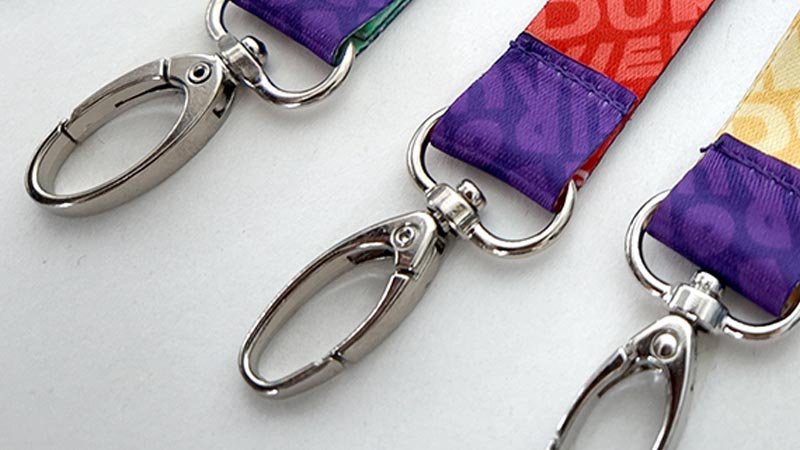
For enterprise sourcing, “strongest” is not a single universal hook—it’s a measurable performance profile. Start by clarifying your load and risk scenario: is the hook carrying only an ID card, or keys, tools, and devices? Next, select a hook architecture that controls the main failure modes: accidental gate opening, spring fatigue, and corrosion-driven weakening.
In most workplace ID programs, a swivel snap hook is widely specified because the swivel reduces strap twisting and lowers wear at the stitching point. For higher-security carry or higher motion environments, buyers often consider locking designs (e.g., screw-lock or locking carabiner styles) to reduce accidental opens—accepting that locking designs add handling time.
Procurement Spec (Recommended):
-
Material: 304 stainless for general indoor use; consider 316 stainless for coastal, high-humidity, or sweat-intensive environments
-
Design: swivel base preferred for daily movement; consider locking gate if accidental opens are a known risk
-
Compatibility: confirm webbing width (commonly up to 25 mm / 1 inch) and the hook’s attachment eye size
-
Finish: corrosion-resistant finish appropriate to environment (request a material/finish declaration)
QC & Verification (What to require):
-
Load rating / pull test report for the exact model (method noted by supplier)
-
Gate function check: consistent spring return, no sticking, no play that increases accidental opens
-
Burr check: no sharp edges that can cut tether loops or fray webbing
-
Corrosion verification (when relevant): request salt-spray or corrosion exposure report appropriate to your buyer requirements
Common Failure Modes (What buyers see in the field):
-
spring fatigue leading to weak gate closure
-
plating wear and corrosion in humid or salty conditions
-
deformation of thin-gauge hooks under shock load (drops, snags, repeated yanks)
Breakaway lanyard requirements in workplaces?
Problem: Lanyards can snag on equipment, furniture, or moving parts in certain environments.
Agitation: Snagging incidents can create choking or neck-injury risk—and become a serious EHS concern.
Solution: Align breakaway requirements with your site’s risk assessment and specify measurable release performance that can be verified at incoming inspection.
Breakaway lanyards are commonly specified for snag/choking-risk environments. Because requirements vary by workplace policy and local regulations, procurement should follow EHS guidance and require supplier verification of breakaway release performance and placement.
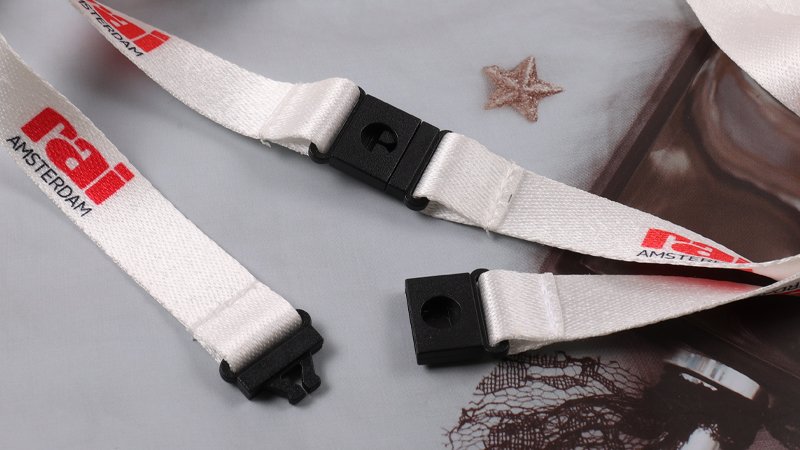
For procurement teams, breakaway selection is risk-management and documentation. Many organizations specify breakaways in schools, healthcare, warehousing, and manufacturing—especially where snag hazards exist. However, “the correct release force” is not universal. It may be defined by internal EHS policy, local standards, and role-specific risk assessment.
Two common breakaway mechanisms are used in large programs:
-
Torsion (side-release/twist) breakaway: mechanical interlock designed to separate under a defined pull or torsion load.
-
Magnetic breakaway: separates at a target force; often perceived as premium and smooth to use, but should be evaluated for contamination risk in metal-dust environments and for consistent performance across lots.
Procurement Spec (Recommended):
-
Placement: typically at the back of the neck (or as required by your policy)
-
Mechanism: torsion or magnetic based on risk profile and user handling needs
-
Target release performance: specify an internal target range per EHS policy and require verification (avoid “generic compliance” statements without data)
QC & Verification (Practical incoming checks):
-
Batch sampling test using a calibrated force gauge/spring scale (define method internally)
-
Visual + functional inspection: clasp alignment, consistent closure, no cracking
-
Lot traceability: require batch codes on packaging for audit and corrective actions
Common Failure Modes:
-
release too easily (nuisance opens → poor user adoption)
-
release too late (defeats safety intent)
-
magnetic performance variation due to debris or inconsistent magnet strength
-
plastic fatigue cracking after repeated stress
Compliance note: Always follow your local regulations and your organization’s EHS policy. For regulated environments, request documented test results and keep records for audits.
Best lanyard attachment for phones?
Problem: A phone lanyard attachment slips, frays, or fails during movement.
Agitation: That can cause drops, screen damage, and user dissatisfaction—especially in event staff or field teams.
Solution: Specify a phone-appropriate tether system and verify compatibility with common case designs used across your workforce.
For most enterprise phone-lanyard programs, a reinforced tether tab (patch) + swivel lobster clasp is a common, scalable solution—provided you confirm case compatibility and require pull-test verification for the tether component.
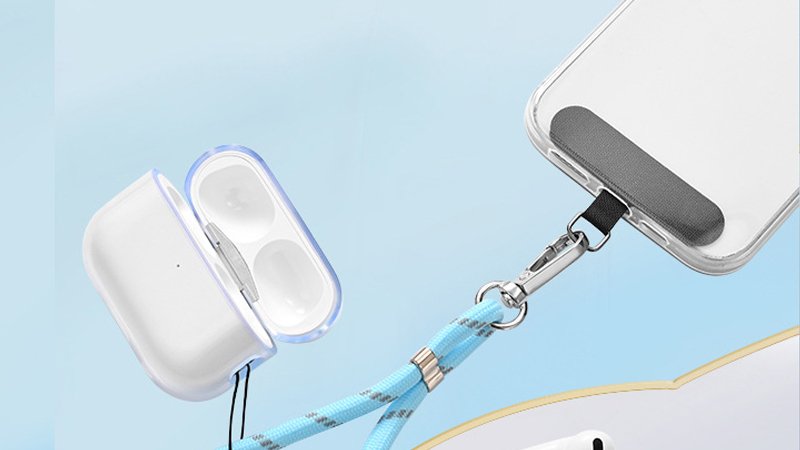
Phone carry is different from badge carry: the load is higher, the motion is more dynamic, and the failure consequences are more expensive. Procurement should treat phone attachments as a system—tether + hook + case interface—and specify against the most common failure points (tab tearing, clasp burrs cutting the tether, and case-fit incompatibility).
Common attachment systems include:
-
Tether tab (patch) + clasp: scalable for bulk programs; works with many cases, but the case opening and port shape matter.
-
Case-loop threading: strong when the case supports it; less universal across mixed case fleets.
-
Adhesive mounts: convenient but often less preferred for enterprise due to residue, aging, and inconsistent surface compatibility.
Procurement Spec (Recommended):
-
Tether: reinforced patch/tab material designed for repeated pull and abrasion
-
Hook: small swivel lobster clasp with smooth edges (anti-burr)
-
Compatibility: validate against the top 3–5 case types used in your organization (including charging-port cutout design)
-
User comfort: consider weight, swing, and noise if used in customer-facing roles
QC & Verification:
-
Pull test report for tether tab (by supplier; method documented)
-
Edge/burr inspection on clasp and rings (prevents tether cutting)
-
Fit test with representative phone cases before mass order
-
Cycle test (optional for large programs): repeated attach/detach to confirm wear resistance
Quick comparison (enterprise lens):
| Feature | Reinforced Tether Tab + Swivel Clasp | Metal Ring | Adhesive Mount |
|---|---|---|---|
| Deployment at scale | High | Medium | Medium |
| Cross-case compatibility | High (with fit validation) | Medium–Low | Low–Medium |
| Risk of cosmetic impact | Low | Medium (bulk/scratch risk) | Medium–High (residue) |
| Durability control | High (with testing) | Medium | Low–Medium |
Swivel hook vs non-swivel hook?
Problem: Lanyards twist, tangle, and wear at the stitch point.
Agitation: Users fumble access, the strap abrades faster, and replacements increase.
Solution: Choose swivel designs when movement is frequent, and reserve fixed designs for low-motion, cost-sensitive deployments.
A swivel hook rotates to reduce twisting and strap wear; a non-swivel hook is fixed and typically lower cost. For daily access badges and frequent movement, swivel hooks are commonly preferred.
From a procurement perspective, swivel vs non-swivel is a lifecycle cost decision. Twisting increases abrasion at the stitching and concentrates stress near the hardware attachment point. Over time, that can drive premature failures even if the strap webbing is otherwise durable.
Procurement guidance:
-
Choose swivel hooks for: daily badge use, access control scanning, retail/hospitality staff, event operations, and roles with frequent bending/turning.
-
Consider non-swivel hooks for: short-term event lanyards, static ID wear, or budget-driven campaigns where lifecycle expectations are shorter.
QC & Verification:
-
swivel rotation should be smooth but not loose
-
gate closure should remain consistent across samples
-
confirm hook eye size fits your webbing and stitching design
Typical tradeoffs:
| Metric | Swivel Hook | Non-Swivel Hook |
|---|---|---|
| Tangle risk | Lower | Higher |
| Strap wear over time | Lower | Higher |
| User experience | Higher | Medium |
| Unit cost | Medium | Lower |
Hook sizes and badge holder compatibility?
Problem: Hooks don’t fit badge holder slots or grommets.
Agitation: That creates rework, swap-outs, and avoidable returns—especially in multi-site rollouts.
Solution: Measure first, then specify gate opening and connector geometry with clear tolerances.
To prevent fit issues, procurement should specify gate opening (and connector geometry) based on the badge holder slot/grommet dimensions—typically selecting a gate opening slightly larger than the slot width for smooth attach/detach.
Fit issues are one of the most common causes of bulk-order dissatisfaction because badge holders vary widely by brand and design. Instead of relying on “standard sizes,” define compatibility using measurable dimensions:
-
Badge holder interface: slot width, hole diameter, grommet thickness
-
Hook interface: gate opening width, nose shape, and thickness at the gate
Procurement Spec (Recommended):
-
Measure your badge holder slot/hole using calipers (or request drawings from your badge-holder supplier).
-
Specify a hook gate opening that provides clearance for easy operation (avoid overly tight fits that slow users and increase stress on the gate).
Example reference table (adjust to your actual badge holders):
| Badge Slot Width | Recommended Hook Gate Opening | Notes |
|---|---|---|
| ~4 mm | ~5 mm | May feel tight depending on holder thickness |
| ~6 mm | ~8 mm | Common “easy clip” range |
| ~10 mm | ~12 mm | More clearance; confirm security preference |
QC & Verification:
-
incoming fit test: sample hooks with actual badge holders
-
check for burrs at gate tip (prevents scratching and binding)
-
verify thickness doesn’t jam grommets or slot reinforcements
How to choose lanyard attachments for bulk orders?
Problem: You need 1,000–10,000+ attachments and a failure turns into a program-wide issue.
Agitation: Wrong specs create rework, delays, user complaints, and budget leakage.
Solution: Treat attachments like a controlled component: define measurable CTQs, require sample validation, and lock an inspection plan before mass production.
For bulk orders, define the use case, confirm compatibility dimensions, set CTQ quality standards, and source from suppliers that can provide documented QC processes and batch traceability (e.g., ISO-aligned quality systems).
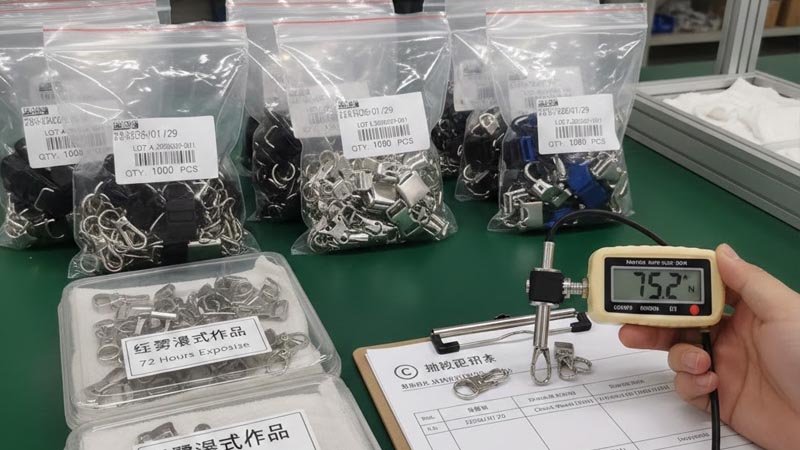
A repeatable procurement process reduces risk and improves consistency across deployments. Use this workflow:
1 Define the use case (and the real risk):
Separate office ID programs from industrial environments, healthcare, or outdoor deployments. The attachment choice should be tied to risk profile (snag risk, corrosion exposure, frequent scanning, device carry).
2 Build a one-page spec sheet (the RFQ anchor):
Include: attachment type, material (304/316 or equivalent), finish, swivel requirement, gate opening, badge-holder interface size, breakaway mechanism/target if required, and packaging/labeling needs.
3 Request samples and verify CTQs (Critical-to-Quality):
Typical CTQs include:
-
gate function consistency (spring return)
-
burr-free finish at contact points
-
compatibility fit with your badge holders / reels / phone cases
-
breakaway performance (when applicable)
-
corrosion resistance (when applicable)
4) Lock an inspection plan and traceability:
For large orders, align on a sampling plan (AQL or equivalent) and require batch codes on packaging. This supports corrective action if an issue appears in the field.
Example supplier evaluation table (illustrative):
| Supplier | Material Claim | Breakaway Verification | Corrosion Evidence | Sample Approval |
|---|---|---|---|---|
| A | 304 SS | Provided test data | Indoor OK | Yes |
| B | Zinc alloy | Not verified | Failed early appearance | No |
| C | 316 SS | Provided test data | Strong for coastal | Yes |
5) Reduce rollout risk with a pilot:
Before a 10,000-unit deployment, place a pilot order (e.g., 300–500 units) to validate packaging, labeling, field handling, and real-user feedback—then proceed to mass production.
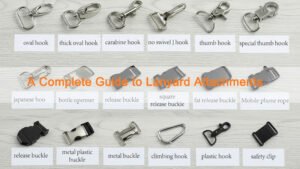
Other common attachments procurement teams specify
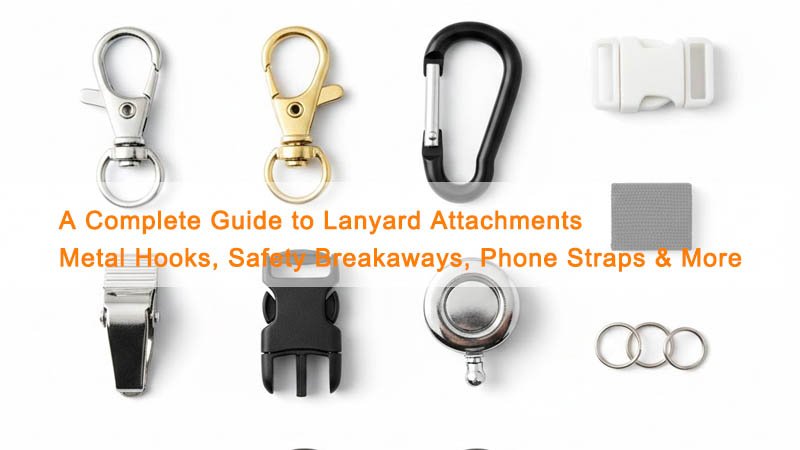
Enterprise lanyard programs often combine hooks with additional components. Consider adding these to your option set:
-
Retractable badge reel: improves access control scanning; verify retraction life and cord material
-
Quick-release buckle: allows detaching the badge without removing the lanyard; verify buckle durability and lock consistency
-
Bulldog clip: useful for temporary badges or tickets; confirm it won’t damage laminated cards
-
Split ring / keyring: secure for keys but slower to remove; verify ring closure quality and wire gauge
-
D-ring / O-ring adapters: helpful for multi-attachment setups; verify weld quality (avoid open rings for higher-duty use)
Conclusion
This guide is designed for procurement and enterprise rollouts: choose attachments by use case, specify measurable requirements, and verify performance with sample testing and documented QC. When you standardize specs (material, gate opening, swivel, breakaway mechanism/target) and require batch traceability, you reduce failures, improve user experience, and lower total cost of ownership across your lanyard program.