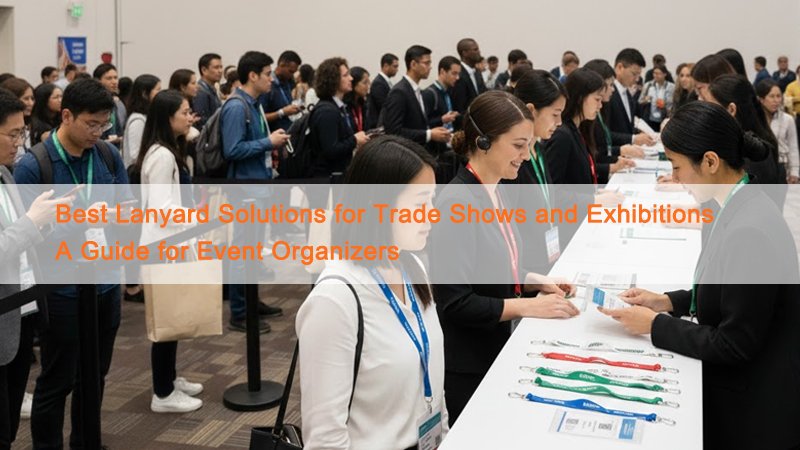
Trade show giveaways get forgotten fast. A well-designed lanyard doesn’t. It stays on attendees all day—at registration, in session rooms, at coffee lines, and in photos—while doing real operational work: identification, access control, and smoother crowd flow.
A lanyard is event infrastructure, not swag—treat it like a core operations item.
Quick Picker: Best Lanyard Setup by Event Type
| Event type | Recommended lanyard | Printing | Safety | Attachment + holder |
|---|---|---|---|---|
| High-volume expo (fast check-in) | 20mm polyester | Heat transfer or dye-sublimation | Breakaway (venue-approved) | Swivel hook + 0.5mm clear holder |
| Premium conference / VIP | 20–25mm nylon or jacquard | Woven or heat transfer | Breakaway where required | Lobster clasp + rigid holder |
| Outdoor / humid venue | 20mm polyester or rPET | Dye-sublimation (best for full color) | Breakaway where required | Strong clasp + water-resistant holder |
| Budget one-day event | 15–20mm tubular/flat polyester | Screen print (simple logos) | Breakaway if required | Basic hook + standard holder |
| Eco-focused summit | 20mm rPET | Dye-sublimation / heat transfer | Breakaway where required | Swivel hook + recyclable packaging |
Choose the “system” (strap + print + safety + holder) based on how your event runs—not just on unit cost.
Why Lanyards Matter More Than “Swag”
Lanyards keep badges visible, hands free, and roles clear. That reduces friction at entrances and helps staff answer questions quickly (“Where’s media?” “Who’s exhibitor?”). On top of that, lanyards create repeated brand impressions all day—often longer than any single giveaway.
Lanyards deliver both operational ROI (flow + security) and marketing ROI (visibility + photos).
Define Your Event Needs Before Picking a Style
Before you pick material or printing, define your event requirements:
-
Event scale: attendee count, check-in speed, queue length
-
Wear time: 2 hours vs 2 days vs multi-day
-
Badge type: paper insert, PVC card, or oversized credential
-
Access tiers: attendee / exhibitor / staff / VIP / press / speaker
-
Venue rules: safety requirements (breakaway, metal restrictions, etc.)
-
Branding: sponsor placement, color accuracy needs
-
Tech: QR scanning, optional NFC, lead capture workflows
-
Sustainability: recycled materials, packaging expectations
A simple mapping table helps you lock decisions early:
| Requirement | Recommended choice |
|---|---|
| Fast check-in + scanning | 20mm strap + holder that keeps QR flat |
| All-day comfort | Smooth webbing + wider width (20mm+) |
| Multi-role access control | Color-coded straps + printed role labels |
| Sponsor-heavy branding | Heat transfer or dye-sublimation |
| Eco message | rPET strap + minimal packaging |
Your “must-haves” determine the right lanyard—don’t start with materials; start with event operations.
Best Lanyard Types for Trade Shows (Match to Event Format)
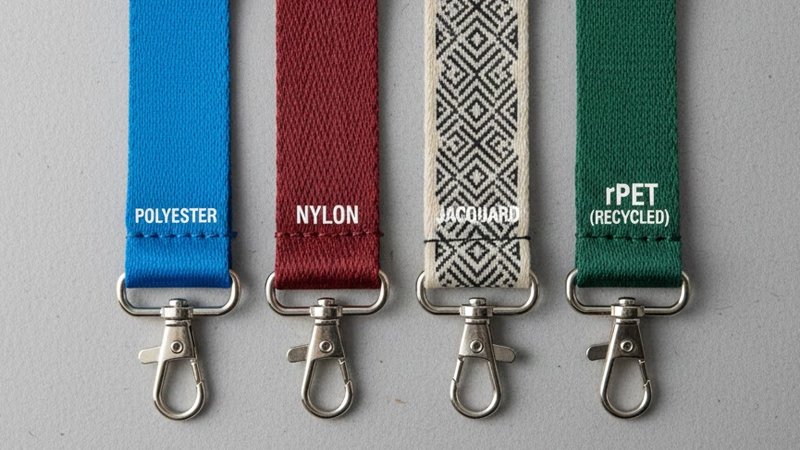
1 Polyester (most common, scalable)
Reliable, cost-effective, and works well with modern printing methods—especially for sponsor logos and full-color designs.
Often chosen for executive audiences or premium conference experiences where tactile feel matters.
Branding is woven into the strap for a high-end finish. Best for simpler designs (logos/text) rather than gradients.
4 Recycled PET (rPET) (eco-friendly positioning)
Great for sustainability-focused events—works well with full-color printing depending on the construction.
Polyester covers most trade show needs; upgrade to nylon/jacquard for premium positioning, or rPET for sustainability alignment.
Printing Methods: Choose Based on Logo Complexity (Not Guesswork)
Screen Print
Best for bold, simple logos (usually 1–2 spot colors). Cost-effective at scale.
Heat Transfer
Ideal for multi-color logos and crisp edges (small text, detailed marks). Great for sponsor lineups.
Dye-Sublimation
Best for full-color, gradients, and all-over designs. Works especially well on polyester-based straps.
Use this simplified decision matrix:
| Method | Best for | Watch-outs |
|---|---|---|
| Screen print | Simple logos, large quantities | Not ideal for gradients or photo designs |
| Heat transfer | Detailed, multi-color sponsor logos | Confirm durability requirements for heavy wear |
| Dye-sublimation | Full-wrap artwork, gradients | Best results on polyester; confirm color targets |
Pick printing to match your artwork—complex sponsor logos usually need heat transfer or dye-sublimation.
Width, Comfort, and Readability: Use the “Photo Test”
A lanyard design might look perfect on screen, then disappear in real photos. Avoid that with a simple test:
-
Print or sample 15mm, 20mm, 25mm versions
-
Photograph from 1.5m (5ft) and 3m (10ft)
-
Check readability of logo and role text
-
Wear-test for comfort and twisting
General guidance:
-
15mm: good baseline for simple branding
-
20mm: best all-around for sponsor visibility + comfort
-
25mm: premium presence and role clarity
If you can’t read it in a quick photo, it won’t deliver sponsor value on-site.
Safety and Compliance (Especially in Crowded Venues)
Safety requirements vary by venue and region, so avoid assumptions and confirm early. The most common organizer-friendly approach:
-
Breakaway buckles: Choose models with a documented release rating and confirm they meet venue policy.
-
Hardware choices: Some venues prefer metal for durability; others restrict metal for security reasons. Plan accordingly.
-
Snag/pinch reduction: Choose attachments with smoother profiles and avoid sharp edges.
Instead of hard-coding one “standard,” build a compliance checklist for each venue:
-
Does the venue require breakaway?
-
Are metal hooks allowed?
-
Any flame-retardant documentation required?
-
Any child-safety or public-safety guidelines?
Treat safety as a venue requirement—specify it in writing and request supplier documentation when needed.
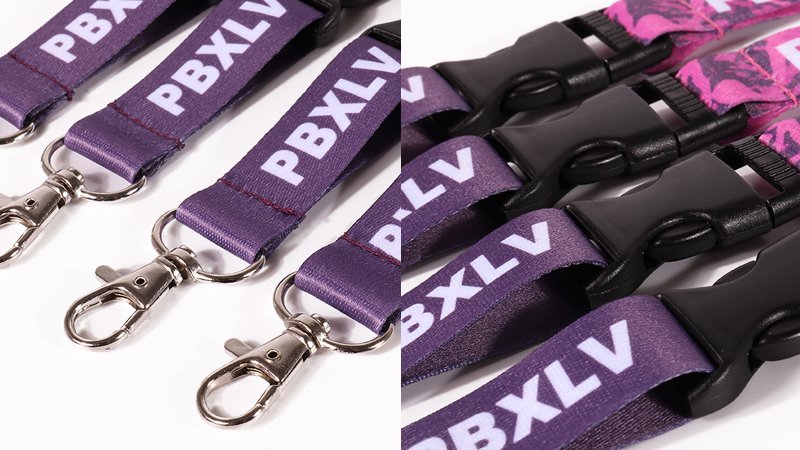
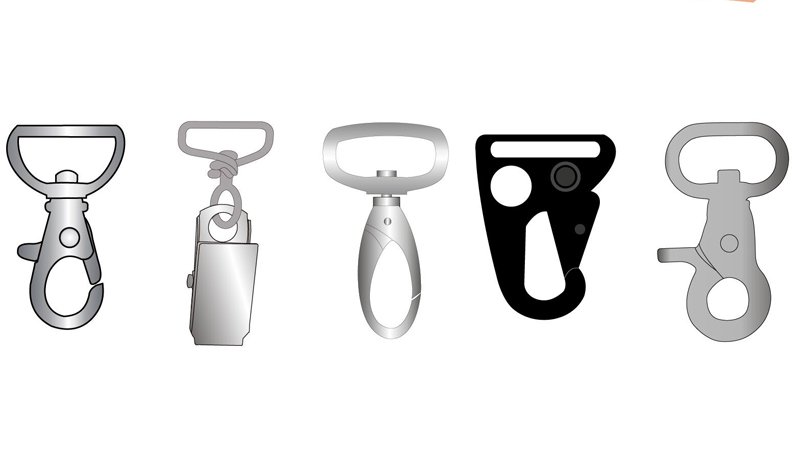
Badge Holders and Attachments: Where Failures Usually Happen
Most “lanyard problems” are actually holder or hook problems. Make reliability non-negotiable.
Holder recommendations
-
Choose holders that keep QR codes flat and visible
-
For multi-day events, consider thicker, more durable holders (often 0.5mm+)
-
For outdoor events, consider water-resistant options
Attachment recommendations
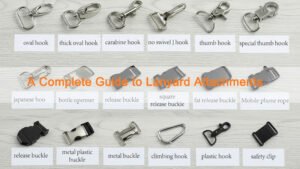
-
Swivel hook: reduces twisting; strong general-purpose choice
-
Lobster clasp: secure and premium for heavier badges
-
Basic hook: acceptable for budget events (test strength)
A practical organizer test:
-
Pull test with a realistic badge load
-
Flex/open-close cycle testing for hooks and reels
-
Visual check for cracking, deformation, or sharp edges
Spend your reliability budget on holders and hooks—this is where badge loss and chaos start.
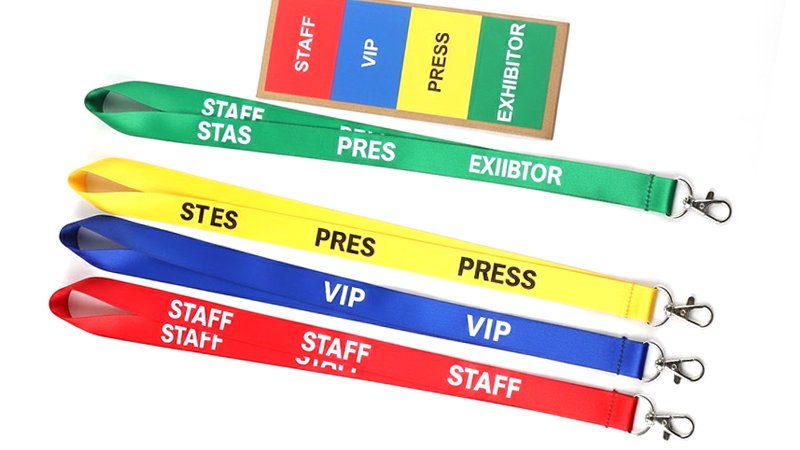
Role Identification That Works: Color-Coding + Labels
If staff and VIP look the same, access control becomes manual—and slow. Use a system:
-
Color by role: Staff / VIP / Exhibitor / Press / Speaker
-
Print role labels: “STAFF,” “VIP,” etc. (large and high-contrast)
-
Upgrade security tiers: lockable clips or controlled checkpoints when required
-
Night events: reflective or high-contrast printing can help visibility
Example role chart:
| Strap color | Role | Suggested attachment | Access use |
|---|---|---|---|
| Blue | Staff | Swivel hook | All areas |
| Red | VIP | Lobster/lockable | VIP zones |
| Green | Press | Reel + holder | Media areas |
| Yellow | Exhibitor | Standard hook | Exhibition floor |
Color-coding reduces training time and prevents bottlenecks at doors.
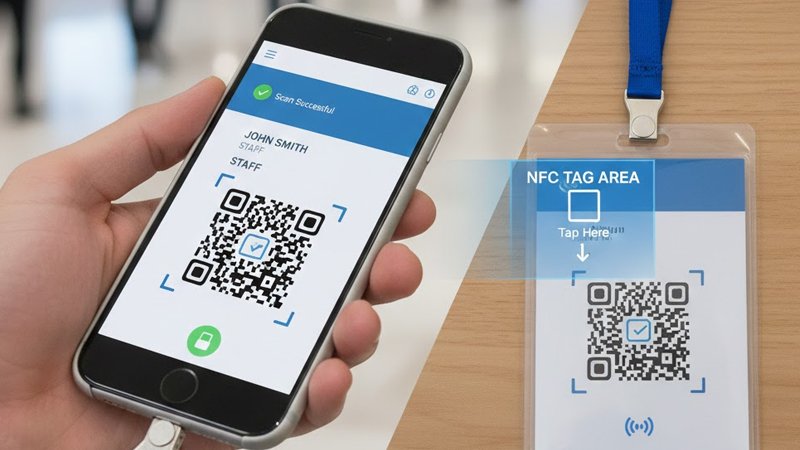
Smart Lanyards (QR and Optional NFC): When Tech Actually Helps
QR (recommended default)
-
Low complexity, easy to deploy
-
Works for check-in backup, surveys, lead capture links
NFC (optional upgrade)
NFC can improve tap-based workflows, but only if your registration/lead-capture system supports it. Popular tag families include NTAG213/215/216; select based on your data needs and compatibility testing.
Best practices:
-
Test on iOS + Android devices in real lighting and queue conditions
-
Keep a fallback: printed QR, manual lookup, or backup scanner workflow
-
Place tags where they won’t bend or rub (badge area or protected patch)
Use QR for simplicity; add NFC only when your on-site workflow is already proven.
Logistics and Ordering: A Checklist Organizers Can Trust
A dependable ordering timeline prevents last-minute disasters:
-
Finalize artwork + specs
-
Approve proof (check color targets and spacing)
-
Review a pre-production sample if schedule allows
-
Confirm packaging method (bulk vs individual)
-
Add buffer for shipping delays and holidays
Quantity planning:
-
Total = attendees + staff + exhibitors + VIP/press + 5–10% buffer
Length specification (avoid confusion):
-
Specify overall length (end-to-end) or folded length (neck drop).
-
Example: “900mm overall” or “450mm folded.” Use one standard in your RFQ.
Most ordering mistakes come from unclear specs—write them once, reuse the template, and set early internal deadlines.
Common Mistakes (And How to Avoid Them)
| Mistake | What it causes | Prevention |
|---|---|---|
| Choosing material without considering wear time | discomfort, returns, complaints | match strap to wear time + environment |
| Tiny logos and low contrast | wasted sponsor value | run the photo test |
| Weak holders/hooks | badge loss + queue chaos | test holder thickness + hook strength |
| Assuming venue safety rules | last-minute rework | confirm requirements early |
| No buffer quantity | day-two shortage | add 5–10% buffer |
Most failures are predictable—use a checklist and simple tests to eliminate them.
FAQ
1. What lanyard width is best for trade shows?
For most events, 20mm is the best balance of comfort and visibility. Use 15mm for lighter branding needs and 25mm for premium/VIP visibility.
2. Which printing method is best for sponsor logos?
If you have multiple sponsors or detailed logos, heat transfer or dye-sublimation usually performs best. Screen print is best for simple 1–2 color designs.
3. Do I always need a breakaway buckle?
Not always—but many venues and public-facing events prefer or require it. Confirm your venue’s policy and specify it clearly in your order.
4. What’s the most common reason lanyards fail at events?
Usually badge holders and hooks, not the strap itself. Prioritize durable holders, reliable hooks, and basic pull testing.
5. Can I print QR codes on lanyards?
Yes. QR codes work well on badges or strap sections that stay flat. Always test scanning under real lighting and crowd conditions.
6. Should I use NFC?
Use NFC only if your workflow supports it and you can test thoroughly on iOS/Android devices. Otherwise, QR is simpler and more reliable.
7. How many lanyards should I order?
Order for your total attendance plus staff/exhibitors/VIP/press, then add 5–10% buffer.