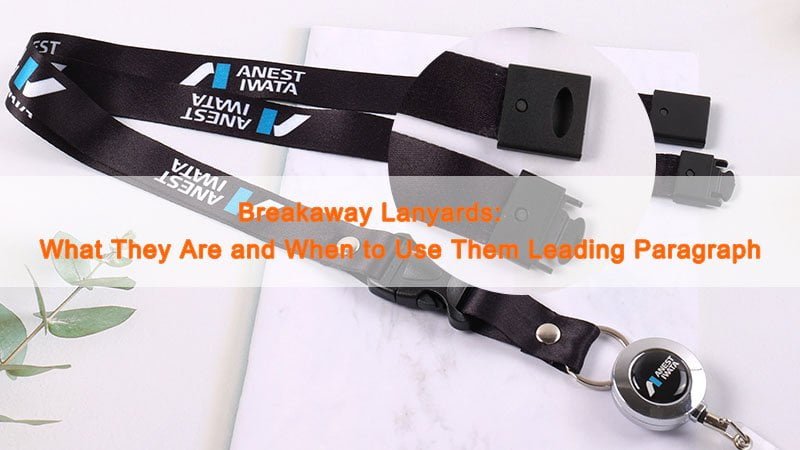
Safety matters in any environment where people wear ID badges, keys, or access cards around the neck. In busy workplaces, schools, hospitals, and events, a standard lanyard can sometimes become a hazard if it gets pulled, caught, or snagged. That is why many organizations choose breakaway lanyards as a safer alternative.
A breakaway lanyard includes a special safety clasp that opens under pressure. This helps reduce choking and snagging risks, making it a practical choice for active environments and high-movement jobs.
To choose the right lanyard, it is important to understand how breakaway designs work, where they are most useful, and when a standard lanyard may still be enough.
What Is a Breakaway Lanyard?
At first glance, a breakaway lanyard looks much like a standard lanyard. The difference lies in one small but important feature: a safety release clasp designed to open when the lanyard is pulled with enough force.
A breakaway lanyard has a detachable safety closure, usually positioned behind the neck. When tension is applied, the clasp separates to help protect the wearer from choking or snagging hazards.
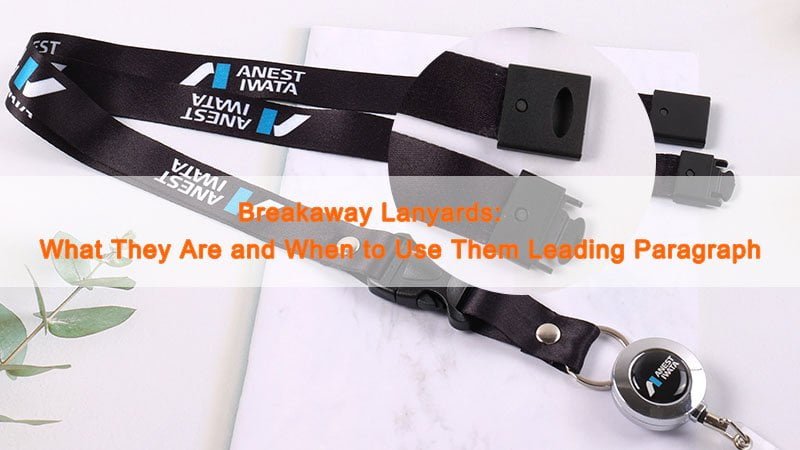
Breakaway lanyards are commonly used to carry ID cards, access badges, keys, or lightweight tools while improving wearer safety. The breakaway point is typically built into the neck section of the lanyard and is designed to release when pulled suddenly or forcefully. This can help prevent the lanyard from trapping around the neck if it becomes caught on equipment, furniture, door handles, or another person’s hand.
These lanyards are widely used in schools, healthcare facilities, factories, warehouses, laboratories, and event settings. They are especially valuable in places where movement is frequent and the risk of accidental pulling is higher. Buyers should note that different breakaway clasps may have different release characteristics, so the right option depends on the end-use environment, the user group, and the level of safety needed.
How Does a Breakaway Clasp Work?
The effectiveness of a breakaway lanyard depends on the clasp. It must stay closed during normal wear, but release quickly when enough force is applied.
A breakaway clasp is designed to remain secure during everyday use and open only when tension reaches a certain level. This balance allows the lanyard to function normally while improving safety.
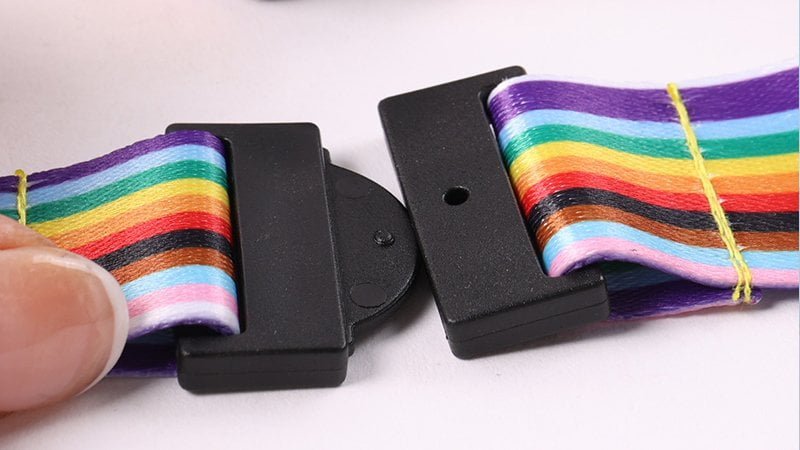
Most breakaway clasps use a molded interlocking design that connects two parts of the lanyard together. Under everyday conditions, the clasp remains closed while the wearer moves, walks, or bends. If the lanyard is pulled suddenly, the connection separates and releases the loop from around the neck.
The reliability of the clasp depends on consistent manufacturing, smooth edges, proper material quality, and appropriate strength for the intended application. A clasp that releases too easily may create frustration during normal use. One that is too difficult to open may reduce the safety benefit. For this reason, it is important to match the clasp design to the actual working conditions and to test samples before ordering in bulk.
Why Are Breakaway Lanyards Important?
A lanyard is a simple product, but in the wrong setting, it can create an avoidable safety risk. Breakaway lanyards help reduce that risk without affecting the basic function of carrying identification.
Breakaway lanyards are important because they are designed to detach under pressure. This helps reduce the risk of choking, entanglement, and snagging in active or higher-risk environments.
In schools, children may run, play, or move quickly through crowded spaces, increasing the chance that a lanyard could be pulled or caught. In hospitals, staff often work around beds, carts, rails, and medical equipment where snagging is possible. In factories, warehouses, and industrial environments, workers may be near shelving, hooks, tools, or machinery where a standard neck lanyard may present more risk.
Breakaway lanyards provide an added level of protection by allowing the lanyard to open instead of remaining tightly looped around the neck. They can also support internal safety policies and procurement requirements in organizations that place a strong emphasis on worker and visitor protection. In many cases, this small design feature can make a meaningful difference in day-to-day safety.
When Should You Use Breakaway Lanyards?
Not every environment requires a breakaway feature, but many do. The key question is whether the wearer may be active, work in tight spaces, or face any realistic snagging risk.
Breakaway lanyards are best used in active settings such as schools, hospitals, warehouses, factories, laboratories, and events where the lanyard could be caught or pulled.

Breakaway lanyards are a smart choice in the following situations:
Schools and universities
Students, teachers, and staff often move through crowded hallways, classrooms, buses, and outdoor areas. A breakaway feature can help improve safety, especially for younger users.
Hospitals and healthcare facilities
Medical staff work around beds, carts, wheelchairs, rails, and other equipment. A snag-resistant ID solution is often preferred in these fast-moving environments.
Factories and warehouses
Workers may be near shelving, tools, conveyors, racks, or machines. In these settings, a breakaway lanyard can be a practical safety upgrade.
Laboratories and technical workplaces
Where people work around benches, instruments, and specialized equipment, a lanyard that releases under pressure can help reduce entanglement risk.
Outdoor events and active venues
Attendees, staff, and volunteers may pass through gates, tents, fences, barriers, or crowded entry points where lanyards can get caught unexpectedly.
A simple rule is this: if the wearer works, walks, or moves in a place where a strap could snag, a breakaway lanyard is usually the better choice.
When a Standard Lanyard May Be Enough
Although breakaway lanyards are safer in many applications, they are not always necessary. In lower-risk environments, a standard lanyard may still be the right and more economical option.
Standard lanyards are often suitable for low-movement, low-risk settings such as offices, reception desks, conferences, and controlled indoor environments.
Standard lanyards are commonly used in office settings where staff mainly work at desks, meet in conference rooms, or stay in controlled indoor spaces. They are also suitable for trade shows, front desk teams, registration counters, and seated events where movement is limited and snagging hazards are low.
Because they do not include a breakaway clasp, standard lanyards may offer slightly simpler construction and, in some cases, a lower cost. They can still be an effective choice when safety risks are minimal. The best approach is to evaluate the environment first rather than assuming one type is right for every application.
Breakaway vs. Non-Breakaway Lanyards
Choosing between breakaway and non-breakaway lanyards depends on how the lanyard will be used, who will wear it, and what risks are present in the environment.
Breakaway lanyards prioritize wearer safety, while non-breakaway lanyards may be suitable for low-risk environments where simplicity and cost are the main concerns.
| Feature | Breakaway Lanyard | Non-Breakaway Lanyard |
|---|---|---|
| Safety release | Yes | No |
| Snagging protection | Better | Lower |
| Best for | Active or higher-risk settings | Low-risk settings |
| Construction | Includes safety clasp | Simpler construction |
| Use cases | Schools, healthcare, industry, events | Offices, conferences, reception |
Breakaway lanyards are the better choice when safety is the priority. Non-breakaway lanyards can still work well in controlled environments where the risk of pulling or entanglement is low.
Optional Features to Combine with Breakaway Lanyards
A breakaway lanyard can do more than carry an ID badge. Depending on the application, it can be combined with other useful features to improve convenience and functionality.
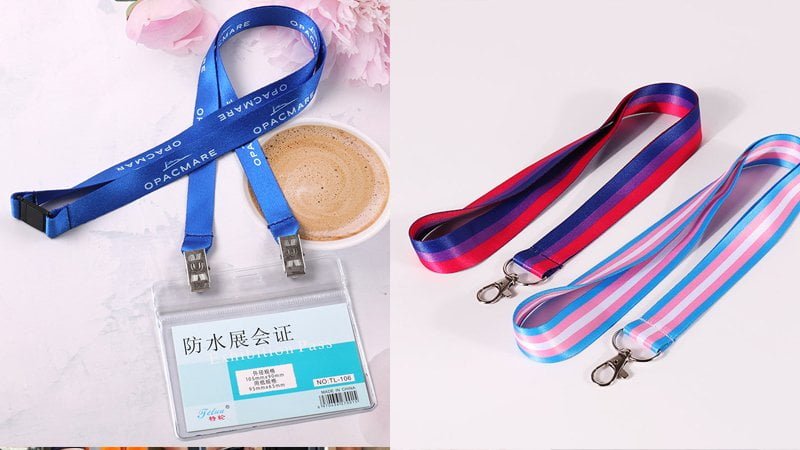
Popular add-ons for breakaway lanyards include badge reels, detachable buckles, badge holders, swivel hooks, and custom printing.
Common options include:
Detachable buckle
Allows the lower part of the lanyard to be removed quickly for scanning, swiping, or access control.
Badge reel
Makes it easier to extend an ID card without removing the lanyard from the neck.
Clear badge holder
Helps protect ID cards from dirt, moisture, and daily wear.
Swivel hook or bulldog clip
Provides different ways to attach cards, holders, or lightweight accessories.
Custom printed branding
Logos, slogans, safety messages, and color matching can still be added to breakaway lanyards for a professional branded look.
When adding accessories, it is important to consider total weight and daily use conditions so the lanyard remains practical and comfortable.
How to Choose the Right Breakaway Lanyard
The right breakaway lanyard depends on more than just color or price. Buyers should consider safety needs, user comfort, branding goals, and the working environment.
To choose the right breakaway lanyard, consider the material, width, print method, attachment hardware, and intended application. Testing samples before bulk production is strongly recommended.
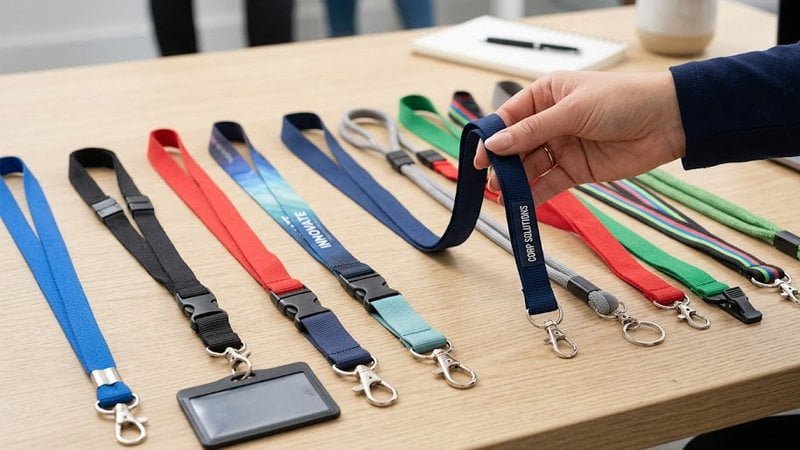
Here are the main factors to review before placing an order:
1. User environment
Think about where and how the lanyard will be worn. Is the wearer stationary, highly active, or working near equipment?
2. Material
Polyester is a common choice because it is durable, cost-effective, and suitable for printing. Nylon offers a smoother finish, while eco-friendly materials may suit sustainability-focused buyers.
3. Width
Common widths include 10 mm, 15 mm, 20 mm, and 25 mm. Wider lanyards can improve visibility and comfort, especially for printed logos.
4. Print method
Screen printing works well for simple designs and bulk orders. Dye sublimation is ideal for full-color artwork, gradients, and complex branding.
5. Attachment type
Choose the right hook, clip, or buckle based on whether the lanyard will hold a badge, key, pass holder, or other accessory.
6. Sample testing
Before mass production, test samples for comfort, print quality, clasp consistency, and real-use suitability in the target environment.
A good breakaway lanyard should not only look professional but also perform reliably in everyday use.
Conclusion
Breakaway lanyards are a practical safety solution for environments where a standard neck lanyard may be pulled, caught, or snagged. They are especially useful in schools, hospitals, factories, warehouses, laboratories, and active event settings. While a standard lanyard may still be enough in low-risk areas, breakaway lanyards offer added protection where movement and hazards are part of daily use.
For buyers ordering custom lanyards in bulk, the best choice depends on the wearer, the work environment, and the balance between branding, comfort, and safety. By selecting the right material, attachment, and breakaway design, organizations can create a lanyard that supports both identification and safer daily wear.