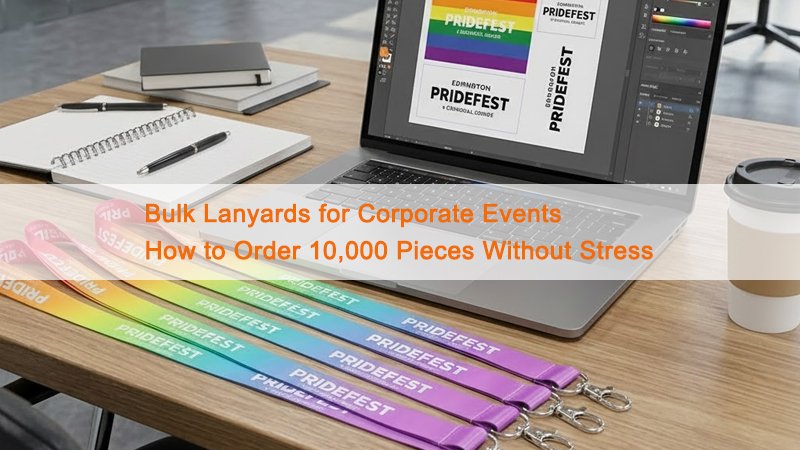
Ordering 10,000 lanyards for a corporate event is less about “buying merch” and more like running a small supply chain project. The risk isn’t the volume itself—it’s unclear specs, slow approvals, and logistics surprises that scale into expensive event-day problems.
You can order 10,000 lanyards without stress by using a documented process: a procurement-ready spec sheet, a two-stage sample approval flow, defined QC checkpoints, and a realistic timeline with buffers for shipping and customs.
The fastest way to de-risk a bulk lanyard order is to treat it like any other corporate purchase: define requirements, standardize approvals, verify quality early, and plan packaging for on-site distribution. The guide below walks through each step.
Why 10,000-Piece Orders Become Stressful (and How to Prevent It)
At 10,000 units, small uncertainties turn into large operational issues. A missing Pantone code, an ambiguous attachment requirement, or a vague delivery term can cause delays, rework, or inconsistent batches.
Bulk orders become stressful when there is no single source of truth for specs, no structured approval path, and no buffer in the production/shipping timeline. A checklist-based workflow prevents most failures.
Most preventable problems fall into four categories:
-
Spec ambiguity (material, width, print method, attachment, packaging) → supplier assumptions → mismatch on arrival.
-
Artwork readiness (file format, Pantone, layout tolerance) → repeated revisions → lost days.
-
Timeline compression (no buffer for sampling, production, customs) → “rush mode” and higher freight cost.
-
Distribution complexity (VIP/staff/attendee separation, labeling) → check-in bottlenecks.
Prevention framework (what to implement):
-
Create a one-page Spec Sheet and make it the only reference.
-
Assign one approver for artwork and samples.
-
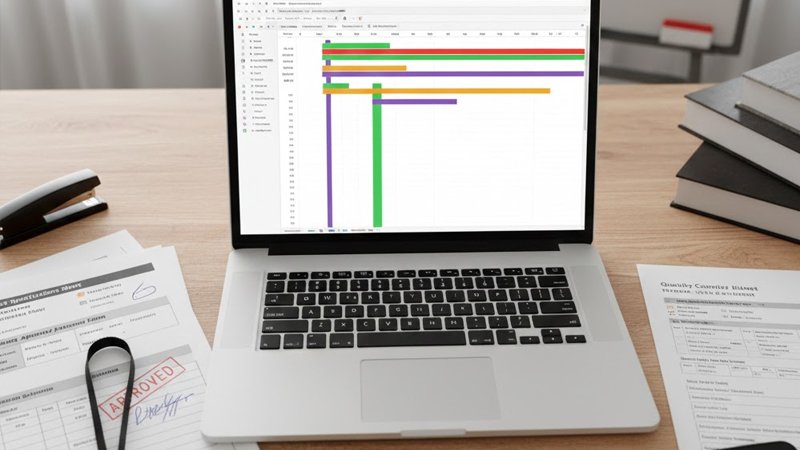
Set milestones (proof → sample → production start → in-line QC → pre-shipment QC → dispatch).
-
Require QC evidence (photos/videos + inspection record) before shipping.
-
Build shipping/customs buffer into the plan and confirm Incoterms in writing.
The No-Stress 7-Step System to Order 10,000 Lanyards
The simplest way to control cost, timeline, and quality is to follow a repeatable procurement workflow. The steps below align internal stakeholders and give suppliers clear inputs—reducing rework and delays.
Follow seven steps: define specs, request comparable quotes, approve samples, lock the production schedule, inspect in-line, confirm packaging/labeling, and track shipment with documentation.
Step 1: Define specs (create a procurement-ready Spec Sheet)
Include the fields below to avoid supplier guesswork:
-
Quantity: 10,000 pcs (+5–10% spare recommended for walk-ins/replacements)
-
Webbing: polyester / nylon / jacquard; thickness (if required)
-
Size: width (15/20/25mm), standard length (e.g., 900mm unfolded)
-
Print method: screen print / heat transfer / dye sublimation
-
Sides: single vs double-sided
-
Color: Pantone codes; note acceptable tolerance if any
-
Attachment: hook type (metal/plastic), breakaway (back/side), detachable buckle (Y/N)
-
Stitching: standard vs reinforced (recommended for heavier badge holders)
-
Packaging: bulk per 50/100 or individual polybag; carton labels required (Y/N)
-
Delivery requirement: target delivery date + receiving hours + address format
-
Trade terms: EXW / FOB / CIF / DDP (confirm responsibility for duties/taxes)
Final Spec Sheet (PDF) approved internally.
Step 2: Request comparable quotes (standardize the RFQ)
Ask 2–3 suppliers using the same Spec Sheet so pricing is comparable. Require:
-
Unit price breakdown (webbing + printing + accessories + packaging)
-
Confirmed lead time (sample + production + dispatch)
-
QC method and defect handling policy
-
Shipping options and document support
Quote comparison table + recommended supplier.
Step 3: Approve samples (two-stage approval for speed + accuracy)
Use a two-stage process:
-
Digital proof (layout, logo size, spacing, text accuracy)
-
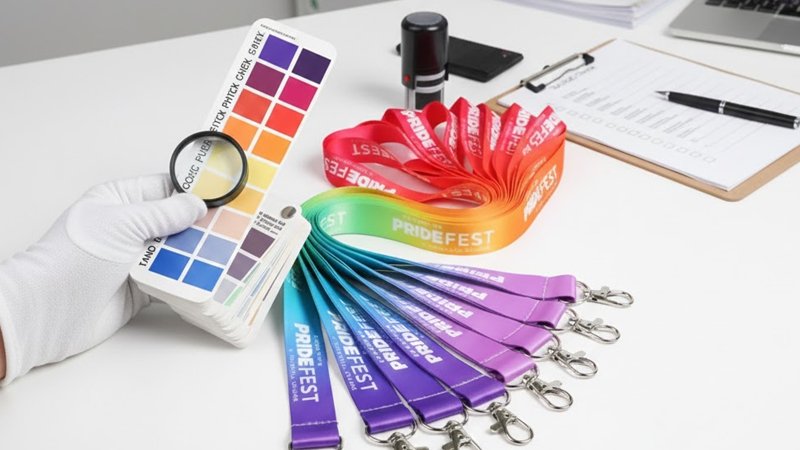
Pre-production physical sample (color, print clarity, feel, stitching, attachment function)
Approval checklist:
-
Pantone match / acceptable tolerance confirmed
-
Logo alignment and repetition length confirmed
-
Attachment rotates smoothly; breakaway works as specified
-
Stitching clean; no fraying; tension acceptable
-
Packaging spec confirmed (count per bag/box, label text)
Signed Sample Approval Form (single approver)
Step 4: Lock the production schedule (with buffers)
Confirm and document:
-
Production start date
-
Estimated completion date
-
QC dates
-
Dispatch date
-
Buffer days for shipping/customs
Production Timeline (shared with supplier + internal team).
Step 5: Inspect in-line (catch batch issues early)
For 10,000 pcs, in-line checks prevent “mass defects.” Request:
-
In-line photos/videos at defined output milestones (e.g., first 200 pcs, then every 1,000 pcs)
-
Quick checks: print edge clarity, ink density, color consistency, attachment installation
If feasible, use a third-party inspection or internal QC standard.
In-line QC evidence + issue log (if any).
Step 6: Confirm packaging and labeling (reduce event-day chaos)
Packaging should support check-in operations:
-
Bulk pack per 50/100 (most cost-effective)
-
Carton labels by attendee type (VIP / staff / general) or by department/counter
-
Include packing list + carton count + SKU/variant identifiers
-
Consider split shipment: 70% early, 30% later if final headcount is uncertain
Packaging Plan + carton label template.
Step 7: Track shipment and documents (avoid customs delays)
Require:
-
Tracking number + carrier details
-
Commercial invoice, packing list, HS code (as applicable)
-
Photo of final pallet/carton condition before dispatch
-
Clear Incoterms and delivery responsibility confirmed in writing
Shipment Tracker + full document set.
Quality Control: What to Check for Bulk Orders
Quality control for 10,000 lanyards is about preventing repeat defects and ensuring consistency across cartons. The best approach is staged inspection—early, in-process, and pre-shipment—so issues are corrected before they scale.
Check material consistency, color accuracy, print durability, stitching strength, attachment functionality, and packaging counts. Stage-based QC prevents batch-wide defects.
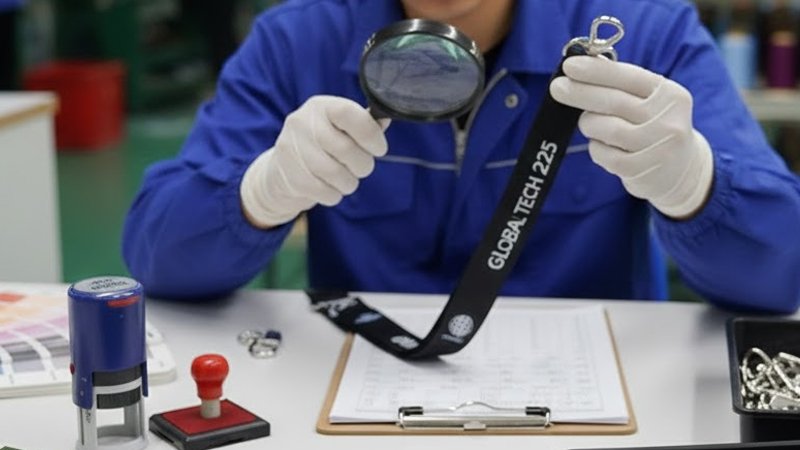
A practical four-stage QC plan:
Stage 1: Incoming material (supplier-side)
-
Webbing width and thickness consistency
-
Base color vs Pantone (or approved tolerance)
-
Surface quality: no stains, no uneven weave
Stage 2: In-process inspection (during printing/assembly)
Recommended sampling approach:
-
Inspect first-off samples (first 50–200 pcs)
-
Then spot-check each 1,000 pcs for:
-
print alignment/repeat length
-
edge clarity and density
-
stitching cleanliness
-
accessory installation (correct model, orientation)
-
Stage 3: Pre-shipment inspection (before cartons are sealed)
-
Random carton opening and piece count verification
-
Function test: swivel rotation, buckle release, breakaway performance
-
Simple pull test on a small sample (confirm stitching integrity)
-
Reject criteria defined (critical vs major vs minor defects)
Stage 4: Final audit (documents + labeling)
-
Packing list matches carton labels
-
Correct variants per carton (VIP vs staff vs general)
-
Total quantity matches PO (including spare ratio)
-
QC photos archived for record
Best practice: require a QC report + photos before the final balance payment and dispatch (based on your payment terms).
What Impacts Price the Most at 10,000 Pieces?
At 10,000 units, pricing is predictable when you understand the few variables that drive cost. The goal is not “cheapest at all costs,” but the best total value given brand requirements and event deadlines.
Price is mainly driven by webbing material and thickness, printing method, hardware type, packaging requirements, and shipping choice. Small spec adjustments can reduce cost without reducing usability.
| Cost Driver | Lower-Cost Option | Higher-Cost Option |
|---|---|---|
| Material | Basic polyester | Woven nylon / jacquard |
| Print Method | Screen print (simple logos) | Full dye sublimation (complex, gradients) |
| Hardware | Plastic hook | Metal swivel clip / premium buckle |
| Packaging | Bulk pack per 50/100 | Individual polybags / custom retail packaging |
| Shipping | Sea freight | Air / express |
Additional cost notes (procurement-friendly):
-
Double-sided printing typically increases cost vs single-sided.
-
Pantone color control may require extra proofing steps (worth it for strict brands).
-
Peak season and tight deadlines often raise production + freight costs.
-
If your brand allows it, choosing bulk packaging and a standard accessory can reduce total cost significantly.
Common Mistakes to Avoid
Most bulk-order failures are process failures, not manufacturing failures. Avoiding a few common mistakes dramatically improves on-time delivery and reduces rework.
Avoid unclear specs, skipping physical samples, approving without Pantone confirmation, leaving no timeline buffer, and failing to plan QC and packaging. These are the main causes of bulk-order surprises.
-
Unclear specs: Always provide exact width/length, printing method, attachment model, and packaging count per carton.
-
No Pantone reference: For brand-critical orders, use Pantone codes (and define tolerance).
-
Skipping physical samples: Digital proofs can’t confirm feel, stitching, or hardware performance.
-
No buffer: Add at least 10–14 days before the event date for shipping/customs surprises.
-
Weak QC plan: Define QC checkpoints and reject criteria before production starts.
-
Packaging ignored: Unlabeled cartons cause check-in delays; label by attendee type or department.
Final Thoughts: Make 10,000 Pieces Feel Easy
A 10,000-piece lanyard order becomes manageable when you standardize inputs (specs), speed approvals, verify quality in stages, and plan packaging for distribution.
Use a spec sheet, a seven-step workflow, staged QC, and a cost driver table. With the right checklist and timeline buffer, you can manage 10,000 corporate event lanyards confidently and consistently.
Once you build templates—Spec Sheet, RFQ, Sample Approval Form, QC checklist, Packaging Plan, Shipment Tracker—future bulk orders become repeatable. The outcome is not just on-time delivery, but smoother check-in operations and stronger brand presentation at the event.
Timeline Table (Recommended Planning Guide)
| Phase | Typical Duration | Key Deliverable | Risk | Mitigation |
|---|---|---|---|---|
| Requirements + Spec | 1–3 days | Approved Spec Sheet | spec ambiguity | one source of truth |
| Quotation + Supplier Selection | 2–5 days | Quote comparison | incomparable quotes | same RFQ template |
| Digital Proof | 1–3 days | Approved layout | revision loops | single approver |
| Physical Sample | 5–10 days | Sample approval form | color/feel mismatch | Pantone + sample |
| Mass Production | 10–20 days | Production updates | batch defects | in-line QC checkpoints |
| Pre-shipment QC | 1–3 days | QC report + photos | hidden defects | random carton checks |
| Shipping + Customs | 3–40+ days | Tracking + docs | customs delay | buffer + accurate docs |
FAQ (Corporate Buyer Edition)
1) How many extra lanyards should we order for a corporate event?
A common planning range is +5–10% to cover walk-ins, replacements, staff changes, and on-site loss.
2) Should we require Pantone matching?
If your brand color is strict or the lanyard is high-visibility, yes. Provide Pantone codes and clarify whether close-match tolerance is acceptable.
3) Which printing method is best for corporate event lanyards?
-
Screen print: best for simple logos and cost efficiency
-
Heat transfer / dye sublimation: best for complex logos, gradients, or full-color designs
4) What accessories are most suitable for corporate events?
Most common: swivel hook + safety breakaway. Add a detachable buckle if frequent scanning or badge swapping is expected.
5) How do we reduce customs and delivery risks?
Confirm Incoterms in writing, keep documents consistent (invoice/packing list), and build at least 10–14 days buffer before the event date.
6) What packaging option is best for fast check-in distribution?
Bulk packing per 50/100 with carton labels by attendee type (VIP/staff/general) or department is typically the most efficient.
CTA (Next Step for Procurement)
If you want to speed up quoting and reduce revisions, use these ready-to-send templates:
-
10,000-Piece Lanyard Spec Sheet (copy/paste RFQ)
-
Sample Approval Checklist
-
QC Checklist + Shipment Tracker
-
Packaging Plan (VIP/Staff/General carton labeling)
Reply with your event date, quantity, logo file, and preferred lanyard width (15/20/25mm), and you can request a free spec review to confirm feasibility, timeline, and the most cost-effective print method for your design.