
Corporate Identity Programs: Why Branded Lanyards Matter More Than You Think
Introduction: The identity touchpoint most programs miss
Corporate identity is not only your logo, website, or office signage. It is also what people see and touch in daily operations.
Branded lanyards are one of the highest-frequency physical brand touchpoints. They sit at eye level, appear in daily interactions, and travel across locations and events. When they are inconsistent or low-quality, they quietly undermine the standards your brand guidelines are meant to protect.
Why lanyards matter in a corporate identity program
Lanyards do three jobs at the same time:
-
Identity visibility: Who belongs here, and in what role.
-
Operational clarity: Faster visitor handling, fewer exceptions, fewer “workarounds.”
-
Brand consistency: A repeatable visual standard across sites, teams, and events.
Unlike a brochure or website that can be ignored, lanyards remain “on.” They are worn, touched, and seen throughout the day.

The “last meter” effect: where brand guidelines meet reality
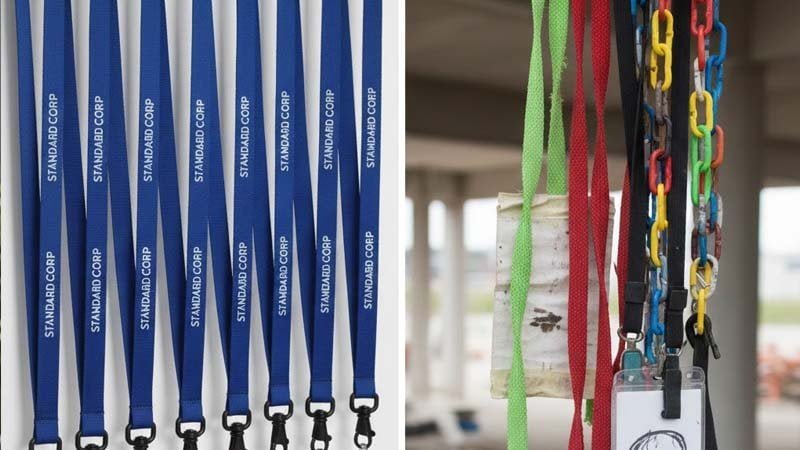
Most identity programs fail in the last meter—the point where real people, real processes, and real constraints appear.
Typical breakdowns include:
-
Departments ordering different designs and hardware
-
Event teams buying “whatever is cheapest this week”
-
Visitor lanyards looking too similar to employee lanyards
-
Print color drifting from brand standards
-
Hooks/clips failing and causing badge loss
A lanyard standard closes the last meter gap. It turns brand intent into operational execution.
Trust signaling: legitimacy is judged in seconds
In offices, healthcare sites, campuses, and trade shows, people make quick decisions: “Is this person authorized?”
Lanyards support instant legitimacy through:
-
Professional appearance (clean print, consistent color, quality feel)
-
Clear role identification (employee vs. visitor vs. contractor)
-
Reduced uncertainty (fewer challenges, smoother interactions)
Practical reality: A premium brand printed on a flimsy lanyard reads as inconsistency. Procurement savings can turn into perception cost.
Culture and security: one item can support both
Lanyards function as “micro-uniforms.” They create visual alignment without full uniforms.
Culture benefits
-
Better team cohesion (everyone is “on brand”)
-
Stronger onboarding impression (day-one belonging)
-
Easier cross-team recognition in shared spaces
Security benefits
-
Quick differentiation (employee/visitor/contractor)
-
Color-coded access tiers for controlled areas
-
Standard hardware that reduces badge loss and misuse
Bottom line: Lanyards are a low-cost method to support both employee experience and compliance.
Build a lanyard standard: a procurement-ready framework
Most organizations do not need more choices. They need a controlled standard.
Use this framework to define a corporate lanyard program:
A. Brand controls (non-negotiables)
-
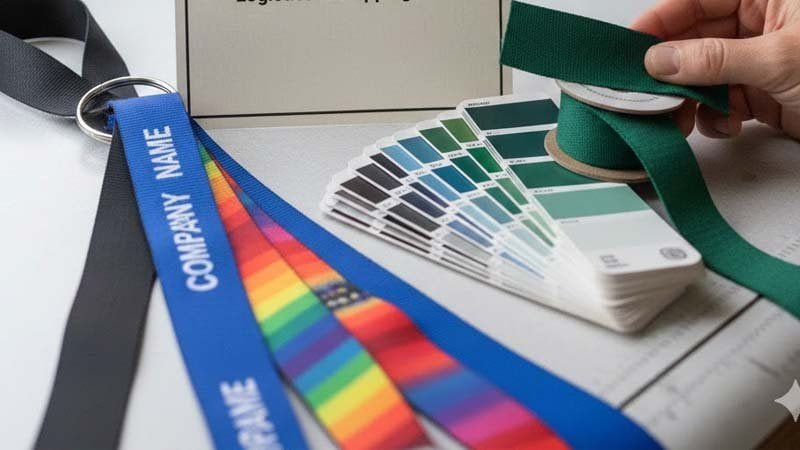
Approved brand colors (Pantone/CMYK reference)
-
Logo placement rules (safe margins, repeat spacing, minimum size)
-
Print legibility requirements (distance readability, contrast)
-
Consistency across departments and sites
B. Functional specification (by use case)
Define 2–4 standard SKUs, not 20.
-
Width/length (comfort + visibility)
-
Printing method aligned to wear and environment
-
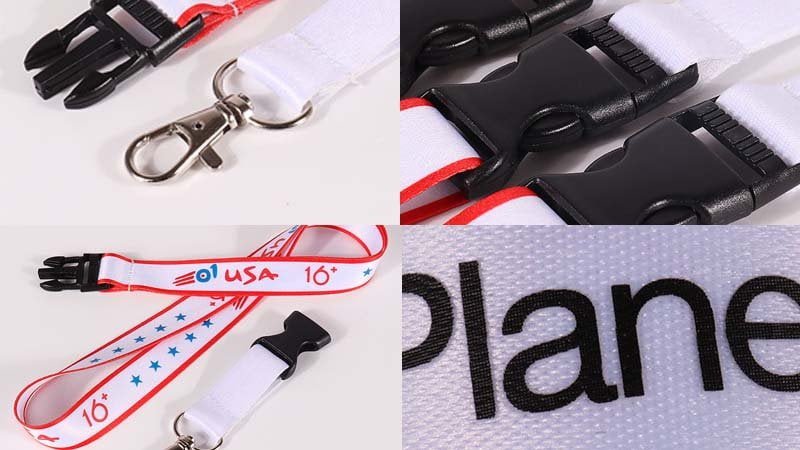
Hardware options (clip type, swivel, buckle, phone loop)
-
Badge holder compatibility (vertical/horizontal, rigid/soft)
C. Security and safety features (when needed)
-
Breakaway connectors (industrial/healthcare)
-
Tamper-resistant options for sensitive zones (policy-dependent)
-
Distinct visitor designs (color + wording + holder style)
D. Sustainability and lifecycle requirements
-
Material composition and durability expectations
-
Reuse strategy for visitor inventory
-
Replacement policy (how often and why)
-
End-of-life plan where feasible
E. Governance (how to prevent “brand drift”)
-
Central spec sheet and approved artwork templates
-
Approved vendor list
-
SKU control (only pre-approved items can be ordered)
-
Distribution rules (onboarding kits, front desk stock, event cartons)
Note: Exact specifications should align with your environment, badge system, and security policy.
6) Buyer’s checklist: what to specify before you order
Use this procurement intake checklist to align stakeholders (admin, security, brand, procurement).
Brand
-
Brand color reference (Pantone/CMYK)
-
Logo file format + minimum size rules
-
One-sided or two-sided layout
-
Repeat spacing standard (e.g., every X cm)
Use case
-
Primary environment: office / event / factory / healthcare
-
Wear time: occasional / daily / high-friction
-
Comfort priorities: soft edges / wider strap / lightweight
Hardware
-
Clip type: swivel / lobster / trigger
-
Quick-release buckle needed?
-
Breakaway safety needed? (when relevant)
-
Add-ons: phone loop / D-ring / retractable reel compatibility
Quality and compliance (environment-dependent)
-
Minimum tensile strength requirement (if relevant)
-
Color fastness expectations (high-wear environments)
-
Print durability requirement (rub/friction exposure)
Sustainability and cost
-
Reuse plan for visitors
-
Target service life (months/years)
-
Total cost lens: cost per day of use
Cost and ROI: evaluate beyond unit price
Unit price is easy to compare—and often misleading.
Better evaluation metrics:
-
Replacement frequency (wear, fading, fraying)
-
Badge loss and reissue cost (hardware failure)
-
Time spent handling exceptions (visitor confusion, security checks)
-
Brand consistency across sites (governance overhead)
Conclusion: treat lanyards as an operational brand standard
Lanyards are not small details. They are repeatable identity tools used in high-visibility moments.
If your organization is investing in a corporate identity program, a lanyard standard is one of the fastest ways to improve consistency, security clarity, and day-to-day professionalism—without increasing operational complexity.