For fitness brands, corporate merchandise buyers, sports event organizers, schools and promotional product distributors, the challenge is not simply finding a supplier that can print a logo. It is choosing a product configuration that works for the intended users, matches the brand and can be produced consistently at the required quantity.
A neoprene water bottle sling with a mesh pocket may be appropriate for a school promotion. A double-zipper carrier with phone storage may offer better value for a lifestyle brand. A drawstring design with reinforced attachments may be more suitable for selected outdoor activities.
Each option involves different materials, labor, printing and quality requirements.
This guide explains how to customize water bottle carriers for commercial projects, what influences wholesale pricing, how to evaluate an OEM supplier and what to include in a request for quotation (RFQ).
Quick buying advice: Start with your intended bottle and user, choose the necessary features, finalize the artwork and confirm a functional sample before approving bulk production.
1. Why Custom Water Bottle Carriers Work for Branded Merchandise
Promotional merchandise is most useful when the recipient has a reason to keep and use it.
A custom water bottle carrier can provide several practical benefits:
- Hands-free carrying: Adjustable shoulder straps make it easier to carry a water bottle during walking, travel or event attendance.
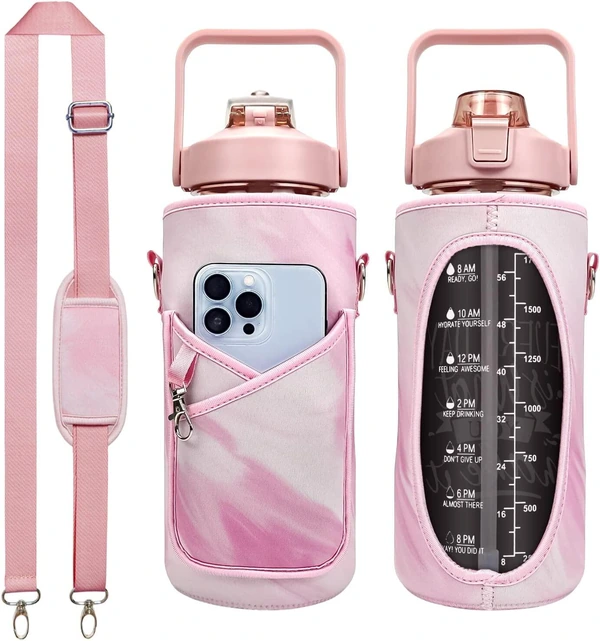
- Everyday storage: Phone pockets, mesh compartments and small zippered pockets provide space for suitable personal accessories.
- Brand visibility: Printed fabric panels and custom shoulder straps provide areas for logos, artwork and campaign messaging.
- Product differentiation: Colors, patterns, pocket layouts and accessory details can create a distinctive branded product.
- Reusable functionality: A properly constructed bottle carrier may continue to be used after the original event or promotion.
However, these benefits depend on the finished design. A carrier that does not fit the intended bottle or cannot comfortably support its weight is unlikely to deliver a positive user experience, regardless of how attractive the logo looks.
For B2B buyers, product functionality should be established before marketing claims and artwork are finalized.
2. Which Businesses Should Consider Custom Water Bottle Carriers?
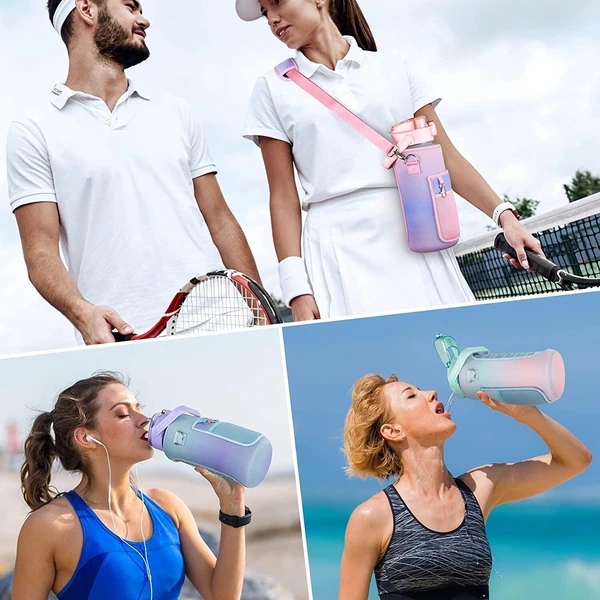
Different industries have different priorities. A gym may emphasize convenient phone storage, while a school may need a practical and easy-to-distribute accessory.
Fitness Brands and Gyms
Fitness companies can develop custom bottle slings as member merchandise, branded accessories or retail products.
A carrier with an adjustable shoulder strap and secure phone pocket can be useful for travel to the gym, walking between training areas and general daily activities.
Recommended customization: Solid brand colors, a clearly positioned logo, zippered phone storage and durable strap attachments.
Marathons, Walking Events and Sports Organizations
Sports event organizers can use branded bottle carriers for participant merchandise, volunteer kits, sponsor promotions and event retail collections.
The intended activity should determine the design. A crossbody bottle sling may be practical for walking events or spectators, but it is not automatically suitable for competitive running because movement and bouncing can become uncomfortable.
Recommended customization: Event logo, sponsor artwork, adjustable strap and a carrier designed for the selected bottle.
Schools, Universities and Summer Camps
Educational institutions can incorporate bottle carriers into school merchandise, student welcome packages, summer camp accessories and club activities.
Simple mesh-pocket designs may be sufficient for general use, while more structured zippered versions can be considered for older students or travel programs.
Recommended customization: School colors, printed logo, straightforward pocket design and appropriate strap dimensions.
Outdoor, Travel and Lifestyle Brands
Outdoor accessory brands can offer water bottle carriers with adjustable crossbody straps, drawstring openings, practical storage pockets and customized patterns.
For larger bottles, particular attention should be given to the supporting base, attachment hardware and carrying comfort.
Recommended customization: Functional drawstring design, suitable shoulder padding, reinforced connections and coordinated textile colors.
Corporate Wellness and Employee Gifts
Companies organizing wellness programs, outdoor activities or employee appreciation campaigns can select custom bottle carriers as practical branded gifts.
For broad employee distribution, choose a design with useful everyday features rather than adding unnecessary complexity.
Recommended customization: Corporate logo, neutral or brand-matched colors, adjustable strap and individually packed sets.
Promotional Product Distributors
Advertising merchandise companies often need flexible customization, consistent production quality and clearly documented specifications.
Offering several carrier configurations allows distributors to serve different budgets and project requirements without treating every order as an entirely new product development.
Recommended customization: Select from established carrier constructions, then adjust printing, colors, strap details and packaging to suit each client.
Ecommerce and Private-Label Brands
Amazon sellers, online accessory brands and retail distributors may require more product differentiation than a simple printed logo.
Custom pocket configurations, original patterns, branded labels and retail packaging can help establish a distinct product identity.
Buyers should also confirm product dimensions, labeling requirements, material specifications and packaging before creating retail listings.
3. Which Water Bottle Carrier Style Fits Your Brand?
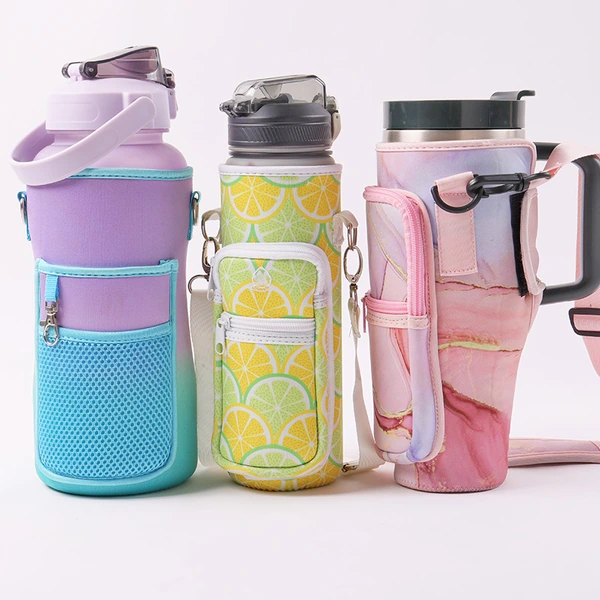
The best design is not necessarily the most complicated one. A suitable carrier should provide the features that its target users will actually need.
| Carrier Style | Main Features | Suggested Buyers | Procurement Focus |
|---|---|---|---|
| Mesh Pocket Carrier | Neoprene sleeve, mesh storage, adjustable strap | Schools, event organizers, promotional distributors | Practicality, printing, target cost |
| Double-Zipper Carrier | Phone pocket, accessory pocket, detachable strap | Fitness brands, corporate buyers, ecommerce sellers | Zipper quality, usable storage, workmanship |
| Drawstring Bottle Sling | Adjustable upper opening, optional handle and multiple pockets | Outdoor, travel and lifestyle brands | Bottle retention, comfort, attachment strength |
For detailed size selection, bottle compatibility and material comparisons, read our Water Bottle Carrier Bag Buying Guide: Sizes, Pockets, Straps & Materials.
This article focuses on what happens after the general product type has been selected: customization, manufacturing decisions and wholesale purchasing.
4. How to Customize Water Bottle Carriers with Your Logo
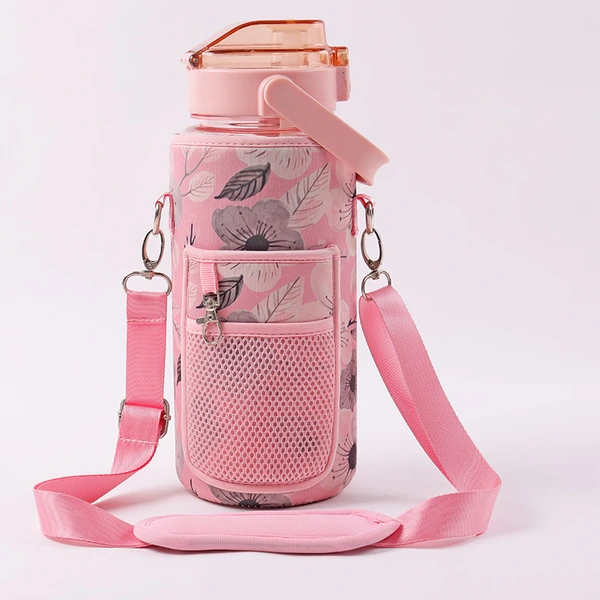
Brand customization should be planned around the actual product structure.
A logo placed on a flat neoprene panel may look different after the material is wrapped around a large bottle. Front pockets, zippers, seams and straps can also obscure part of the artwork.
Before selecting a printing method, consider the logo colors, artwork complexity, available printing area and overall product design.
Heat Transfer Printing for Full-Color Artwork
Heat transfer printing is a popular option for custom neoprene bottle carriers with colorful artwork, patterns and detailed graphics.
Depending on the surface material, a suitable transfer or dye-sublimation process can be used for:
- Multicolor company logos
- Floral and geometric artwork
- Gradients and detailed illustrations
- Repeated patterns
- Sports or event-themed graphics
- Matching printed shoulder straps
For designs involving extensive printing coverage, it is generally preferable to plan the artwork around the flat fabric pattern before cutting and sewing.
This allows the printing layout to account for the final seams, folds and pocket positions.
Screen Printing for Simple Branding
Screen printing can be suitable for logos, lettering and artwork with a limited number of solid colors.
It is worth comparing with heat transfer printing when the branding requirements are simple, particularly for repeat orders using the same design.
However, the preferred process depends on artwork, fabric, print area, quantity and setup requirements. Screen printing should not automatically be assumed cheaper in every case.
Custom Woven Labels and Rubber Patches
For private-label merchandise, buyers can consider additional branding details such as woven labels or compatible PVC rubber patches.
These trims can be attached to suitable fabric areas, provided they do not interfere with zippers, carrying comfort or the bottle sleeve’s fit.
For a more understated design, a small woven brand label may be more appropriate than a large printed graphic.
Custom Printed Shoulder Straps
The adjustable shoulder strap is an additional branding surface and can help create a coordinated product.
Possible options include:
- Solid-color polyester webbing
- Heat transfer printed patterns
- Screen printed logos
- Jacquard woven lettering or patterns
- Coordinated strap colors and hardware
- Optional padded strap sections
For colorful full-surface designs, matching the strap artwork with the bag fabric can create a cohesive appearance.
Pantone Colors and Artwork Approval
When brand consistency is important, provide Pantone references alongside the digital artwork.
Neoprene fabric, polyester webbing, rubber trims and printed surfaces may reproduce colors differently. Buyers should review the approved sample under suitable lighting and understand the achievable color tolerance for each material.
Practical advice: Do not approve production solely from a digital screen mockup when color matching is critical.
5. Custom Product Features: Which Upgrades Are Worth the Cost?
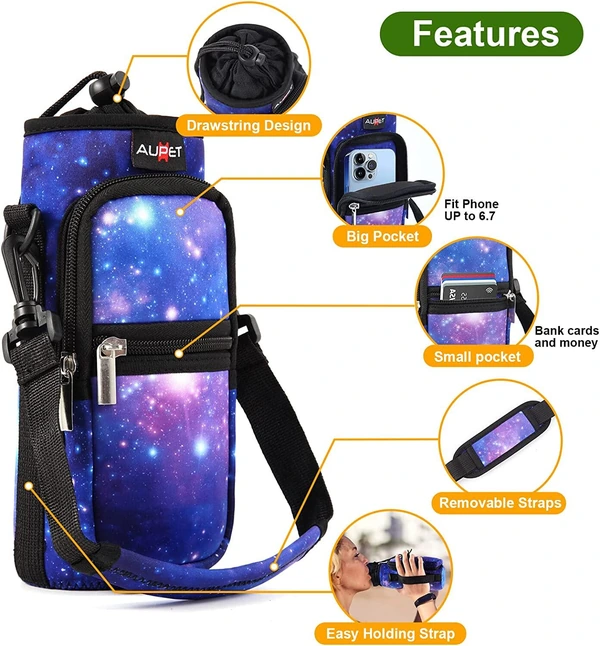
Every additional feature affects at least one of the following: material usage, sewing operations, hardware, sampling complexity or packing requirements.
For wholesale buyers, the goal is to select features that provide noticeable user value without introducing unnecessary cost or manufacturing risk.
Phone Pockets and Accessory Compartments
A front phone pocket can increase the practical value of a bottle carrier, especially for travel and everyday use.
However, a zippered compartment requires additional fabric panels, zipper components and sewing operations.
For promotional giveaways with a strict target budget, a simpler mesh pocket may be adequate.
Adjustable and Detachable Shoulder Straps
An adjustable shoulder strap is useful for accommodating different users and carrying positions.
Detachable designs typically require clips, rings and reinforced connecting loops, which add components compared with a permanently sewn strap.
For larger bottles, attachment quality and load suitability should take priority over saving a small amount on hardware.
Drawstring Openings
A drawstring closure can help retain compatible bottles and adds another functional detail.
It also introduces a drawcord, cord lock and additional sewing operations. Consider it when the upper bottle opening genuinely benefits from adjustment.
Hand-Carry Straps and Shoulder Padding
Side handles provide an alternative carrying method, while shoulder padding may improve comfort when transporting heavier bottles.
These features may be useful for premium outdoor and retail designs, but they are not essential for every promotional project.
Custom Packaging
Simple individual packaging may be suitable for many wholesale orders. Retail projects may require branded labels, inserts, hangtags or packaging designed for a specific sales channel.
Packaging should be evaluated based on presentation, protection, packing volume and applicable destination-market requirements.
6. What Determines the Wholesale Price of a Custom Water Bottle Carrier?
The wholesale price is determined by the complete product specification, not simply by the external dimensions.
Two carriers designed for the same 40oz bottle may have significantly different production costs if one has a simple mesh pocket and the other includes multiple zippers, thicker materials and a padded detachable shoulder strap.
| Cost Factor | Why It Matters | Practical Cost-Control Option |
|---|---|---|
| Material thickness | Changes material consumption, cushioning and construction | Use thickness appropriate for the intended bottle |
| Carrier size | Larger patterns generally consume more fabric | Avoid unnecessary oversized sleeves |
| Pocket construction | Additional panels and zippers increase materials and sewing operations | Include only useful storage compartments |
| Printing | Artwork, print area and setup affect production | Compare suitable methods using final artwork |
| Straps and hardware | Webbing, clips, buckles and padding affect component cost | Standardize safe, suitable components |
| Order quantity | Setup and fixed costs are distributed across units | Request quotations at realistic quantity tiers |
| Packaging | Materials, labor and shipping volume may increase | Match packaging to actual distribution needs |
Example: How to Build a More Cost-Effective Specification
Suppose an event organizer needs 1,000 branded bottle carriers for a corporate walking event.
Instead of immediately choosing a complex design with two zipper compartments, heavy hardware and retail packaging, the buyer could begin with:
- A neoprene sleeve sized for the selected bottle
- One suitable storage pocket
- An adjustable polyester shoulder strap
- A clearly printed event logo
- A simple individual packing arrangement
This represents a possible specification for quotation comparison, not a claim that it will always be the lowest-cost design.
If users need more secure phone storage, a zippered compartment may be worth the additional cost.
The objective is to optimize cost per useful feature, not simply select the lowest unit price.
7. MOQ and Bulk Ordering: What Buyers Should Know
Minimum order quantity (MOQ) can vary according to the product construction, material availability, artwork and number of design variations.
A simple existing-style carrier with one printed logo may have different order requirements from a newly developed design with custom dimensions, multiple pocket configurations and unique components.
What Can Affect MOQ?
- Existing pattern versus newly developed design
- Custom material colors and fabric availability
- Number of sizes and color combinations
- Artwork and printing requirements
- Specialized clips, zippers and branded trims
- Individual packaging requirements
Can Multiple Colors Be Combined in One Order?
Multiple colors or artwork variations may be possible, but buyers should not assume that different designs automatically share the same MOQ or unit price.
The production arrangement depends on material procurement, printing setup and the quantity required for each variation.
Should You Request Several Quantity Tiers?
Yes. If your expected demand is flexible, ask for quotations at several realistic quantities, such as 500, 1,000 and 3,000 pieces.
These are examples of quotation tiers, not stated minimum order quantities.
Comparing tiers helps determine whether increasing the order volume offers a meaningful cost advantage after considering inventory and cash-flow requirements.
Why a Small Pilot Order Can Be Valuable
For a new retail product or unfamiliar bottle style, an initial pilot order may help validate customer acceptance, fit and packaging.
However, a lower-quantity pilot order may have a higher unit cost. Buyers should compare the cost of testing the market against the risk of holding excess inventory.
8. OEM vs ODM: Which Customization Approach Is Right?
Both OEM and ODM are common terms in custom promotional product manufacturing, but the scope of development can differ.
OEM: Manufacturing to an Existing Specification
In an OEM project, the buyer typically supplies artwork, dimensions, construction details or an approved reference specification.
The supplier reviews production feasibility and manufactures according to the agreed requirements.
Suitable for: Brands with a finalized product specification, established designs or existing merchandise programs.
ODM: Developing or Adapting a Product Design
In an ODM-style project, the buyer may provide a concept, reference images or functional requirements rather than a complete technical specification.
The product design is then developed or adapted through material selection, pattern adjustments, sampling and review.
Suitable for: Brands developing new bottle carrier styles, custom pockets, unique carrying systems or special packaging configurations.
Using an Existing Style with Your Own Branding
Not every project requires a new pattern or fully customized construction.
For many promotional campaigns, selecting a suitable existing-style carrier and customizing the fabric color, printed logo and strap may provide an efficient solution.
Before placing an order, clarify what is being customized: the artwork only, the materials and trims, or the complete product construction.
9. How to Evaluate a Water Bottle Carrier Supplier in China
A competitive unit price is important, but supplier evaluation should also consider communication, sample accuracy and the ability to manufacture the agreed specification consistently.
Request Real Product Photos
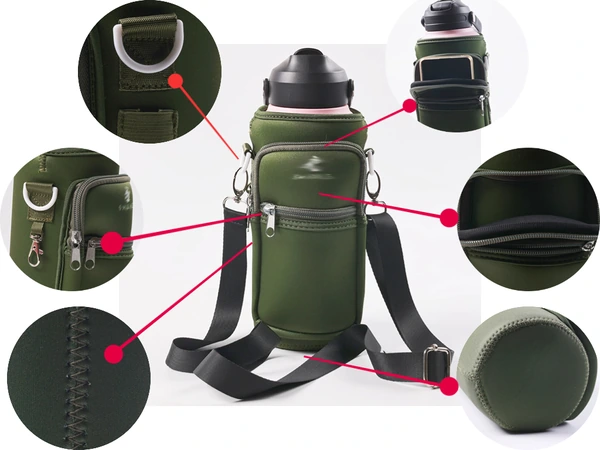
Ask to see the actual bottle carrier, including close-ups of the seams, bottom construction, pocket interiors, zippers and strap attachments.
Product images that only show the front artwork may not reveal the construction details that affect everyday use.
Confirm Bottle Compatibility
Send the actual bottle dimensions or sample to the supplier.
Do not approve a carrier for a 40oz or 64oz bottle solely because the supplier advertises that capacity. The bottle’s external shape and dimensions must be compatible.
Review a Physical Sample
A sample provides an opportunity to check both branding and functionality before bulk production.
Inspect the fabric, printed colors, pocket usability, strap connections, zipper operation and fit with the intended filled bottle.
Ask About Quality Control
Discuss how the supplier will control critical specifications such as carrier dimensions, attachment stitching, logo positioning and color consistency.
For large bottles, loaded-use testing is particularly important. Agree on a suitable test method and acceptance criteria before production rather than relying on general statements about durability.
Confirm Production and Delivery Arrangements
Ask for estimated sampling time, bulk production lead time, packaging specifications and the available shipping terms.
Lead times should be reconfirmed after the final artwork, materials and quantity have been approved.
Understand the Supplier’s Actual Role
A supplier may manufacture certain components directly and coordinate others through specialized partners.
What matters is having clear responsibility for specifications, production coordination, quality checks, delivery and communication.
10. Six Common Mistakes in Custom Water Bottle Carrier Procurement
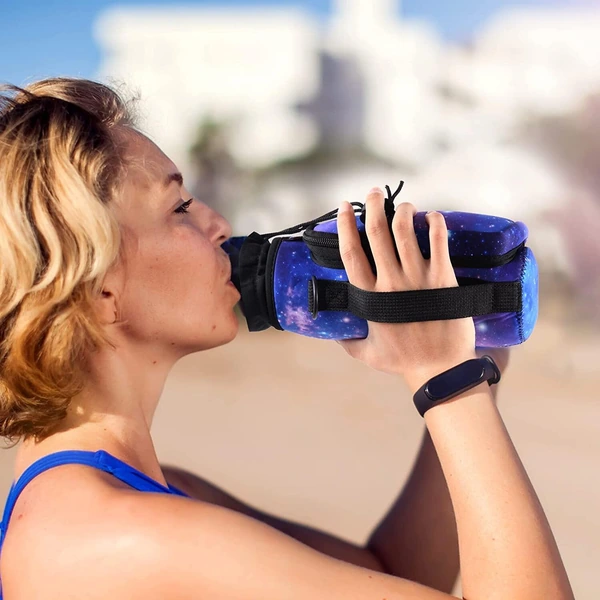
Mistake 1: Requesting Prices Without Bottle Dimensions
Providing only the capacity can result in an unsuitable pattern, especially for handled tumblers or unusually shaped bottles.
Better approach: Provide the bottle diameter, height, handle position and photos.
Mistake 2: Selecting the Cheapest Hardware Without Considering Load
Large filled bottles can place considerable stress on the shoulder strap and its attachments.
Better approach: Evaluate suitable webbing, clips, rings and reinforced connections as a complete load-bearing system.
Mistake 3: Approving the Logo Before Reviewing Its Final Position
A logo that appears centered on a flat material panel may be partially hidden after pocket assembly.
Better approach: Review the artwork on the final three-dimensional sample.
Mistake 4: Assuming Phone Pocket Dimensions Equal Usable Space
Seams, zippers and the inserted bottle can reduce the accessible internal dimensions.
Better approach: Test the intended phone size, including its protective case.
Mistake 5: Ignoring Packaging Until Production Is Complete
Retail packaging, individual bags, labels and carton requirements can affect cost, packed volume and delivery planning.
Better approach: Agree on packaging before final quotation and sample approval.
Mistake 6: Confirming a Bulk Order Without a Complete Approved Specification
Approving only a reference photo leaves room for uncertainty about materials, pocket sizes, hardware, print colors and stitching.
Better approach: Use a finalized specification sheet and approved sample as the production reference.
11. Wholesale Sourcing for the USA, UK, Australia and European Markets
International buyers may have similar product requirements, but distribution channels and documentation needs can differ.
USA Promotional Merchandise and Ecommerce Buyers
US buyers may source customized bottle carriers for corporate promotions, school activities, retail brands and outdoor merchandise programs.
Confirm the intended sales channel, labeling needs and product specifications before ordering.
UK and European Promotional Product Distributors
Distributors should review applicable product safety, chemical, textile or consumer information requirements based on the materials, intended users and destination market.
Importers should verify which requirements apply to their specific product rather than assuming every neoprene accessory has the same compliance obligations.
Australian Event and Outdoor Merchandise Buyers
Buyers may focus on practical accessories for schools, community activities, tourism and outdoor events.
Custom artwork, reusable functionality, clear specifications and realistic delivery planning are useful considerations.
Working with a Guangzhou, China Supplier
A Guangzhou-based custom promotional accessories supplier can help coordinate artwork review, material selection, sampling and production for international B2B orders.
When comparing suppliers, request clear quotations and confirm whether pricing is EXW, FOB, DDP or another agreed Incoterms arrangement.
Import duties, taxes, delivery responsibilities and destination requirements should be assessed according to the selected shipping terms and market.
12. How to Prepare a Water Bottle Carrier RFQ
A well-prepared request for quotation helps suppliers provide more accurate pricing and reduces unnecessary communication.
Instead of asking only, “What is your best price for a custom water bottle bag?”, provide the details needed to evaluate materials, construction and production.
RFQ Checklist
- Product style: Mesh pocket, double-zipper, drawstring or custom design
- Bottle details: Capacity, dimensions, shape, handle position and filled weight
- Material: Preferred fabric and thickness, if known
- Artwork: Logo file, colors and preferred print areas
- Shoulder strap: Width, length, printing and hardware requirements
- Storage: Phone pocket and other accessory compartments
- Quantity: Expected total and quantities per size or design
- Packaging: Individual bag, label, insert or other requirements
- Destination: Country and shipping address or port
- Schedule: Required sample date and delivery deadline
Sample RFQ for Custom Water Bottle Carriers
Subject: RFQ – Custom Neoprene Water Bottle Carrier Bags
Hello,
We are sourcing custom water bottle carrier bags for our branded merchandise program.
Our preliminary requirements are:
- Product: Neoprene water bottle carrier with adjustable shoulder strap
- Style: Double-zipper phone pocket design
- Bottle: 40oz cylindrical bottle; exact measurements to follow
- Branding: Full-color printed artwork
- Quantity: Please quote 500 / 1,000 / 3,000 pcs
- Packaging: Individual packing
- Destination: To be confirmed
Please advise the available customization options, MOQ, sample cost, estimated production time and quotation basis.
We can provide our logo and bottle specifications for further review.
Best regards,
Purchasing Team
These specifications are an example only. Replace them with your actual project requirements before sending an RFQ.
13. Frequently Asked Questions About Wholesale Custom Bottle Carriers
What is the MOQ for custom water bottle carrier bags?
MOQ varies by construction, material, printing, design variations and packaging. A supplier should confirm the applicable minimum quantity after reviewing the specifications.
Can I order different colors in one bulk order?
Multiple colors may be possible, but quantities per color, printing setup and material availability can affect MOQ and unit pricing.
Can I customize both the bottle sleeve and shoulder strap?
Yes. Depending on the materials, both components can be customized using suitable printing, colors and textile branding methods.
Which is better for a colorful logo: heat transfer or screen printing?
Heat transfer or sublimation on suitable fabric surfaces is generally useful for multicolor and detailed artwork. Screen printing is often suitable for simpler solid-color logos. The final choice depends on artwork, fabric and order quantity.
Can I develop a private-label bottle carrier?
Private-label projects may involve custom fabric patterns, original branding, labels, pocket configurations and packaging. The scope should be agreed before sampling.
Can one carrier fit different water bottle brands?
Some designs can accommodate multiple similar bottle profiles, but universal fit should not be assumed. Actual dimensions and sample testing are important.
Do I need a sample before bulk production?
A physical sample is strongly recommended, particularly for new patterns, large bottles and products with multiple compartments or custom hardware.
What information is needed for an accurate wholesale quote?
Provide the carrier style, bottle dimensions, material, artwork, quantity, strap specifications, pocket requirements, packaging and destination.
What affects the production lead time?
Lead time can depend on material availability, sample approval, product complexity, printing requirements, quantity and factory scheduling.
Can a supplier arrange international shipping?
Shipping options depend on the supplier, destination, quantity and agreed trade terms. Buyers should confirm freight cost, delivery responsibility and applicable import requirements.
14. Final Purchasing Advice: Build a Useful Product, Not Just a Printed Giveaway
A successful custom water bottle carrier project begins with a practical product specification.
Identify the bottle that users will carry. Select the pocket layout and carrying features according to their activities. Choose a printing process suitable for the brand artwork. Then confirm materials, construction, sample performance and packaging before ordering in bulk.
For buyers balancing product quality and budget, it is often better to select a well-designed carrier with a few genuinely useful features than an overly complicated version with unnecessary accessories.
The most important purchasing decision is not simply finding the lowest price. It is agreeing on a product that fits, functions and can be manufactured consistently.
Source Custom Water Bottle Carriers from Lovecolour
Lovecolour is a Guangzhou, China-based manufacturer and supplier specializing in custom lanyards, straps, garment accessories and related promotional products.
We support custom water bottle carrier projects involving neoprene sleeves, printed patterns, adjustable shoulder straps, storage compartments and OEM/ODM development.
Whether you are a promotional product distributor, fitness brand, sports event organizer, corporate procurement team or private-label merchandise buyer, we can review your design and product specifications for a suitable production solution.
Explore Custom Water Bottle Carrier Bags with Adjustable Shoulder Straps
For further product selection advice, read our Water Bottle Carrier Bag Buying Guide.
For other neoprene beverage accessories, explore our Custom Neoprene Cup Sleeves & Stubby Holders.
Request a quotation: Send us your reference images, bottle dimensions, artwork, expected quantity and delivery destination. Our team can review the specifications and advise on available customization and quotation details.
Lovecolour – Custom Lanyards, Water Bottle Carriers and Branded Promotional Accessories from Guangzhou, China.