Organizations continue to treat lanyards as a “small item,” but procurement outcomes often hinge on them: breakaway safety, print durability, reorder speed, and documentation can make the difference between a smooth ID program and costly churn.
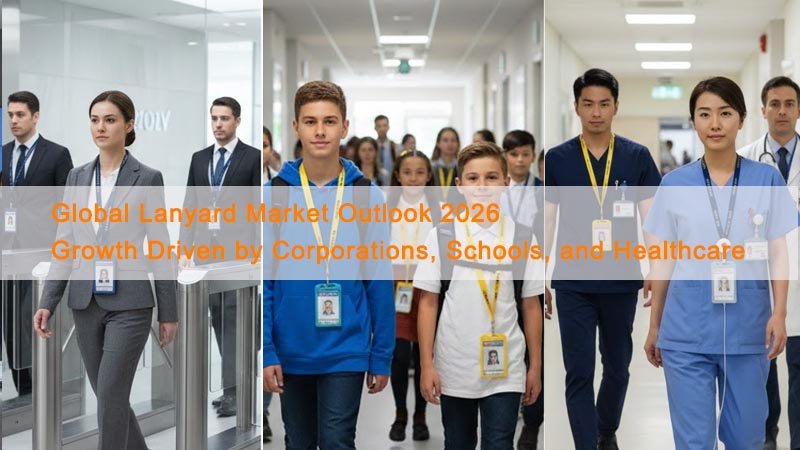
Market outlook for 2026: demand remains resilient, led by corporate access programs, school ID policies, and healthcare identification requirements. Growth is less about “more units” and more about spec upgrades and bundle adoption (lanyard + badge holder + reel + accessories).
Buyer implications
-
Treat lanyards as part of an ID ecosystem (badge, holder, reel, access workflow), not a standalone commodity.
-
Competitive advantage increasingly comes from spec compliance, QC evidence, and fast reorders, not just unit price.
Market Definition & Scope
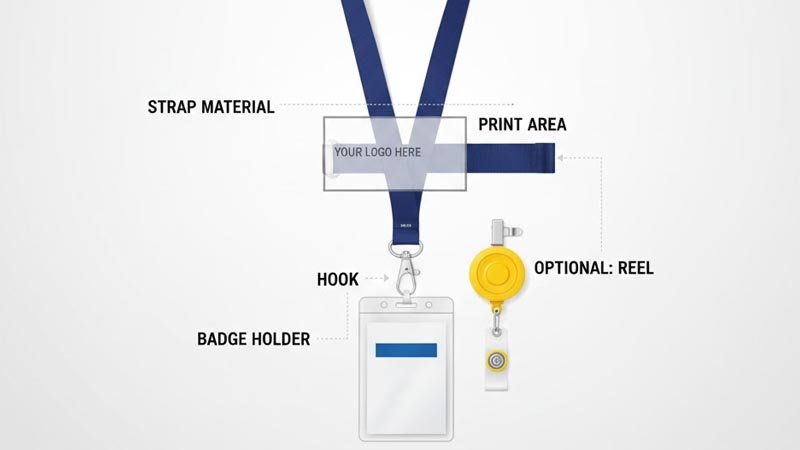
A lanyard in this context is a cord or strap designed to carry an ID card, badge holder, keys, or small access tools, typically worn around the neck or wrist. Core variables include:
-
Materials: polyester, nylon, woven fabric constructions, and recycled or eco-material variants
-
Print/branding methods: screen print, dye-sublimation/heat transfer, woven/jacquard
-
Safety and attachments: breakaway clasps, quick-release buckles, clips/hooks, badge reels, and holders
-
Channels: direct procurement, promotional distributors, online ordering, and program-based replenishment
For 2026 planning, the most useful lens is not “lanyards” as a single category, but use-case clusters:
-
Access control & identity visibility (corporate, campus, clinical settings)
-
Branding & event operations (conferences, onboarding, festivals)
-
Policy-driven ID programs (schools, hospitals, secure workplaces)
Buyer implications
-
Define your scope and specs up front: width/length, breakaway type, print method, accessories, packaging, and reorder cadence.
-
If you purchase through multiple departments (HR, Facilities, Security, Marketing), align on a single spec sheet to reduce inconsistent buys and quality drift.
Key Market Forces in 2026
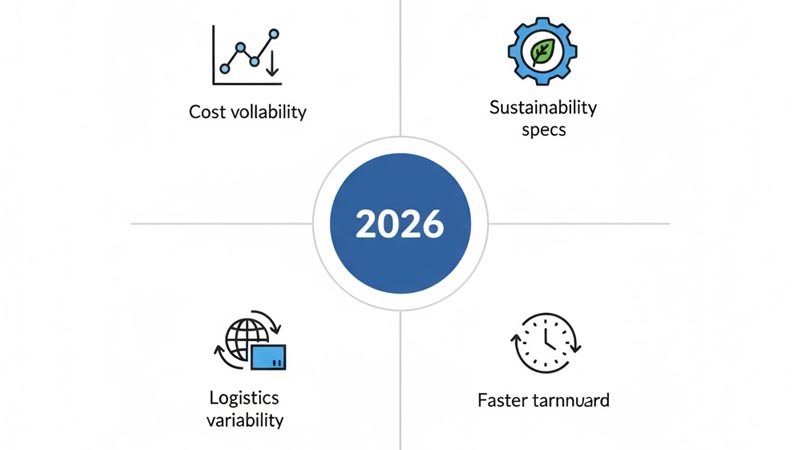
Several forces shape lanyard procurement in 2026:
-
Input cost variability
Polyester and nylon pricing can fluctuate with energy, feedstock, and regional supply. Buyers are increasingly sensitive to price stability across reorder cycles. -
Sustainability requirements moving from “preference” to “spec”
Recycled yarns and lower-plastic packaging are more frequently requested, especially for event programs and EU-facing procurement. -
Manufacturing and lead-time expectations
Digital workflows (art approvals, mockups, and production scheduling) reduce cycle time, but global logistics uncertainty still pushes buyers to value predictable dispatch windows and reorder readiness. -
Customization as a margin and differentiation lever
Customization remains a primary value driver when it improves brand consistency, reduces risk (safety features), or improves operational usability.
Below is a practical view of cost and demand drivers (directional):
| Driver | Impact | Trend Direction |
|---|---|---|
| Nylon & Polyester Prices | Higher production cost | Variable / Up |
| Eco-friendly Materials | Premium positioning | Stable to Up |
| Digital Printing Tech | Faster turnaround | Up |
| Global Logistics Variance | Lead-time volatility | Uncertain |
| Customization Demand | Higher perceived value | Up |
Buyer implications
-
Build your sourcing plan around total landed reliability (QC + lead time + reorder speed), not only unit price.
-
If sustainability matters, request documentation (recycled content claims, material declarations) and standardize it in your vendor qualification pack.
Segment Deep Dive: Corporations
Demand profile
Corporate demand comes from:
-
Employee ID and access control programs
-
Visitor management and contractor badging
-
Events, onboarding kits, and internal brand programs
In 2026, corporate buyers increasingly seek a balance of:
-
Brand fidelity (logo clarity, consistent color across batches)
-
Durability (stitching, attachment strength, wear resistance)
-
Safety features (breakaway and/or quick-release where required)
-
Supply continuity (repeatable specs for annual or quarterly reorders)
Typical spec and method considerations
Different decoration methods map to different corporate goals (cost vs. premium look vs. color complexity). A simplified comparison:
| Feature | Basic Nylon | Woven Fabric | Dye-Sublimation |
|---|---|---|---|
| Cost | Low | Mid | High |
| Print Clarity | Low | High | Very High |
| Safety Options | Breakaway | Breakaway | Breakaway |
| Lead Time | 7–10 days | 10–15 days | 15–20 days |

Buyer implications
-
Standardize a core corporate SKU for reorders (width, color, attachment, breakaway type), then add premium variants for executive kits or events.
-
Procurement efficiency improves when you bundle: lanyard + holder + reel, reducing vendor count and mismatch risk.
-
Ask suppliers for batch consistency controls (color targets, print QA checkpoints) if you reorder frequently.
Segment Deep Dive: Schools
Demand profile
School demand is strongly linked to ID policy and the operational need for quick issuance and replacement. Requirements often emphasize:
-
Low total cost
-
Safety (breakaway clasps commonly requested)
-
High visibility (bright colors, grade/role color-coding)
-
Reorder efficiency (lost badges, mid-year enrollments, events)
Material and use-case mapping
Schools typically purchase across multiple use cases—daily wear, staff, and short-term events. A practical mapping:
| Material | Use Case | Cost Level | Safety Rating |
|---|---|---|---|
| Tyvek | Events | Very Low | Standard |
| Polyester | Daily ID | Low | High |
| Woven | Staff & VIP | Mid | High |
| Eco-Cotton | Green Schools | Mid to High | High |
Buyer implications
-
Plan for seasonality: start-of-term spikes + mid-year replenishment. Choose a supplier that can repeat-match specs fast.
-
Prioritize breakaway + durability + comfort over the lowest unit price; failures create hidden costs (replacements, admin time, safety complaints).
-
Consider a program approach: standard lanyard + standardized holder + reorder portal for smoother replenishment.
Segment Deep Dive: Healthcare
Demand profile
Healthcare lanyards sit at the intersection of:
-
identity visibility (patients and staff need quick recognition)
-
workflow (tap access cards, badge scans, tool attachment)
-
hygiene expectations (cleaning compatibility and design that minimizes contamination risk)
Rather than “medical certification claims,” healthcare procurement tends to focus on practical requirements:
-
wipeability / cleaning compatibility (disinfectant wipes, routine cleaning)
-
breakaway safety
-
retractable reels to reduce swinging contact and improve access use
-
sealed or rigid badge holders to protect credentials
Material positioning (directional)
Different materials can support different hygiene and durability needs. A simplified comparison:
| Feature | Silicone | Coated Polyester | PVC |
|---|---|---|---|
| Hygiene (wipeability) | Very High | High | Medium |
| Clean Method | Wipe | Wipe | Wipe |
| Durability | High | Mid | Low |
| Cost | Mid to High | Mid | Low |

Buyer implications
-
Avoid compliance over-claims; instead require a material declaration pack (e.g., material safety statements, applicable restricted-substance declarations where relevant to your region).
-
When infection-control is a concern, evaluate a bundle: breakaway lanyard + reel + rigid/closed holder, and set cleaning guidance in the program.
-
Ask for sample testing under real conditions (wipe cycles, hardware fatigue) before locking a long contract.
Regional Outlook
At a high level:
-
Asia-Pacific is a major production hub due to supply depth and customization capability.
-
North America and Europe are demand-intensive markets where buyer expectations on documentation, on-time delivery, and sustainability are often stronger.
-
Latin America and MEA can be growth markets for events and corporate programs, often favoring flexible MOQs and competitive landed pricing.
A directional regional view (qualitative, not a market-share claim):
| Region | Production | Demand Drivers | Growth Rate |
|---|---|---|---|
| Asia Pacific | High | Export, Domestic OEM | Moderate–High |
| North America | Mid | Corporate, Events | Moderate |
| Europe | Mid | Healthcare, Schools | Moderate |
| Latin America | Low | Events, SMEs | Moderate–High |
| MEA | Low | Corporate, Festivals | High (from smaller base) |
Buyer implications
-
If your programs require documentation (sustainability claims, restricted substances), select vendors who can provide consistent paperwork at reorder scale.
-
For NA/EU buyers, predictable delivery windows and reorder stability often outweigh the lowest ex-works price.
-
For LATAM/MEA expansion, build for MOQ flexibility and localized lead-time expectations.
Product & Material Trends
2026 product evolution is less about new “invented” lanyards and more about upgrading specs buyers already request:
-
Recycled yarns (e.g., rPET) and lower-plastic packaging
-
Enhanced safety configurations (breakaway + quick-release combinations)
-
Higher-resolution and faster-turn decoration via digital workflows (complementing—not fully replacing—screen printing)
-
Functional bundling: reels, rigid holders, dual-attachment points
A directional trend table:
| Trend | Benefit | Adoption Stage |
|---|---|---|
| Recycled PET | Sustainability positioning | Growing |
| Bamboo Fibers | Natural feel, eco story | Pilot / Niche |
| UV / Digital Printing | High resolution, faster | Growing |
| Flame-Retardant Options | Risk reduction in certain workplaces | Stable / Use-case driven |
Buyer implications
-
Treat sustainability as a spec + documentation requirement, not a marketing line: confirm recycled-content claims and packaging approach.
-
Match print method to your artwork and reorder needs: a high-color design may justify digital; simple logos may favor other methods.
-
Where safety is relevant, standardize on breakaway hardware type and require consistent assembly QC.
Competitive Landscape & Buyer Decision Factors
Competition is typically strongest on:
-
unit price for basic SKUs
-
quality consistency for program procurement
-
speed for events and replenishment
-
service workflow (mockups, sampling, reorder tooling)
A practical weighting model buyers often follow (adjust to your reality):
| Factor | Weight (%) |
|---|---|
| Price | 30 |
| Quality | 25 |
| Lead Time | 20 |
| Customization Ease | 15 |
| Sustainability | 10 |

Buyer implications
-
Vendor evaluation should include QC evidence (process checkpoints, tensile/assembly checks, color control), not only photos.
-
For long-run programs, insist on a controlled spec sheet + golden sample approach to prevent drift between batches.
-
If suppliers look similar on price, service speed (mockup turnaround, sampling discipline, reorder friction) becomes the true differentiator.
2026–2027 Forecast Scenarios
Instead of anchoring on a single universal number, scenario thinking better reflects real procurement uncertainty:
-
Base case: steady demand with continued migration toward higher-value specs and bundles.
-
Upside case: broader adoption of school ID programs and stronger corporate event cycles drive higher unit volume; sustainability upgrades lift ASPs (average selling prices).
-
Downside case: budget tightening slows refresh cycles; buyers extend replacement timelines and consolidate vendors—yet baseline ID needs remain.
Key scenario variables:
-
input costs (materials, hardware)
-
logistics variability
-
policy intensity (school ID enforcement, facility ID requirements)
-
printing workflow efficiency and supplier capacity
Buyer implications
-
Build a dual-track plan: a cost-controlled core SKU plus a spec-upgraded premium SKU for high-visibility use cases.
-
Reduce risk via reorder readiness: stored artwork, standardized attachments, and repeatable packaging.
-
For regulated or safety-sensitive environments, prioritize verification and repeatability over short-term price wins.
Conclusion
The global lanyard market in 2026 remains a durable, policy-anchored category. Corporations, schools, and healthcare will continue to drive demand, while the most consistent value creation comes from spec upgrades (breakaway safety, durability, sustainability documentation) and ecosystem bundling (holders, reels, attachments).
If you want predictable outcomes in 2026, optimize for standardized specs, QC evidence, and reorder efficiency—that’s where cost control and brand consistency converge.