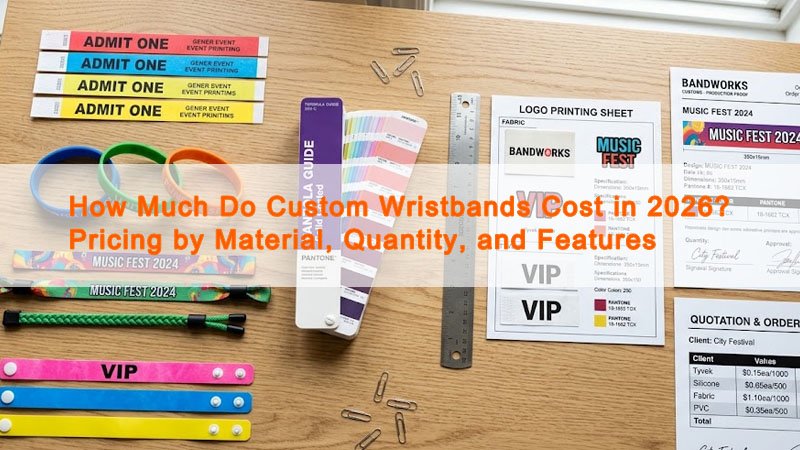
Custom wristbands remain one of the most practical products for event access, crowd control, promotions, fundraising, resorts, and brand campaigns. In 2026, however, buyers are seeing a wider price gap than before. Some wristbands cost only a few cents each in bulk, while others can cost significantly more depending on material, printing method, packaging, and added functions.
So how much do custom wristbands cost in 2026?
The short answer is that custom wristband prices typically range from around $0.10 to $3.50 per piece, depending on the product type and order requirements. Entry-level disposable styles are the most economical, while premium reusable or technology-enabled wristbands are priced higher because they offer better durability, branding value, or security performance.
For buyers, the most important point is this: the final quote is determined by more than the base material alone. Quantity, logo application, color count, attachments, packaging, lead time, and shipping terms all affect the total landed cost.
In this guide, we break down typical 2026 custom wristband pricing, explain the main cost drivers, and show how to choose the right wristband for your budget and application.
Average Custom Wristband Costs in 2026
In the 2026 market, custom wristband pricing is best understood by order size and product category. For many standard custom projects, typical average pricing falls in the range of about $0.25 to $1.20 per piece, while specialty products may fall outside that range.
As a general rule, unit prices drop as order quantity increases. Small orders carry a higher per-piece cost because tooling, setup, labor preparation, and artwork handling are spread across fewer units. Larger runs benefit from production efficiency and bulk material purchasing.
Typical Cost by Order Size
| Quantity Range | Typical Cost per Band |
|---|---|
| 100–249 | $1.20 |
| 250–499 | $0.80 |
| 500–999 | $0.50 |
| 1,000+ | $0.25 |
These figures should be treated as general reference ranges, not universal market prices. Actual cost will vary based on wristband type, print complexity, packaging requirements, and delivery destination.
For B2B buyers, it is also important to look beyond the ex-factory unit price. A realistic budget should account for:
- artwork or setup charges,
- sample costs if required,
- packaging style,
- rush production fees,
- shipping method,
- customs or import charges where applicable.
When comparing suppliers, always compare total landed cost, not just the lowest advertised unit price.
What Affects the Cost of Custom Wristbands?
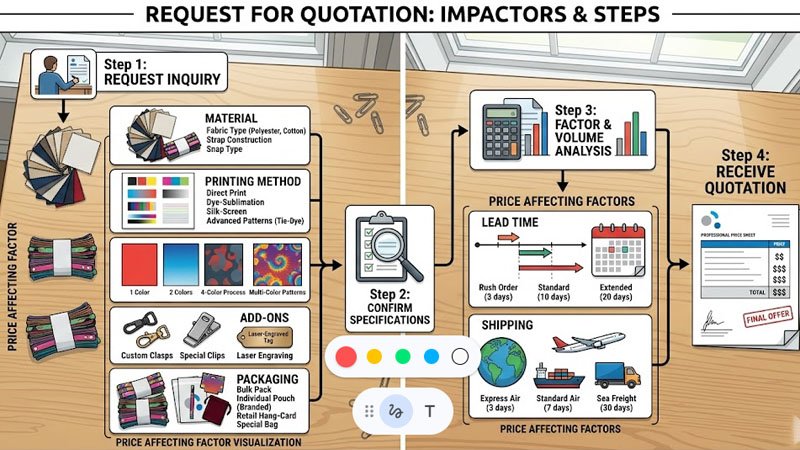
Two wristbands may look similar in a photo but differ greatly in price once production details are confirmed. The main reason is that custom wristband cost is built from several layers: material, printing process, color complexity, accessories, and delivery requirements.
Key Cost Drivers
| Cost Driver | Typical Impact |
|---|---|
| Material | Sets the base product cost |
| Printing Method | May add setup and running cost |
| Color Count | More colors usually increase production cost |
| Add-ons / Attachments | Increase both material and labor cost |
| Packaging | Can raise cost depending on packing style |
| Lead Time | Rush orders usually cost more |
| Shipping Terms | Strong influence on final delivered price |
1. Material Type
Material is the first and biggest cost driver. Disposable materials are generally cheaper, while premium or reusable materials cost more because they offer higher durability, better comfort, or a stronger brand presentation.
2. Printing Method
Logo application affects both appearance and price. Simple one-color printing is usually the most economical. Full-color printing, heat transfer, woven designs, embossed effects, or specialty finishes may increase both setup and production cost.
3. Number of Colors
The more colors required in the artwork, the more complex the production process becomes. This is especially true for screen printing and other multi-step decoration methods.
4. Add-ons and Special Features
Options such as QR codes, barcodes, sequential numbering, detachable tabs, charms, RFID chips, or premium locking closures can increase cost quickly.
5. Packaging Requirements
Bulk packaging is the lowest-cost option for most event and wholesale projects. Individual polybags, retail-ready cards, barcode labels, or special export packing will increase the final cost.
6. Lead Time and Shipping
Fast production almost always carries a premium. If the order must be completed urgently or shipped by express service, the delivered cost can rise substantially.
For this reason, professional buyers usually request quotes early and confirm specifications as completely as possible before production begins.
Custom Wristband Cost by Material
Different materials serve different purposes, and that is why price ranges vary so much. Choosing the right material is not only a question of budget, but also of event duration, security level, brand image, and user comfort.
Material Comparison
| Material | Typical Cost Range | Durability | Common Applications |
|---|---|---|---|
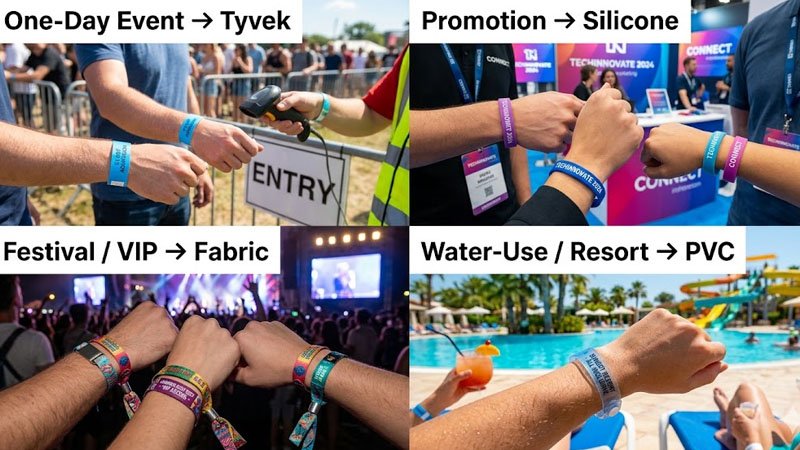
| Tyvek | $0.10–$0.20 | Single use | Events, admission control, parks |
| Silicone | $0.30–$1.00 | Long-term | Promotions, fundraising, awareness campaigns |
| Fabric | $0.50–$2.00 | Reusable / durable | Festivals, VIP passes, multi-day events |
| PVC | $0.40–$1.50 | Durable / water-resistant | Pools, resorts, water-use settings |
| Elastic | $0.20–$0.60 | Flexible | ID use, light promotional applications |
Tyvek Wristbands
Tyvek wristbands are the most economical choice for short-term use. They are widely used for concerts, water parks, visitor control, bars, schools, and one-day events. Their main advantage is low cost at volume. Their main limitation is that they are not designed for long wear or premium branding.
Silicone Wristbands
Silicone wristbands are a popular choice for promotional campaigns and awareness projects. They are comfortable, durable, and reusable, which makes them suitable for longer-term wear. They cost more than disposable styles but offer better perceived value.
Fabric Wristbands
Fabric wristbands are commonly chosen for festivals, resorts, VIP access, and branded events where both comfort and appearance matter. They typically cost more than basic silicone or Tyvek options, but they deliver a stronger premium image and better wear experience.
PVC Wristbands
PVC wristbands are suitable for environments that require good water resistance and durability. They are often used in pools, beach venues, family entertainment facilities, and similar applications.
Elastic Wristbands
Elastic styles are lightweight and cost-effective for certain identification or simple promotional uses. They are less common for high-security event access, but may be appropriate for niche applications.
The best material is not always the cheapest one. It is the one that matches the real use scenario.
Why the Cheapest Wristband Is Not Always the Lowest-Cost Solution
Many buyers focus on the lowest unit price when comparing quotes. That is understandable, but it can lead to higher total cost if the selected wristband does not perform well in actual use.
A lower-cost wristband may create problems such as:
- breakage during use,
- poor print quality,
- color inconsistency,
- weak closures,
- reorders caused by product failure,
- a less professional brand image.
Hidden Cost of Choosing Only by Price
| Potential Issue | Possible Cost Impact |
|---|---|
| Breakage or damage | Replacement cost per piece |
| Reorder requirement | Additional production and freight |
| Delays | Event risk and operational disruption |
| Poor presentation | Negative effect on brand image |
| Customer complaints | Lower satisfaction and trust |
For professional sourcing, it is usually more effective to evaluate value per use, not just price per piece. A slightly higher unit price may reduce rework, improve presentation, and lower the risk of delays or complaints.
This is especially important for:
- multi-day events,
- branded promotions,
- resort and tourism use,
- VIP access products,
- export projects with limited time for replacement.
How to Reduce Custom Wristband Costs Without Sacrificing Quality
Reducing cost does not always mean choosing the cheapest product. In many cases, a better strategy is to simplify the order and remove unnecessary cost drivers while keeping the required quality level.
Practical Cost-Saving Tips
- Choose a material that matches the real application, not a higher grade than needed.
- Keep artwork simple if budget is the priority.
- Limit the number of print colors where possible.
- Order in larger quantities to improve unit price.
- Use bulk packaging unless retail presentation is required.
- Prepare final artwork correctly to avoid editing and delay costs.
- Avoid rush production whenever possible.
- Approve samples early to prevent expensive changes later.
For example, a one-day event usually does not need a premium fabric wristband. A standard Tyvek style may be enough. On the other hand, a music festival or resort program may justify the higher cost of a more durable and better-looking material.
The goal is not to cut quality blindly. The goal is to spend where the product creates value and save where it does not.
How to Choose the Right Wristband for Your Budget
The most effective way to control cost is to make the right decisions early. Many pricing problems come from unclear requirements, late artwork changes, or selecting features before defining the actual application.
Step-by-Step Selection Process
- Define the purpose
Is the wristband for admission, identification, branding, fundraising, or long-term wear? - Confirm the duration of use
A one-day pass and a multi-day event require different materials. - Set a realistic total budget
Include product cost, setup, packaging, and shipping. - Choose the material carefully
Match the material to performance needs, not assumptions. - Decide on branding requirements
Confirm logo method, color count, and any variable data. - Add only the features that matter
QR codes, RFID, charms, or premium closures should only be added if they support the project goal. - Review a sample if necessary
Sampling can help avoid larger quality or color problems in bulk production.
This step-by-step approach helps buyers avoid over-specification, reduce waste, and receive a more accurate quotation from the start.
Frequently Asked Questions About Custom Wristband Pricing
What is the minimum order quantity for custom wristbands?
Minimum order quantity depends on material and production method. For many standard custom wristbands, 100 pieces is a common starting point, although some suppliers may offer higher or lower MOQs depending on the product.
Does adding more colors increase the cost?
Yes. In many cases, more colors mean more setup steps, more production time, and higher cost. This is especially true for traditional printing methods.
How long does production usually take?
Standard production for custom wristbands often falls in the 7–10 day range after artwork approval, although timing depends on product type, quantity, and factory schedule. Rush service may be available at additional cost.
Are shipping fees included in the wristband price?
Usually not. Shipping is often quoted separately because it depends on package size, total weight, destination country, and delivery method.
Do design changes affect the price?
They can. Minor revisions may be included, but repeated edits, special file preparation, or late-stage changes can create additional cost or delay.
How can buyers get a more accurate quote quickly?
To receive a faster and more accurate quotation, it helps to provide:
- wristband type,
- quantity,
- size,
- artwork,
- print method if known,
- packaging requirements,
- delivery country,
- target delivery date.
Conclusion
Custom wristband pricing in 2026 depends on more than the product itself. Material, quantity, printing method, features, packaging, and delivery terms all influence the final cost.
As a general reference, buyers can expect basic custom wristbands to start from low-cost disposable options and move upward into premium reusable or specialty products depending on the application. The best sourcing decision is not always the one with the lowest unit price. It is the one that balances budget, performance, brand presentation, and delivery reliability.
For B2B buyers, the most effective approach is to define the application clearly, compare total landed cost, and work with a supplier that can explain the cost structure transparently.
If you are planning a custom wristband project, the fastest way to reduce cost and avoid mistakes is to confirm the specifications early and request a quote based on clear production requirements.