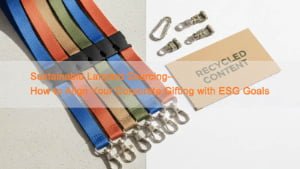
Security lanyards aren’t just accessories. They’re critical tools that can make or break your team’s effectiveness in the field.
Security teams need specialized lanyards that withstand daily wear, enable fast credential presentation, and reduce safety risks during incidents. The right lanyard setup helps protect both personnel and sensitive access credentials.
When I first started working with security teams, I noticed something surprising: many were using standard lanyards not designed for operational realities. That gap created avoidable risks—accidental credential loss, slow ID checks, and unnecessary safety exposure. In this article, I’ll outline why security professionals need purpose-built lanyards and how to specify the right solution for different posts, environments, and policies.
What Makes Security Lanyards Different From Standard Options?
Standard lanyards simply don’t cut it for security professionals. I’ve seen firsthand how improper lanyards create vulnerabilities that compromise safety and efficiency.
Security lanyards are differentiated by higher durability at stress points, role-specific attachment configurations, and safety-first release options. They are designed to stay reliable in demanding environments while keeping credentials accessible, controlled, and policy-compliant.
Security teams work in environments where small equipment failures can become real operational issues. In practice, effective security lanyards are defined by three pillars: durability, safety, and functionality.
Durability is not just “lasting longer.” It is about resisting pulling, abrasion, sweat, UV exposure (for outdoor posts), and repeated daily use. Security-grade builds typically use sturdy webbing (polyester or nylon), reinforced stitching at high-stress junctions (e.g., box stitching or bar tacks), and hardware selected for consistent performance over time. Optional upgrades—such as UV-resistant dyes or coated surfaces—may be appropriate for outdoor or industrial sites, but the most important factor is structural reinforcement where failures usually occur.
Safety focuses on managing neck-worn risk. In many security roles, breakaway features are used to reduce entanglement and choking hazards. Importantly, breakaway performance should be selected based on site risk assessment and SOPs—too low a release threshold can increase accidental release and credential loss, while too high can reduce safety benefits. The goal is controlled, predictable behavior aligned with policy.
Functionality is about fast, consistent credential handling and controlled attachment. Common security configurations include detachable buckles, dual-ended attachments (for ID + keys), badge reels for frequent scans, and tamper-aware hardware when credential retention is a priority. Good functionality reduces friction at access points without creating dangling hazards.
| Pillar | Key Features | Benefits for Security Teams |
|---|---|---|
| Durability | Reinforced webbing, stress-point stitching, corrosion-aware hardware | Reduces breakage, maintains professional appearance, lowers replacement rate |
| Safety | Breakaway option selected per risk/SOP, low-snag configuration | Mitigates entanglement/choking risk while maintaining operational control |
| Functionality | Detachable buckle, badge reel compatibility, dual-ended setups where appropriate | Faster credential presentation, fewer bottlenecks, better daily usability |
Which Security Scenario Demands Specific Lanyard Features?
Not all security environments are equal. I’ve learned that the right lanyard solution changes based on whether your team works in corporate, industrial, or event security.
Different security posts require different lanyard specifications. Corporate environments prioritize professional appearance and frequent credential presentation. Industrial sites demand durability against harsh conditions. Event security benefits from high visibility and fast credential handling under crowd pressure.
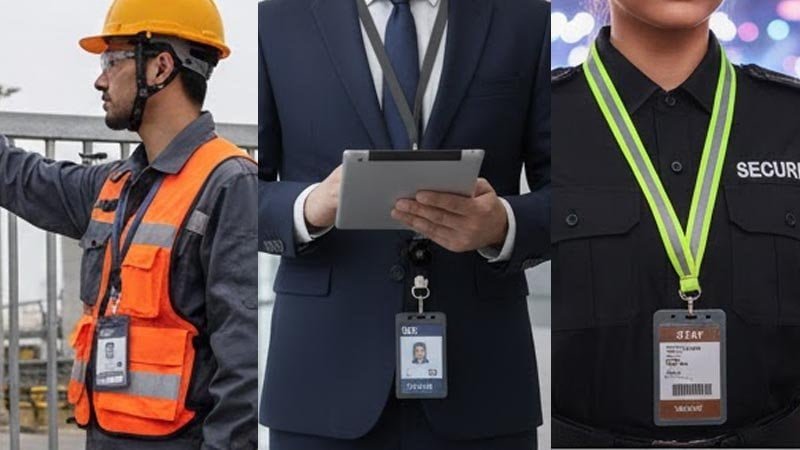
Choosing the right lanyard starts with the operational environment and the way credentials are used.
Corporate Security typically involves frequent ID presentation at controlled access points. A common setup is a neck lanyard with a detachable buckle (to hand over credentials when needed) and a badge reel (for quick scanning). Woven or jacquard branding can look more premium and consistent with uniform standards. Breakaway features may still be appropriate depending on policy and workplace snag risks.
Industrial Security faces abrasion, dust, sweat, moisture, and mechanical snag hazards. Here, durability and low-snag design matter most: robust webbing, reinforced stitching, and hardware that resists corrosion. Coatings may help in certain chemical-exposure environments, but they should be selected intentionally based on site conditions rather than assumed as standard.
Event Security requires immediate identification, rapid credential checks, and safe gear in crowded spaces. High-visibility color systems (by role or access level), reflective elements for night operations, and quick credential presentation (badge reels or easy-facing holders) support smoother flow while maintaining control.
| Security Scenario | Key Requirements | Recommended Lanyard Features |
|---|---|---|
| Corporate | Professional appearance, frequent ID checks | Detachable buckle, badge reel, woven/jacquard branding, policy-aligned breakaway option |
| Industrial | High wear, snag/abrasion exposure, moisture | Reinforced webbing + stitching, corrosion-aware hardware, low-snag configuration, site-selected material options |
| Event | High visibility, rapid throughput, crowd dynamics | Role color coding, reflective option, badge reel/quick presentation holder, lightweight but reinforced build |
How Can Security Lanyard Engineering Prevent Critical Failures?
I’ve seen how small lanyard failures can create major security vulnerabilities. The right engineering approach anticipates potential failure points before they become dangerous problems.
Security lanyard engineering prioritizes stress-point reinforcement, consistent hardware performance, and controlled-release options. The objective is predictable reliability—minimizing accidental detachment while preventing dangerous entanglement scenarios.
When a lanyard fails, consequences include lost credentials, delayed access control, and compromised professionalism—sometimes at the worst moment. Engineering attention should focus on the most common failure modes:
Stress-point reinforcement is the number-one reliability upgrade. Critical junctions include the hook connection, buckle transitions, and badge-holder attachment loops. Strong builds use reinforced layers and proven stitch patterns (e.g., box stitching or bar tacks) that distribute load and resist progressive tearing.
Hardware consistency matters as much as webbing. Security lanyards benefit from durable hooks and connectors, and—where policy requires—closures that resist accidental opening. Swivel hardware can reduce twisting that gradually weakens fabric and stitching. For outdoor or high-humidity posts, corrosion-aware finishes help maintain long-term function.
Controlled safety behavior should be deliberate, not random. A breakaway feature is intended to reduce risk under abnormal pulling or entanglement scenarios, while a detachable buckle supports workflow (credential handover) without removing the lanyard from the neck. These functions should be specified separately so the lanyard behaves predictably in both routine and emergency contexts.
| Failure Point | Engineering Solution | Security Benefit |
|---|---|---|
| Stress Points | Reinforced layers, box stitch/bar tack, secured attachment loops | Prevents separation at high-tension areas |
| Hardware Components | Durable hooks, corrosion-aware finishes, swivel where appropriate | Maintains reliable connection through daily use |
| Safety Behavior | Separate specs for breakaway vs detachable buckle | Reduces incident risk while maintaining credential control |
What Safety Features Should Every Security Lanyard Include?
I’ve encountered security teams who’ve faced serious entanglement hazards. The right safety features can mean the difference between a routine incident and a life-threatening situation.
At minimum, security lanyards should be specified for predictable safety behavior: a policy-aligned breakaway option, workflow-friendly detachable buckles, and retention designs that reduce accidental credential loss. The “right” setup depends on post risk and SOPs.
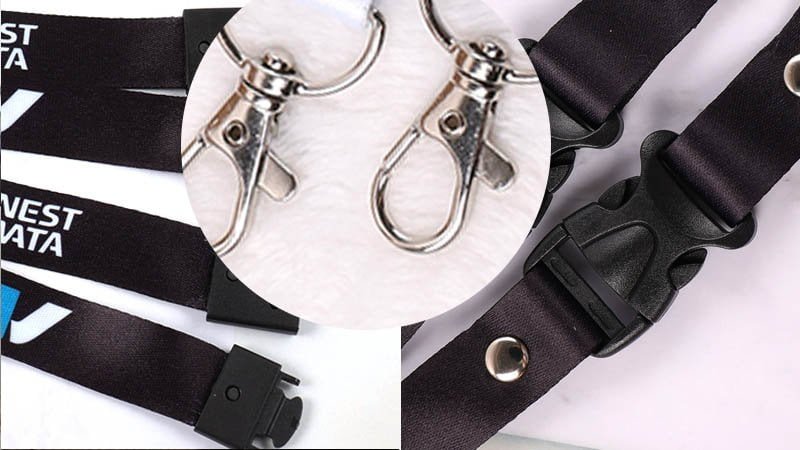
In professional security operations, safety features must reduce risk without introducing new vulnerabilities such as accidental release or credential loss. The most important step is to separate three functions that are often confused:
1 Breakaway (automatic release under abnormal pulling)
Breakaway connectors are used to reduce choking/entanglement risk. Breakaway performance should be selected based on a job risk assessment and organizational policy. A release threshold that is too sensitive can increase accidental separation; too resistant can reduce the intended safety benefit. For this reason, breakaway should be offered as a configurable option aligned to the site’s SOPs.
2 Detachable buckle (manual quick separation for workflow)
This is not the same as breakaway. A detachable buckle allows the wearer to remove the credential module without taking the strap off the neck—useful for handing IDs to reception, scanning at access points, or controlled inspection. A well-designed buckle is easy to operate (including with gloves, if required by the post) while remaining secure during routine movement.
3 Retention / tamper-aware options (credential control)
In environments where credential retention matters, consider designs that reduce accidental unhooking and discourage casual removal. These should be applied carefully: “tamper-resistant” should never prevent safe breakaway behavior when neck-worn risk is present. The best approach is usually credential retention at the badge attachment, while keeping neck safety managed via breakaway where appropriate.
Recommended Reference Table (useful for procurement decisions):
| Feature Type | What It Does | Best Used When | Watch-outs |
|---|---|---|---|
| Breakaway | Automatically separates under abnormal pulling/entanglement | Posts with snag/confrontation risk or policy mandates | Choose based on risk/SOP; too sensitive can cause accidental release |
| Detachable buckle | Manual separation for handing/scanning without removing strap | Frequent credential checks, controlled handover scenarios | Must be secure under movement; not a substitute for breakaway |
| Retention / tamper-aware attachment | Reduces accidental credential loss; discourages casual removal | High-value credentials, restricted areas | Must not compromise neck safety; apply at badge attachment where possible |
How Can Security Lanyards Enhance Professional Authority While Meeting Compliance?
I’ve noticed that security lanyards do more than hold credentials—they project authority and communicate compliance. The right branding turns a simple tool into a professional statement.
Security lanyards reinforce authority through consistent, readable identification and policy-aligned visual systems. Effective design improves recognition, supports access-control workflows, and maintains a professional standard across sites.

In security operations, appearance is operational. Lanyards support authority when they are clear, consistent, and compliant.
Readable identification matters more than decorative branding. High-contrast text (e.g., SECURITY / STAFF / CONTRACTOR), legible typography, and repeat-print patterns improve recognition at distance and reduce confusion in public-facing posts.
Compliance communication can be supported through simple, controlled design systems. Color coding by role or access category is often more effective than complex graphics. If QR/NFC verification is used, implement it according to the organization’s security policy—avoid exposing sensitive data to casual observers.
Material and finish influence perception. Woven/jacquard logos and quality hardware finishes (e.g., matte or brushed) often appear more professional and durable than glossy, low-cost components, especially when worn daily.
| Branding Element | Professional Impact | Compliance Function |
|---|---|---|
| High-contrast, readable text | Faster authority recognition | Reduces misidentification and confusion |
| Role/access color system | Clear visual hierarchy | Supports site SOPs and controlled access workflows |
| Optional verification tech (QR/NFC) | Modern, credible appearance | Enables controlled verification when policy permits |
Add this section (NEW): Procurement Spec Box (Highly Recommended)
Procurement Spec Box: What to Specify Before Ordering
Use this checklist to avoid “generic lanyards” that fail in real security work.
-
Use environment: corporate / industrial / event / outdoor / high humidity
-
Wear method: neck lanyard / short lanyard / belt clip / vest-mounted reel
-
Webbing width: 15mm (lightweight), 20mm (balanced), 25mm (high visibility/readability)
-
Material: polyester (print + durability), nylon (premium feel), jacquard (woven branding for long-term consistency)
-
Stitching: box stitch or bar tack at hook junctions; reinforced loops
-
Hardware: swivel hook / carabiner / heavy-duty hook (match the carried load and policy)
-
Safety spec: breakaway option per risk assessment + SOP
-
Workflow spec: detachable buckle for handover/scanning (if needed)
-
Accessories: badge holder orientation (portrait/landscape), badge reel (scan frequency), key ring (if permitted)
-
Branding system: readable text + role color coding (avoid over-design)
Safety & Compliance Note: Always follow your organization’s safety policy and local regulations. Lanyard features—especially breakaway and retention/tamper-aware options—should be selected based on job risk assessment and site SOPs.
Conclusion
The right security lanyard is a role-specific system—not a generic accessory. When durability is engineered at stress points, safety behavior is specified intentionally, and credential handling is optimized for workflow, security teams operate with fewer failures, faster checks, and stronger professional authority.
If you want a precise recommendation, share three details: your security scenario (corporate/industrial/event), credential type (card size + holder orientation), and whether your SOP requires breakaway and/or detachable buckles. From there, it’s straightforward to define a lanyard spec that is durable, safe, and operationally efficient.