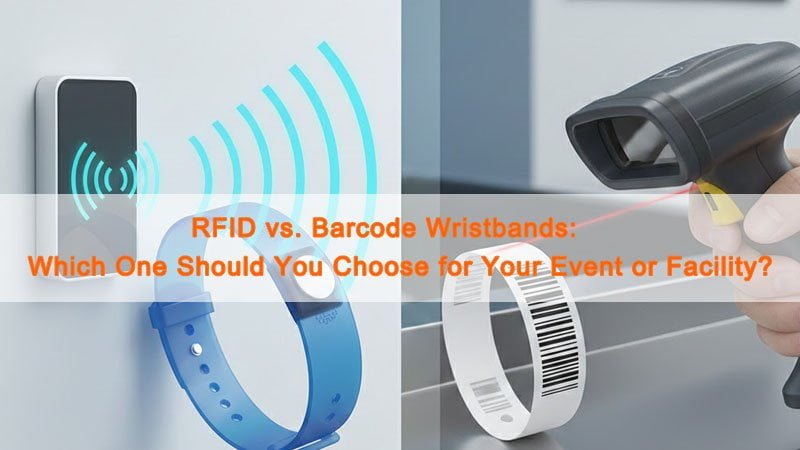
Technology has changed what a wristband can do. Today, wristbands are not just accessories—they are practical tools for identity verification, access control, cashless transactions, and attendee tracking.
For most B2B buyers, the decision comes down to two mainstream options:
-
RFID wristbands (contactless, data-driven, scalable)
-
Barcode wristbands (budget-friendly, simple, fast to deploy)
This guide explains the key differences and helps you choose the right wristband based on budget, security, user experience, and operational goals.
What Is an RFID Wristband?
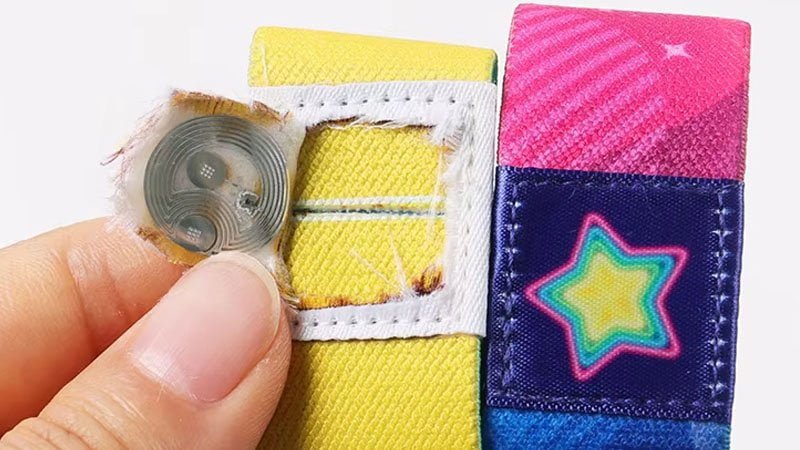
An RFID wristband is a wearable band embedded with a small RFID chip and antenna. The chip stores a unique ID (and sometimes additional data) that can be read wirelessly by an RFID reader.
Because RFID doesn’t require direct line-of-sight scanning, it’s widely used in:
-
Music festivals and large-scale events
-
Theme parks and attractions
-
Gyms and membership clubs
-
Workplaces, campuses, and restricted-access sites
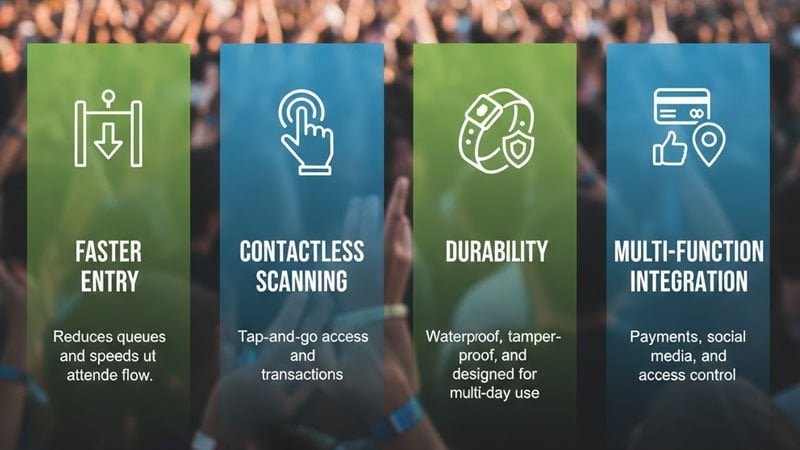
RFID wristbands are often selected when buyers need speed, durability, and multi-function integration (entry + payments + tracking).
How Does RFID Work?
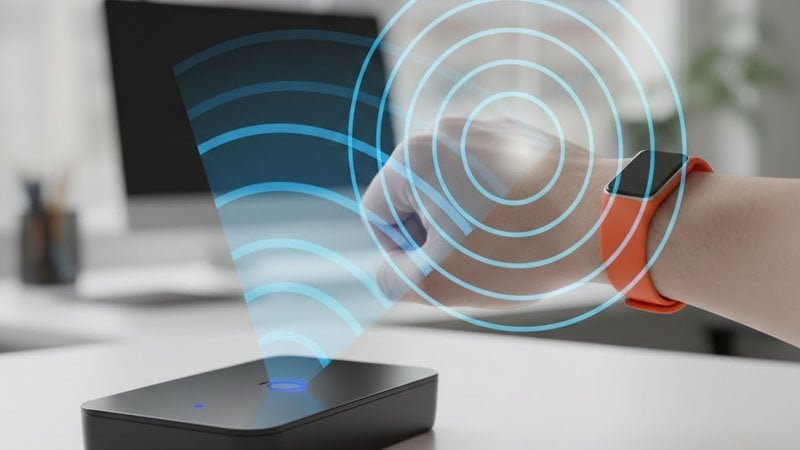
RFID uses radio waves to transmit data between the wristband and the reader. When the wristband enters the reader’s range, the chip responds by sending its stored ID.
Reading distance depends on the RFID type:
-
LF (Low Frequency): short range, stable near metal/water
-
HF (High Frequency, commonly 13.56 MHz): short-to-medium range, strong ecosystem, widely used for access/payment
-
UHF (Ultra High Frequency): longer range, suitable for logistics and asset tracking
Key Advantages of RFID Wristbands
1 Faster throughput in high-traffic environments
RFID enables quick taps or proximity reads and can reduce queue times at:
-
entry gates
-
checkpoints
-
VIP zones
-
redemption counters
2 Hands-free, frictionless user experience
Attendees can simply tap or wave their wrist for:
-
check-in
-
re-entry
-
locker access
-
cashless payments (when integrated)
3 Better durability and lower failure rate
Unlike printed codes that can fade, wrinkle, or get scratched, RFID chips are sealed inside the wristband. This makes them more reliable for:
-
outdoor events
-
water-related venues
-
multi-day use
-
high-wear scenarios
4 Multi-function integration
A single RFID wristband can support:
-
access control & zoning
-
cashless payment
-
attendee movement tracking
-
membership validation
-
anti-fraud measures (unique UID + backend rules)
What Is a Barcode Wristband?
Barcode wristbands store data in a printed barcode (or QR code). Staff scan the code with a barcode scanner or mobile device.
Barcode wristbands are a popular B2B choice for:
-
hospitals and clinics
-
one-day events and basic admission control
-
visitor management
-
inventory labeling and logistics workflows
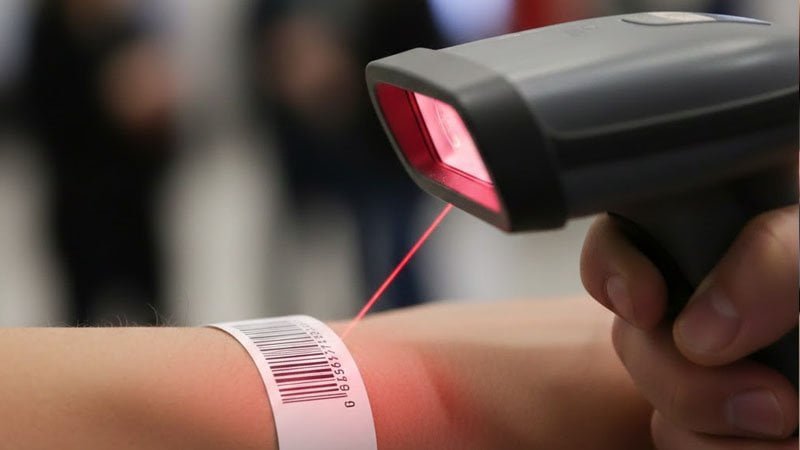
They are typically chosen for low cost, simplicity, and quick deployment.
When Barcode Wristbands Make the Most Sense
Barcode wristbands are ideal if you need:
-
a low-cost solution for short-term use
-
basic identity verification
-
one-time scanning (or limited scans)
-
easy integration with existing barcode workflows
Common use cases include:
-
Healthcare: patient identification and medication matching
-
Events: general admission, single-entry tickets
-
Warehousing & logistics: fast labeling and scanning
RFID vs. Barcode Wristbands: Quick Comparison
| Factor | RFID Wristbands | Barcode Wristbands |
|---|---|---|
| Scan method | Contactless (no line-of-sight) | Line-of-sight required |
| Speed & throughput | Very fast, better for crowds | Fast but depends on alignment/visibility |
| Durability | High (chip sealed inside) | Medium (print can wear/fade) |
| Security | Higher (unique UID, optional encryption) | Lower (codes can be copied if not controlled) |
| Functions | Entry + cashless + tracking + zoning | Mainly ID/check-in/admission |
| Best for | Large events, theme parks, gyms, workplaces | Budget events, hospitals, simple entry |
| Unit cost | Higher | Lower |
How to Choose: A Practical Buying Checklist
Choose RFID wristbands if you need:
-
Contactless entry with a premium guest experience
-
High-speed verification in dense crowds
-
Stronger anti-fraud controls
-
Multi-zone access (VIP, backstage, staff areas)
-
Cashless payments or locker systems
-
Reusable wristbands or multi-day events
Choose barcode wristbands if you need:
-
The lowest cost per unit
-
A short-term event (single day / basic entry)
-
Simple ID verification with minimal infrastructure
-
Compatibility with existing barcode scanners or mobile apps
Pro Tips for B2B Buyers
-
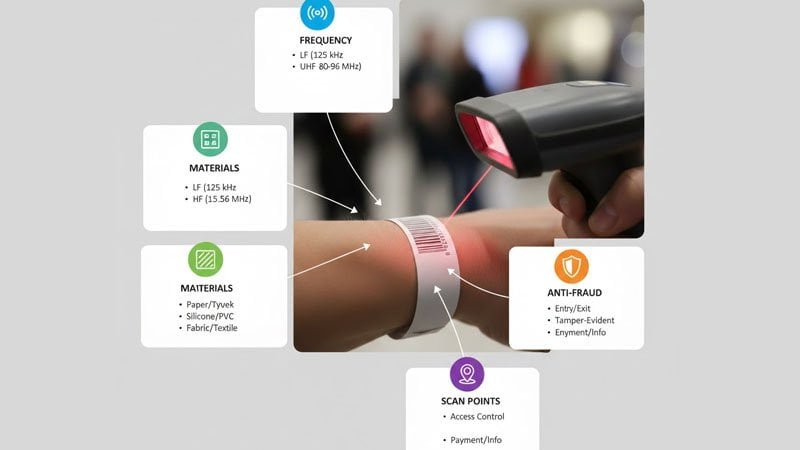
Define scan frequency: One-time scan vs multiple scans per day changes the ROI.
-
Match to your system: Confirm whether your software supports HF/UHF RFID, QR codes, or both.
-
Select the right material:
-
Silicone / TPU: water-resistant, durable, reusable
-
Fabric / woven: comfortable, premium branding
-
PVC / vinyl: cost-effective for short-term use
-
-
Plan anti-fraud measures: For events, consider unique serials, tamper-proof closures, and backend validation rules.
Conclusion: Which Wristband Is Right for You?
Both RFID and barcode wristbands are proven identification tools. The best choice depends on your priorities:
-
If your goal is simple, cost-effective, and fast to deploy, barcode wristbands are a strong option.
-
If your goal is speed, durability, better security, and multi-function integration, RFID wristbands are a smarter long-term investment.
If you want, we can help you choose the best configuration based on your event size, scan points, and budget—then provide a recommended spec sheet (chip type / frequency / materials / closure / printing options).