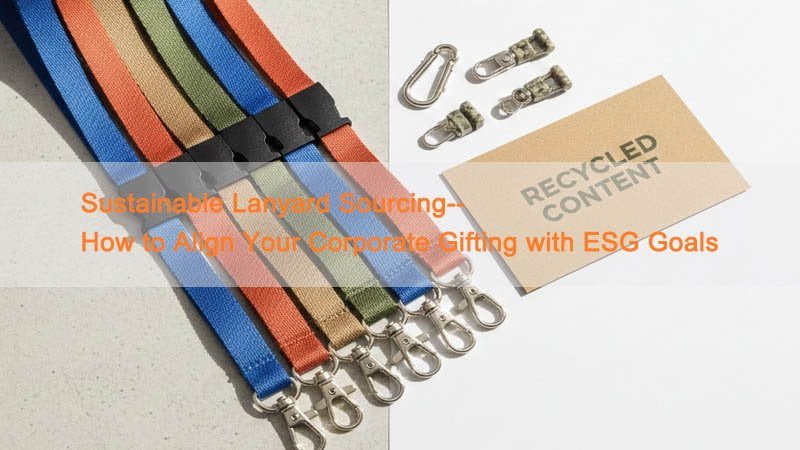
When “Small” Merchandise Creates Big ESG Exposure
Corporate gifting and event merchandise can create outsized environmental and reputational impact—especially when items are produced in high volumes, distributed widely, and disposed of quickly. Lanyards are a prime example: they are low-cost, high-visibility, and frequently treated as disposable.
Sustainable lanyards offer a practical way to align branded merchandise with ESG goals without sacrificing brand presence. By selecting lower-impact materials, verifying responsible manufacturing, controlling chemical risk, and designing for reuse or recovery, companies can turn a routine giveaway into a documented, auditable sustainability action.
In brief: Sustainable lanyards reduce impact through verified recycled or renewable materials, responsible manufacturing practices, reduced packaging, and end-of-life planning—supporting ESG targets while keeping branding front and center at events.
Why Sustainable Lanyards Matter in Corporate Gifting
Traditional lanyards are often designed for short-term use and are difficult to recover at the end of an event. The result is predictable: unnecessary waste, avoidable emissions, and increased scrutiny from stakeholders who expect ESG commitments to show up in everyday procurement decisions.
Sustainable lanyards matter because they create a clear line between what a company says (values) and what it buys (behavior). For procurement teams, they are a manageable category to improve quickly—one where specifications, documentation, and supplier controls can meaningfully reduce risk.
Key takeaway: Treat lanyards as a “high-visibility ESG proof point”—a small item that can demonstrate credible, measurable progress when sourced correctly.

What ESG Means for Promotional Products and Event Giveaways
ESG in promotional products is not a slogan; it is a sourcing discipline.
-
Environmental (E): material footprint, energy use, waste, packaging, and end-of-life outcomes
-
Social (S): labor standards, worker health & safety, working hours, wages, and subcontracting controls
-
Governance (G): traceability, certifications, claims substantiation, audit programs, and corrective action closure
When these elements are built into product specifications and supplier qualification, promotional items shift from “swag” to an accountable part of responsible procurement.
Key takeaway: ESG-aligned gifting requires the same rigor as other supplier-managed categories: requirements, verification, and evidence.

Material Choices: From Conventional Polyester to rPET and Beyond
Material selection is the first major lever. For lanyards, the common sustainability pathways are:
-
Recycled synthetics (e.g., rPET):
Maintains performance similar to conventional polyester while reducing reliance on virgin fossil-based feedstock. ESG value depends on verified recycled content and traceable chain-of-custody. -
Renewable natural fibers (e.g., organic cotton, hemp):
Can support renewable sourcing narratives and, depending on local waste systems, may offer improved end-of-life options. Requires careful consideration of durability, wash performance, and dye/chemical controls. -
Recycled cotton blends:
Useful for certain applications, but performance and color consistency can vary; governance and testing are important.
Instead of overpromising on “best material,” a practical approach is to align material choice with use case (one-day event vs. daily staff use), brand requirements (color fidelity), and evidence availability (documentation and certification).
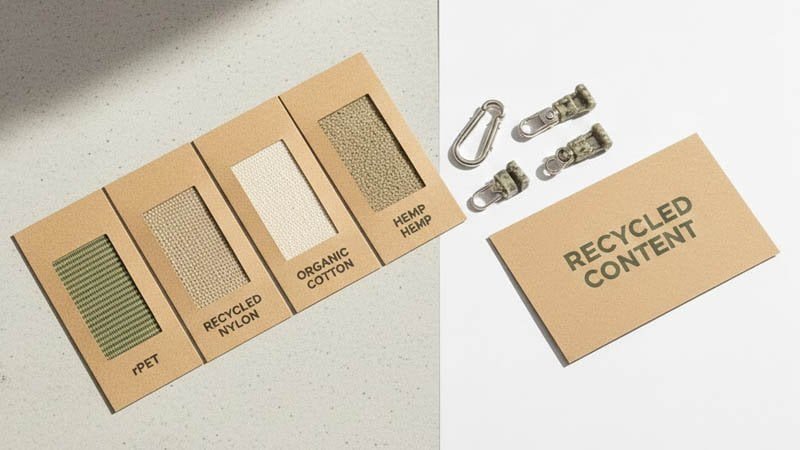
Key takeaway: Recycled content only counts as ESG progress when it is verifiable and documented.
Durability First: The Most Sustainable Lanyard Is the One People Keep
Longevity is an underrated sustainability metric. A durable lanyard reduces replacement frequency, prevents waste, and improves cost-per-use—often delivering both ESG benefits and better brand ROI.
Durability levers procurement can specify:
-
reinforced stitching and edge finishing
-
robust swivel hooks and connectors
-
breakaway safety options designed for repeated use
-
abrasion resistance and colorfastness requirements
-
washability/disinfection compatibility for healthcare and industrial use cases
Key takeaway: The simplest circular strategy is designing a lanyard worth reusing.
Printing, Dyes, and Chemical Management: Reduce Hidden Environmental Risk
For worn textile accessories, chemical management matters as much as material selection. Printing and dyeing can introduce compliance risk (restricted substances), worker safety issues, and wastewater concerns if not controlled.
Lower-risk printing practices often include:
-
water-based or lower-VOC ink systems (where feasible for the design)
-
process controls that reduce setup waste and rework
-
restricted substances management (RSL/MRSL-aligned practices)
-
third-party testing for higher-risk programs or large volumes
Rather than relying on vague “eco ink” claims, procurement should ask for: (1) restricted substances declarations, (2) test results when needed, and (3) a documented chemical management process.
Key takeaway: Sustainability claims around printing should be supported by process evidence, not marketing language.
Responsible Manufacturing: Social Compliance and Worker Welfare
The Social pillar becomes real when you can demonstrate auditable labor standards and safe workplaces. For lanyards, the risk areas often appear in high-volume production steps: sewing, printing, assembly, and packaging—especially if subcontracting is used.
Procurement due diligence should cover:
-
third-party social audit status and recency
-
corrective action plans (CAP) and closure discipline
-
working hours and wage compliance
-
worker health & safety training and PPE usage
-
transparency around subcontractors and outsourced steps
Key takeaway: “Ethical” is not a label; it is an auditable management system with evidence.
Governance & Claims: How to Avoid Greenwashing in “Eco” Lanyards
Greenwashing risk is high in promotional products because claims are easy to print and hard to verify. Strong governance protects both ESG credibility and brand reputation.
Common pitfalls to avoid:
-
“eco-friendly” without a defined metric
-
recycled claims without traceable documentation
-
vague “biodegradable” language without end-of-life context
-
“carbon neutral” claims without boundaries, method, and verification
Better practice: Use claims that are specific, bounded, and evidence-backed, such as:
-
“Made with verified recycled polyester (documentation available upon request).”
-
“Packaging is plastic-free and made from recycled paper.”
-
“Supplier maintains audited social compliance and documented corrective actions.”
Key takeaway: If a claim cannot be supported in an audit file, it should not appear in marketing copy.
Packaging and Kitting: Cutting Waste Without Sacrificing Brand Experience
Packaging can quietly dominate the waste profile, especially when every lanyard is individually packed in plastic. A sustainable approach focuses on right-sizing and material simplification.
Preferred options:
-
bulk packaging for events where feasible
-
paper-based bands or recycled kraft packaging
-
minimal inserts (replace with QR code landing pages)
-
packaging requirements aligned with local recycling systems
Key takeaway: Sustainable presentation is not less premium; it is more intentional.
End-of-Life Strategies: Reuse, Take-Back Programs, and Recyclability
End-of-life is where many “sustainable” products fail—because no collection system exists. Practical strategies include:
-
Design for disassembly: detachable hook/buckle so materials can be separated
-
Event take-back: collection boxes and clear signage
-
Reuse-first programs: neutral designs and durable hardware to encourage continued use
-
Recovery partnerships: work with recyclers where feasible, recognizing that local infrastructure varies
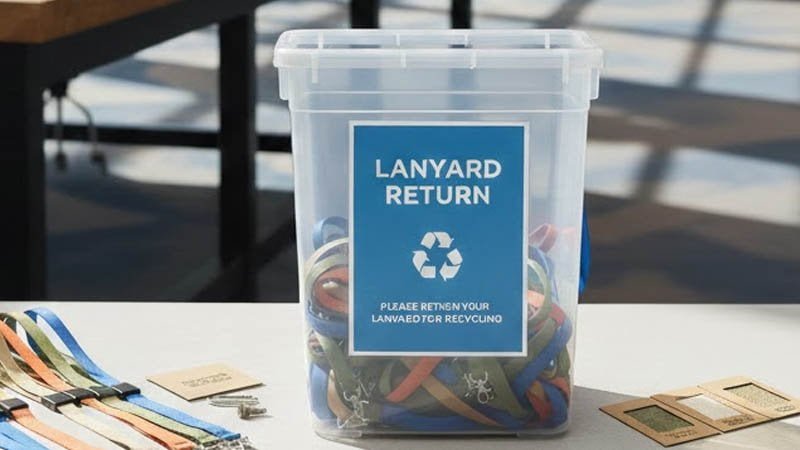
Key takeaway: End-of-life success depends on design plus a realistic collection plan.
Conclusion: Turning Small Gifts Into Measurable ESG Wins
Sustainable lanyards are a practical way to convert corporate gifting into a documented ESG action. When material selection, durability, chemical management, packaging reduction, and governance controls work together, lanyards become more than event accessories—they become evidence of responsible procurement.