At large-scale events and busy venues, long lines, misplaced tickets, slow verification, and inefficient access control can quickly affect both operations and customer satisfaction. RFID wristbands help solve these challenges by combining identification, access authorization, and convenience into a single wearable solution.
Today, RFID wristbands are widely used for secure entry, cashless payments, guest management, and access monitoring across events, hospitality environments, and controlled-access facilities. By reducing manual checks and streamlining movement, they can improve efficiency, shorten wait times, and create a smoother overall user experience.
The same advantages extend beyond event entrances. In hotels, resorts, and secure workplaces, RFID wristbands can support faster access, more flexible permission control, and better operational visibility. Their value lies not in novelty, but in how effectively they improve speed, security, and day-to-day management.
RFID Wristbands for High-Traffic Events
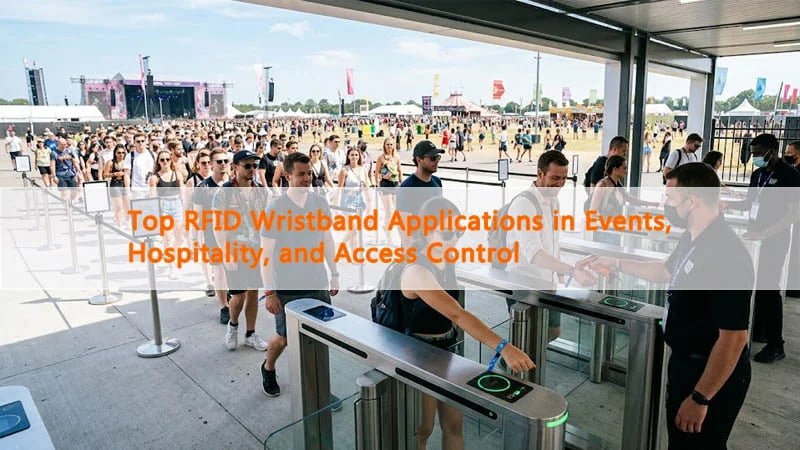
In festivals, exhibitions, concerts, sports venues, and trade shows, entry speed has a direct impact on crowd flow, staffing efficiency, and attendee satisfaction. Long queues at access points can slow operations, create congestion, and negatively affect the guest experience before the event even begins.
RFID wristbands help event organizers replace manual ticket checks with fast, contactless validation. This makes it easier to manage large numbers of attendees, reduce waiting times, and maintain smoother movement through gates and restricted areas.
In practice, RFID wristbands are particularly useful because each credential can be linked to an attendee’s registration profile. Instead of relying on printed tickets or repeated manual verification, guests can enter with a quick scan, reducing delays caused by lost passes, damaged paper tickets, or repeated identity checks.
Another major benefit is operational visibility. RFID systems can provide useful data such as peak entry times, gate usage patterns, and congestion points. This information helps organizers improve venue layouts, adjust staffing, and plan access points more effectively for future events.
Here is how RFID wristbands support event operations:
| Feature | Operational Benefit | Typical Impact |
|---|---|---|
| Fast Entry | Replaces manual ticket validation | Shorter wait times at gates |
| Credential Verification | Links access to attendee registration | Fewer disruptions caused by lost or damaged tickets |
| Crowd Flow Visibility | Tracks movement by entry point or zone | Better routing and layout decisions |
| Staff Efficiency | Reduces manual checking workload | More efficient use of event personnel |
In addition to improving speed, RFID wristbands can also strengthen event security by helping ensure that only authorized attendees enter designated areas such as VIP zones, backstage sections, or staff-only locations. For organizers, that means more control and a more efficient entry process. For guests, it means a smoother and more reliable event experience.
RFID Wristbands in Hospitality and Guest Experience

In hospitality environments such as resorts, hotels, water parks, cruise operations, and all-inclusive properties, RFID wristbands can function as multi-purpose guest credentials. They may be used for room access, amenity access, cashless purchases, reservation verification, and guest identification.
By combining multiple functions into one wearable device, RFID wristbands help reduce friction throughout the guest journey. Instead of carrying room cards, cash, or printed vouchers, guests can access services more conveniently while staff can manage permissions more efficiently.
A typical hospitality workflow may look like this:
- Check-in: The guest receives an RFID wristband linked to their booking profile.
- Room Access: The wristband is used as a convenient room credential.
- On-Site Services: Guests can use the wristband for approved amenities such as spas, pools, dining outlets, or retail purchases.
- Access Authorization: Different access rights can be assigned based on room type, package level, or guest status.
- Check-out: The wristband can be deactivated or reset in the property management system.
This kind of workflow supports a more seamless guest experience while also helping hospitality operators improve service consistency. In many properties, RFID wristbands make it easier to streamline guest movement, reduce dependency on physical cards, and simplify payment and access processes across the site.
Customization also adds branding value. In resorts, themed venues, and premium guest programs, a well-designed RFID wristband can function not only as an access credential but also as a visible brand touchpoint. Custom colors, logos, patterns, and themed designs can enhance presentation and reinforce brand identity throughout the guest stay.
RFID-generated usage data can also support operational planning. Properties may use access and service patterns to identify peak check-in periods, monitor amenity usage, and improve staffing allocation across front desk, guest service, and housekeeping functions.
Here is how RFID wristbands create value in hospitality:
| Benefit | Operational Value | Typical Outcome |
|---|---|---|
| Streamlined Check-In | Reduces manual handling and queue pressure | Smoother arrival experience |
| Cashless Convenience | Simplifies guest spending on property | Faster transactions |
| Multi-Area Access | Combines room and amenity permissions | More convenient guest movement |
| Brand Visibility | Supports custom colors and logo designs | Stronger brand presentation |
| Usage Data | Helps monitor service and access patterns | Better operational planning |
For hospitality operators, RFID wristbands offer a practical way to combine convenience, access control, and service efficiency in one wearable solution. For guests, they create a simpler, more comfortable, and more seamless on-property experience.
RFID Wristbands in Access Control Systems

Traditional keys and access cards can create security and administrative challenges when they are lost, copied, or not returned on time. In offices, schools, healthcare environments, industrial workplaces, membership facilities, and other controlled-access settings, RFID wristbands can provide a more flexible and manageable alternative.
In many access control environments, RFID wristbands can replace or complement traditional keys and ID cards. They support centralized permission management, faster credential deactivation, and better visibility into entry activity across different zones and user groups.
Compared with conventional credentials, RFID wristbands offer several practical advantages:
- Individual credential assignment for each authorized user
- Faster deactivation if a wristband is lost or no longer valid
- Integration with access control software and centralized dashboards
- Configurable permissions based on area, schedule, or user role
- Easier management of temporary staff, contractors, visitors, or members
With centralized system control, administrators can update permissions, deactivate lost credentials, and review entry records without relying on physical key replacement or manual reissuance processes. This improves both response speed and overall operational control.
Access logs are another important advantage. RFID-based systems can provide clear visibility into where and when credentials are used, which supports auditing, incident review, and more effective enforcement of access policies. For facilities that require traceability and zone-based security, this can be a significant operational benefit.
Here is a general comparison between traditional credentials and RFID wristbands in access control:
| Detail | Traditional Cards or Keys | RFID Wristbands |
|---|---|---|
| Credential Management | Often more manual | Easier to manage digitally |
| Deactivation Speed | May require more steps | Typically faster through software |
| Access Visibility | Depends on system setup | Better support for digital logging |
| User Convenience | Easy to forget or misplace | Wearable and harder to lose during use |
| Application Flexibility | More limited by format | Suitable for staff, visitors, members, or temporary users |
Although RFID wristbands may involve a different upfront cost structure than traditional credentials, many organizations consider the operational benefits worthwhile, especially when security, traceability, and administrative efficiency are priorities.
Conclusion
RFID wristbands have become a practical solution for organizations that need faster access, better user management, and more efficient operations. In events, they support smoother entry and better crowd control. In hospitality, they improve convenience while helping properties streamline guest services. In access control, they provide a more flexible and traceable way to manage permissions and movement.
As businesses continue to look for ways to improve both user experience and operational control, RFID wristbands stand out as a versatile option that combines convenience, security, and real-time system visibility in a single wearable format.