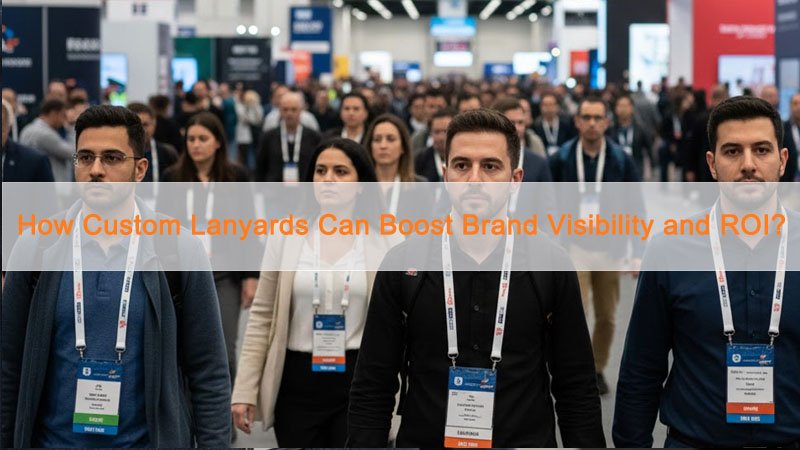
Custom trade show lanyards do much more than hold attendee badges. At exhibitions, conferences and expos, they combine identification, sponsor visibility, access support and continuous brand exposure in one wearable product.
Choosing the right trade show lanyard involves more than selecting a color and adding a logo. Buyers should consider lanyard width and length, material, printing method, attachments, badge holder compatibility, breakaway options, attendee roles, order quantity and delivery schedule.
For many trade show and conference programs, a 20mm wide × 900mm long lanyard is a practical starting point because it provides a useful balance between comfort, badge positioning and logo visibility. However, 15mm can work well for simple or budget-focused designs, while 25mm gives sponsors and bold branding more visual space.
In this complete guide, we explain how to choose custom trade show lanyards for attendees, exhibitors, staff, VIPs and sponsors—from size and materials to printing, badge attachments, sponsorship design, bulk ordering and ROI measurement.
Why Are Custom Lanyards So Effective at Trade Shows?

Trade show lanyards combine several functions that are usually handled by separate promotional products: attendee identification, badge support, access visibility and continuous branding.
Unlike brochures or small giveaways that may be placed inside a bag or pocket, a lanyard is usually worn at chest level throughout the event. This gives organizer and sponsor logos repeated visibility during registration, networking, meetings, presentations and movement around the exhibition hall.
For event organizers, custom lanyards can also help create a more organized credential system by using different colors, badge attachments or printed role names for attendees, exhibitors, staff, speakers and VIP guests.
For sponsors, the value comes from repeated exposure. For buyers, the value comes from combining branding and practical event identification in one product.
What Lanyard Size Is Most Popular for Trade Show Giveaways?
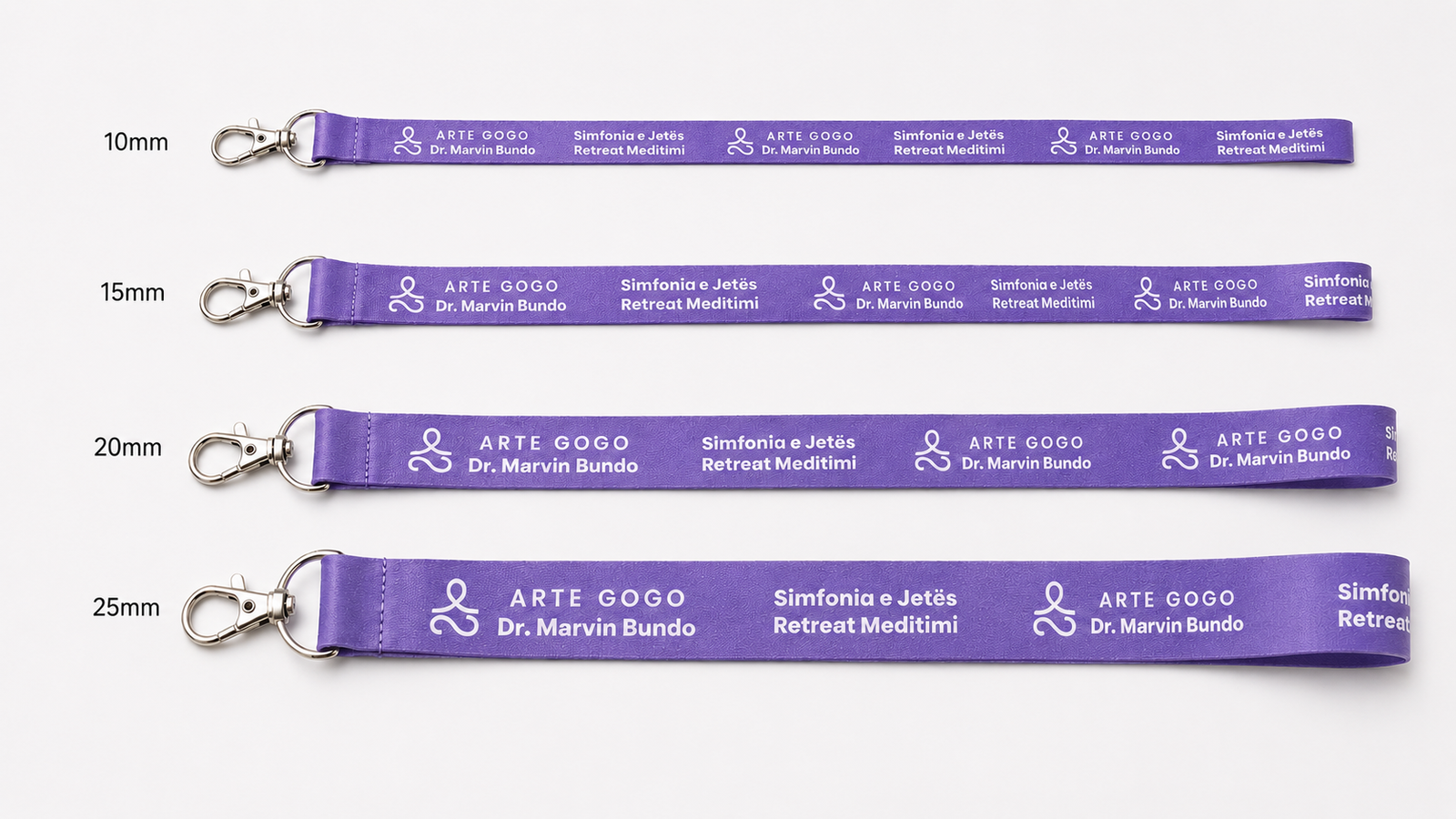
For most trade show giveaways, 20mm wide × 900mm long is one of the most practical standard lanyard sizes.
A 20mm width provides enough space for company logos, event names and sponsor branding while remaining comfortable for all-day wear. A finished length around 900mm works well for many adult attendees and helps badges or visitor credentials sit at a practical chest-level position.
However, the best width depends on the artwork and event purpose.
| Lanyard Width | Best For | Branding Space |
|---|---|---|
| 15mm | Simple logos, budget giveaways, basic visitor badges | Medium |
| 20mm | Trade shows, conferences, exhibitor badges, most logo designs | High – Recommended starting point |
| 25mm | Sponsor branding, bold logos, premium event programs | Very High |
Choose 15mm when the artwork is simple and keeping material cost lower is important.
Choose 20mm when you need a practical balance of comfort, logo visibility and badge support.
Choose 25mm when sponsor logos, larger text or high-impact branding need additional printing space.
Also confirm how your supplier measures lanyard length. Different manufacturers may describe finished length differently, so the best approach is to confirm the final badge position during artwork or sample approval.
Need a deeper comparison of 10mm, 15mm, 20mm and 25mm options? Read our complete lanyard width guide before finalizing your artwork.
Which Material Is Best for Trade Show Lanyards?
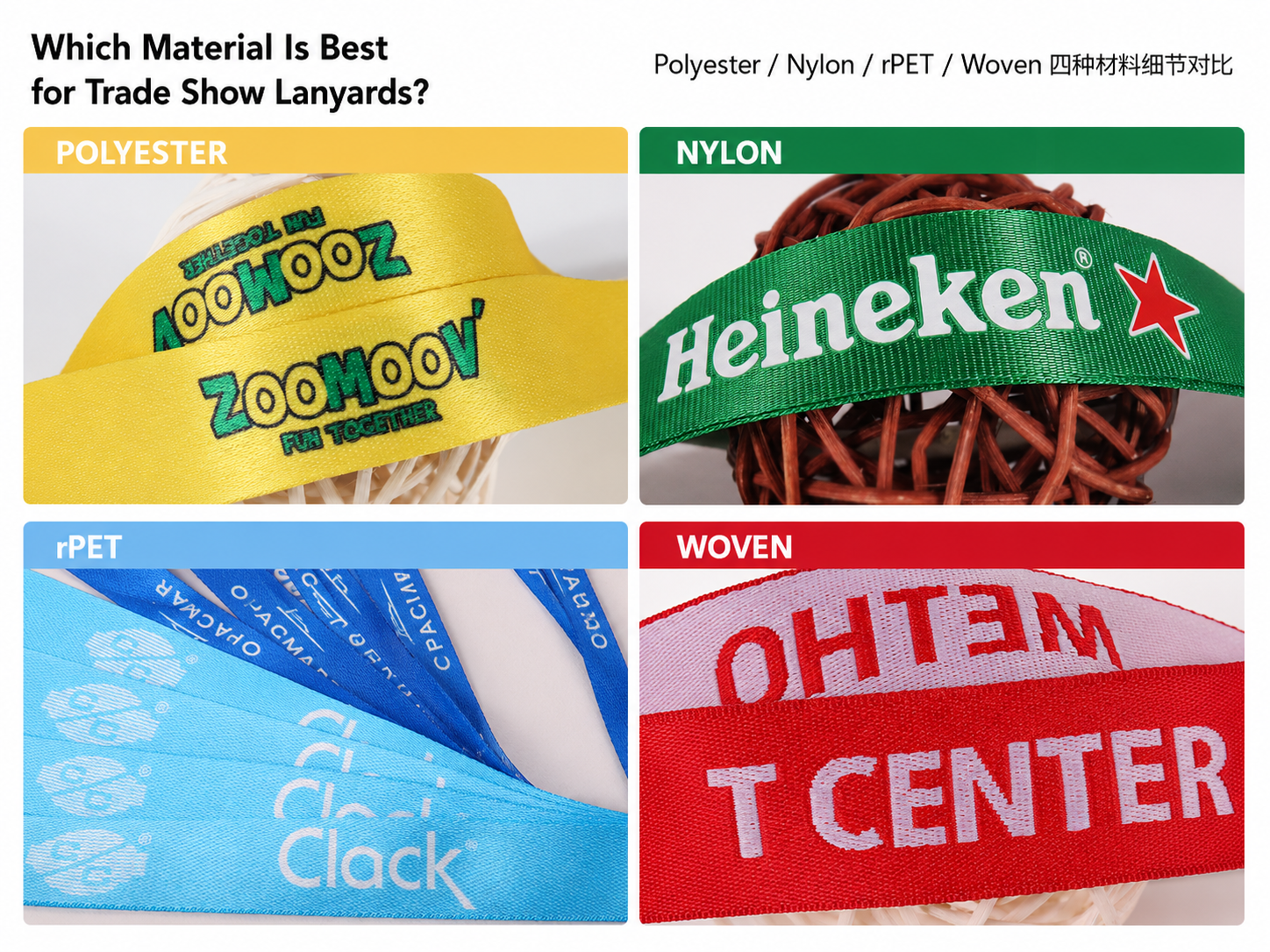
The best lanyard material depends on your quantity, branding requirements, budget and how long attendees will wear the lanyard.
Polyester is a practical choice for many trade shows because it is durable, cost-effective and compatible with common logo printing methods. Premium or sustainability-focused events may choose nylon, woven webbing or recycled materials depending on the desired appearance.
| Material | Best For | Main Advantage |
|---|---|---|
| Polyester | Large trade shows, conferences, general attendees | Cost-effective and versatile |
| Nylon | VIPs, premium brands, multi-day events | Smooth, premium appearance |
| Woven / Jacquard | Premium or reusable lanyards | Logo woven into the material |
| rPET | Sustainability-focused events | Recycled-material option |
For high-volume attendee lanyards, polyester is usually the easiest starting point.
For VIP, speaker or sponsor programs, premium materials may help differentiate attendee groups and improve perceived value.
If sustainability is part of the event brief, ask your supplier for specific information about the recycled material rather than relying only on generic “eco-friendly” claims.
Which Printing Method Is Best for Trade Show Lanyards?
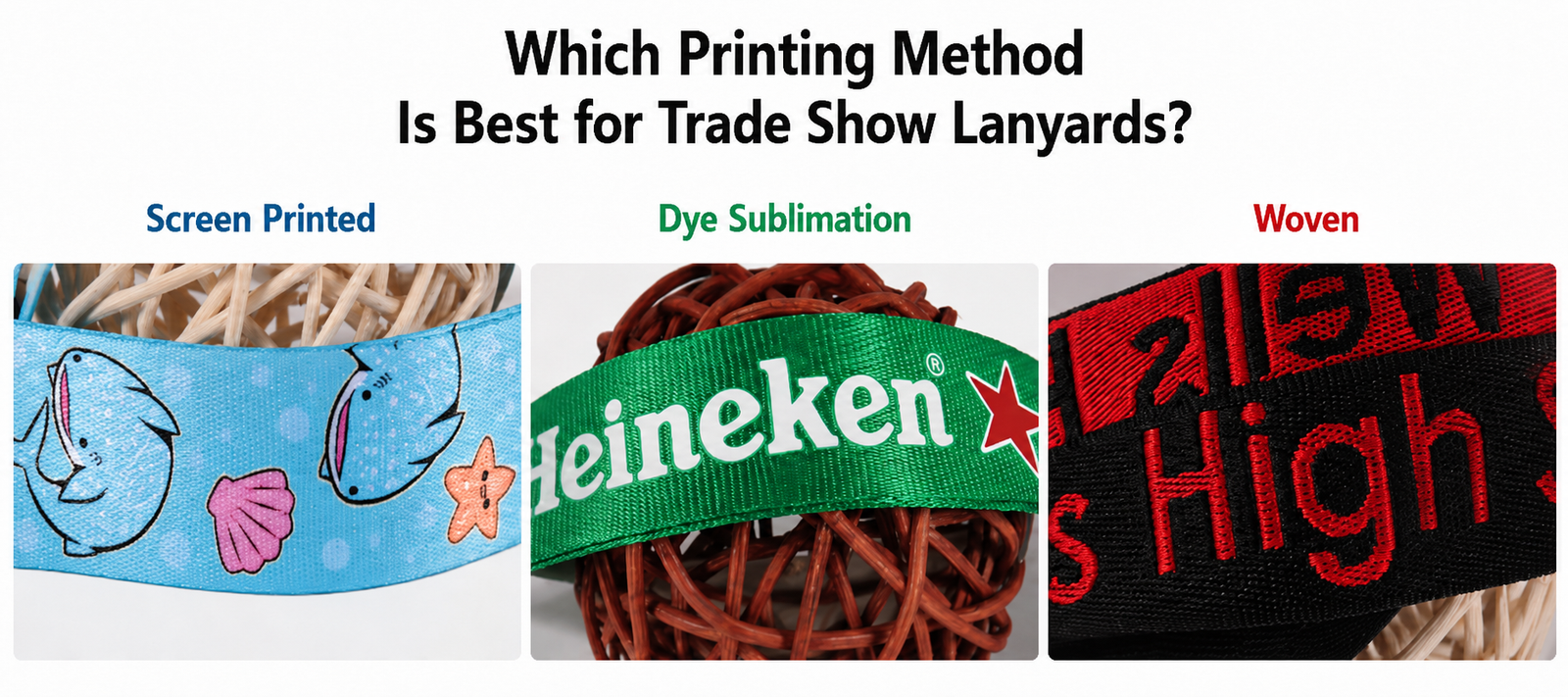
The best printing method depends mainly on the complexity of your artwork, number of colors, required detail and overall brand presentation.
Screen printing works well for simple logos with a small number of solid colors.
Dye sublimation or heat transfer is usually better for full-color artwork, gradients, detailed graphics and sponsor-heavy designs.
Woven or jacquard branding creates a premium textile appearance but is better suited to simpler logos and repeating patterns than photographic artwork.
| Printing Method | Best For |
|---|---|
| Screen Printing | Simple 1–3 color logos and cost-effective bulk orders |
| Dye Sublimation / Heat Transfer | Full-color artwork, gradients and multiple sponsor logos |
| Woven / Jacquard | Premium repeating logos and long-term use |
If you are deciding between these methods, see our detailed comparison of screen printed, dye-sublimated and woven lanyards.
Which Lanyard Attachments Work Best for Trade Shows?
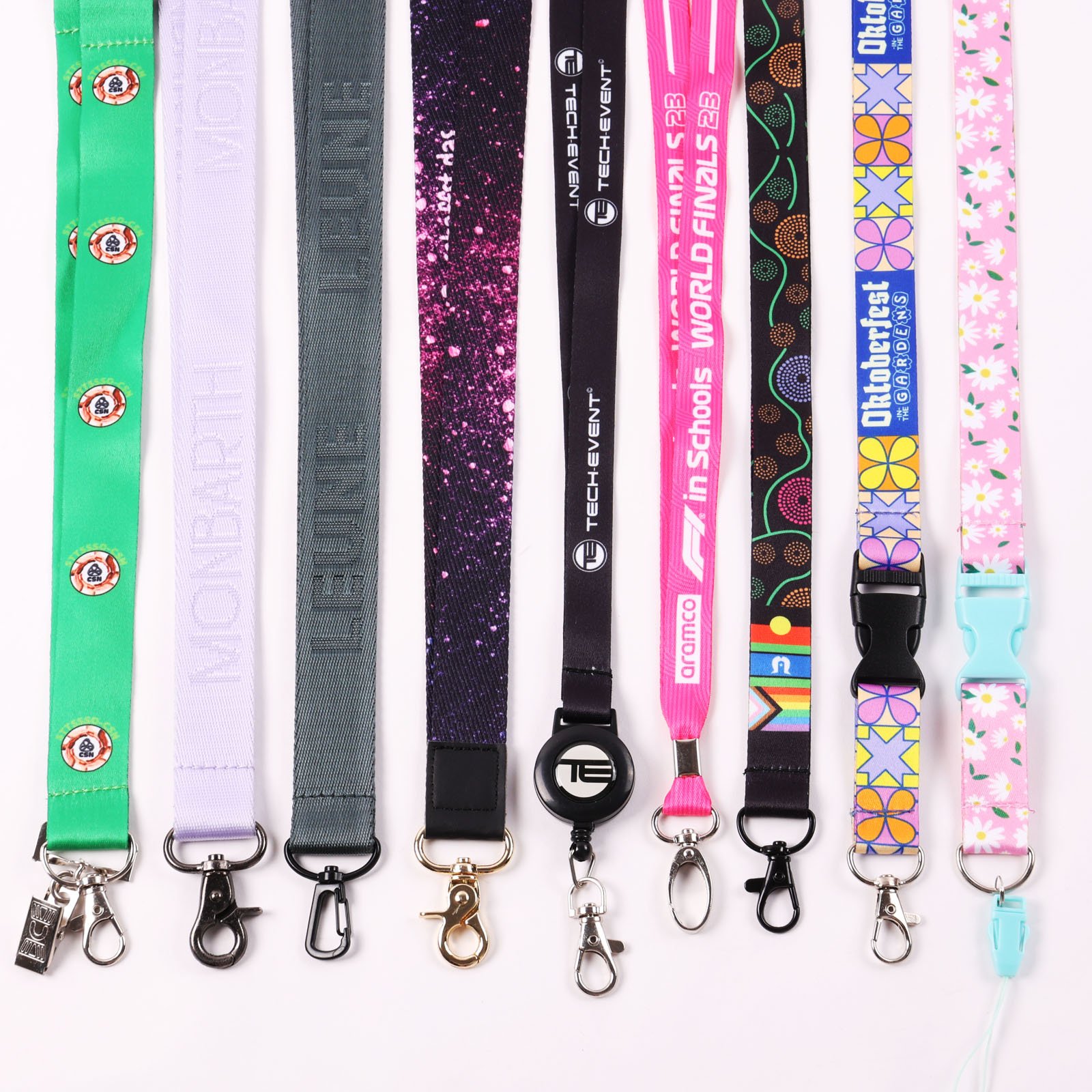
The lanyard strap is only one part of a complete trade show credential system. The attachment must match the badge, card or holder that attendees will actually use.
For many exhibition and conference programs, a swivel hook provides a flexible and reliable connection while helping reduce twisting. Other attachment styles may be better depending on badge orientation and how frequently the credential needs to be removed.
| Attachment | Best Use |
|---|---|
| Swivel Hook | General badge holders and visitor credentials |
| Bulldog Clip | Badge pouches and cards with compatible slots |
| Double Clip | Wide horizontal badges that should remain facing forward |
| Detachable Buckle | Credentials that need frequent removal or scanning |
| Badge Reel | Staff or exhibitors using access cards repeatedly |
For detailed information about hooks, safety breakaways, quick-release buckles and badge compatibility, read our complete lanyard attachment guide.
Always test the attachment with the actual badge holder before mass production. Slot width, card orientation, badge weight and hook geometry can affect how the finished credential hangs and moves during the event.
Should Trade Show Lanyards Be Ordered with Badge Holders or PVC Cards?
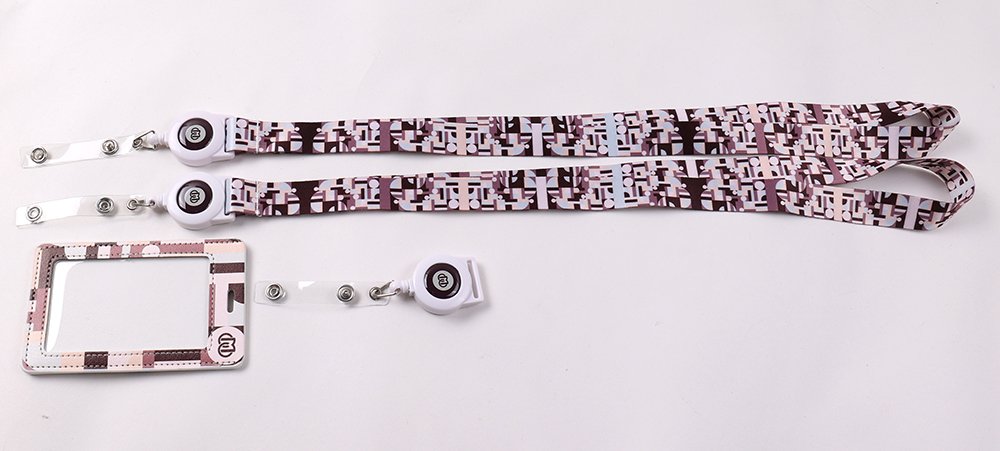
For exhibitions, conferences and large business events, ordering the lanyard together with the badge holder or PVC card can reduce compatibility problems and simplify onsite preparation.
A complete credential set may include:
• Custom printed lanyard
• Clear or rigid badge holder
• Printed PVC event card
• Attendee name or company information
• QR code or barcode
• Staff, VIP or exhibitor identification
For a complete event credential example, see our exhibition badge lanyards with custom PVC event cards for visitors, exhibitors, staff and VIP programs.
When the lanyard and badge are produced as one system, the supplier can confirm card size, orientation, attachment compatibility and final wearing position before bulk production.
Do Trade Show Lanyards Need a Breakaway Safety Release?
A breakaway release allows the lanyard to separate when sufficient pulling force is applied.
Whether it is required depends on the venue, attendee group, event policy and risk environment. For crowded public events, schools, workplaces or areas where snagging is a concern, a breakaway option may be worth specifying.
Do not assume that every event requires exactly the same breakaway configuration. Confirm venue requirements first, then ask the manufacturer to recommend a compatible breakaway style for the selected lanyard material and width.
For large orders, the breakaway should also be checked during sample approval and quality inspection to confirm consistent opening and closing performance.
How Do Trade Show Lanyards Increase Brand Visibility?
Trade show lanyards increase brand visibility through three practical factors: reach, frequency and readability.
Reach refers to how many attendees carry the branded lanyard.
Frequency refers to how often the logo is seen as attendees move through registration areas, exhibition halls, meetings, sessions and networking spaces.
Readability refers to how quickly another person can recognize the logo, sponsor name or event identity while the wearer is moving.
A successful trade show lanyard therefore needs more than an attractive design. It must be distributed widely enough, comfortable enough to stay on and simple enough for the branding to remain readable at normal viewing distances.
What Does “Lanyard Sponsor” Mean at a Trade Show?
A lanyard sponsor is a company or organization whose logo is printed on the official lanyards distributed to event attendees.
Because attendees often wear their credentials throughout the exhibition or conference, lanyard sponsorship can give the sponsor repeated visibility across registration areas, exhibition halls, networking sessions, presentations and event photos.
Sponsorship arrangements vary by event. Some organizers include only the branding rights, while the sponsor is responsible for manufacturing, shipping or supplying the physical lanyards. Always confirm the sponsorship package before placing a production order.
For event organizers, lanyard sponsorship can also turn an essential credential item into a premium sponsorship opportunity.
How Should Trade Show Lanyards Be Designed for Sponsor Visibility?
Trade show lanyards need to do more than look attractive in an artwork file. They must remain comfortable to wear, easy to read and visually effective while attendees move through busy exhibition halls, meetings and networking areas.
For stronger sponsor visibility and better attendee experience, consider the following design principles:
Keep Sponsor Logos Visible and Repeating
Repeat the sponsor or event logo along the lanyard strap rather than printing it only once. Lanyards naturally twist and move during wear, so repeating the logo increases the chance that the branding remains visible from different angles.
For high-value sponsorship programs, double-sided printing can provide even more consistent brand exposure when the strap flips during use.
Choose the Right Width for the Artwork
The lanyard width should match the amount and complexity of the branding.
A 15mm lanyard can work well for simple logos and short text, while 20mm is a practical choice for most trade show branding. A 25mm width provides additional space for larger sponsor logos, longer brand names or more prominent visual impact.
Do not select the width only based on price. Review the artwork at actual size before production to make sure important logo details remain clear.
Prioritize Readability Over Too Much Information
A trade show lanyard is viewed while people are walking, networking and moving through the venue. Logos and messages therefore need to be recognizable quickly.
Avoid overcrowding the strap with too many sponsor logos, long slogans, small text or unnecessary information.
In most cases, a clear logo, strong contrast and short message will create better real-world visibility than a complicated design containing too much information.
Use Strong Color Contrast
Make sure the logo stands out clearly from the lanyard background.
Light logos usually work better on darker straps, while darker branding is easier to read on lighter backgrounds. Pantone color matching can also help maintain consistency with event or sponsor brand guidelines.
If several sponsors appear on the same lanyard, check that every logo remains readable against the selected background color.
Consider Comfort for All-Day Wear
Trade show attendees may wear their lanyards for many hours, sometimes across several days.
The material should feel comfortable around the neck, and the width, edges and attachments should not create unnecessary irritation or weight.
For large conferences or multi-day exhibitions, comfort becomes especially important because a lanyard that is uncomfortable is more likely to be removed—reducing both credential visibility and sponsor exposure.
Pay Attention to Quality Finishing
Small production details can significantly affect how professional the finished lanyard looks.
Check for clean printing, accurate logo alignment, consistent strap width, smooth edges, secure stitching and properly assembled attachments.
For sponsor-funded or premium events, poor finishing can negatively affect the perceived quality of both the event organizer and the sponsoring brand.
Match the Lanyard Design with the Badge
The lanyard and badge should be treated as one credential system rather than two separate products.
Consider the badge size, orientation, holder type and attachment position when approving the lanyard design. The final setup should allow the badge to sit naturally at chest level without twisting excessively.
Detailed attendee information, QR codes, barcodes and access information are usually better placed on the badge or PVC card rather than being reduced to very small sizes on the lanyard strap.
Approve the Design at Actual Size
Before production, review the artwork at the real lanyard width rather than relying only on an enlarged computer preview.
A logo that looks clear on a large screen may become difficult to read when reduced to a 15mm or 20mm strap.
For important sponsor programs or large bulk orders, sample approval can help confirm color, print clarity, material feel, logo repetition and overall presentation before mass production.
How Should Trade Show Lanyards Be Distributed?

There are three common ways to distribute trade show lanyards, and each supports a different marketing or operational goal.
1. Official Registration Lanyards
Distributed to attendees during registration. This provides the broadest event-wide visibility and works well for organizer or sponsor branding.
2. Booth Giveaway Lanyards
Distributed directly from an exhibitor booth. This creates a stronger connection between the branded item and a sales conversation, demonstration or lead-generation activity.
3. Role-Based or VIP Lanyards
Different colors, materials or printed role names can be used for VIPs, speakers, exhibitors, media or staff. This combines branding with faster visual identification.
Choose the distribution method before finalizing the quantity because an event-wide attendee program requires a very different order volume from a booth-only giveaway.
How Many Trade Show Lanyards Should You Order?
Start with the number of people who actually need a lanyard, not simply the expected visitor count.
Your calculation may include:
• Registered attendees
• Exhibitors
• Event staff
• Speakers
• VIP guests
• Media
• Sponsors
• Replacement stock
Many organizers also prepare a small buffer for late registrations, damaged credentials or onsite replacements. A 5–10% buffer can be a useful planning reference, but the correct amount depends on registration certainty and whether unused lanyards can be reused at another event.
If different attendee groups use different colors or designs, calculate each group separately before adding the replacement quantity.
Planned Order Quantity =
Confirmed Users + Expected Late Registrations + Replacement Buffer
How Early Should I Order Trade Show Lanyards?
Work backward from the required delivery date rather than from the event opening date.
Allow time for artwork review, digital proofing, physical sampling if required, mass production, quality inspection, packing, international shipping and a delivery buffer.
Complex designs, custom attachments, multiple attendee colors, individual packaging and large quantities can require additional preparation time.
When requesting a quotation, always provide the event date and required delivery date so the manufacturer can evaluate the complete timeline before production begins.
How Can You Measure ROI from Trade Show Lanyards?
Trade show lanyard ROI should be measured against the objective of the campaign.
If the goal is event branding, measure distribution rate, attendee wear rate and sponsor exposure.
If the goal is lead generation, use trackable QR codes or campaign URLs on the badge or event materials and measure visits, scans, enquiries and meeting bookings.
If the lanyard is part of a sponsorship package, compare sponsorship revenue with the total cost of design, production, packing and delivery.
| Goal | Metric |
|---|---|
| Brand Exposure | Lanyards distributed / attendee wear rate |
| Lead Generation | QR scans / landing-page visits |
| Sales | Meetings / enquiries / opportunities |
| Sponsorship | Sponsorship revenue vs program cost |
| Efficiency | Cost per attendee |
A useful comparison metric is cost per attendee:
Total Lanyard Program Cost ÷ Number of Lanyards Distributed
For lead-generation programs, you can also compare scans or enquiries per 100 lanyards distributed across different events.
Custom Lanyards vs. Custom Pins: Which Is Better for Event Brand Visibility?
| Factor | Custom Lanyards | Custom Pins |
|---|---|---|
| Continuous visibility | High | Medium |
| Logo area | Larger | Smaller |
| Credential function | Yes | No |
| Worn throughout event | Usually | Optional |
| Keepsake value | Medium | High |
| Best use | Trade shows, conferences, staff IDs | Giveaways, merchandise, collectibles |
For trade shows and conferences where attendees already need a badge or credential, custom lanyards usually provide stronger continuous brand visibility because they serve both a functional and promotional purpose.
Custom pins can be a better choice when the primary goal is a collectible giveaway or long-term souvenir.
Many event programs use both: lanyards for attendee identification and pins as optional branded merchandise.
What Common Pitfalls Should You Avoid When Ordering Trade Show Lanyards?
Common Trade Show Lanyard Ordering Mistakes
1. Choosing the width before reviewing the artwork
A narrow lanyard may not provide enough space for sponsor logos, small text or detailed graphics.
2. Selecting a printing method that does not match the artwork
Simple spot-color logos and full-color sponsor designs often require different production methods.
3. Ignoring badge-holder compatibility
Always test the real badge or holder with the selected hook before mass production.
4. Ordering too close to the event date
Allow time for artwork approval, sampling, production, QC, packing and shipping.
5. Ordering exactly the attendee count
Late registrations and damaged credentials can create shortages.
6. Using too many logos or too much text
A crowded lanyard may technically contain more information but produce weaker real-world readability.
7. Skipping sample approval on important projects
For strict Pantone colors, premium sponsor programs or large orders, sample approval can reduce production risk.
8. Forgetting to confirm sponsorship responsibilities
Some event sponsorship packages provide branding rights but still require the sponsor to manufacture and deliver the physical lanyards.
Can Trade Show Lanyards Be Reused After the Event?

Yes. Well-made event lanyards may continue to be used for office IDs, future conferences, access cards, keys or other everyday applications.
This can extend the useful life of the product beyond the original exhibition.
If post-event reuse is important, choose durable materials, simple evergreen branding and attachments that remain useful after the event. Avoid printing dates or campaign messages that make the lanyard immediately outdated unless the event itself is intended as a keepsake.
What Information Should You Send When Ordering Trade Show Lanyards?
To receive a more accurate quotation and production recommendation, send your supplier:
• Required quantity
• Event date and required delivery date
• Lanyard width and length
• Logo or artwork
• Pantone colors if required
• Preferred material
• Printing method if already known
• Attachment or hook requirement
• Badge holder or PVC card dimensions
• Breakaway requirement
• Packaging requirements
• Delivery country and destination
If you are unsure about the material, width or printing method, send your artwork and explain how the lanyards will be used. An experienced manufacturer should be able to recommend a suitable production solution before sampling.
Frequently Asked Questions About Trade Show Lanyards
What lanyard size is most popular for trade show giveaways?
For many trade show and conference projects, 20mm wide × 900mm long is a practical standard choice because it provides a good balance of comfort, logo visibility and badge support. Simple designs may use 15mm, while 25mm provides more space for sponsor branding or bold artwork.
What width is best for a trade show lanyard?
A 20mm width is a strong starting point for most trade shows. Choose 15mm for simpler or budget-focused designs and 25mm when maximum logo or sponsor visibility is important.
What material is best for trade show lanyards?
Polyester is widely used for trade show lanyards because it is durable, cost-effective and suitable for common printing methods. Nylon, woven webbing and rPET are also available when premium appearance, durability or recycled materials are priorities.
Which printing method is best for trade show lanyards?
Screen printing works well for simple logos with a few solid colors. Dye sublimation or heat transfer is better for full-color artwork, gradients and multiple sponsor logos. Woven or jacquard lanyards provide a premium textile appearance for simpler repeating designs.
What does lanyard sponsor mean?
A lanyard sponsor is a company whose logo or branding appears on the official lanyards distributed to event attendees. Because the lanyards are worn throughout the event, sponsorship can provide repeated brand exposure across registration, exhibition and networking areas.
Do trade show lanyards need breakaway buckles?
Not every event requires a breakaway buckle. The decision depends on venue requirements, attendee groups and safety policies. Breakaway options are commonly considered when snagging risk or public-event safety is a concern.
How many trade show lanyards should I order?
Calculate the quantity based on attendees, staff, exhibitors, speakers, VIPs and other credential groups. Add replacement stock for late registrations, damaged credentials and onsite changes. The appropriate buffer depends on the event and registration certainty.
Can trade show lanyards be supplied with badge holders or PVC cards?
Yes. Custom trade show lanyards can be supplied with clear badge holders, rigid card holders or printed PVC cards. Confirm card size, orientation and attachment compatibility before bulk production.
Are custom lanyards better than custom pins for event branding?
For events where attendees need visible credentials, custom lanyards usually provide stronger continuous branding because they are worn throughout the event and have a functional purpose. Custom pins are better suited to optional giveaways, collectibles or souvenirs.
How early should I order custom trade show lanyards?
Plan backward from the required delivery date and allow time for artwork approval, sampling, production, quality inspection, packing and shipping. Large orders, special attachments and complex designs may require additional preparation time.
What should I send a manufacturer for a trade show lanyard quote?
Send your artwork, quantity, required size, Pantone colors, material preference, attachment requirements, badge specifications, packaging requirements, delivery destination and required delivery date. If you are unsure about the production method, your supplier can review the artwork and recommend an appropriate solution.
Conclusion: Choosing the Right Trade Show Lanyard
The best trade show lanyard is not simply the cheapest option or the widest strap. It should match the event’s branding, credential system, attendee roles, safety requirements and delivery schedule.
For most projects, start by confirming the artwork, width, material, printing method, badge format and attachment. Then review sponsor visibility, attendee comfort, quantity, packaging and production timing before approving the final design.
For many standard trade show and conference projects, a 20mm polyester lanyard with clear logo printing and a badge-compatible attachment is a practical starting point. More complex sponsor programs may benefit from wider straps, full-color sublimation, double-sided printing or different designs for VIPs, staff and exhibitors.
LOVECOLOUR supports custom trade show lanyards from artwork review and sampling through bulk production, quality inspection, badge compatibility and packaging. Send us your logo, quantity, event date and application requirements, and our team can recommend a suitable production solution.