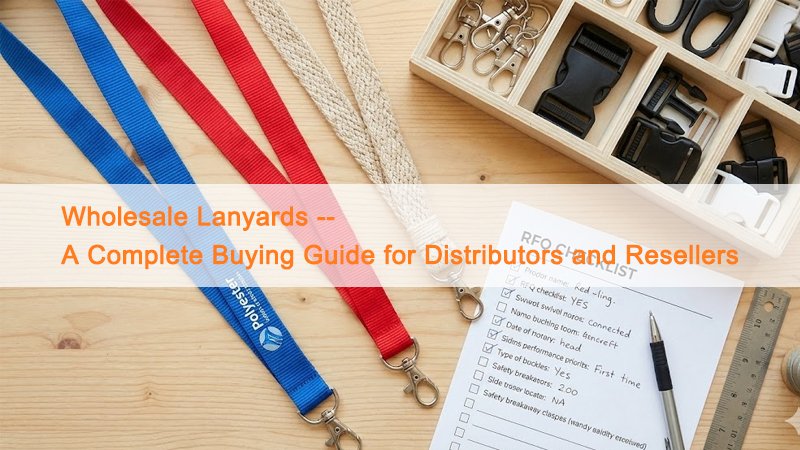
Low margins and inconsistent lanyard quality can quietly destroy a reseller’s business.
You lose clients, waste hours on rework, and bleed money through returns and replacements.
This wholesale buying guide turns lanyard sourcing into a repeatable system—so you can protect margin, reduce defects, and deliver on time.
In this guide, I share the exact steps I use to choose the right wholesale lanyards. You’ll learn practical sourcing workflows, pricing drivers, quality checks, RFQ structure, and “Good / Better / Best” sales bundles to increase average order value.
I wrote this guide to help resellers avoid the most common mistakes and save weeks of back-and-forth. Below is the step-by-step process I follow—so you can copy it, standardize it, and scale it.
Why buying wholesale lanyards is different for resellers
I used to treat lanyard sourcing like any other promo product.
That led to slow suppliers, mismatched specs, and inconsistent branding results.
Once I focused on reseller priorities, the entire buying process became faster, more reliable, and more profitable.
Resellers need more than “a lanyard.” They need predictable margins, low-risk quality, consistent lead times, flexible MOQs, and upgrade paths (hardware, packaging, accessories) that support bundling and repeat sales.
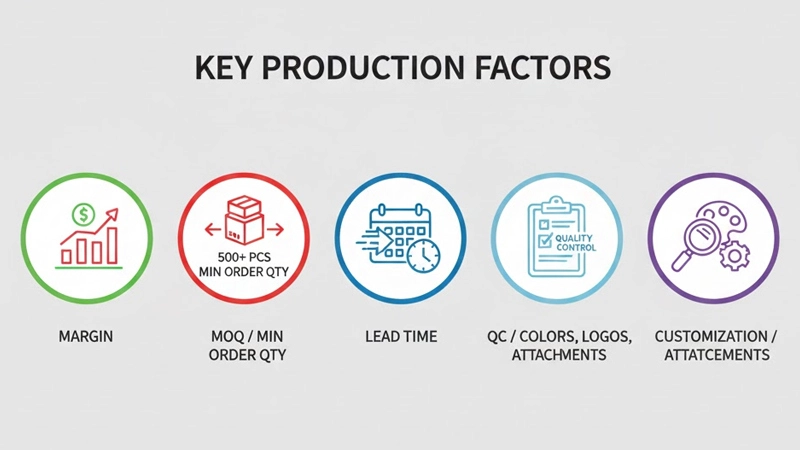
I start by mapping buyer needs. I list materials, widths, printing methods, hardware, and accessories. I note end-use scenarios (events, corporate ID, schools, industrial workplaces) and budget tiers. I also confirm MOQ and volume discounts. Then I sketch a simple product map that keeps my quotes consistent:
| Feature | Options | Priority |
|---|---|---|
| Material | Polyester, Nylon (smooth finish), rPET (eco) | High |
| Width | 10mm, 15mm, 20mm | Medium |
| Print Method | Screen Print, Dye Sublimation, Heat Transfer (film/patch) | High |
| Hardware | Swivel Hook, Bulldog Clip, J-Hook | Medium |
| Accessories | Breakaway, ID Holder, Badge Reel | Low |
This map helps me match supplier offers quickly. When quotes come back, I can compare cost, quality, and lead time without confusion. I keep this checklist handy in every RFQ.
Step 1 — Know the wholesale buyer’s priorities
I used to guess what buyers cared about most.
My offers looked “fine,” but reorder rates stayed low.
I started scoring priorities by impact—then building a sourcing strategy around those priorities.
Wholesale buyers care about five things: price, quality, customization, speed, and reliability. When you rank these clearly, you can choose suppliers and specs that reduce risk and increase repeat orders.
I use a simple 1–5 score model. It forces clarity and creates a consistent decision process:
| Priority | Score | Action |
|---|---|---|
| Price | 5 | Negotiate tiered volume discounts |
| Quality | 4 | Request material + hardware samples |
| Customization | 4 | Confirm print method, artwork rules, colors |
| Lead Time | 3 | Add buffer and checkpoints to timelines |
| Stock Reliability | 3 | Confirm capacity, QC flow, and consistency |
I test suppliers against this model before scaling. It helps me balance price vs. quality, plan for delays, and set reorder strategies that keep clients happy.
Step 2 — Build your product map
Wholesale lanyards come in dozens of combinations.
Without a system, it’s easy to mix specs, misquote, or reorder the wrong version.
A product map turns “too many options” into a structured catalog you can quote from quickly.
A product map lists your core variants, specs, and SKUs. It speeds up quoting, reduces errors, and helps your team sell consistently across event types and budgets.
I build my product map in a spreadsheet with columns for style, material, print method, hardware, MOQ, price range, and lead time range. I group SKUs by use case (events, corporate ID, school, premium branding). Here’s a simplified example:
| SKU | Style | Material | Print Method | Hardware | MOQ | Price | Lead Time |
|---|---|---|---|---|---|---|---|
| LNY-01 | Flat | Polyester | Screen Print | Swivel Hook | 100 | $0.40 | 15 days |
| LNY-02 | Flat (premium) | Nylon | Screen Print / Heat Transfer | J-Hook | 200 | $0.60 | 20 days |
| LNY-03 | Tubular | Polyester | Heat Transfer (film/patch) | Bulldog Clip | 100 | $0.50 | 18 days |
This table lets me match client specs fast. I update prices and lead times regularly, and I share the map internally so the whole team quotes “apples to apples.”
Step 3 — Choose the best printing method
I once chose the cheapest printing option for everything.
Colors didn’t match, fine details looked rough, and clients asked for reprints.
Now I choose printing by logo type, material, and durability needs—not just unit price.
Screen printing is ideal for clean, simple logos. Dye sublimation is best for full-color artwork on polyester. Heat transfer options (like film/patch) can handle complex graphics but vary in durability depending on the process.
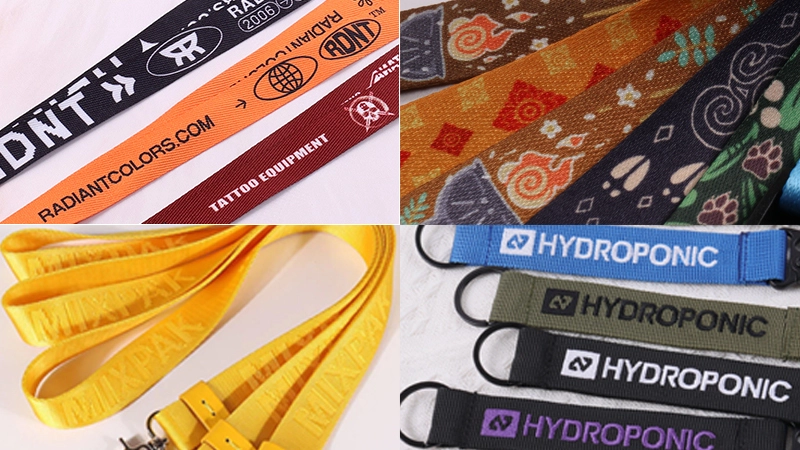
Here’s the side-by-side comparison I use during quoting:
| Method | Best For | Color Limit | Durability | Cost |
|---|---|---|---|---|
| Screen Print | Simple logos, bold shapes | Typically 1–4 | High | Low |
| Dye Sublimation | Full color, gradients, photos | Unlimited | Very High* | High |
| Heat Transfer | Complex designs, special effects | Often unlimited | Medium–High** | Medium |
* Best results on polyester-based straps.
** Durability depends on the transfer type and finishing.
I always request print samples (or a pre-production sample for large orders). I check edge sharpness, color consistency, and rub resistance. Then I explain tradeoffs clearly to clients so expectations match the final product.
Step 4 — Hardware and accessories: where quality problems usually start
Even when the strap looks great, weak hardware can ruin the order.
Broken clips lead to returns, complaints, and lost trust.
I treat hardware like a critical component—tested, documented, and upgraded when needed.
Most end-user complaints come from hooks, clips, breakaways, and reels—not the webbing. I inspect hardware strength, smoothness, finishing, and reliability before approving mass production.
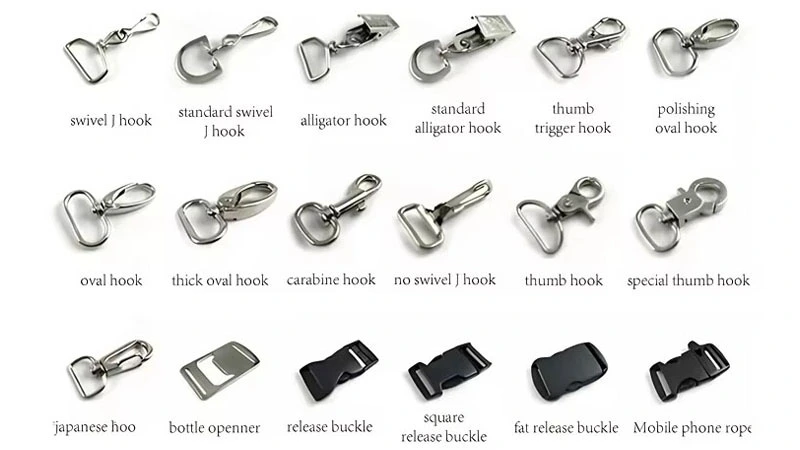
I inspect hardware quality and run simple functional tests. The exact thresholds should match the customer’s usage and venue requirements, but I document my pass/fail criteria like this:
| Hardware Type | Test | Pass Criteria (example) |
|---|---|---|
| Swivel Hook | Pull test | No deformation under agreed pull threshold |
| Bulldog Clip | Open/close cycles | Smooth operation after repeated cycles |
| Breakaway | Release test | Releases within specified safety range when pulled |
| Badge Reel | Extension + recoil | Extends smoothly and retracts reliably |
If anything fails, I reject the batch sample and request replacement samples or a hardware upgrade. This one step alone reduces defects and after-sales issues dramatically.
Step 5 — What drives wholesale pricing
A quote can look profitable—until hidden costs show up.
Freight, packaging, and upgrades quietly shrink margins.
I break pricing into predictable line items so every quote is controllable.
Wholesale pricing depends on material, width, print method, hardware grade, quantity tiers, lead time, packaging, and shipping terms. Always request a clear breakdown so you can compare suppliers fairly.
I build a cost sheet for every major order. Here’s an example format:
| Cost Element | Unit Cost | Total Cost Calculation |
|---|---|---|
| Material | $0.10 | qty × unit |
| $0.05 | per process / per color (if applicable) | |
| Hardware | $0.08 | per set |
| Packaging | $0.02 | per unit |
| Freight (FOB) | $0.03 | estimated per unit |
| Duties & Tax | $0.02 | % of CIF (varies by country/category) |
| Overhead & Margin | $0.07 | planned markup |
I ask suppliers to confirm which items are included vs. optional. Then I compare totals across quotes—because the “lowest unit price” often hides shortcuts in printing, hardware, QC, or packing.
Step 6 — The distributor’s RFQ checklist
Vague RFQs create mismatched quotes.
You lose days clarifying specs, revising prices, and fixing misunderstandings.
A standardized RFQ template makes quotes faster, cleaner, and more comparable.
A strong RFQ includes full specs, artwork rules, packaging details, delivery terms, and tier quantities. This ensures suppliers quote the same product—not their “closest version.”
Here’s what I include in every RFQ:
-
Company and contact info
-
Product map SKU list (or clear spec list)
-
Material, width, length, and style
-
Print method + print sides + color rules (PMS/CMYK)
-
Hardware and accessory details
-
Packaging and labeling requirements
-
MOQ and volume tiers (e.g., 100 / 500 / 1000 / 5000)
-
Delivery terms (EXW/FOB/CIF/DDP if relevant) and destination
-
Target ship date + required delivery date buffer
-
Payment terms and currency
I send this via email or a shared sheet. I set a reply deadline and a revision window. The result: fewer misunderstandings and faster decision cycles.
Step 7 — Quality control: what resellers should ask suppliers to prove
Many issues only appear after bulk production.
That’s when defects are expensive—and visible to your client.
I require QC proof and sign-off checkpoints before shipment.
Ask for QC evidence before shipping: sample reports, production photos/videos, hardware confirmation, and third-party tests when required by the customer’s industry or region.
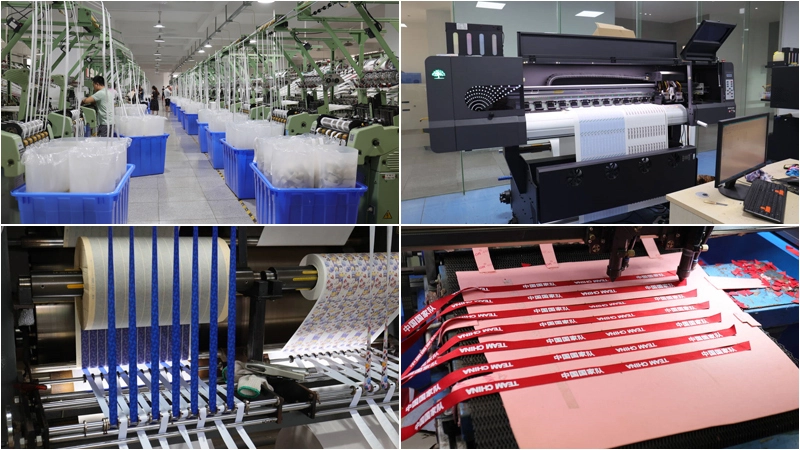
Here’s the QC proof list I request, depending on the order:
| QC Proof | Source | Purpose |
|---|---|---|
| Material Cert | Supplier / Mill | Confirm fiber content and base material |
| Production Photos | Factory | Verify color, logo, stitching, hardware |
| Sample Report | Internal QC | Confirm print alignment and finishing |
| Lab Test (if needed) | SGS / BV / etc. | Compliance and durability (when required) |
I review proofs and approve the batch before shipment. This prevents “surprise defects” and reduces after-sales disputes.
Step 8 — Lead times and shipping: build a two-lane strategy
Late delivery kills event-based orders.
You miss deadlines, pay rush fees, and lose repeat business.
I run two lanes—standard and express—so I can serve both planned and urgent orders.
A two-lane strategy balances cost and speed: standard for bulk orders, express for deadline-driven orders. This lets you protect margin while still winning urgent projects.
Here’s how I plan it:
| Lane | Timeline (typical) | Cost Factor | Use Case |
|---|---|---|---|
| Standard | 20–30 days | Lower | Planned events / steady demand |
| Express | 7–14 days | Higher | Rush orders / deadline jobs |
I also keep buffer stock of best-sellers when possible, and I build milestone checkpoints (art approval → pre-production sample → mass production → QC proof → shipment). That way, clients stay informed and deadlines stay realistic.
Step 9 — Common wholesale lanyard mistakes
Most reseller losses come from predictable mistakes.
Wrong specs, late shipments, weak hardware, and unclear expectations create churn.
I keep a “mistakes list” and check it before confirming any order.
The biggest mistakes are avoidable: skipping samples, vague RFQs, missing QC steps, ignoring shipping costs, and overlooking hardware quality. Fix these and you immediately reduce risk.
Here are the top mistakes I avoid:
-
Skipping samples (or skipping pre-production approval for big orders)
-
Sending vague RFQs
-
No defined QC checkpoints
-
Ignoring lead time buffers
-
Underestimating shipping and import costs
-
Not confirming print colors and artwork rules
-
Overlooking hardware grade and strength
-
Not planning MOQ and tier pricing
-
Missing packaging/label requirements
-
Forgetting after-sales support terms
I review this list before I approve a supplier or place a large PO.
Step 10 — Sales strategy for resellers: “Good / Better / Best” bundles
A single “one-size” offer limits margin and makes price the only comparison.
Clients want choices—and you lose upsells when you don’t guide them.
I package lanyards into clear tiers so customers can self-select upgrades.
Bundles increase clarity and average order value. Each tier should have an obvious use case, a clear upgrade story, and a margin-friendly price point.
Here’s a sample structure:
| Tier | Features | Price | Margin |
|---|---|---|---|
| Good | Polyester, basic print, standard clasp | $0.50 | 20% |
| Better | Premium strap feel, improved print, upgraded hardware | $0.80 | 25% |
| Best | Full-color decoration, safety add-ons, bundle extras | $1.20 | 30% |
When pitching, I frame tiers by outcome: durability, brand impact, comfort, and convenience. In many reseller programs, this approach increases order value because customers understand what they gain by upgrading (instead of only seeing price differences).
Conclusion
I now buy wholesale lanyards with a repeatable system: product mapping, clear RFQs, defined QC proof, realistic lead times, and margin-protecting bundles. This approach reduces mistakes, improves consistency, and builds client trust over time.
If you want to make this guide even more actionable, the next best step is to turn your RFQ checklist + product map into a reusable template your team can send in minutes—so every quote is faster, clearer, and more profitable.