Many brands have learned the hard way that low-cost lanyards can break, fray, fade, or look unprofessional after limited use. In corporate settings, trade shows, schools, and large-scale events, these failures do more than create inconvenience. They can weaken brand presentation and increase replacement costs.
Companies are willing to pay more for premium custom lanyards because they help brands look more professional, perform better over time, and reduce avoidable reorders. Higher-quality materials and finishing also improve trust, usability, and long-term value.
A single faulty lanyard at a busy event can disrupt check-in, affect attendee experience, and reflect poorly on the organizer. That is one reason more buyers are rethinking lanyards not as low-value accessories, but as part of a broader branding, identification, and procurement strategy. The following eight factors explain why premium custom lanyards are becoming a smarter investment in 2026.
How Do Premium Lanyards Protect Brand Perception?
At conferences, exhibitions, and corporate events, branded lanyards are often one of the first physical items people notice. If the strap looks worn, the print appears blurred, or the hardware feels weak, the brand itself may appear less polished.
Premium custom lanyards use stronger materials, cleaner printing methods, and better finishing. They display logos more clearly, resist fraying, and support a more professional brand image across repeated use.
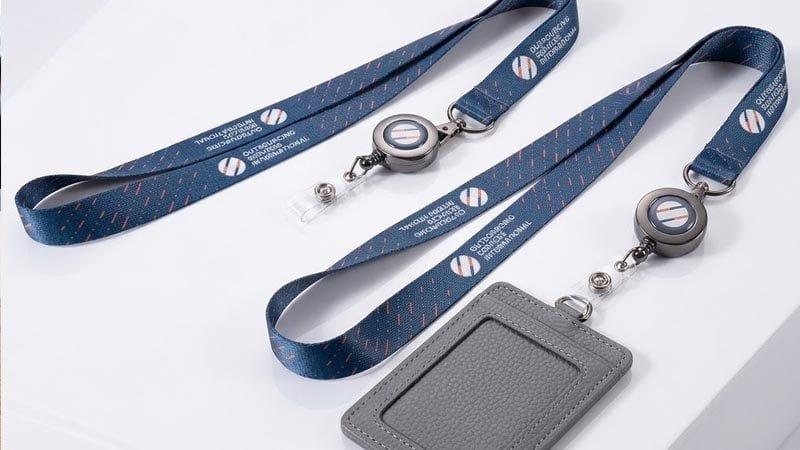
Brand perception is shaped by small physical details. A clear logo, consistent color, and durable strap immediately suggest that a company pays attention to quality. In contrast, thin webbing, poor stitching, and faded printing can send the opposite message. For this reason, many companies now evaluate lanyards the same way they evaluate packaging, uniforms, or other branded materials.
Different materials also affect performance and appearance. Woven polyester is widely valued for its durability and detailed logo presentation. Nylon offers a smooth surface and bright color reproduction, while tubular polyester is often used for more economical programs. Silicone can serve specific promotional applications, but it is not always the preferred choice for traditional corporate badge use.
| Material | Durability | Print Quality | Relative Cost |
|---|---|---|---|
| Woven Polyester | High | Sharp | Medium |
| Silicone | Medium | Smooth | Low to Medium |
| Nylon | High | Bright | High |
| Tubular Polyester | Medium | Bold | Low |
For brands that want to look consistent and premium in front of customers, employees, or event attendees, material choice directly affects the final impression.
Why Do Buyers Want Fewer But Better Promotional Items?
Many promotional campaigns once focused on quantity. The goal was to distribute as many items as possible, often at the lowest possible unit price. Today, that approach is being reconsidered.
More buyers now prefer fewer promotional items with higher perceived value. A premium custom lanyard is more likely to be used, kept, and associated with a positive brand impression than a low-cost giveaway that is quickly discarded.
In 2026, promotional purchasing is increasingly driven by usefulness, durability, and relevance rather than sheer volume. Companies are under pressure to reduce waste, improve brand ROI, and select products that recipients will actually use. This is especially true for trade shows, internal employee kits, visitor programs, campus events, and branded merchandise campaigns.
A premium lanyard performs well in this environment because it is functional, visible, and easy to carry daily. When combined with a badge holder, card wallet, phone attachment, or event credential, it becomes more than a giveaway. It becomes a practical branded item that stays in use.
| Metric | Low-End Giveaway Strategy | Premium Item Strategy |
|---|---|---|
| Perceived Value | Low | High |
| Likelihood of Daily Use | Low to Medium | Medium to High |
| Replacement Frequency | Higher | Lower |
| Brand Retention Potential | Limited | Stronger |
This shift reflects a broader change in buyer behavior: fewer disposable products, more emphasis on quality, and stronger focus on long-term brand memory.
How Have Events Become Experience-Driven?
Modern events are no longer judged only by attendance numbers. They are also judged by how cohesive, memorable, and well-designed the entire experience feels.
Premium custom lanyards now play a role in event presentation. They support the visual identity of the event, improve badge usability, and contribute to a more organized and immersive attendee experience.
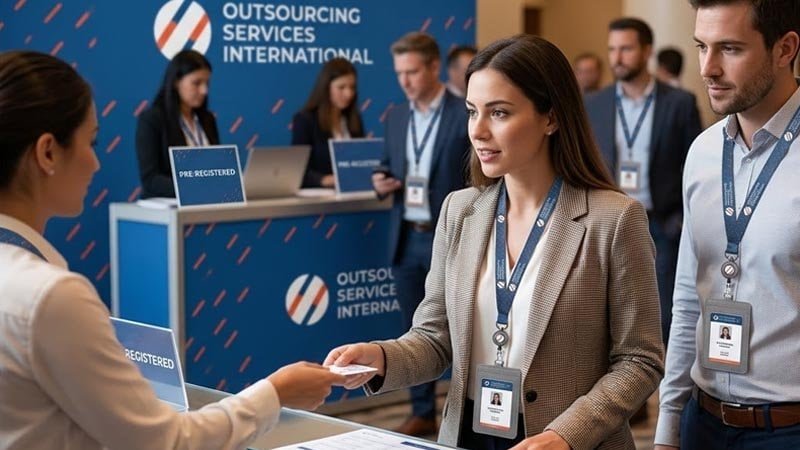
Event organizers increasingly treat every physical touchpoint as part of the overall brand story. That includes signage, registration counters, printed materials, badges, and lanyards. A well-made lanyard helps reinforce the event theme while making credentials easier to wear, recognize, and manage.
Design choices can shape the mood and function of the event. Slim flat lanyards often create a modern, minimalist feel, while wider textured webbing can communicate a more premium or formal impression. Additional features such as role-based color coding, custom attachments, safety breakaways, and detachable buckles can also improve usability during live events.
| Element | Effect on Presentation | Best Use Case |
|---|---|---|
| Slim Ribbon | Modern and sleek | Tech events |
| Wide Ribbon | Premium and visible | Corporate summits |
| Custom Charm | Interactive and branded | Trade shows |
As events become more experience-led, premium lanyards help support both aesthetics and event operations.
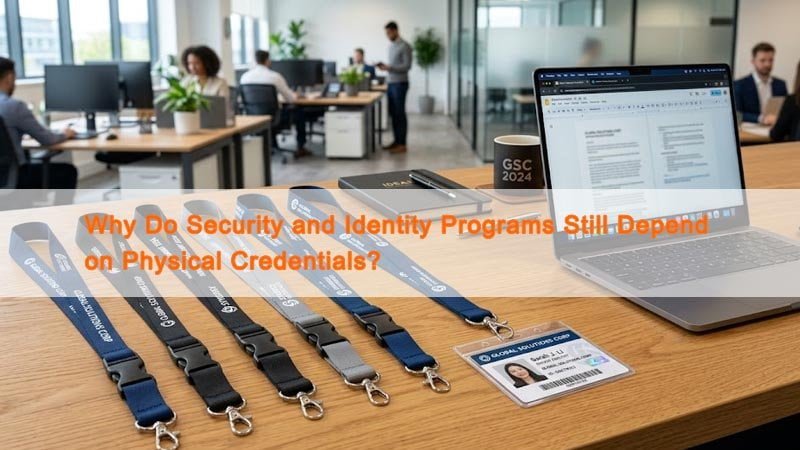
Why Do Security and Identity Programs Still Depend on Physical Credentials?
Even as digital access tools continue to grow, physical credentials remain essential in many workplaces, visitor programs, and secure events.
Premium custom lanyards support badge holders, RFID cards, and event credentials more reliably. They improve all-day wear comfort while helping identification and access systems run more smoothly.
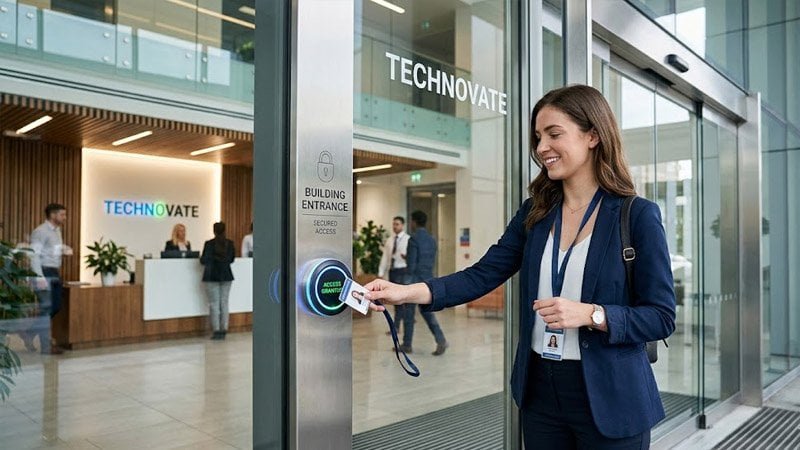
In many business environments, physical ID still plays an important role in access control, visual verification, and visitor management. Even when a badge includes NFC, RFID, or barcode technology, the credential still needs a dependable way to be carried, displayed, and scanned.
This is where lanyard quality matters. Weak stitching, poor hooks, or inconsistent badge holder sizing can affect usability and create avoidable problems during registration, gate entry, or internal movement. Premium lanyards are typically selected for better attachment strength, more secure fittings, and improved compatibility with daily badge use.
| Feature | Benefit | Typical Use Case |
|---|---|---|
| Breakaway Safety Clip | Improves wearer safety | Schools, workplaces |
| Secure Card Attachment | Helps keep badge in place | Access control programs |
| Rigid Badge Holder | Protects card and improves scan handling | Conferences, secure sites |
| Detachable Buckle | Adds convenience for repeated use | Staff ID programs |
For companies that rely on visible credentials, premium lanyards support both security and operational efficiency.
Why Do Compliance and Documentation Matter More?
Procurement teams today often review more than price and lead time. They may also look at material declarations, product consistency, traceability, and use-case suitability.
Premium custom lanyards are more likely to come with clearer documentation, stable quality control, and better production consistency. That makes them more suitable for buyers with internal approval, audit, or compliance requirements.
In sectors such as healthcare, education, manufacturing, government projects, and large corporate events, buyers increasingly want products that are easier to evaluate and approve. This does not always mean the lanyard needs a complex certification. However, it often means the supplier must be able to provide clear specifications, material information, production records, and consistent batch quality.
Premium suppliers are usually better equipped to support these needs through controlled manufacturing processes, stronger inspection procedures, and clearer documentation. For buyers, that reduces risk and makes procurement more efficient.
| Requirement | Why It Matters | Typical Verification |
|---|---|---|
| Material Specification | Supports product consistency | Supplier data sheet |
| Batch Traceability | Helps identify issues quickly | Internal QC records |
| Safety Feature Option | Supports workplace or event requirements | Product design confirmation |
| Stable Print Consistency | Protects brand standards | Pre-production sample approval |
For many organizations, paying more for a premium product is also a way to reduce approval delays, avoid quality disputes, and improve supply reliability.
How Is Sustainability a Purchasing Filter?
Sustainability is no longer limited to brand messaging. In many tenders and purchasing programs, it has become part of supplier evaluation.
More buyers now ask about recycled materials, responsible sourcing, and production transparency. Premium custom lanyards made from recycled PET or other more sustainable materials can help companies align with their environmental goals while maintaining product quality.
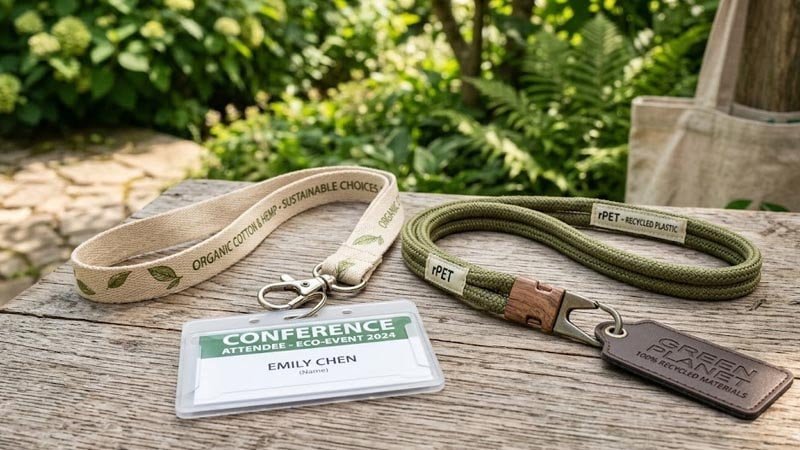
As sustainability expectations grow, buyers increasingly want promotional and identification products that balance performance with lower environmental impact. In the lanyard category, this often means asking about recycled polyester, packaging reduction, material declarations, or third-party certifications where relevant.
Recycled PET is one of the most common options because it can offer a familiar look and feel while supporting greener purchasing goals. Other materials such as cotton blends or bamboo-based fibers may also be considered depending on the application, budget, and branding needs.
| Material Option | Sustainability Positioning | Typical Strengths |
|---|---|---|
| Recycled PET | Widely accepted recycled option | Durable, familiar finish |
| Organic Cotton | Natural fiber appeal | Soft hand feel |
| Bamboo Fiber Blend | Alternative eco-focused option | Distinct texture and brand story |
For buyers, sustainability is increasingly tied to credibility. A premium supplier that can clearly explain materials, documentation, and production standards often has an advantage over low-cost options with limited transparency.
Why Has Customization Quality Become a Differentiator?
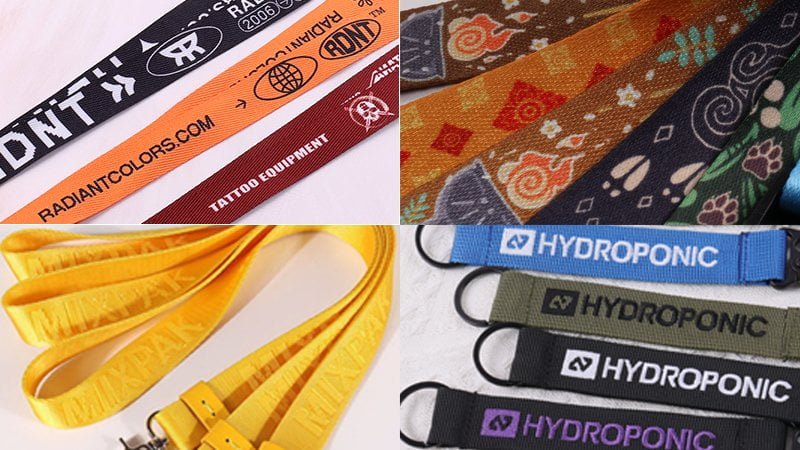
Not all customization methods deliver the same result. For branded lanyards, print clarity, color accuracy, and wear resistance all affect how professional the final product looks.
Premium customization methods such as woven labels, high-quality screen printing, dye sublimation, and specialty finishes can produce cleaner detail and longer-lasting branding. This matters more when logos are complex or brand guidelines are strict.
Customization quality has become a major differentiator because buyers want more than a basic logo application. They want branding that remains clear across production runs, different order quantities, and repeated use. This is especially important for companies with established visual identity systems, distributor networks, or large multi-location programs.
Different methods suit different branding needs. Woven styles work well when a premium texture and long-lasting logo presentation are required. Screen printing can be effective for bold, simple artwork. Dye sublimation is often chosen for full-color designs and gradient-heavy branding. Specialty finishes may be useful when visual impact is a priority.
| Method | Durability | Visual Effect | Relative Cost |
|---|---|---|---|
| Woven | High | Detailed | Medium |
| Embossed/Stamped | Medium | Textured | High |
| Dye Sublimation | High | Full color | Medium to High |
| Screen Print | Medium | Bold | Low to Medium |
When customization quality improves, the lanyard becomes a stronger extension of the brand rather than just a basic accessory.
How Does Premium Lower Total Cost of Ownership?
A low unit price can look attractive during sourcing, but it does not always reflect the true long-term cost of a lanyard program.
Premium custom lanyards often cost more upfront, but they can lower total ownership cost by reducing replacements, minimizing defects, and improving durability over a longer usage cycle.
When evaluating lanyards for staff IDs, events, schools, or promotional programs, buyers should consider more than initial piece price. A lower-grade product may require more frequent replacement due to broken fittings, faded printing, torn webbing, or poor badge-holder compatibility. Those issues create extra purchasing, handling, and administrative costs over time.
Premium lanyards may deliver better value because they typically last longer, present the brand better, and reduce disruption during use. In many cases, the cost difference narrows significantly when replacement frequency and operational effort are taken into account.
| Type | Upfront Cost | Expected Replacement Rate | Long-Term Value |
|---|---|---|---|
| Low-Cost Basic Option | Lower | Higher | Lower |
| Premium Custom Option | Higher | Lower | Higher |
For procurement teams, the key question is not only “What is the unit price?” but also “What will this program cost over its full use cycle?” That is where premium quality often proves more economical.
Conclusion
Premium custom lanyards are no longer viewed as simple low-cost accessories. In 2026, they are increasingly treated as part of a company’s branding, event presentation, identification system, and procurement strategy. Higher-quality lanyards help protect brand image, improve durability, support customization standards, and make compliance and sustainability discussions easier to manage.
For companies that want better long-term value rather than just the lowest initial price, premium custom lanyards are a practical investment.