When buyers compare custom lanyard quotations, the attachment is often treated as a small detail. In actual production, however, the hook, clip, buckle or connector can make a noticeable difference in product quality, appearance, durability and price.
Two metal hooks may look almost identical in a photo but have different weights, wall thicknesses, materials, spring quality and plating finishes. The same is true for plastic buckles: different materials and molding quality can affect strength, surface appearance and long-term performance.
From our experience manufacturing custom lanyards for bulk orders, we recommend evaluating lanyard hardware as part of the complete product rather than selecting accessories only by appearance or unit price.
This guide explains the materials commonly used for lanyard attachments, what affects their price, which specifications buyers should confirm, and what we normally check before mass production.
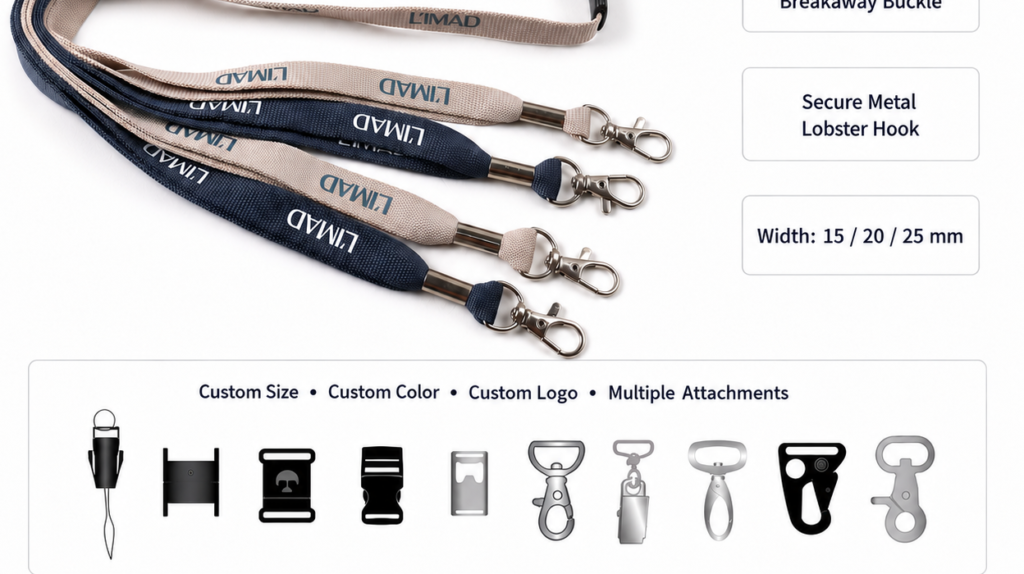
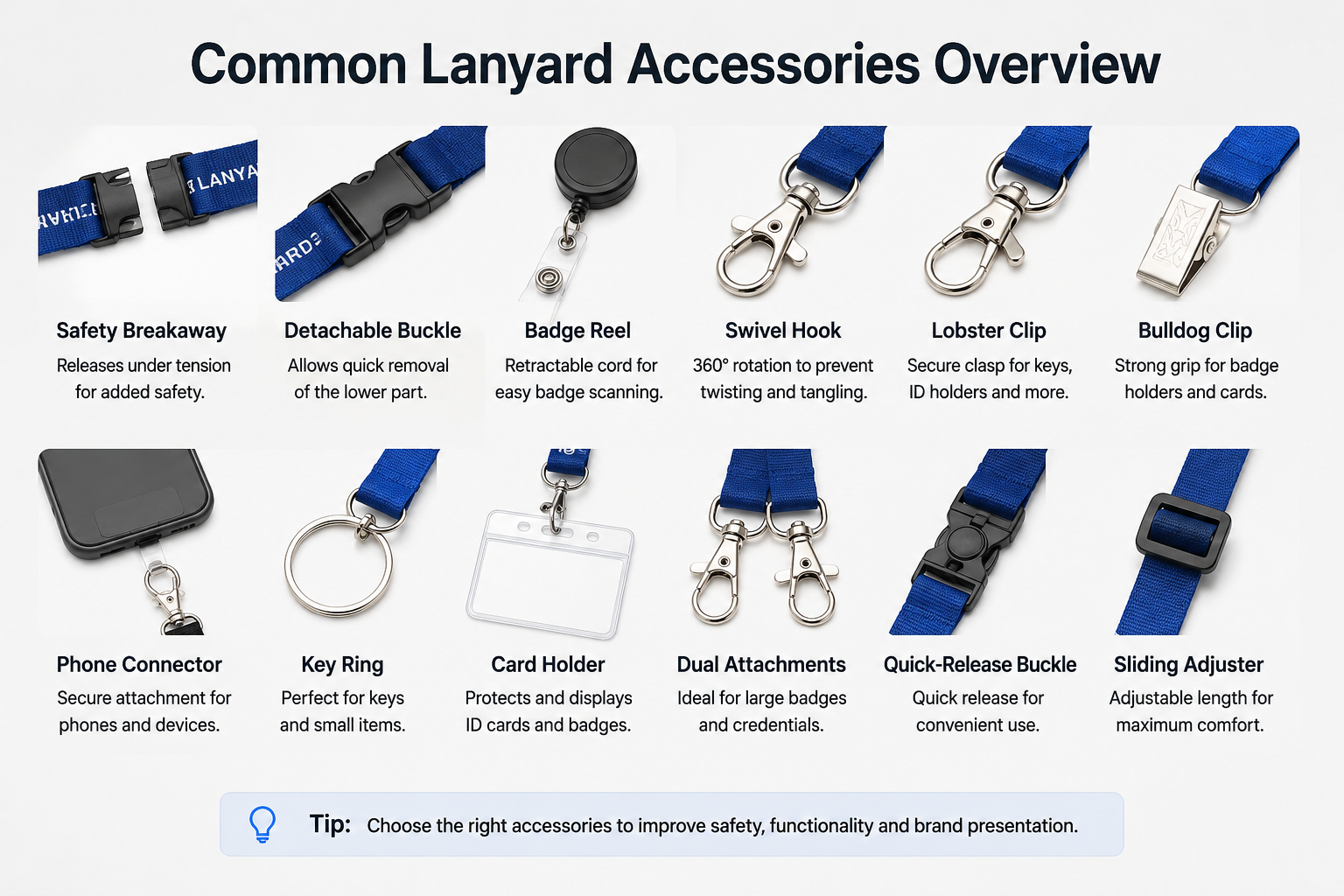
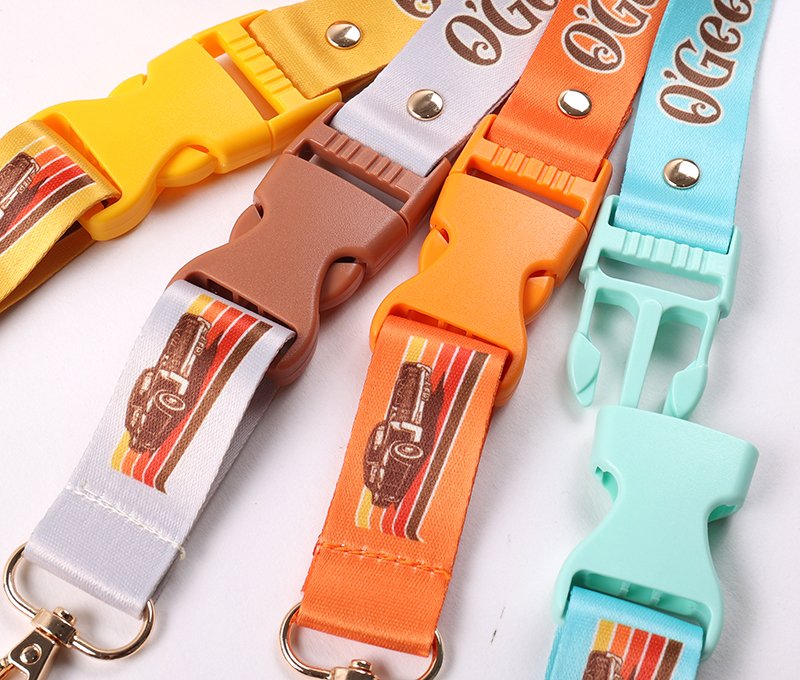
Comparison of common lanyard hardware materials including zinc alloy hooks, iron clips, POM buckles and colored nylon plastic accessories.
Why Lanyard Attachment Quality Matters in Bulk Orders
A small quality difference becomes much more important when an order reaches thousands or tens of thousands of pieces.
For example, a weak spring may not be obvious when checking one hook, but inconsistent spring performance across 10,000 pieces can create customer complaints. Thin metal hardware may look acceptable in a product photo but feel lightweight or deform more easily during repeated use. Poor plating can also lead to uneven color, scratches or faster surface wear.
For bulk lanyard projects, attachment quality can affect:
Product durability
User experience
Finished product appearance
Perceived product value
Safety and functionality
Replacement rates
Packaging weight
Unit price
This is why material, thickness, weight, construction and finishing should be considered before approving a sample.
What Materials Are Commonly Used for Lanyard Attachments?
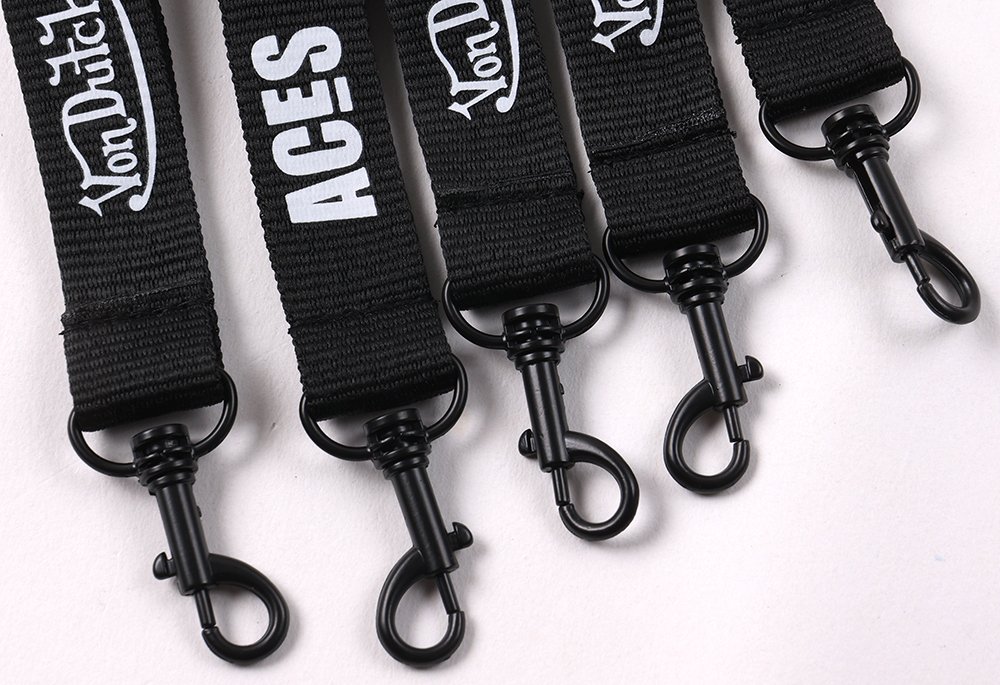
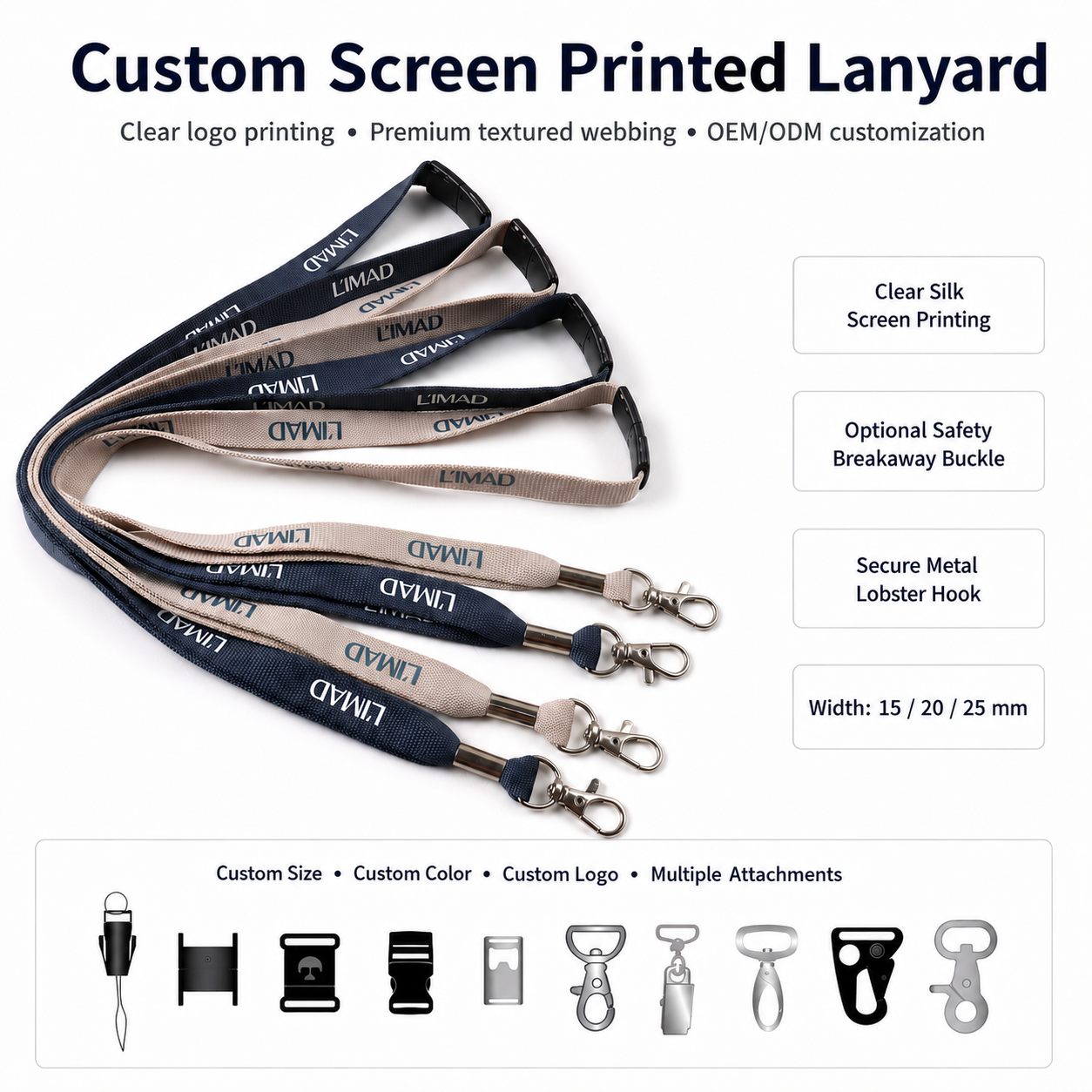
Comparison of similar metal lanyard hooks with different thicknesses and weights to show how material usage and construction can affect quality and price.
There is no single material used for every lanyard accessory.
Different attachment types require different materials depending on their shape, function, expected cost and manufacturing method.
Zinc Alloy Lanyard Hooks and Metal Hardware
Zinc alloy is widely used for many custom lanyard metal accessories because it can be die-cast into detailed shapes and finished with different plating colors.
Common zinc alloy components may include:
Swivel hooks
Lobster clasps
Snap hooks
Decorative hooks
Custom-shaped metal connectors
Selected buckle components
Zinc alloy is especially suitable when buyers want a clean metal appearance, consistent shape and multiple plating options.
However, not all zinc alloy hooks are the same.
Even when two hooks use similar material, differences in thickness, overall weight, internal construction and surface finishing can result in very different prices and product quality.
Factory Tip
When comparing two visually similar metal hooks, ask for the actual sample weight and dimensions. A heavier hook often uses more material, but weight alone does not define quality—the spring mechanism, casting quality and plating also need to be checked.
Iron Clips and Steel Components
Iron is commonly used for stamped or spring-type lanyard components, particularly clips that require thin metal construction and mechanical gripping action.
Common examples include:
Bulldog clips
Alligator clips
Selected badge clips
Split rings
Certain stamped metal fittings
These parts are usually produced through stamping and forming rather than the die-casting process commonly used for zinc alloy hooks.
The quality of an iron clip depends on several factors, including:
Metal thickness
Spring force
Jaw alignment
Surface smoothness
Edge finishing
Plating quality
A very thin clip may reduce cost, but it can also feel less substantial and may deform more easily.
POM Plastic Buckles
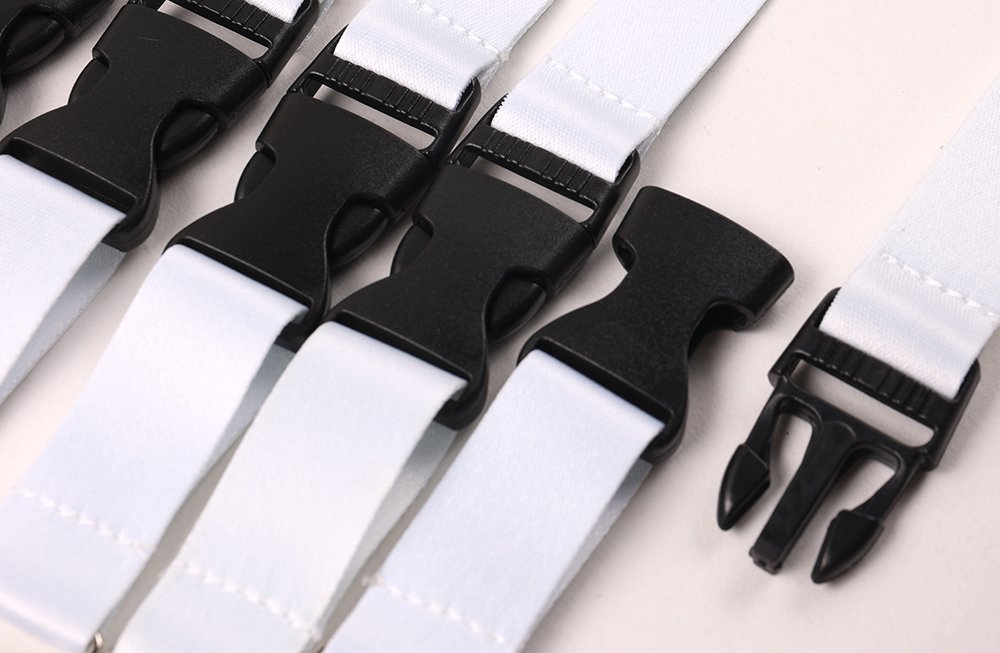
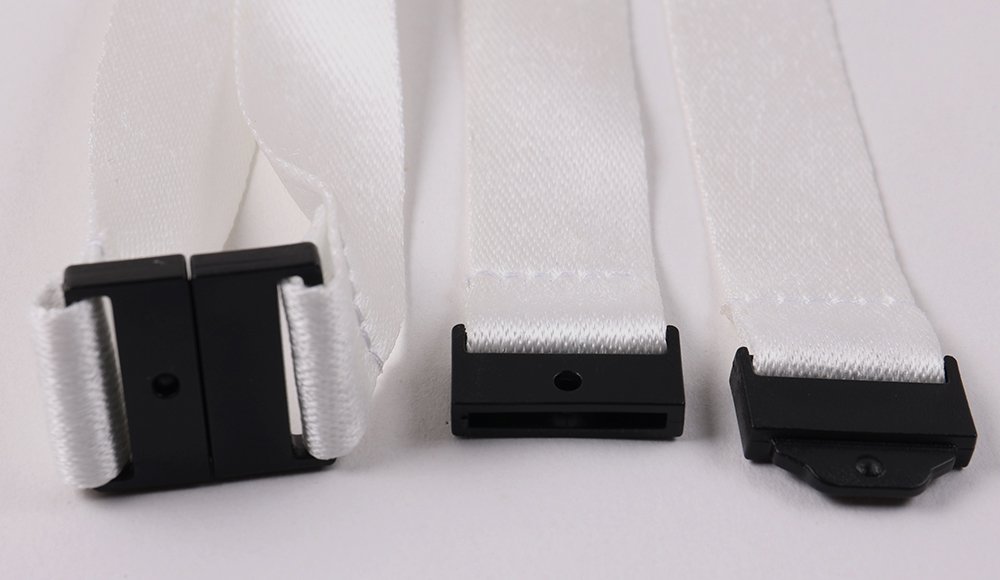
Close-up of a POM detachable lanyard buckle showing the locking structure, male and female parts, webbing slot and molded edge quality.
POM, or polyoxymethylene, is an engineering plastic commonly used for functional lanyard buckles and connectors.
It is often selected for:
Detachable buckles
Quick-release buckles
Selected safety breakaways
Adjustment components
POM is valued for its dimensional stability, smooth operation and good mechanical properties.
For standard black plastic lanyard hardware, POM is a common option because it provides a clean appearance and reliable buckle function when properly molded.
The performance of the finished buckle still depends on:
Material grade
Wall thickness
Mold accuracy
Locking design
Molding consistency
A buckle that looks similar externally can perform differently if the internal locking structure or material quality changes.
Nylon Plastic Accessories and Custom Colors
Nylon Plastic Accessories and Custom Colors
For projects requiring colored plastic accessories, nylon components can be dyed or produced in customized colors depending on the product design and order requirements.
Colored plastic accessories are useful when the hardware needs to coordinate with:
Brand colors
Lanyard colors
Event themes
Corporate identity systems
Color matching should be confirmed during sampling because the final color appearance may vary slightly depending on the plastic material, surface texture and production batch.
For projects with strict brand colors, buyers should provide a Pantone reference whenever possible.
Zinc Alloy vs Iron vs POM: Which Material Should You Choose?
The correct material depends on the attachment function rather than simply choosing the “strongest” material.
Material
Common Applications
Main Advantages
Points to Check
Zinc Alloy
Hooks, clasps, decorative metal fittings
Detailed shapes, premium metal appearance, multiple plating options
Weight, thickness, casting quality, plating
Iron
Bulldog clips, alligator clips, rings
Suitable for stamped and spring components, cost-effective
Flexible color options, useful for coordinated designs
Color consistency, material performance
There is no universal best option.
The correct choice should balance function, appearance, quantity and budget.
Why Do Similar Lanyard Hooks Have Different Prices?
This is one of the most common questions we receive from buyers.
Two hooks can look almost identical in website photos but have noticeably different quotations.
Several factors affect the actual cost.
1. Metal Thickness
Thicker hardware normally requires more raw material.
It may also feel more solid in the hand and provide a more substantial appearance.
However, thicker is not always necessary for every project. Lightweight promotional lanyards may not require the same hardware construction as reusable employee lanyards or premium branded products.
2. Attachment Weight
Weight is closely related to material usage and construction.
For the same general hook design, a heavier version may use:
More metal
Thicker walls
Larger components
A more substantial swivel base
This is why we recommend comparing actual sample weights rather than judging only from photographs.
For very large orders, even a small weight difference per piece can significantly affect both manufacturing cost and shipping weight.
3. Size and Overall Dimensions
Larger hooks use more material and may require different molds or components.
Important dimensions can include:
Overall hook length
Width
Attachment eye size
Gate opening
Wire or body thickness
The attachment size should also match the lanyard width.
A large, heavy hook can look unbalanced on a 10 mm lanyard, while a small lightweight attachment may look undersized on a 25 mm premium lanyard.
4. Spring and Moving Components
For hooks, lobster clasps, clips and buckles, moving parts are extremely important.
A lower-cost attachment may still look good when closed, but differences become clear during repeated use.
We normally check:
Smooth opening and closing
Spring return
Gate alignment
Swivel movement
Locking consistency
Unusual looseness
For reusable corporate or employee lanyards, these details are often more important than saving a very small amount on each attachment.
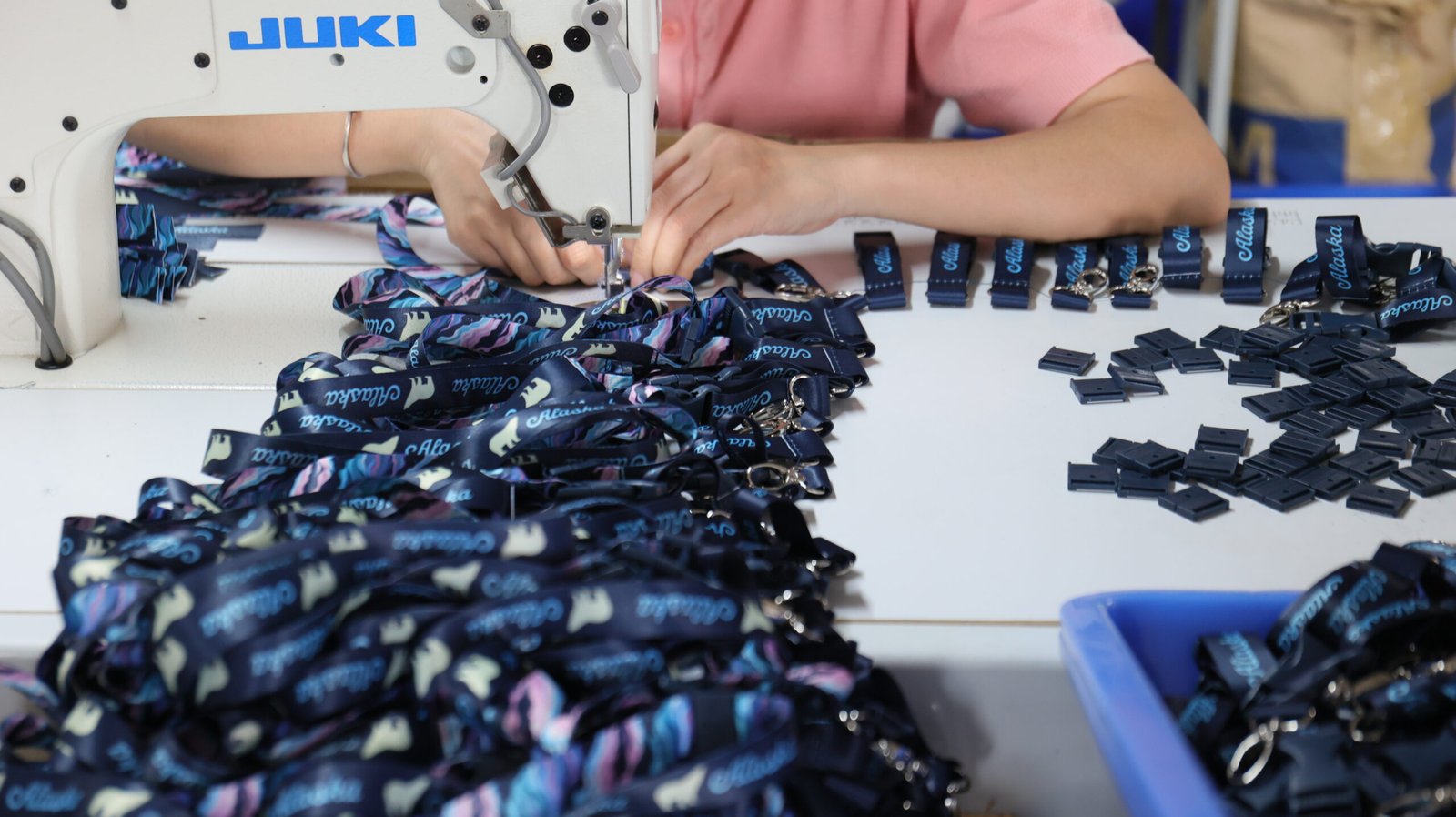
Factory quality control process for bulk lanyard hardware orders including dimension measurement, weight checking, functional testing and surface inspection.
Metal Plating and Surface Finishing
Most metal lanyard accessories require a surface finish.
Depending on the design, metal accessories may be electroplated in finishes such as:
Nickel
Chrome-like silver
Black
Gunmetal
Gold
Antique finishes
Other customized finishes where available
Plating affects both appearance and cost.
A good plated surface should normally appear even and clean without obvious:
Color variation
Pitting
Rough areas
Peeling
Excessive scratches
Sharp unfinished edges
Why Plating Quality Matters
The plating process does more than change the color of the hardware.
It also affects the overall presentation of the finished lanyard.
For premium corporate products, an uneven metal finish can make an otherwise well-made lanyard look inexpensive.
For this reason, plating color and surface quality should be approved using an actual production sample rather than relying only on a digital image.
Does Plating Make Metal Hardware Rust-Proof?
Not necessarily.
Plating can improve surface protection and appearance, but the final corrosion resistance depends on:
Base metal
Surface preparation
Plating process
Plating thickness
Environment
Sweat and moisture exposure
Storage conditions
For normal indoor promotional or corporate applications, standard plated hardware is commonly used.
For projects exposed to high humidity, salt, outdoor environments or unusually demanding conditions, buyers should tell the manufacturer before production so the material and finishing requirements can be discussed separately.
How Metal Thickness and Weight Affect Lanyard Quality
Thickness and weight are useful indicators when comparing different hardware options, but neither should be considered alone.
A heavier hook can provide a more premium feeling, but an unnecessarily heavy attachment may make the lanyard uncomfortable.
A very lightweight attachment may reduce cost, but could look less substantial when paired with a wide premium strap.
The objective is balance.
For example:
Narrow promotional lanyard → lighter attachment
Standard corporate ID lanyard → medium-weight hardware
Wide woven or jacquard lanyard → larger or heavier premium hardware
Phone lanyard → attachment strength and connection quality become more important
Large event badge → stability and attachment geometry become important
During sampling, we recommend evaluating the complete lanyard rather than approving the hook separately.
Lanyard Hook Gate Opening and Compatibility
An attachment can be well made and still be unsuitable if it does not fit the badge holder or other item.
For an existing ID holder or accessory, sending the physical sample to the manufacturer is often the safest approach.
If a physical sample is unavailable, provide accurate dimensions or a technical drawing.
Choosing Attachments for Different Lanyard Widths
The attachment should visually and mechanically match the lanyard.
10 mm Lanyards
Usually work better with lightweight hooks and smaller plastic components.
Large heavy hardware can make the finished product look unbalanced.
15 mm Lanyards
Suitable for many standard hooks, clips, detachable buckles and badge attachments.
20 mm Lanyards
Offer more flexibility and can support a wider range of medium-size hardware.
25 mm and Wide Lanyards
Often pair well with larger hooks, wider buckles, dual attachments and more substantial metal components.
The width alone does not determine the accessory, but it is an important part of the overall design.
If you are not sure whether 10 mm, 15 mm, 20 mm or 25 mm is suitable for your project, see our complete lanyard width guide.
Comparison of similar metal lanyard hooks with different thicknesses and weights to show how material usage and construction can affect quality and price.
How We Check Metal Hooks Before Bulk Production
For custom lanyard orders, the attachment should be checked together with the finished lanyard.
Depending on the product and buyer requirements, common inspection points include:
Visual Inspection
We check for:
Major scratches
Uneven plating
Obvious casting marks
Rough surfaces
Sharp edges
Deformation
Functional Inspection
For moving components, we check:
Hook opens correctly
Spring returns normally
Swivel rotates smoothly
Clip jaws align
Buckle locks correctly
Breakaway reconnects correctly
Assembly Inspection
We also check:
Attachment direction
Stitching position
Webbing alignment
Attachment eye fit
Finished product balance
A good attachment installed incorrectly can still result in a poor finished lanyard.
What We Check on Bulldog and Alligator Clips
Bulldog and alligator clips are different from die-cast metal hooks.
Because they depend on stamped metal and spring action, we pay particular attention to:
Metal thickness
Spring force
Jaw alignment
Teeth or gripping surface
Opening function
Plating
Sharp edges
For badge holders, the clip should provide enough grip without creating unnecessary damage to the attached material.
What We Check on POM Buckles
For detachable or quick-release POM buckles, important checks include:
Male and female parts fit correctly
Lock engages completely
Release action is smooth
No obvious flash around molded edges
No cracking
Consistent color
Correct buckle size for the webbing
For projects requiring frequent attachment and detachment, repeated operation should also be considered during sample evaluation.
Safety Breakaway Quality and Testing
Safety breakaways require a different approach from normal detachable buckles.
A detachable buckle is primarily designed for convenience.
A safety breakaway is intended to separate when sufficient tension is applied.
If the buyer has a specific required release force, internal safety policy or testing standard, that requirement should be provided before sampling.
There is no single release-force specification that should automatically be applied to every school, hospital, factory or workplace project.
For bulk production, the important points include:
Breakaway position
Correct assembly
Consistent connection
Material condition
Repeated opening and reconnection
Buyer-specified release requirement where applicable
Safety requirements should always follow the buyer’s actual application and applicable organizational or local requirements.
Safety Breakaway Quality and Testing
Phone Lanyard Attachments Need Different Quality Considerations
Phone lanyards place more load on the attachment system than a simple ID badge.
The complete system may include:
Phone tether tab
Connector loop
Metal clasp
Ring
Lanyard
Phone case interface
Before bulk production, buyers should confirm phone-case compatibility and pay particular attention to the connection between the tether and metal hardware.
Sharp metal edges or poorly finished rings can damage tether material during repeated movement.
For phone lanyard projects, we recommend checking:
Tether thickness
Reinforcement around attachment point
Connector hole
Metal edge smoothness
Hook closure
Compatibility with the intended phone case
What Specifications Should Buyers Include in an RFQ?
A detailed request for quotation helps suppliers recommend the correct option and reduces price misunderstandings.
For lanyard attachments, provide as much of the following information as possible:
Attachment type
Lanyard width
Lanyard material
Required quantity
Metal or plastic preference
Preferred metal finish or plating color
Required attachment size
Item being carried
Badge holder or device connection dimensions
Safety breakaway requirement
Custom color requirement
Packaging requirement
Special testing or quality requirements
If you are comparing several hardware grades, ask the supplier to clearly identify the difference between each option.
Why the Cheapest Attachment Is Not Always the Lowest-Cost Choice
For a one-time promotional event, a basic attachment may be completely suitable.
For an employee lanyard that will be used every working day, the purchasing decision is different.
A slightly higher-cost attachment may provide:
Better spring performance
More consistent plating
Greater material thickness
Better fit
More comfortable weight
Longer usable life
Lower replacement rates
The correct decision is therefore not always:
Which attachment has the lowest unit price?
A better question is:
Which attachment provides the right quality level for this application and budget?
Why the Cheapest Attachment Is Not Always the Lowest-Cost Choice
How to Compare Two Lanyard Attachment Quotations
When two suppliers quote different prices for what appears to be the same hook, compare more than the product name.
Specification
Supplier A
Supplier B
Material
?
?
Overall Size
?
?
Individual Weight
?
?
Metal Thickness
?
?
Plating / Finish
?
?
Spring / Gate Function
?
?
Swivel Function
?
?
Sample Approved
Yes / No
Yes / No
Packaging
?
?
This helps prevent the common situation where buyers compare two different quality levels as though they were the same product.
Factory Tip
For large orders, ask suppliers to quote against an approved physical sample or clearly defined specification whenever possible. This creates a much more meaningful price comparison.
Sample Approval Before Mass Production
For bulk custom lanyard orders, we strongly recommend approving a complete finished sample.
The sample should include:
Actual lanyard material
Actual width
Actual printing or weaving
Final attachment
Final plating color
Badge holder or connected item if applicable
Correct packaging where required
Checking only an isolated metal hook does not show how the final lanyard will feel, hang or function.
Once the complete sample is approved, it provides a clearer reference for bulk production and quality inspection.
Bulk Order Quality Control Checklist
Before approving mass production, confirm:
Attachment material
Attachment dimensions
Individual weight if quality grade is important
Metal thickness where applicable
Plating color
Surface finish
Spring function
Swivel function
Buckle locking function
Breakaway requirement
Badge or device compatibility
Lanyard width compatibility
Sample approval
Packaging method
For large or repeat programs, keeping the approved specification and physical sample on file can improve consistency across future orders.
Frequently Asked Questions About Lanyard Attachment Quality
What are most metal lanyard hooks made of?
Many common metal lanyard hooks are made from zinc alloy, while stamped clips and rings may use iron or other metal materials depending on the design. The correct material depends on the shape, function, required price and intended application.
Why do two similar lanyard hooks have different prices?
The price can differ because of material quantity, metal thickness, individual weight, size, spring construction, plating quality and production grade. Two hooks that look almost identical in a photo may not have the same construction.
What material is commonly used for plastic lanyard buckles?
POM is commonly used for many functional detachable and quick-release lanyard buckles because of its dimensional stability and mechanical properties. Other plastic materials may also be used depending on the design and color requirements.
Can plastic lanyard accessories be made in custom colors?
Yes. Depending on the component and material, colored plastic accessories can be produced or dyed to coordinate with the lanyard or brand colors. Pantone references should be provided when accurate color matching is important.
Does heavier lanyard hardware always mean better quality?
No. Higher weight may indicate more material or thicker construction, but quality also depends on design, spring function, casting, finishing and suitability for the intended application. The attachment should also be comfortable and visually balanced with the lanyard.
What should I check before approving metal lanyard hardware?
Check the material, size, weight, thickness, surface plating, edges, opening and closing function, spring return, swivel movement and compatibility with the final lanyard and attached item.
Why is plating important for metal lanyard accessories?
Plating affects the color, surface appearance and protection of metal hardware. Poor plating may result in uneven color, scratches, rough surfaces or faster visible wear.
Should I approve the attachment separately or as part of the finished lanyard?
For bulk orders, approving the complete finished lanyard is usually better. This allows you to evaluate the attachment size, weight, appearance, function and balance together with the actual strap.
Final Advice for Bulk Lanyard Attachment Sourcing
Lanyard attachments may represent only a small part of the finished product, but they have a large influence on how the lanyard looks, feels and performs.
When comparing hardware, do not rely only on product photos or attachment names.
Confirm the actual:
Material
Size
Thickness
Weight
Plating
Mechanical function
Compatibility
Quality level
For bulk orders, the best approach is to define the application first, compare samples based on the same specification and approve the complete finished lanyard before mass production.
If you are sourcing custom lanyards and are unsure which hardware grade is suitable, send us your artwork, lanyard width, quantity, application and preferred attachment. We can recommend suitable metal or plastic hardware options based on the required quality level and budget.
Hi, I’m Bella from LOVECOLOUR in Guangzhou. I work closely with our production and sourcing teams, not only on custom lanyards and ID accessories, but also on a wide range of promotional products for events and brands. In this blog, I share down-to-earth insights on product selection, materials and printing, quality control, pricing and lead times, plus industry updates and practical buying advice—so you can make confident decisions and get reliable results from every order.