Choosing the right custom metal keychain involves more than selecting a shape and adding a logo. Material selection, decoration methods, mold requirements, metal thickness, attachment hardware and production quantities all influence the final product, its appearance and its cost. For brand owners, promotional product distributors, souvenir wholesalers and retail buyers, understanding these details before ordering can help avoid unnecessary tooling expenses, artwork limitations and quality problems during bulk production.
At LOVECOLOUR, we support OEM and ODM custom metal keychain projects based on customer artwork, dimensions, materials, decorative requirements and intended applications. This guide explains how to compare metal options, choose the right logo finishing method, understand mold costs, evaluate samples and prepare a more accurate wholesale inquiry.
If you already have a design in mind, you can also explore our custom metal keychains to review available customization possibilities.
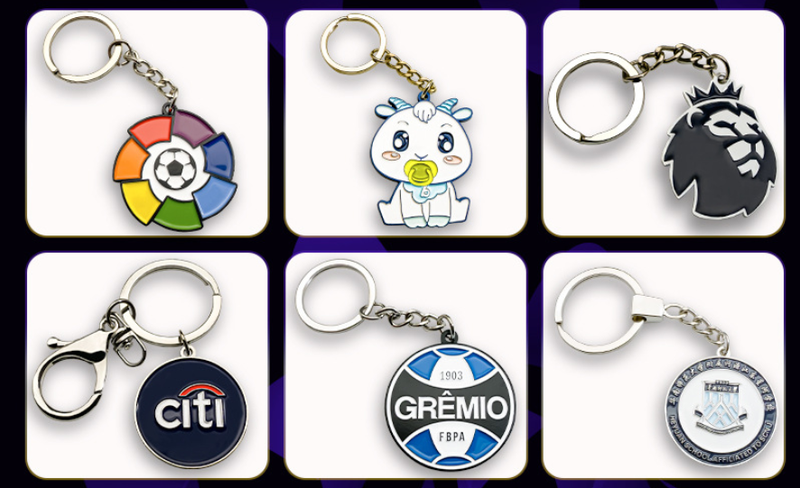
1. What Should You Consider Before Ordering Custom Metal Keychains?
Before requesting a quotation, it is useful to evaluate five main factors: the metal material, the shape and dimensions, the logo decoration method, the attachment hardware and the required order quantity. These specifications are closely connected. For example, a design with small details and multiple recessed color areas may require a different material and mold structure from a simple metal logo tag.
A practical starting point is to define what the finished keychain needs to achieve. Is it a promotional giveaway, a premium corporate gift, a retail souvenir or a collectible merchandise item? The intended application helps determine the appropriate weight, visual finish, attachment structure and packaging.
- Material: Zinc alloy, iron or a special metal selected according to the design and budget.
- Shape: Custom outline, flat construction or suitable 2D/3D visual effects.
- Logo: UV printing, enamel-style color filling, baked-paint finishing or epoxy coating, depending on feasibility.
- Hardware: Split rings, metal chains, lobster-style clips or other compatible fittings.
- Quantity: Total quantity and quantity required for each individual design.
Defining these points early makes it easier for a manufacturer to recommend a suitable construction rather than quoting an incomplete product specification.
2. Zinc Alloy vs. Iron vs. Special Metals: Which Material Is Better?
The base metal influences the manufacturing possibilities, surface appearance, structural design and overall cost of a custom metal keychain. Zinc alloy and iron are two important material options for custom projects, while copper and other special metals can be considered when a particular material appearance or specification is required.
Zinc Alloy Metal Keychains
Zinc alloy is a versatile option for custom metal keychains that require shaped details, dimensional effects and more elaborate mold structures. It is particularly suitable for designs where the outline, raised areas, recessed sections and decorative details need to be developed together.
For relevant enamel-style keychain designs, zinc alloy is often a preferred option because it can support the required molded structure and decorative details. However, the suitability of the material still depends on the actual artwork and construction.
Zinc alloy generally costs more than ordinary iron. It can be a worthwhile choice when appearance, design complexity and finishing requirements are more important than minimizing the initial material cost.
Suitable applications include:
- Custom corporate logo keychains.
- Detailed promotional merchandise.
- Souvenir keychains with custom-shaped outlines.
- Collectible merchandise with dimensional design elements.
- Branded gifts requiring a more substantial metal appearance.
Iron Metal Keychains
Iron can be a more economical option for simpler metal keychain structures and budget-sensitive promotional projects. It may be suitable when the design does not require the same level of molded complexity as some zinc alloy applications.
However, material selection should not be based on price alone. The proposed construction, surface treatment, thickness and required decorative effect should all be reviewed before confirming whether iron is appropriate.
Suitable applications include:
- Simple branded promotional keychains.
- Budget-conscious event giveaways.
- Basic metal logo accessories.
- Projects where a simpler construction meets the visual requirements.
Copper and Other Special Metal Options
For projects with specific material or appearance requirements, copper and other special metals can also be considered. These options are generally assessed individually because material availability, manufacturing feasibility and finishing requirements can differ considerably.
If your design requires a particular metal rather than simply a particular metal color, specify the actual material requirement in your inquiry. A gold-colored or silver-colored surface does not automatically mean the product is made of gold or silver.
Metal Material Comparison
| Comparison | Zinc Alloy | Iron | Copper / Special Metals |
|---|---|---|---|
| Relative Material Cost | Generally higher than ordinary iron | Generally more economical | Depends on material and specification |
| Design Considerations | Suitable for complex shapes and dimensional details | Better evaluated for simpler structures | Depends on the selected metal and process |
| Enamel Applications | Often suitable for relevant enamel designs | Requires design-specific assessment | Requires design-specific assessment |
| Best Selection Factor | Detail and molded structure | Budget and construction | Specific material or appearance requirements |
LOVECOLOUR recommendation: If your design includes detailed shapes, raised elements or enamel-style color sections, start by evaluating zinc alloy. If the project has a simpler structure and a tighter budget, iron may be worth considering. The final recommendation should always be based on the actual artwork and production feasibility.
3. Which Logo Decoration Method Should You Choose?
The decoration method determines how your logo, lettering, illustrations and brand colors appear on the metal surface. A common sourcing mistake is choosing a finishing method based only on a reference photograph without checking whether the same effect can be achieved with the proposed material and structure.
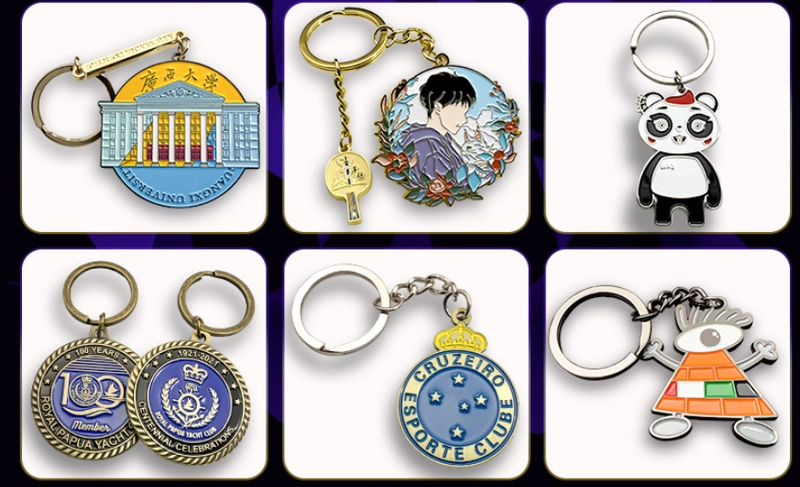
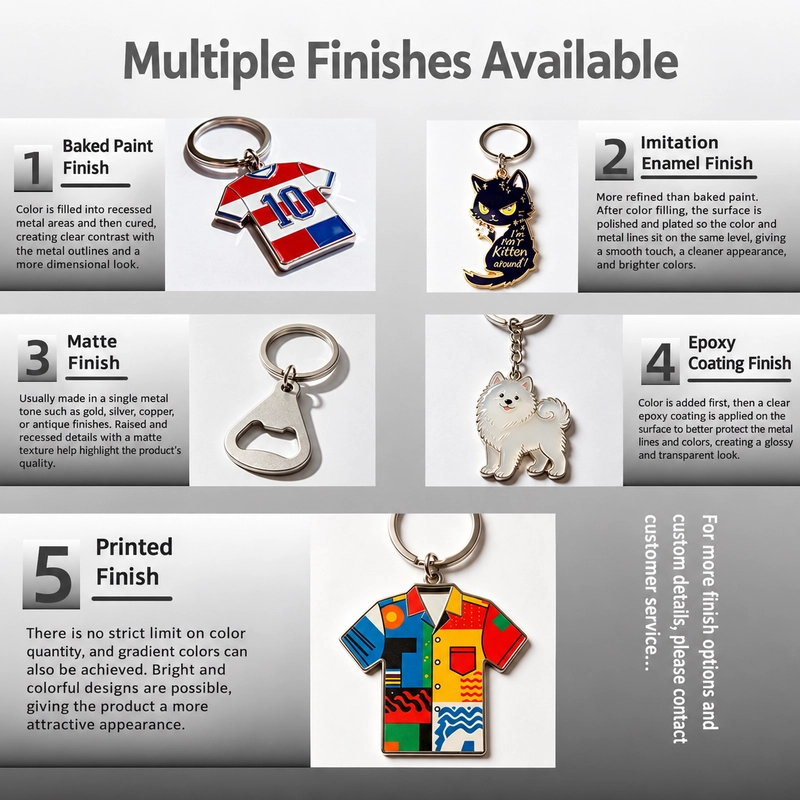
LOVECOLOUR supports several decoration options for custom metal keychain projects, including UV printing, enamel-style finishes, painted color filling and epoxy coating, subject to design feasibility.
UV Printing for Full-Color Designs
UV printing is suitable for metal keychain designs that require colorful artwork, illustrations, gradients or more complicated graphic details. It provides greater flexibility for designs that are difficult to reproduce using separate recessed color sections.
This method is worth considering for brand logos containing multiple colors, detailed illustrations, small graphic elements or artwork with gradient transitions.
Before production, confirm the printable surface, artwork size, color appearance and whether the design requires decoration on one side or both sides.
Best for: Full-color logos, illustrations, gradient artwork and detailed promotional designs.
Soft Enamel and Hard Enamel Finishes
Enamel-style metal keychains use colored areas together with metal outlines or dividing lines to create a distinctive decorative appearance. The exact construction should be identified before ordering because different enamel processes produce different surface effects.
Soft enamel generally has recessed color areas below the raised metal outlines, creating a noticeable textured surface. Hard enamel is generally processed to create a smoother surface that is closer to the level of the surrounding metal. The actual process and available finish should be confirmed with the manufacturer for each design.
For suitable enamel projects, zinc alloy is often recommended because its molded structure can accommodate the required raised outlines and recessed color areas.
When preparing artwork for enamel keychains, pay attention to the following:
- Metal dividing lines between different color areas.
- The width of small lettering and narrow graphic details.
- The number of separate color sections.
- The position of raised and recessed elements.
- The intended appearance of the metal outlines and finished surface.
Best for: Brand emblems, souvenir designs, club logos, collectible merchandise and designs with clearly separated color areas.
Baked-Paint Color Filling
Painted color filling is another decorative option for suitable metal keychain structures. It allows selected areas of the design to receive contrasting colors while maintaining the visual appearance of the metal body.
The feasibility depends on the shape, recessed areas, artwork details and selected finishing process. Buyers should confirm the expected color appearance and surface finish through an approved reference or sample.
Best for: Designs requiring defined color sections and a painted decorative appearance.
Epoxy Coating and Doming
Epoxy coating adds a transparent decorative layer to suitable printed or colored surfaces. Depending on the construction, it can create a smooth, glossy and slightly raised appearance while adding a protective layer over the underlying decoration.
Epoxy should not be treated as a universal solution for every metal keychain. The surface, artwork, coating thickness and compatibility with the selected decoration method need to be assessed first.
Best for: Suitable colorful printed designs where a transparent glossy finish is desired.
Logo Decoration Comparison
| Decoration Method | Visual Effect | Suitable Artwork | Main Consideration |
|---|---|---|---|
| UV Printing | Printed full-color graphics | Gradients, illustrations and detailed logos | Printable surface and color appearance |
| Soft Enamel | Recessed color areas with raised metal outlines | Logos with separated color sections | Color separation and line structure |
| Hard Enamel | Smoother filled-color surface | Suitable designs requiring a flatter finish | Process feasibility and finishing requirements |
| Baked Paint | Painted color-filled areas | Designs with defined color sections | Surface and structure compatibility |
| Epoxy / Doming | Transparent glossy coating | Suitable printed or colored designs | Coating compatibility and thickness |
Not every material can accommodate every decoration method, and not every combination is suitable for the same design. A professional quotation should identify the proposed base material and actual finishing process rather than simply listing several techniques.
4. Custom Shapes, 2D and 3D Effects, and Dimensions
One advantage of custom metal keychains is the ability to develop a product around a brand’s own outline, logo or illustration instead of choosing a standard shape.
Depending on the selected material and mold structure, a custom project may incorporate flat graphic areas, raised elements, recessed sections or suitable three-dimensional visual effects.
Custom Shapes
Custom-shaped keychains can be developed around logos, symbols, product outlines, brand illustrations and original artwork. The outer contour should be evaluated together with the internal details because very narrow sections, sharp corners and small lettering can affect the final construction.
2D and 3D Design Effects
A 2D design generally focuses on the outline and surface details of the metal body. A 3D effect introduces additional depth through raised or recessed structures where the material and mold allow it.
When requesting a quotation, explain whether you want a flat logo, raised lettering, recessed artwork or a more dimensional overall shape. A reference image is useful, but a production-ready drawing is more helpful for evaluating the exact construction.
How to Specify Keychain Dimensions
Always distinguish between the dimensions of the metal body and the total assembled length of the finished keychain.
- Body Width: The widest measurement of the metal design.
- Body Height: The overall height of the metal body.
- Body Thickness: The thickness of the metal component.
- Chain Length: The length of any connecting chain.
- Overall Assembled Length: The complete measurement including the body, chain and attachment hardware.
For example, a keychain with a 40 mm metal body and a short connecting chain will have a different assembled length from a 40 mm keychain attached directly to a split ring. If the final size matters for retail packaging or product presentation, specify the overall dimensions in advance.
Front and reverse artwork should also be identified separately. If the back requires a logo, lettering, a special texture or a different decorative finish, include a clear reverse-side reference in the inquiry.
5. Choosing the Right Metal Keychain Attachments
The attachment hardware is not simply an accessory added after the design is finished. It affects the appearance, functionality, assembled dimensions and connection structure of the complete product.
Split Ring
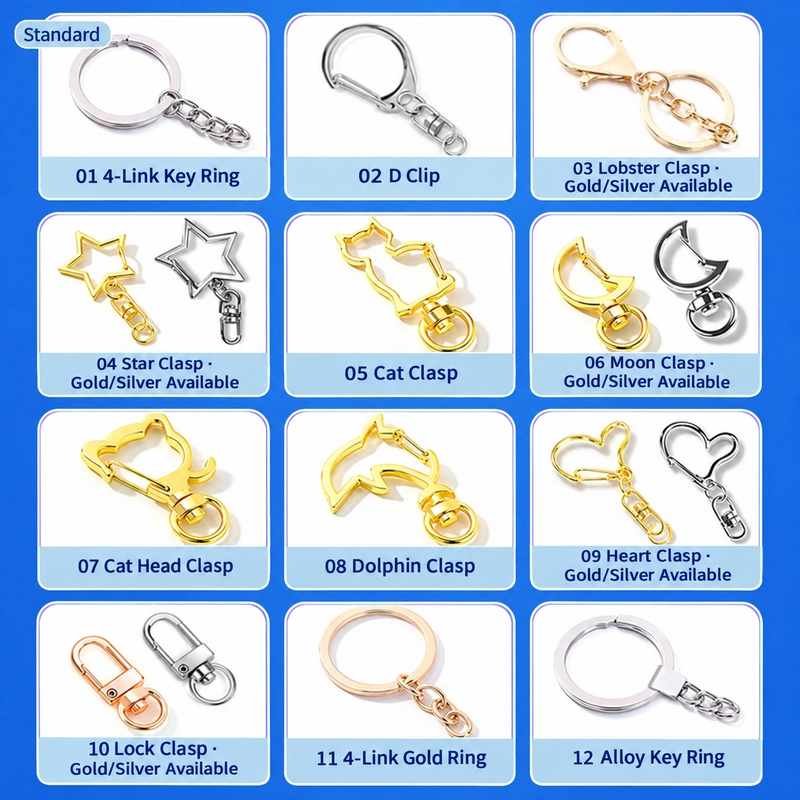
A split ring is a common choice for attaching keys. It offers a familiar keyring structure and can be connected directly to the metal body or through a short chain or connector.
Metal Chain
A short metal chain creates separation between the decorative metal body and the keyring. It can also allow the body to hang more freely, depending on the overall construction.
Lobster-Style Clips and Swivel Clips
Opening clips provide an alternative to a traditional split ring when users need a more convenient connection to bags, loops or other compatible accessories. The exact clip model, size and finish should be confirmed before bulk production.
What Should Buyers Check?
- Whether the attachment is a split ring, clip or a combination of components.
- Whether a connecting chain is required.
- Whether the metal body hangs in the correct direction.
- Whether the opening and closing action feels appropriate.
- Whether the assembled length matches the approved drawing.
- Whether the connection is suitable for the intended use and any specified strength requirement.
For projects where attachment strength or corrosion resistance is important, specify the required testing method and acceptance criteria separately. Do not assume that a particular load rating or test result is included unless it has been confirmed for the actual product.
6. Why Does Every Custom Metal Keychain Design Usually Require Its Own Mold?
Tooling is an important cost consideration in custom metal keychain manufacturing. Unlike choosing a standard stock product, developing a custom-shaped metal keychain generally involves creating a mold for the specific design.
The mold is developed around the product’s shape and structural requirements. Therefore, two different logos or outlines normally require separate molds, even when they use the same material and attachment hardware.
What Influences Mold Cost?
- Design Dimensions: Larger designs may require different tooling considerations.
- Structural Complexity: Complicated outlines and dimensional features can increase tooling requirements.
- Detail Requirements: Small lettering, fine lines and complex recessed areas need to be evaluated.
- Material and Process: Different materials and production methods require different tooling approaches.
- Design Variations: Changes to size, structure or important mold details may require additional tooling assessment.
Not automatically. If the artwork or physical structure is different, each design generally requires its own mold. Even when two designs look similar, changes in size, shape or structural details may affect the tooling requirements.
If you are ordering a collection with several designs, list the required quantity for each design separately. This helps the manufacturer evaluate the tooling and production costs more accurately.
What About Repeat Orders?
For repeat orders, confirm whether the original mold is retained, whether it remains suitable for reuse and whether any storage or maintenance conditions apply. Do not assume that every future order automatically qualifies for free tooling.
A clear quotation should separate the unit price, mold cost and sample cost so that the initial development investment and subsequent bulk production costs are easy to compare.
7. MOQ and Production Lead Time for Custom Metal Keychains
Minimum order quantity is an important consideration for promotional product buyers, retail brands and souvenir wholesalers. The MOQ of a custom metal keychain is influenced by its material, design, tooling and production requirements.
What Is the MOQ for Custom Metal Keychains?
Our standard MOQ is generally 500 pieces per design. Smaller trial quantities may be considered depending on the artwork, material, production process and project requirements.
For example, ordering 500 pieces of one design is different from ordering 500 pieces divided across five different designs. Since each independent design usually requires its own mold, the tooling investment and production arrangements need to be evaluated separately.
How Long Does Production Take?
The typical bulk production lead time is approximately 10–15 days, depending on the design complexity, order quantity, finishing requirements, mold development and sample approval.
International shipping time is additional. If the keychains are required for a trade show, product launch, seasonal campaign or scheduled event, provide the required arrival date and destination when requesting a quotation.
Always confirm when the quoted production period starts and which milestones must be completed before bulk production can begin.
Production Planning Overview
| Production Item | General Arrangement |
|---|---|
| Standard MOQ | Generally 500 pcs per design |
| Smaller Orders | Negotiable subject to project assessment |
| Tooling | Generally one mold per independent design |
| Bulk Production | Approximately 10–15 days |
| Sample Timing | Confirmed according to the specific project |
| Shipping | Quoted separately according to destination and shipping method |
These are general production guidelines, not a guaranteed delivery schedule. The final quotation should confirm the actual specifications and production arrangement for your order.
8. How to Evaluate a Metal Keychain Sample Before Bulk Production
Approving a sample before mass production is one of the most effective ways to reduce avoidable misunderstandings. A keychain may look correct in a digital design but still require adjustments to its dimensions, surface appearance, color filling or hardware assembly.
For B2B orders, the approved sample and production drawing should establish a clear reference for the bulk order.
Metal Body and Shape
- Check whether the outer contour matches the approved artwork.
- Compare the body width, height and thickness with the agreed specifications.
- Inspect the edges and visible surface for defects.
- Check that raised and recessed details are consistent with the approved design.
Logo and Decoration
- Check logo placement and orientation.
- Verify that small lettering remains readable.
- Compare the color appearance with the approved color reference.
- Inspect enamel or painted areas for visible inconsistencies.
- Check the surface appearance of UV printing and any epoxy coating.
- Review the front and reverse sides separately.
Hardware and Assembly
- Confirm that the selected ring, clip and chain match the agreed specification.
- Check whether all connecting components are assembled correctly.
- Evaluate the opening and closing action of any clip.
- Check whether the metal body hangs in the intended direction.
- Confirm any agreed attachment strength requirements using the specified acceptance method.
Packaging and Final Presentation
Packaging should also be discussed before bulk production. Individual polybags, custom printed packaging, backing cards or other retail presentation formats may be considered according to the project requirements.
If the keychains will be sold through retail stores or online marketplaces, consider the packaging dimensions, product visibility, barcode requirements and protection during international transportation.
These points are recommended buyer acceptance checks. Any formal inspection, laboratory testing or compliance documentation should be separately agreed and verified for the specific order.
9. Where Are Custom Metal Keychains Used?
Custom metal keychains are versatile branded accessories because they combine practical everyday use with a compact area for logos, illustrations and custom designs.
Corporate Gifts and Brand Promotions
Companies can use custom logo metal keychains as promotional gifts for customers, employees, business partners and distributors. A custom metal design can provide a more substantial presentation than some lightweight promotional accessories.
Trade Shows and Events
Metal keychains can be developed as branded giveaways for exhibitions, conferences, product launches and marketing campaigns. Buyers should consider the distribution quantity, packaging format and event delivery deadline when planning production.
Tourist Souvenirs and Travel Retail
Tourist attractions, museums, destinations and souvenir retailers can develop custom metal keychains featuring local landmarks, symbols, illustrations or destination-specific artwork.
For these projects, the visual identity and reverse-side details may be important because customers often purchase souvenirs as keepsakes rather than purely functional accessories.
Retail and Collectible Merchandise
Retail brands and merchandise sellers can use custom metal keychains to build themed collections, seasonal products and branded accessory ranges. Multiple designs may be developed around one collection, although tooling and MOQ should be evaluated for each independent design.
For character-based or licensed merchandise, buyers should provide the appropriate authorization for the artwork and trademarks being manufactured.
Clubs, Teams and Organizations
Clubs, sports organizations, automotive communities and special-interest groups can use metal keychains featuring their own logos, symbols and membership identities. Custom shapes and decorative details can help distinguish different collections or editions.
10. How to Request an Accurate Wholesale Metal Keychain Quotation
A complete RFQ helps the manufacturer evaluate the project more efficiently. You do not need to have every technical detail finalized before contacting a factory, but providing the following information will make the initial quotation more accurate.
Custom Metal Keychain RFQ Checklist
- Artwork: Logo, vector file, illustration or reference photograph.
- Product Size: Required body width, height and thickness.
- Material: Zinc alloy, iron, copper or another specified material.
- Decoration: UV printing, enamel, baked paint, epoxy or another required effect.
- Colors: Color references, Pantone numbers where applicable, and any areas that must remain metal-colored.
- Front and Back: Artwork and surface requirements for both sides.
- Hardware: Split ring, chain, lobster-style clip or another attachment.
- Quantity: Total quantity and quantity per individual design.
- Packaging: Individual packaging, retail packaging or bulk packing.
- Destination: Delivery country and city for shipping evaluation.
- Deadline: Required delivery date, especially for event or seasonal orders.
What Should a Complete Quotation Include?
When comparing suppliers, make sure the quotations refer to the same product specification. A lower unit price may simply reflect a different material, thinner body, simpler decoration, different hardware or a less complete packaging arrangement.
Ideally, request a quotation that separates the following items:
- Metal body material and proposed construction.
- Body dimensions and thickness.
- Decoration and surface finishing process.
- Attachment hardware and assembly.
- Unit price at the required quantity.
- Tooling or mold charge for each design.
- Sample charge and sample schedule.
- Bulk production lead time.
- Packaging cost and specifications.
- Shipping cost and shipping terms.
This makes it easier to compare quotations on an equivalent basis and identify the actual cost of developing a custom metal keychain collection.
11. Common Mistakes When Buying Custom Metal Keychains
Mistake 1: Choosing a Material Based Only on Unit Price
A cheaper material may not support the same shape, detail or finishing requirements as the material used in your reference product. Evaluate the finished construction rather than comparing material prices alone.
Mistake 2: Assuming Every Logo Can Use the Same Decoration Method
UV printing, enamel and painted color filling produce different visual effects and have different structural requirements. Review the artwork before selecting the production method.
Mistake 3: Ignoring Mold Costs
Custom metal keychains usually require a separate mold for each independent design. If you are developing a collection, include tooling costs in the initial project budget.
Mistake 4: Combining Several Designs Without Checking Their Individual MOQ
A total order quantity does not automatically satisfy the MOQ of every design. Confirm the quantity required for each individual mold and design before placing the order.
Mistake 5: Approving Only the Front Side
The reverse surface, artwork orientation, attachment point and back decoration should all be included in the approval drawing. Otherwise, important production details may be left open to interpretation.
Mistake 6: Comparing Quotations Without Comparing Specifications
Always compare the material, thickness, finishing method, hardware, mold charge and packaging. Two quotations for products that look similar in photographs may describe different finished products.
12. Frequently Asked Questions About Custom Metal Keychains
What is the standard MOQ for custom metal keychains?
Our standard MOQ is generally 500 pieces per design. Smaller quantities may be negotiable depending on the material, artwork, tooling and production requirements. Each independent design usually requires its own mold.
What is the usual production lead time?
The typical bulk production lead time is approximately 10–15 days. The actual schedule depends on design complexity, mold development, sample approval, quantity and finishing requirements. Shipping time is additional.
Which material is better for custom metal keychains, zinc alloy or iron?
Zinc alloy is generally more suitable for many complex shaped and dimensional designs, including relevant enamel applications. Iron can be a more economical option for simpler structures. The best material depends on the actual design and required finish.
Can I order custom metal keychains with full-color logos?
Yes. UV printing can be considered for suitable full-color logos, illustrations and gradient designs. The printable surface and expected color appearance should be evaluated before production.
Can you make custom enamel metal keychains?
Yes. Enamel-style finishes can be considered for suitable custom metal keychain designs. Soft enamel and hard enamel have different surface characteristics. The appropriate material, mold structure and finishing process should be confirmed according to the artwork.
Can I combine UV printing and epoxy coating?
These processes may be suitable for certain designs, but their compatibility depends on the material, surface and construction. Submit your reference artwork so the proposed combination can be assessed before quotation.
Does every custom metal keychain design require a separate mold?
Generally, yes. Different logos and shapes normally require their own molds. Changes to dimensions or structural details may also require a new tooling assessment.
Can I customize both the front and back of a metal keychain?
Front and reverse requirements can be customized according to the design and manufacturing process. Provide separate artwork or reference images for each side and confirm the required reverse finish before approving the sample.
Can I choose different attachments for my metal keychain?
Yes. Split rings, short metal chains, lobster-style clips and other compatible fittings can be considered. Specify the complete connection structure and preferred hardware when requesting a quotation.
Can I order several designs in one bulk order?
Multiple designs can be discussed as part of one project. However, each independent design generally requires separate tooling and must be evaluated against its own MOQ. Provide the quantity required for each design so that the quotation can be prepared accurately.
Can you develop metal keychains for souvenir and retail brands?
Yes. Custom metal keychains can be developed for tourist souvenirs, retail merchandise, corporate gifts, promotional campaigns, events and authorized collectible merchandise. Artwork, materials, finishing and packaging can be assessed according to the target market.
What files should I send for a custom metal keychain quotation?
Vector artwork such as AI, EPS or PDF is preferred when available. High-resolution PNG files and reference photographs can also be used for an initial design review. Include the required dimensions, quantity, material preference, finishing method and attachment requirements if known.
13. Work with LOVECOLOUR on Your Custom Metal Keychain Project
Developing a successful custom metal keychain starts with matching the artwork to the right material, mold structure, decoration method and attachment hardware. A clear specification at the beginning helps reduce unnecessary revisions and makes bulk production planning more predictable.
LOVECOLOUR provides OEM and ODM support for custom metal keychain projects, from artwork review and material recommendations to mold development, sampling, bulk production and packaging coordination.
Whether you are sourcing promotional metal keychains, custom corporate gifts, event merchandise, tourist souvenirs or retail accessories, our team can review your requirements and help evaluate a suitable production solution.
To get started, send us your artwork or reference image, required quantity per design, approximate dimensions, material preference, finishing requirements and delivery destination.
Explore our Custom Metal Keychains or contact LOVECOLOUR for a wholesale quotation.