A lightweight wrist strap for a compact camera has very different requirements from a padded shoulder strap designed for professional DSLR equipment. Likewise, a fashion-oriented rope camera strap may look appealing in a retail collection but require different connectors, finishing techniques and quality checks from a standard polyester webbing strap.
This guide explains how to compare camera strap types, choose materials, evaluate hardware, select logo customization methods and prepare specifications for OEM manufacturing. It is written for brands, promotional product distributors, photography equipment suppliers and international wholesale buyers.
Quick Answer: What Is the Best Material and Style for a Custom Camera Strap?
For most promotional and branded camera strap projects, polyester webbing is a practical starting point because it offers flexible printing options and relatively economical customization. Nylon webbing is worth considering for a denser, smoother or more premium textile finish. Neoprene padding is useful when comfort and pressure distribution are priorities, while leather and rope constructions are often selected for distinctive retail collections.
However, material alone does not determine whether a strap is suitable for a camera. The finished assembly, stitching, connectors and attachment compatibility must also match the intended equipment.
| Buyer Requirement | Recommended Starting Point | Important Consideration |
|---|---|---|
| Branded promotional merchandise | Printed polyester neck strap | Logo visibility, cost and secure attachments |
| Compact or lightweight camera | Adjustable wrist strap | Camera attachment and wrist-loop security |
| DSLR or heavier mirrorless equipment | Padded neck or shoulder strap | Comfort and verified load-bearing construction |
| Outdoor and travel photography | Nylon or rope-style strap | Abrasion, moisture exposure and connector design |
| Fashion and lifestyle photography brands | Jacquard woven or rope camera strap | Pattern, texture and retail presentation |
| Premium photography accessories | Leather or mixed-material strap | Leather quality, edge finishing and hardware |
| Full-color artwork | Sublimation-compatible polyester | Print placement, color approval and artwork detail |
The best choice depends on the camera system, target user, desired retail positioning and order specifications.
1. Understand the Different Types of Camera Straps
Before contacting a custom camera strap manufacturer, identify how the customer will carry the camera. This decision influences strap length, width, materials and hardware.
Camera Neck Straps: A Versatile Choice for Branded Collections
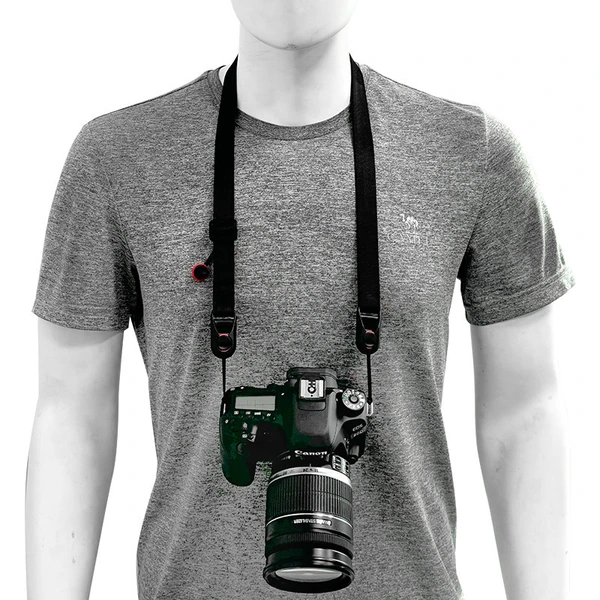
A custom camera neck strap is designed to hang the camera from the neck or, where the length and configuration permit, across one shoulder.
These are common accessories for DSLR and mirrorless cameras and offer a broad fabric surface for custom logos, woven lettering and colorful artwork.
Consider neck straps when developing:
- Camera accessory collections for photography retailers.
- Custom logo straps for photography studios.
- Branded merchandise for camera clubs and photography events.
- OEM accessories for camera equipment suppliers.
- Promotional camera straps for photography-related campaigns.
Buying consideration: A wider contact area or padded section may improve comfort, particularly when users carry heavier camera-and-lens combinations. Check strap length and the attachment style before approving production.
Camera Wrist Straps: Compact, Lightweight and Convenient
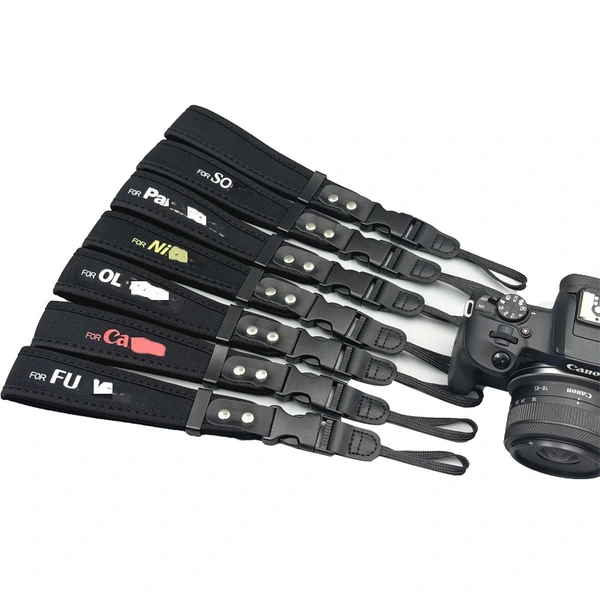
A camera wrist strap, sometimes called a camera hand strap or camera safety wrist strap, provides a short connection between the camera and the user’s wrist.
It can be a practical option for compact digital cameras, lightweight mirrorless equipment and compatible small devices.
Common designs include polyester wrist straps, nylon wrist loops, adjustable rope wrist straps and premium leather camera wrist straps.
Buying consideration: A camera wrist strap is not automatically suitable for every DSLR or action camera. Verify the connection point, expected equipment load and strap-retention design. A simple promotional wrist lanyard should not be treated as a load-rated camera strap without appropriate validation.
Camera Shoulder Straps: Carrying Comfort for Longer Sessions
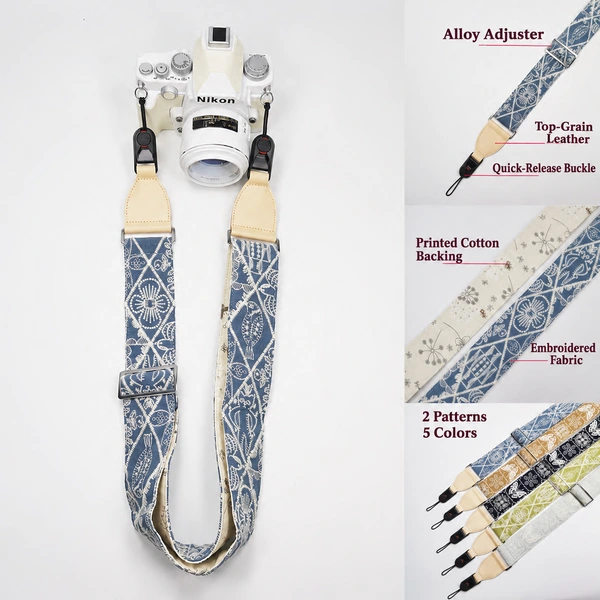
A camera shoulder strap transfers the carrying load onto the shoulder and may use wider webbing, padded sections or adjustable hardware.
It is worth considering for wedding photographers, event photographers, travel photographers and other users who carry camera equipment for extended periods.
The most important specifications are the load-bearing construction, usable length, strap width, shoulder contact surface and connectors.
Camera Sling Straps: Convenient Access While Moving
A camera sling strap is generally worn diagonally across the body, allowing the camera to rest near the hip or side.
Some sling systems use a sliding connection so the camera can move along the strap without removing it from the shoulder. Others use adjustable crossbody construction.
For OEM sling camera straps, buyers should review the sliding mechanism, attachment location, locking hardware and the way the complete system supports the intended camera.
Rope Camera Straps: Distinctive Designs for Lifestyle Brands
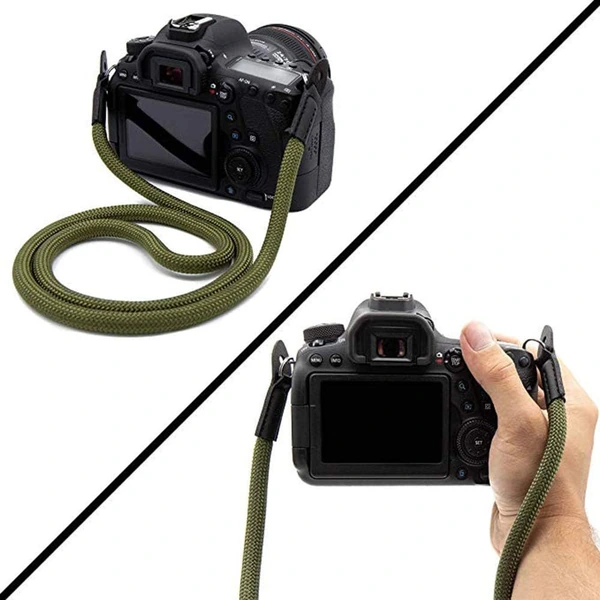
A rope camera strap offers an alternative to flat woven webbing. Depending on the design, it may use braided polyester rope, nylon rope or paracord-style materials with leather, fabric or metal end connections.
Rope-style straps are worth considering for outdoor-inspired merchandise, travel photography collections and fashion-oriented camera accessory brands.
Buyers should examine the rope diameter, flexibility, end-terminal construction and abrasion behavior rather than judging strength by appearance alone.
Leather Camera Straps: Premium Retail Positioning
Custom leather camera straps are often chosen for a classic appearance and distinctive hand feel.
Possible options include genuine leather, selected synthetic leather materials and combinations of leather details with fabric webbing.
The manufacturing details matter: edge finishing, reinforcement, stitching, connection points and leather thickness can all influence the finished product.
For private-label collections, branded retail packaging and a consistent surface finish are also important.
2. Camera Strap Materials Compared: Polyester vs Nylon vs Neoprene vs Leather
Material selection affects comfort, appearance, customization methods, product cost and long-term performance. For wholesale buyers, it also affects consistency between production batches.
Polyester Camera Straps
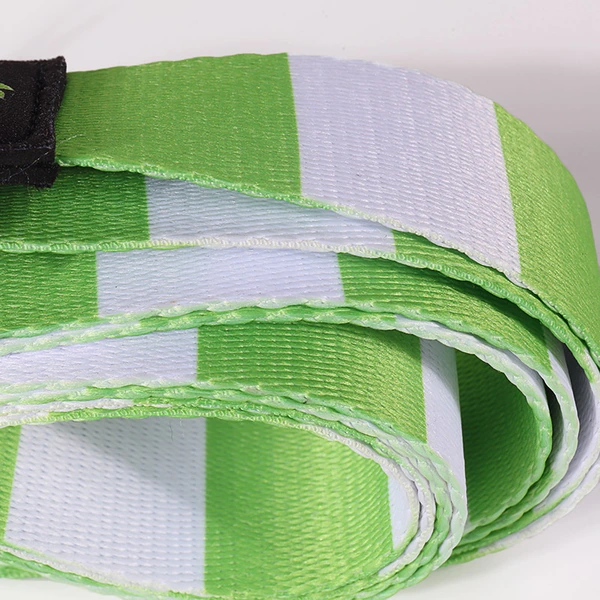
Polyester webbing camera straps are a practical option for promotional products and colorful branded accessories.
Polyester can support a variety of constructions, including flat webbing, printed straps and jacquard-style textiles. Suitable polyester substrates can also be used for full-color sublimation printing.
Advantages include:
- Versatile colors and surface designs.
- Compatibility with several established branding processes.
- Generally economical sourcing for promotional projects.
- Flexible construction for different widths and strap formats.
Explore our custom webbing solutions for related polyester, nylon and specialty woven material options.
Nylon Camera Straps
Nylon camera straps are commonly considered when buyers want a smooth textile surface, flexible feel and abrasion-resistant webbing construction.
Compared with typical promotional polyester webbing, selected nylon constructions can feel smoother or denser. However, the actual performance depends on the yarn, weave, thickness and finishing rather than the material name alone.
For buyers developing premium branded straps, our custom nylon and specialty woven straps demonstrate related textile construction and logo customization options.
Neoprene Camera Straps
Neoprene camera straps generally use a padded neoprene section, often combined with woven attachment straps.
The flexible padded section can improve contact comfort and help spread pressure over a larger area. It can be particularly useful for camera neck and shoulder straps designed for longer carrying periods.
Buyers should confirm neoprene thickness, lining, edge construction and the attachment method between the padded section and the load-bearing strap.
Important: Padding adds comfort but should not be assumed to add load-bearing strength. The complete strap structure still needs to meet the intended equipment requirements.
Cotton and Canvas Camera Straps
Canvas and cotton webbing offer a more traditional textile appearance. They may suit vintage-inspired photography accessories and lifestyle retail collections.
Depending on the specification, cotton webbing can be combined with leather connectors, woven details or decorative stitching.
Because fabric composition, thickness and finishing vary, request a physical material sample before confirming large quantities.
Leather and Synthetic Leather Camera Straps
Leather is often chosen for its tactile appearance and premium positioning. Synthetic alternatives can be considered when a project requires a specific finish, color range or material policy.
For OEM manufacturing, distinguish between genuine leather, PU-coated materials and other synthetic constructions. These are not interchangeable, and their appearance, cost, flexibility and durability vary.
Recycled Polyester Camera Straps
Recycled polyester, or rPET, may be considered by brands developing merchandise with material-sourcing requirements.
When making sustainability-related claims, request supporting documentation for the selected material and manufacturing scope. Recycled content should not automatically be described as environmentally superior in every respect.
3. How to Choose the Right Camera Strap Width and Length
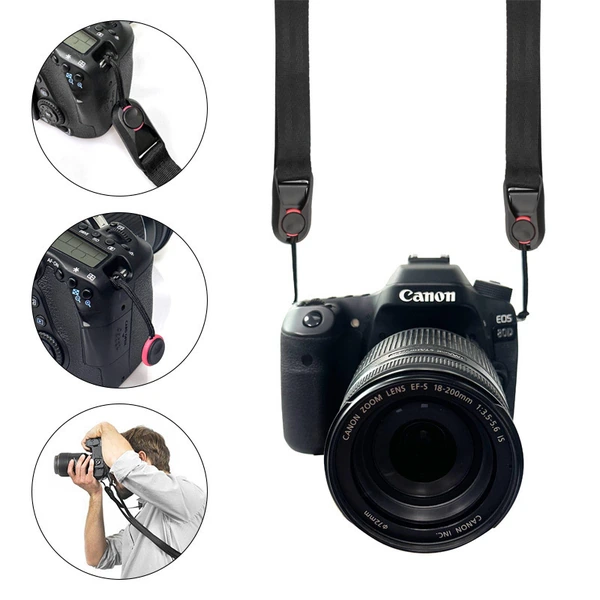
Camera strap sizing should be based on the intended carrying position, camera weight and user experience rather than copying an arbitrary standard from another product.
Strap Width
A narrow strap can be compact and visually suitable for lightweight accessories, but it may concentrate pressure over a smaller contact area.
Wider webbing or padding may provide greater comfort for heavier equipment, although the actual result depends on flexibility, lining and fit.
For custom manufacturing, buyers should specify:
- Webbing width and thickness.
- Padding width, length and thickness, where applicable.
- Neck or shoulder contact surface.
- End-connector width and required assembly details.
- Finished dimensions and agreed tolerances.
Strap Length
Neck, shoulder and crossbody straps require different usable lengths. The preferred size also varies with the intended wearer and carrying position.
For adjustable camera straps, request both the minimum and maximum usable lengths.
For fixed-length straps, clearly establish whether the stated dimension refers to the fabric section, the connection-point distance or the complete assembled product.
OEM tip: Provide a reference strap, technical drawing or measurement diagram. This is more reliable than using descriptions such as “normal adult size” or “standard camera strap length.”
4. Camera Strap Attachments: The Most Important Detail Buyers Should Not Overlook
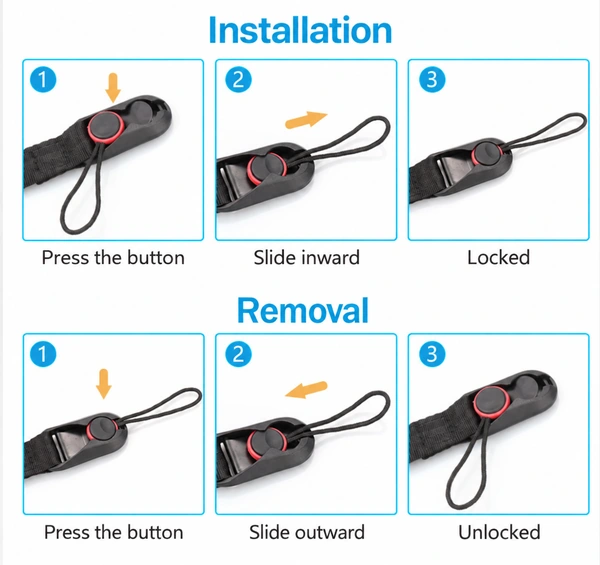
Camera compatibility is determined by the entire attachment system, not simply the body of the strap.
Common camera-side attachment designs include:
- Webbing threaded through compatible camera strap eyelets.
- Split rings or triangular rings used with approved camera connection points.
- Purpose-designed cord loops or anchor-style connectors.
- Compatible quick-release camera strap connectors.
- Specialized sling attachment systems.
Camera Eyelets and Connection Points
Different camera models can have different connection structures. Some use narrow strap eyelets; others use rings or other mounting designs.
For example, Sony’s official camera strap attachment guidance illustrates how attachment arrangements depend on the camera and accessory configuration.
Before manufacturing a strap for a particular camera system, request the exact model or connection dimensions. Do not assume that a connector which fits one camera will fit another.
Quick-Release Camera Strap Connectors
Quick-release connections can make it easier to remove or replace a strap, but they are not all interchangeable.
Specialized systems may use proprietary anchor cords, connector housings or locking mechanisms. As one example, Peak Design’s official Anchor Links product information describes a particular quick-connection system.
For custom OEM development, select connectors based on verified compatibility and appropriate engineering specifications. Do not substitute visually similar third-party connectors without checking their construction and performance.
Are Ordinary Lanyard Buckles Suitable for Camera Straps?
Not necessarily.
Standard badge lanyard accessories, including some plastic release buckles and safety breakaway connectors, are designed for different uses and should not automatically be used to suspend expensive camera equipment.
Any camera-carrying connector should be selected and evaluated as part of the complete load-bearing assembly.
A safety breakaway mechanism intended to release under tension may be unsuitable for a camera-support application because unintended release could cause equipment damage.
What Should Buyers Request from the Supplier?
- Photographs or drawings of the actual camera-side connectors.
- Material and hardware specifications.
- Information about the intended loading conditions.
- Any relevant test results or verified load ratings, if available.
- A physical sample for checking compatibility with the intended camera.
- Confirmation of the approved production hardware before bulk manufacturing.
Do not assume a strap is safe for a particular camera solely because it is advertised as durable or heavy-duty. The complete assembly should be evaluated against the intended application.
5. Custom Camera Strap Logo Options: Printing, Woven Designs and Embroidery
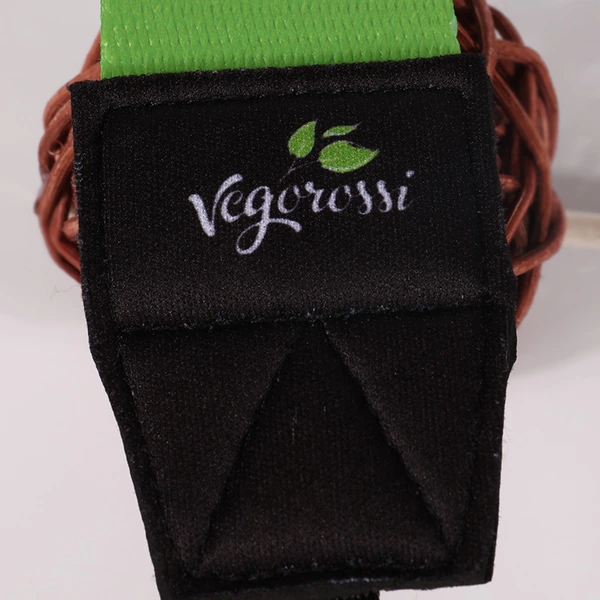
For private-label and promotional camera straps, branding is a major consideration. The most suitable customization method depends on the substrate, design complexity and product positioning.
Screen Printed Camera Straps
Screen printing is suitable for selected fabric straps with clear text, simple artwork and solid-color logos.
It can be a practical choice for promotional camera strap projects, especially when the artwork and fabric surface are compatible with the process.
Full-Color Sublimation Camera Straps
For full-color graphics, photographs, gradients and complex patterns, dye sublimation on a compatible polyester substrate is often a suitable option.
This can support colorful promotional camera straps, patterned neck straps and branded photography accessories.
When approving artwork, check whether the design should repeat across the strap or appear at specific locations. Print placement and folded or stitched areas should be included in the production proof.
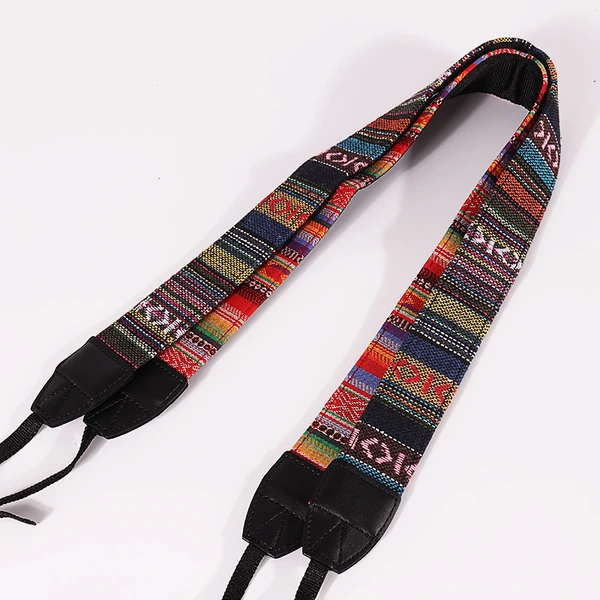
Jacquard Woven Camera Straps
Jacquard woven camera straps incorporate the design or lettering into the textile structure rather than applying the logo only to the surface.
This approach can be attractive for fashion collections and brands that want repeated logos, distinctive woven patterns or a more textured appearance.
See our custom jacquard woven lanyards for examples of related weaving and branding techniques.
Embroidered Camera Strap Details
Embroidery can add a textured visual effect, particularly on suitable fabric panels or reinforced logo sections.
However, embroidery placement must be considered carefully. Dense stitching may affect flexibility and should not weaken a critical load-bearing component.
Leather Logo Patches and Debossed Branding
For premium collections, leather or suitable synthetic-leather components may support embossed, debossed, laser-marked or foil-stamped branding, depending on the material and design.
These methods can also be combined with printed or woven textile sections.
For a broader comparison of available webbing, logo and attachment techniques, visit our custom lanyard design and printing options.
6. How to Select Camera Straps for Different Customer Markets
The ideal design depends on what the buyer’s customer values most. Procurement priorities are not identical across promotional giveaways, specialty photography retail and premium accessories.
| Market or Buyer | Typical Product Direction | Key Purchasing Priorities |
|---|---|---|
| Photography accessory brands | Neck straps, shoulder straps, wrist straps | Compatibility, design consistency, comfort |
| Camera retailers | Private-label camera straps | Retail packaging, quality, product differentiation |
| Promotional product distributors | Logo-printed polyester straps | Artwork, price, MOQ, delivery schedule |
| Outdoor and travel brands | Nylon, rope and crossbody styles | Hardware, abrasion, comfort, practical use |
| Fashion accessory brands | Woven, rope and leather styles | Color, pattern, texture, retail presentation |
| Photography schools and clubs | Branded neck and wrist straps | Budget, logo visibility, suitable connectors |
| Online marketplace sellers | Coordinated strap collections | Product consistency, packaging, replenishment |
For example, a promotional distributor preparing a photography event giveaway may prioritize a lightweight printed strap and straightforward packaging. A retailer developing a premium photography accessory collection may invest more in textile construction, hardware and branding.
These are different sourcing decisions, even though both products may be described as custom camera straps.
7. How to Reduce Costs When Ordering Wholesale Camera Straps
For wholesale buyers, the lowest quoted unit price does not always represent the most economical purchasing decision.
The total cost may include material selection, manufacturing setup, logo customization, hardware, samples, packaging, inspection and international shipping.
Standardize Components Where Practical
Using the same approved hardware across multiple designs may simplify procurement and reduce unnecessary variations.
This is particularly useful when creating a coordinated collection in several colors or patterns.
Choose the Logo Process Based on Artwork
A simple one-color logo does not always require a full-color print process. Similarly, a detailed photographic design may not be appropriate for jacquard weaving.
Selecting the right production method early can reduce revisions and unnecessary setup work.
Confirm How Design Variations Affect MOQ
A 1,000-piece order divided among multiple different woven patterns may not have the same production economics as 1,000 identical pieces.
Ask whether the minimum order quantity applies to the total project, each material, each logo design or each color.
Use a Physical Sample Before Large Orders
Samples add a development step but may prevent costly mistakes involving connector fit, logo placement, webbing texture or incorrect finished length.
For load-bearing camera straps, approving the appearance of a sample is not enough. The attachment system and intended use also need appropriate verification.
Compare Quotations on the Same Basis
When comparing suppliers, make sure the quotations include equivalent materials, hardware specifications, logo methods, packaging and delivery terms.
An EXW factory price should not be compared directly with a delivered price without accounting for freight, import charges and other applicable costs.
8. OEM Camera Strap Quality Control: What Should Be Inspected?
For brands selling custom photography accessories, consistency between the approved sample and finished bulk production is essential.
Before confirming an order, agree with the supplier on the required specifications, inspection criteria and any performance tests.
Material Inspection
- Correct fiber composition and webbing construction.
- Approved color and surface texture.
- Consistent strap width and thickness.
- No obvious weaving defects, sharp edges or unintended damage.
Logo and Appearance Inspection
- Correct artwork and spelling.
- Consistent logo position and orientation.
- Approved color appearance within agreed tolerances.
- Acceptable print, woven or embroidery detail.
Stitching and Assembly Inspection
- Correct stitching pattern and reinforcement according to the approved design.
- No obvious broken or missing stitches.
- Consistent connector and buckle assembly.
- Correct usable strap length and adjustment range.
Attachment and Functional Inspection
- Specified hardware materials and dimensions.
- Correct operation of approved adjustment and connection mechanisms.
- Compatibility with the intended camera-side interface.
- Applicable strength, retention or durability verification against agreed acceptance criteria.
Where strength testing is required, the testing method, load conditions, sample quantity and acceptance criteria should be agreed before production. No generic material description or supplier claim should replace project-specific validation.
Packaging Inspection
- Correct product quantity and color assortment.
- Approved individual or bulk packaging.
- Required barcode, SKU or product labels.
- Clear installation and compatibility information where relevant.
For a broader overview of textile product manufacturing, see our guide to custom lanyard production from artwork to bulk delivery.
9. Sourcing Custom Camera Straps from a Manufacturer in China
Photography brands and promotional merchandise companies in the United States, Canada, United Kingdom, Australia and European markets often need more than a simple price quotation.
A successful OEM order requires coordination between product specifications, branding, manufacturing, packaging and shipping.
Working with a custom camera strap manufacturer in Guangzhou, China can be useful for companies developing custom textile straps, mixed-material accessories and branded webbing products.
When evaluating a potential wholesale camera strap supplier, consider the following:
- Customization: Can the manufacturer review your design and recommend suitable materials and construction?
- Compatibility: Can the required camera-side attachments be sourced and verified?
- Sampling: Can you approve the actual material, logo, dimensions and connector assembly before bulk production?
- Quality control: Are the required product checks and performance criteria clearly documented?
- MOQ: Does the quoted minimum apply per design, color or material?
- Lead time: Are sampling, production and shipping schedules confirmed separately?
- Packaging: Can the supplier prepare the required retail, distributor or promotional packaging?
- Export terms: Are freight costs, delivery responsibilities and documentation clearly defined?
For US promotional product distributors, Canadian photography retailers, UK merchandise suppliers, Australian outdoor brands and European private-label accessory companies, clear specifications and sample approval help reduce cross-border purchasing uncertainty.
10. What Information Should You Send for a Custom Camera Strap Quotation?
A well-prepared RFQ (request for quotation) allows a manufacturer to recommend a more accurate production solution and identify any missing technical requirements.
Include the following information:
| Specification | Information to Provide |
|---|---|
| Product style | Neck, wrist, shoulder, sling, rope or leather strap |
| Camera application | Camera category, model or attachment interface |
| Material | Polyester, nylon, neoprene, leather, rope or reference sample |
| Dimensions | Width, finished length, adjustment range and padding details |
| Logo | Artwork file, preferred printing or branding method |
| Colors | Artwork colors, Pantone references or physical samples |
| Attachment | Connector details, compatibility and hardware requirements |
| Quantity | Total quantity and breakdown by color or design |
| Packaging | Bulk, individual bag, backing card, retail box or barcode |
| Delivery | Destination country, required date and preferred trade terms |
| Testing | Required performance criteria or compliance documentation |
If you do not have a finished technical drawing, a clear reference photograph, basic dimensions and intended application can provide a useful starting point. The manufacturing specifications should then be reviewed before sampling.
11. Frequently Asked Questions About Custom Camera Straps
What is the best material for a custom camera strap?
There is no single best material for every application. Polyester is a versatile choice for branded and printed straps. Nylon may offer a different texture and abrasion performance. Neoprene padding can improve carrying comfort, while rope and leather constructions can support distinctive retail designs. The best option depends on the intended camera, users and product requirements.
Are camera neck straps and camera shoulder straps the same?
They may share similar construction, but their intended wearing position can differ. A neck strap typically suspends the camera from the neck, while a shoulder strap is carried over a shoulder. Some adjustable designs can support more than one wearing position.
Can camera straps be customized with a company logo?
Yes. Depending on the selected material and construction, branding methods may include screen printing, heat transfer, dye sublimation, jacquard weaving, embroidery and leather logo details.
Can one camera strap fit Canon, Nikon, Sony and Fujifilm cameras?
Not automatically. Compatibility depends on the exact camera model and attachment system. Buyers should confirm the mounting interface and suitability of the proposed connectors before claiming compatibility with particular cameras.
Can you manufacture wrist straps for GoPro and other action cameras?
Custom wrist straps and tethers can be developed for suitable small-device applications, but the connection method and intended load must be reviewed. Action cameras may require dedicated housings, mounting adapters or proprietary connections. Compatibility should never be assumed from the brand name alone.
What is the MOQ for wholesale custom camera straps?
The minimum order quantity depends on the material, logo method, attachment hardware and number of design variations. A standard printed webbing style may have different production requirements from a specialty rope or leather construction. Request an MOQ based on your actual specifications.
Is a woven logo better than a printed logo?
A woven logo becomes part of the textile structure and can provide a distinctive texture. Printing offers different advantages, including the ability to reproduce detailed artwork or full-color patterns on suitable materials. The better method depends on the desired design and manufacturing requirements.
Should I request a sample before bulk camera strap production?
Yes, especially when developing a new design or camera connection system. A physical sample helps evaluate the dimensions, material, logo appearance and hardware compatibility. Any required strength or functional testing should also be established before production approval.
Can photography brands order private-label camera straps with custom packaging?
Private-label strap projects can include custom logos, colors, material selections and packaging specifications. Options such as backing cards, individual packaging, SKU labels and retail boxes can be discussed during quotation and sampling.
12. Final Buying Checklist for Custom Camera Straps
Before placing a wholesale or OEM camera strap order, confirm these seven points:
- Application: Which camera or device will the strap support?
- Construction: Which style, material and dimensions are required?
- Compatibility: Are the attachments suitable for the intended equipment?
- Branding: Which printing, weaving or logo process best fits the artwork?
- Sample: Has the finished design been reviewed and approved?
- Quality: Are inspection and performance requirements documented?
- Delivery: Are MOQ, costs, packaging, production time and shipping terms confirmed?
A good custom camera strap should not only look professional. It should be properly designed for the intended application and manufactured according to clear, repeatable specifications.
Develop Your Custom Camera Strap Collection with LOVECOLOUR
LOVECOLOUR is a Guangzhou-based custom lanyard and webbing manufacturer providing OEM and ODM solutions for international brands, promotional product distributors, retailers and wholesale buyers.
Our experience in custom lanyards, woven webbing and straps and branded phone lanyards supports the development of related custom strap and accessory projects.
For camera strap projects, we can review artwork, material preferences, strap construction, logo customization and hardware requirements to help determine a suitable manufacturing approach. Camera-specific compatibility and performance requirements should be verified as part of the development process.
Whether you are sourcing promotional camera straps for a US marketing campaign, developing private-label photography accessories for the UK or European retail market, or planning a custom strap collection for Australian or Canadian customers, clear specifications are the foundation of a successful order.
Ready to discuss your custom camera strap project?
Send us your reference images, logo artwork, preferred material, estimated quantity and intended camera application. We will review your requirements and provide a suitable production recommendation and quotation.