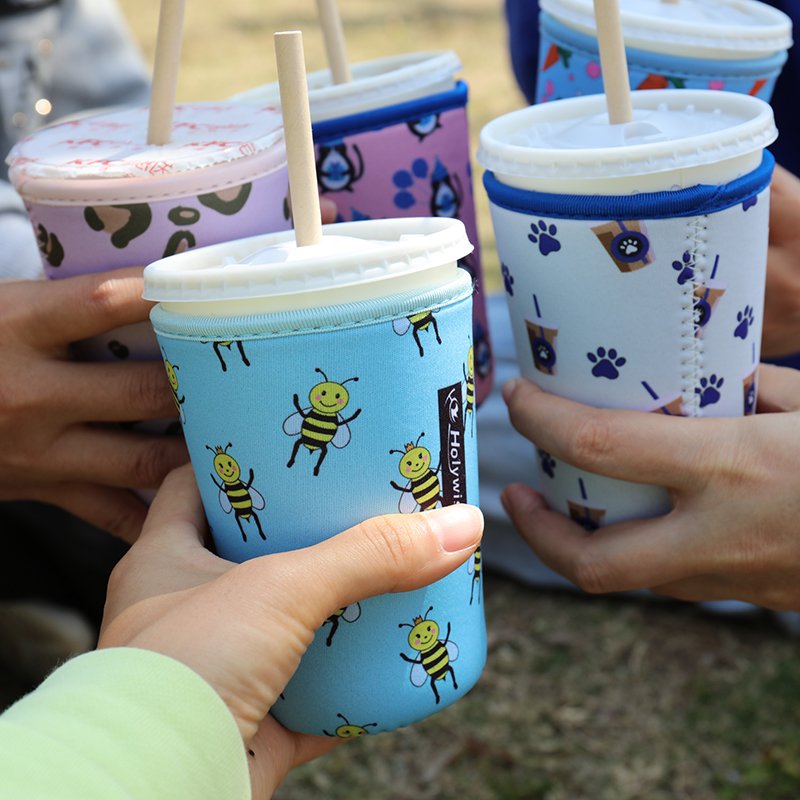
Neoprene Coffee Cup Sleeves: The Complete Guide to Sizes, Materials, Printing & Custom Options
Neoprene coffee cup sleeves have become a popular reusable alternative to ordinary disposable drink sleeves, especially for iced coffee, cold brew, milk tea, takeaway beverages and branded promotional merchandise.
But choosing the right sleeve involves much more than selecting a color and adding a logo. Cup dimensions, neoprene thickness, printing method, stitching quality, edge finishing and additional accessories can all affect the final appearance, fit and usability.
This guide explains what buyers should know before ordering neoprene coffee cup sleeves, from cup sizing and material thickness to full-color printing, handles, labels, metal rings and bulk production.
Quick Answer: What Should You Know Before Ordering?
| Typical Material | SBR-based neoprene foam |
| Common Thickness | Approximately 2–4mm depending on the application |
| Popular Uses | Iced coffee, cold brew, takeaway drinks, milk tea and promotional merchandise |
| Reference Sizes | 16–18oz, 22–24oz and 30oz, plus custom dimensions |
| Printing Options | Screen printing, heat transfer and sublimation |
| Custom Features | Patterns, woven labels, handles, metal rings, lanyards, custom binding and viewing windows |
| Best Ordering Practice | Confirm actual cup dimensions before sampling or mass production |
What Is a Neoprene Coffee Cup Sleeve?
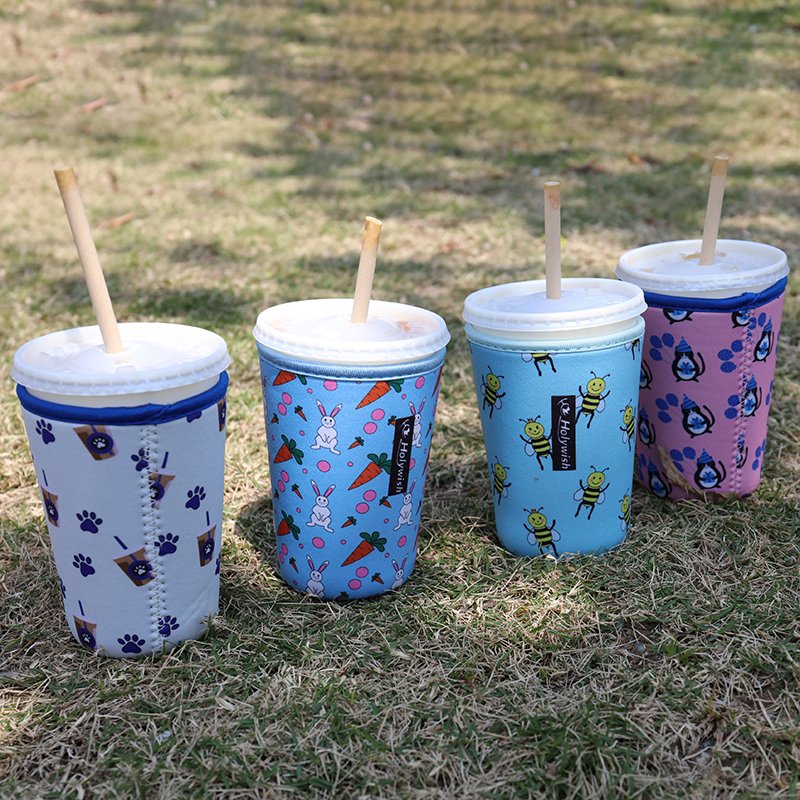
A neoprene coffee cup sleeve is a flexible insulating cover designed to fit around a drink container. Unlike a thin disposable paper sleeve, neoprene provides cushioning, flexibility and a larger reusable surface for custom branding.
Depending on the market, similar products may also be described as:
- Neoprene coffee sleeves
- Iced coffee sleeves
- Reusable cup sleeves
- Drink sleeves
- Insulated cup holders
- Cold drink sleeves
- Custom coffee sleeves
The same basic construction can be adapted to different beverage cups, but the actual dimensions need to match the cup being used.
For buyers looking for customized production, you can also explore our
custom neoprene coffee cup sleeves
with different size, printing and accessory options.
What Does a Neoprene Coffee Sleeve Actually Do?
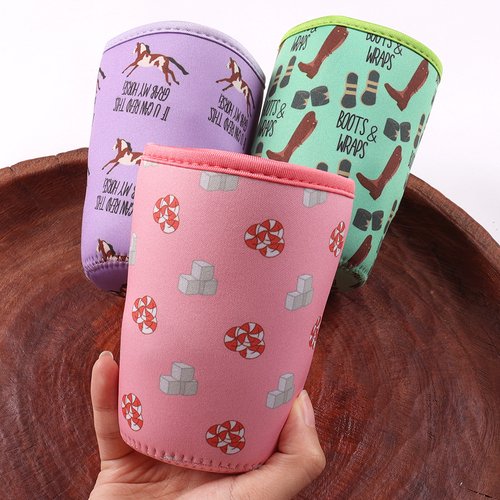
The main purpose of a neoprene sleeve is to create a soft insulating layer between the beverage container and the user’s hand. For cold drinks, it can also help manage the uncomfortable moisture that develops on the outside of the cup.
Does a Neoprene Coffee Sleeve Reduce Condensation?
Yes, it can help reduce direct contact with condensation. Cold drink cups often collect moisture on the outer surface as humid air meets the cold container.
A neoprene sleeve acts as a barrier between the cup and the hand, helping keep the user’s grip more comfortable and reducing direct contact with surface moisture.
It is better to describe this as helping manage condensation rather than claiming that any sleeve completely eliminates condensation under every condition.
Does a Neoprene Sleeve Keep Iced Coffee Cold Longer?
Neoprene provides an insulating layer that can help slow heat transfer between the drink container and the surrounding environment.
Actual performance depends on factors such as material thickness, cup construction, ambient temperature, beverage temperature and how long the drink is exposed.
For this reason, buyers should avoid judging a coffee sleeve only by one insulation claim. Fit, thickness and construction also matter.
Can Neoprene Coffee Sleeves Be Used for Hot Drinks?
Yes. Suitable neoprene sleeves can also be used with takeaway hot drink cups.
However, the actual user experience depends on the drink temperature, cup material and sleeve construction. For extremely hot containers, the complete cup system should be evaluated rather than relying on the sleeve alone.
Are Neoprene Coffee Sleeves Reusable?
Yes. Reusability is one of the main reasons buyers choose neoprene instead of disposable paper sleeves.
A well-made sleeve can be used repeatedly for coffee, iced drinks and other takeaway beverages, making it suitable for café merchandise, promotional gifts and branded retail products.
Neoprene vs Paper Coffee Sleeves: What Is the Difference?
Neoprene and paper sleeves serve different purposes. One is not automatically better for every application.
| Feature | Neoprene Coffee Sleeve | Paper Coffee Sleeve |
|---|---|---|
| Reuse | Designed for repeated use | Usually disposable |
| Cold Drinks | Very suitable | More limited |
| Condensation | Helps reduce direct contact with moisture | May absorb moisture |
| Flexibility | Soft and flexible | More rigid |
| Full-Surface Printing | Excellent for decorative artwork | Possible, depending on production |
| Retail Merchandise | Very suitable | Usually less suitable |
| Branding Options | Printing, labels, straps, handles and accessories | Mainly surface printing |
Paper sleeves remain practical for high-volume takeaway service where the product is intended for short-term use.
Neoprene is often more appropriate when a buyer wants a reusable branded accessory rather than a disposable packaging item.
How Do You Choose the Correct Coffee Sleeve Size?
This is one of the most important questions when ordering custom coffee sleeves.
Do not choose a coffee sleeve only by the ounce capacity printed on the cup.
Two cups both described as 24oz can still have different:
- Top diameters
- Bottom diameters
- Heights
- Tapers
- Wall shapes
As a result, one sleeve may fit one 24oz cup perfectly but be too loose or too tight on another.
Three Measurements That Matter Most
For custom production, provide the following dimensions whenever possible:
- D1 – Top Diameter
- D2 – Bottom Diameter
- H – Cup or Required Sleeve Height
A photograph with measurements or a physical cup sample can also help a manufacturer confirm the fit before bulk production.
Common Reference Coffee Sleeve Sizes
| Cup Capacity | Reference Top Diameter | Reference Sleeve Height | Reference Bottom Width |
|---|---|---|---|
| 16–18 oz | 8.5 cm | 10.7 cm | 6.5 cm |
| 22–24 oz | 9.0 cm | 13.7 cm | 6.7 cm |
| 30 oz | 9.8 cm | 15.5 cm | 7.0 cm |
These measurements should be treated as reference dimensions rather than universal standards.
Before approving a custom order, the actual cup dimensions should be confirmed.
What Neoprene Thickness Is Best for a Coffee Sleeve?
There is no single thickness that is automatically best for every project.
Different thicknesses change the feel, flexibility, structure and insulation of the finished sleeve.
| Thickness | General Characteristics | Typical Use |
|---|---|---|
| 2mm | Lightweight and flexible | Simple promotional projects |
| 3mm | Balanced structure, flexibility and insulation | Many reusable coffee sleeve applications |
| 4mm | Thicker and more structured feel | Retail and reusable applications requiring more cushioning |
| 5mm | Heavier and more substantial | Special applications where additional thickness is required |
Approximately 3mm neoprene is a practical balance for many coffee sleeve projects because it provides useful structure without making the product unnecessarily bulky.
However, the final selection should consider the cup size, target market, price level and required product feel.
What Makes a High-Quality Neoprene Coffee Sleeve?
Many suppliers describe their material as “premium neoprene,” but material thickness alone does not determine product quality.
The real difference is often easier to see in the construction.
1. Bottom Construction
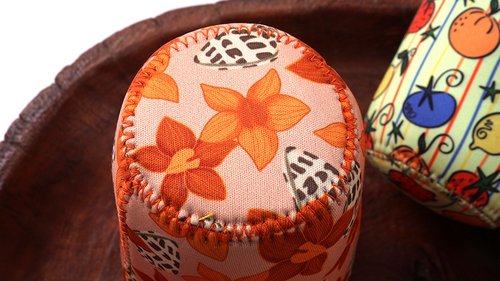
The bottom has to connect cleanly with the side wall while maintaining the overall shape of the sleeve.
Look for:
- Consistent stitching around the curved bottom
- Balanced thread tension
- A clean connection between the base and side wall
- Minimal loose threads
- A symmetrical finished shape
Poor bottom construction can make a sleeve appear twisted, uneven or unstable.
2. Side Seam Quality
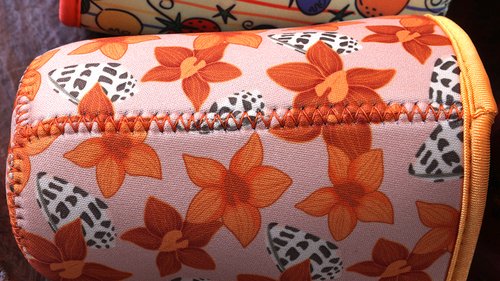
The side seam should securely join the neoprene panels without creating an excessively bulky or irregular section.
Important quality points include:
- Consistent stitch spacing
- Correct thread tension
- Straight seam placement
- Secure joining of the panels
- Clean thread finishing
For all-over printed coffee sleeves, seam quality is particularly important because poor sewing can also interrupt the visual presentation of the artwork.
3. Smooth Top Edge Binding
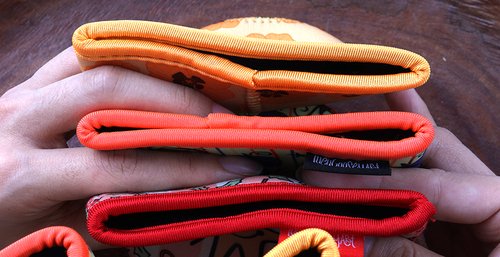
The upper opening is often finished with fabric binding.
A good binding should look:
- Smooth
- Even
- Securely sewn
- Free from obvious twisting
- Consistent around the opening
The binding can also become part of the design. A contrasting edge color may create a decorative accent, while a matching color can produce a cleaner appearance.
4. Overall Shape Retention
Material thickness, stitching and binding should work together to help the sleeve maintain a balanced shape.
A reusable product should remain flexible without looking loose, badly stretched or poorly assembled.
5. Bulk Production Consistency
A good sample is not enough if the mass-produced order looks different.
For B2B buyers, quality control should also consider:
- Size consistency
- Print placement
- Color consistency
- Binding alignment
- Label placement
- Loose threads
- Shape variation
Can Neoprene Have a Material Odor?
Newly manufactured neoprene may have some material odor depending on the formulation, printing process, storage conditions and packaging.
For retail merchandise or consumer-facing products, buyers should discuss material selection, production timing, ventilation and packaging with the supplier.
This is a practical quality consideration that is sometimes overlooked when buyers focus only on price and printing.
Which Printing Method Is Best for a Custom Coffee Sleeve?
The best printing method depends on the artwork.
A more expensive printing process is not automatically better. The goal is to select the method that reproduces the design correctly while matching the quantity and budget.
Screen Printing
Screen printing works well for:
- Simple company logos
- Text
- Solid colors
- Bold graphics
- High-contrast designs
It is often a cost-effective option for bulk promotional orders with relatively simple artwork.
Heat Transfer Printing
Heat transfer is suitable for:
- Multiple colors
- Detailed graphics
- Gradients
- Complex illustrations
- Artwork requiring more color flexibility
For an example, see our
full-color heat transfer neoprene coffee cup sleeve.
Sublimation Printing
Sublimation is especially useful for:
- All-over patterns
- Full-color artwork
- Repeating graphics
- Decorative retail designs
- Large-area printing
You can learn more about different
custom printing and logo options
before choosing a process.
Screen Printing vs Heat Transfer vs Sublimation
| Printing Method | Best For | Artwork Type |
|---|---|---|
| Screen Printing | Simple logos and bulk orders | Text and solid colors |
| Heat Transfer | Detailed promotional graphics | Multiple colors and gradients |
| Sublimation | Full-surface decorative sleeves | All-over patterns and colorful artwork |
If you are not sure which process to choose, send the artwork to the supplier first. A manufacturer should be able to recommend a suitable method based on artwork complexity, quantity and required appearance.
Can the Entire Coffee Sleeve Be Custom Printed?
Yes.
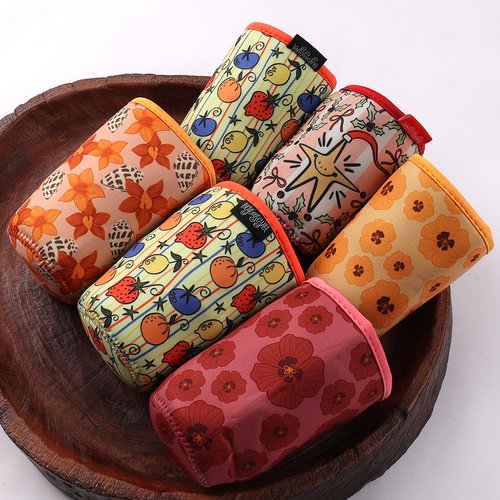
For suitable artwork and construction, the entire visible surface of a neoprene coffee sleeve can be used as part of the design.
Popular concepts include:
- Floral patterns
- Illustrations
- Fruit patterns
- Seasonal graphics
- Character artwork
- Brand patterns
- Event designs
- Limited-edition collections
This makes the product especially suitable for fashion merchandise, café retail products, lifestyle brands and promotional gift programs.
Can You Add a Handle to a Coffee Sleeve?
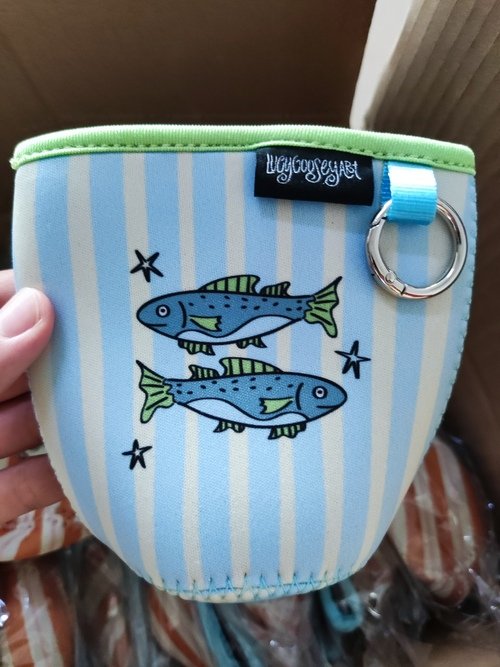
Yes. A fabric or webbing handle can be incorporated into suitable neoprene coffee sleeve designs.
Handles are especially useful for:
- Large iced coffee cups
- Outdoor events
- Travel
- Festivals
- Theme parks
- Promotional merchandise
The handle length, width, material, color and attachment position can be adjusted according to the cup dimensions and intended use.
A custom handle also creates another opportunity to coordinate the product with a brand’s visual identity.
What Other Custom Features Can Be Added?
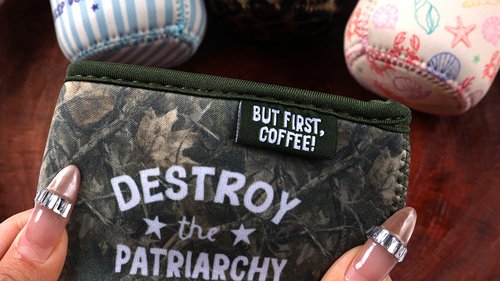
One of the advantages of custom neoprene production is that buyers are not limited to changing only the printed logo.
Custom Woven Labels
A woven brand label can be sewn onto the upper or side edge of the sleeve.
This works particularly well for lifestyle brands, retail merchandise and private-label collections where the buyer wants the product to feel more like branded merchandise than a basic promotional giveaway.
Printed Fabric Labels
Printed fabric labels are another option when the branding contains details or color effects that are not suitable for a traditional woven label.
Metal Ring Attachments
A reinforced fabric loop can be added to the sleeve and fitted with a metal ring.
This creates an attachment point for straps, lanyards or other suitable accessories.
Lanyards & Wrist Straps
The metal ring can be paired with a custom lanyard or wrist strap.
The strap itself can also be customized in different colors, widths and logo styles.
Custom Edge Binding
The top edge binding can be customized to coordinate with the main artwork.
A matching color creates a more unified appearance, while a contrasting color can become part of the design.
Viewing Window
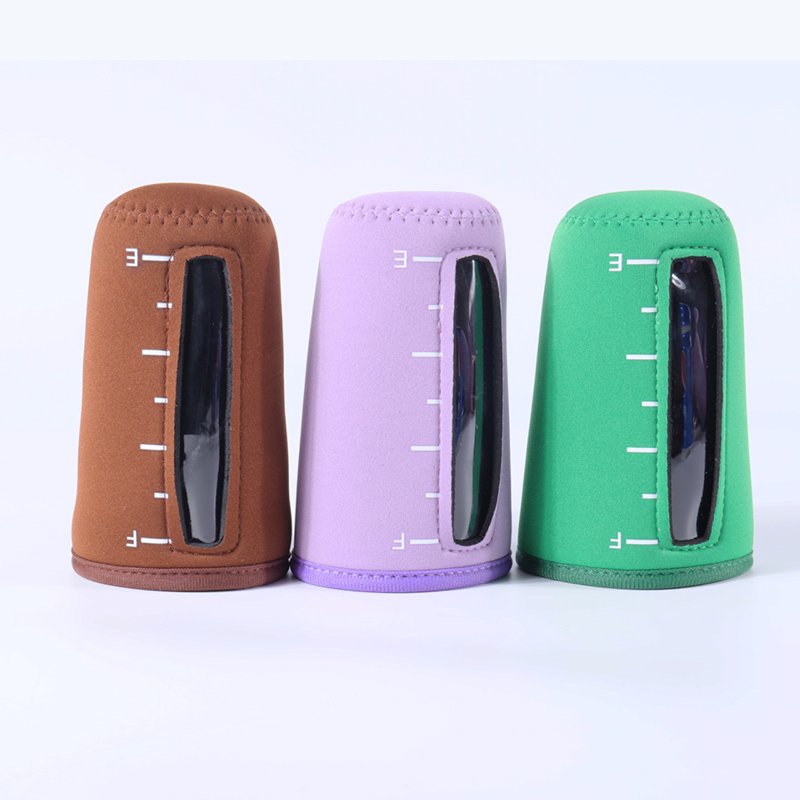
Some projects can also use a custom viewing window.
The window shape, position and size can be adjusted according to the cup design and branding requirements.
For most printed merchandise projects, however, a full-surface standard coffee sleeve provides more continuous space for artwork.
Custom Retail Packaging
Depending on the sales channel, coffee sleeves can be packed using:
- Individual OPP bags
- Backer cards
- Hang tags
- Barcodes
- FNSKU labels
- Other retail-ready packaging
How Do You Prepare Artwork for a Custom Coffee Sleeve?
Good artwork preparation reduces production problems and speeds up sampling.
Preferred Vector Formats
Whenever possible, send:
- AI
- EPS
- SVG
Vector artwork is especially useful for logos because it can be resized without losing edge quality.
PNG and JPG Files
Raster files such as PNG and JPG can also be used when the resolution is high enough for the required print size.
Low-resolution screenshots or images downloaded from social media may not provide enough detail for clean printing.
Consider the Seam Position
For full-surface artwork, the seam position should be considered before the design is finalized.
Important text, logos or small artwork details should not accidentally fall across a structural seam unless that effect is intentional.
Provide Brand Color References
If brand color accuracy is important, provide Pantone references or other clear color information when requesting a sample.
What Information Should You Send for an Accurate Quote?
Sending complete information helps a manufacturer give a more accurate quotation and production recommendation.
Six Things to Send Your Supplier
- Artwork or logo
- Cup dimensions or cup model
- Required quantity
- Preferred printing method, if known
- Required accessories such as label, handle, ring or lanyard
- Packaging and delivery requirements
A message that only says “How much is a coffee sleeve?” usually does not provide enough information for an accurate custom quotation.
If you do not know the technical specifications, that is fine. Send the artwork, cup measurements, quantity and intended use first, and an experienced supplier should be able to help recommend the rest.
7 Common Mistakes When Ordering Custom Coffee Sleeves
1. Choosing a Sleeve Only by Cup Capacity
A 24oz cup from one supplier may have a different shape from another 24oz cup.
Always confirm actual dimensions when fit is important.
2. Finishing the Artwork Before Confirming the Sleeve Size
If the product dimensions change after artwork is completed, logo placement, pattern scale and seam position may also need to change.
3. Choosing the Wrong Printing Method
Simple logos do not always require full-color printing, while gradients and complex artwork may not be suitable for basic screen printing.
4. Ignoring Seam Placement
For full-print designs, important artwork should be positioned with the product construction in mind.
5. Selecting Thickness Only by Price
A thinner material may reduce cost but can also change the feel and structure of the finished product.
Choose thickness according to the intended market and application.
6. Ignoring Binding and Stitching Quality
Poorly finished seams and binding can make even beautiful artwork look inexpensive.
Ask to see close-up photos or an approved sample before placing a significant order.
7. Skipping a Fit Sample for a Special Cup
If the cup is unusual in shape or size, a sample can help identify fitting problems before mass production.
How Does a Custom Coffee Sleeve Project Go From Artwork to Bulk Production?
Step 1 – Confirm the Application
Determine the cup type, target customer, expected use and approximate quantity.
Step 2 – Measure the Cup
Provide the top diameter, bottom diameter and required sleeve height.
Step 3 – Review the Artwork
The supplier reviews the artwork and recommends an appropriate printing method.
Step 4 – Confirm Materials and Accessories
Choose the neoprene thickness, edge binding, label, handle, metal ring, strap or other required features.
Step 5 – Prepare a Digital Mockup
Logo placement, artwork scale, dimensions and accessory positions can be reviewed before sampling.
Step 6 – Produce a Sample
For custom projects, a physical sample can be used to check fit, print appearance, stitching and overall construction.
Step 7 – Confirm the Sample
Any necessary changes should be made before mass production.
Step 8 – Bulk Production
Production proceeds according to the approved artwork and specifications.
Step 9 – Quality Control & Packing
Inspection should consider not only the printed logo but also:
- Dimensions
- Fit
- Print quality
- Color
- Bottom stitching
- Side seams
- Top binding
- Label placement
- Accessories
- Overall appearance
Who Uses Custom Neoprene Coffee Sleeves?
Because they combine branding and practical use, neoprene coffee sleeves can work for many different markets.
- Coffee shops and café chains
- Iced coffee and cold brew brands
- Bubble tea shops
- Beverage companies
- Promotional gift distributors
- Corporate marketing programs
- Festivals and events
- Hotels and hospitality companies
- Lifestyle brands
- Retail merchandise companies
- Souvenir brands
For more reusable beverage products, browse our complete
custom neoprene cup sleeve and drink holder collection.
Frequently Asked Questions About Neoprene Coffee Cup Sleeves
What is a neoprene coffee sleeve?
A neoprene coffee sleeve is a reusable flexible cover that fits around a beverage cup to provide cushioning, insulation and additional grip while offering a large area for custom branding.
Do neoprene coffee sleeves stop condensation?
They help reduce direct contact with condensation and moisture on cold drink cups. Actual condensation depends on beverage temperature, humidity and cup construction.
Do neoprene sleeves keep iced coffee cold longer?
Neoprene provides an insulating layer that can help slow heat transfer, although actual performance varies according to thickness, cup type and surrounding conditions.
Can neoprene coffee sleeves be used for hot drinks?
Yes, suitable neoprene sleeves can be used with many takeaway hot drink cups. Actual comfort depends on beverage temperature and cup construction.
What size coffee sleeve do I need?
The best size depends on the actual top diameter, bottom diameter and height of the cup. Do not choose a custom sleeve by ounce capacity alone.
Is 3mm or 4mm neoprene better for coffee sleeves?
Neither is automatically better. Approximately 3mm offers a practical balance between flexibility, insulation and structure for many projects, while 4mm creates a thicker and more substantial feel.
Are neoprene coffee sleeves washable?
They can generally be cleaned and reused. Gentle hand washing and natural air drying are recommended to help protect printing, stitching and accessories.
What printing method is best for a logo?
Screen printing works well for simple logos and solid colors. Heat transfer is more suitable for detailed graphics and gradients, while sublimation is ideal for colorful all-over patterns.
Can the entire coffee sleeve be custom printed?
Yes. Full-surface and repeating artwork can be produced using a suitable full-color printing process depending on the material and sleeve construction.
Can coffee sleeves be made with handles or straps?
Yes. Fabric handles, metal rings, lanyards and wrist straps can be added to suitable custom designs.
Can I add a woven brand label?
Yes. Woven labels, printed fabric labels and other suitable sewn-on branding can be added to create a more finished retail appearance.
What artwork file should I send?
Vector files such as AI, EPS, PDF and SVG are preferred for logos. High-resolution PNG and JPG files may also be suitable depending on the artwork.
What should I provide for an accurate bulk quotation?
Send your artwork, cup dimensions, quantity, required accessories and packaging requirements. If you are unsure about materials or printing, the supplier can recommend suitable options after reviewing the project.
Ready to Start a Custom Coffee Sleeve Project?
A good custom coffee sleeve should combine the correct cup fit, appropriate material, suitable printing process and clean manufacturing details.
Instead of choosing only by price, compare the complete product:
material + dimensions + printing + stitching + binding + accessories + quality control.
LOVECOLOUR supports custom projects from artwork review and sampling through bulk production, quality inspection and packaging.
Send us your artwork + cup dimensions + quantity + required accessories, and we can recommend an appropriate production solution.
Explore our
custom neoprene coffee cup sleeves,
learn about our
custom printing and branding options,
or visit
LOVECOLOUR
for more factory-direct custom promotional products.