Choosing a lanyard decoration method isn’t just a design decision—it’s a purchasing decision that affects unit cost, brand consistency, durability, and lead time. Many “quality issues” (blurry logos, dull colors, premature wear) don’t come from the factory alone—they come from choosing a technique that doesn’t match the artwork, webbing, or usage scenario.
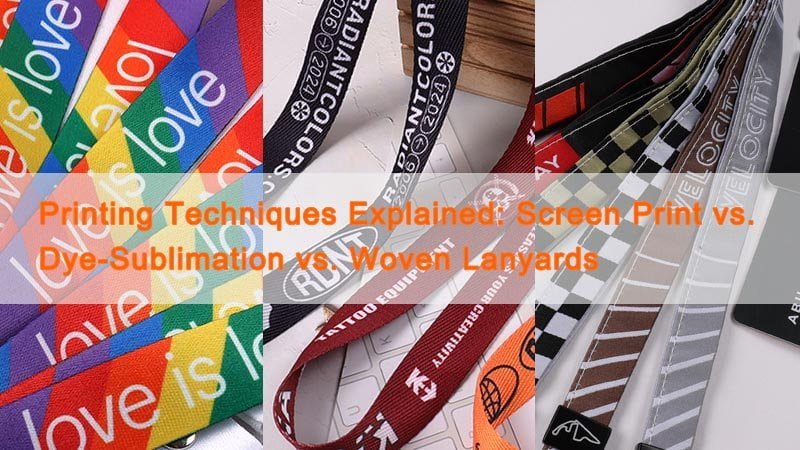
This B2B guide explains the three most common options—screen print, dye-sublimation, and woven (jacquard)—and shows how to select the best method for your event, organization, or long-term badge program.
What buyers actually care about
Procurement teams and event organizers typically evaluate lanyards on outcomes:
-
Logo clarity: Can it hold fine text and small icons?
-
Color requirements: Spot color branding vs. full-color artwork
-
Durability: Friction, sweat, daily wear, industrial use
-
Order quantity & budget: Cost per piece at your volume
-
Lead time: Production + shipping windows
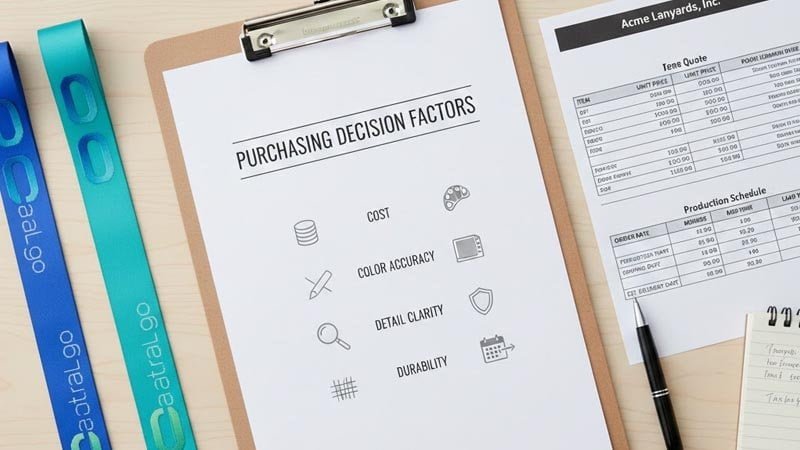
A reliable selection process starts by aligning these factors with the right technique—rather than picking a method first and hoping it fits.
Quick comparison table (buyer-facing)
| Factor | Screen Print | Dye-Sublimation | Woven (Jacquard) |
|---|---|---|---|
| Best for | Simple logos (1–3 spot colors) | Full-color, gradients, detailed art | Premium texture + long-term wear |
| Color capability | Limited by spot colors | Full-color (no per-color setup) | Limited by yarn colors |
| Detail | Strong for bold shapes | Best for fine detail | Good, but very small text may soften |
| Durability | Good; wear depends on ink + friction | Excellent on polyester | Highest—design is woven in |
| Typical MOQ* | ~50–200+ | ~50–200+ | ~200–500+ |
| Typical production time* | ~7–15 business days | ~10–18 business days | ~15–25 business days |
*MOQ and lead time vary by lanyard width, attachments (breakaway, buckle, metal hook), printing area (one-side/two-side), packaging, and seasonal capacity.
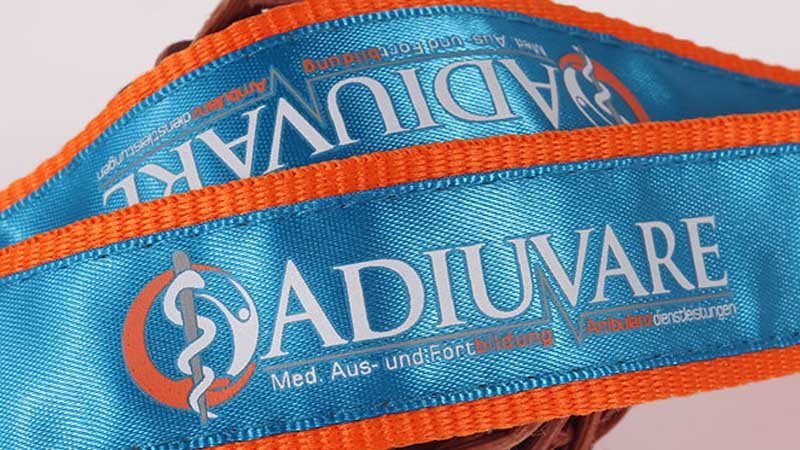
Screen Printed Lanyards (Silk Screen)
What it is
Screen printing applies ink through a mesh screen onto the webbing. Each color typically requires its own screen/setup.
Why buyers choose it
Screen print is usually the most cost-effective option for clean, simple branding. If your logo uses a small number of solid colors and doesn’t rely on gradients or photo-style artwork, screen printing can deliver a sharp, high-contrast result at a competitive unit price.
Best-fit scenarios
-
Corporate ID lanyards with simple logo marks
-
Schools, conferences, and standard event lanyards
-
High-volume orders where cost control matters most
Limitations to consider
-
Complex artwork (gradients, shadows, photo designs) is not ideal
-
More spot colors increase setup complexity and cost
-
Since ink sits on the surface, abrasion-heavy areas (near clips, buckles, pockets) may show wear over time depending on curing and webbing texture
Buyer tip
If your brand uses strict spot colors, provide Pantone references and request a pre-production approval (digital proof + sample if needed).
Dye-Sublimation Lanyards (Heat Transfer / Sublimation)
What it is
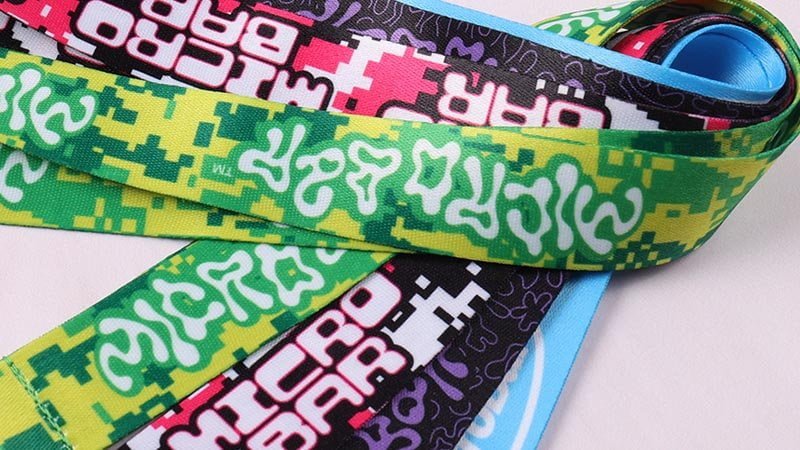
Dye-sublimation prints your artwork onto transfer paper and uses heat and pressure to infuse dye into polyester fibers. The color becomes part of the material rather than a surface layer.
Why buyers choose it
If your artwork includes full-color graphics, gradients, fine lines, or background patterns, dye-sublimation is typically the safest choice. It also avoids per-color setup costs, which makes it cost-efficient for complex designs.
Best-fit scenarios
-
Event and festival branding with bold, colorful visuals
-
Tech expos, product launches, and marketing programs
-
Designs requiring high detail, tiny elements, or multi-color backgrounds
Limitations to consider
-
Works best on polyester (or polyester-coated materials)
-
Color matching can vary based on webbing base color, heat settings, and file profiles—sampling is recommended for strict brand requirements
-
Confirm whether your lanyard is one-side or two-side printed (and whether edge-to-edge printing is required)
Buyer tip
For the best results, supply vector artwork (AI/EPS/PDF) or high-resolution design files, and avoid low-resolution PNGs that can cause soft edges.
Woven Lanyards (Jacquard)
What it is
Woven lanyards are produced on jacquard looms, using colored yarns to weave the logo into the webbing structure—creating a textured, premium finish.
Why buyers choose it
Woven lanyards are often selected for premium appearance and long-term durability. Because the design is not printed on top, it’s well suited for daily-use programs where longevity matters.
Best-fit scenarios
-
Corporate uniform programs and employee badges
-
Industrial workplaces and long-term facility access use
-
Premium brand experiences where texture and “built-in” branding are valued
Limitations to consider
-
Not suitable for photo-like artwork or gradients
-
Very small text can lose definition depending on weaving resolution (yarn thickness and pick density)
-
Typically requires higher volume and longer production planning than basic printing
Buyer tip
If your logo includes fine typography, request a woven “resolution check” (or sample) to confirm readability at the chosen lanyard width.
How to choose the right method (simple decision guide)
Choose screen print when:
-
Your logo is 1–3 solid colors
-
You want strong value at medium to high volumes
-
The design doesn’t require gradients or complex shading
Choose dye-sublimation when:
-
Your artwork is full-color or includes gradients/patterns
-
You want the cleanest reproduction of detailed designs
-
You need visual impact for marketing or premium events
Choose woven when:
-
You want a premium textured look
-
The lanyards will be used daily for months/years
-
You have stable brand marks that don’t rely on photographic detail
Common misconceptions (and what’s true in production)
“Screen print works on any fabric the same way.”
Screen printing can be applied to different webbings, but adhesion and abrasion resistance depend heavily on webbing type, ink system, and curing—so performance varies.
“Sublimation works on cotton or natural fibers.”
Sublimation is designed for polyester (or polyester-coated substrates). For natural fibers, alternative methods are needed.
“Woven is always the most expensive.”
Woven can be cost-effective at higher volumes, but the economics depend on width, yarn colors, and total quantity.
“More colors always mean higher cost.”
That’s often true for screen printing (more setups), but sublimation typically handles complex colors without per-color setup fees.
Start with your logo file (this prevents most problems)
Many production delays come from file issues, not manufacturing.
Recommended files
-
Vector: AI / EPS / PDF (best for screen print and woven setup)
-
Fonts: outlined/converted to curves
-
Spot colors: Pantone references for screen printing
-
Raster images (if unavoidable): minimum 300 DPI at final size
Design reality checks
-
Tiny text may fail on woven depending on density
-
Gradients are best handled by sublimation
-
Low-res logos lead to soft edges on any method
FAQ (B2B quick answers)
1) What’s the typical lowest MOQ?
It varies by factory and configuration, but common ranges are ~50–200+ for printed methods and ~200–500+ for woven, depending on width, accessories, and packaging.
2) Can I combine techniques?
Some projects combine finishes (e.g., special woven webbing styles with printed branding), but feasibility depends on webbing structure and production line capability. It’s best reviewed with your supplier using your artwork and specs.
3) What is the typical production lead time?
A practical planning range is ~7–25 business days depending on technique and complexity, plus shipping. Events should build buffer time for sampling and approvals.
4) Are inks eco-friendly?
Many suppliers offer water-based or lower-VOC ink systems, and sublimation uses dye transfer rather than heavy surface layers. Always request compliance details if you have sustainability requirements.
Conclusion
There’s no universal “best” lanyard printing method—only the best match for your artwork, quantity, brand requirements, and usage.
-
Screen print: best value for simple logos
-
Dye-sublimation: best for full-color, detailed designs on polyester
-
Woven: best for premium texture and long-term durability