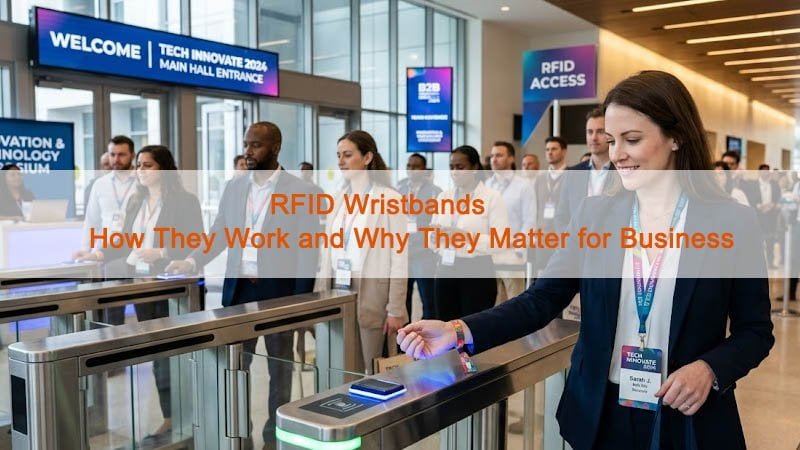
In events, hospitality, healthcare, and access control, speed, convenience, and security are more important than ever. Traditional paper tickets, manual check-ins, and standard ID verification methods can slow down operations and create unnecessary friction for both staff and users. As businesses look for smarter ways to manage entry, identification, and transactions, RFID wristbands have become an increasingly practical solution.
RFID wristbands combine wearable convenience with wireless identification technology. They can help businesses streamline check-in, control access to restricted areas, support cashless payments, and collect useful real-time data. From music festivals and water parks to hotels, gyms, and corporate sites, RFID wristbands are now used across a wide range of industries.
In this article, we explain how RFID wristbands work, why they matter, and what B2B buyers should consider when choosing the right solution.
What Are RFID Wristbands?
RFID wristbands are wearable bands embedded with an RFID chip and antenna. RFID stands for Radio Frequency Identification, a technology that uses radio waves to identify and exchange data between a tag and a reader without direct contact.
Unlike traditional wristbands that only serve as visual identifiers, RFID wristbands can store and transmit data. This allows them to do much more than simply show whether someone has access. Depending on the system, an RFID wristband can be used for attendee identification, ticket validation, room access, membership check-in, locker control, cashless payment, and visitor tracking.
Because they are worn on the wrist, they are convenient, hard to lose, and easy to scan. This makes them especially useful in fast-paced environments where quick and reliable identification is essential.
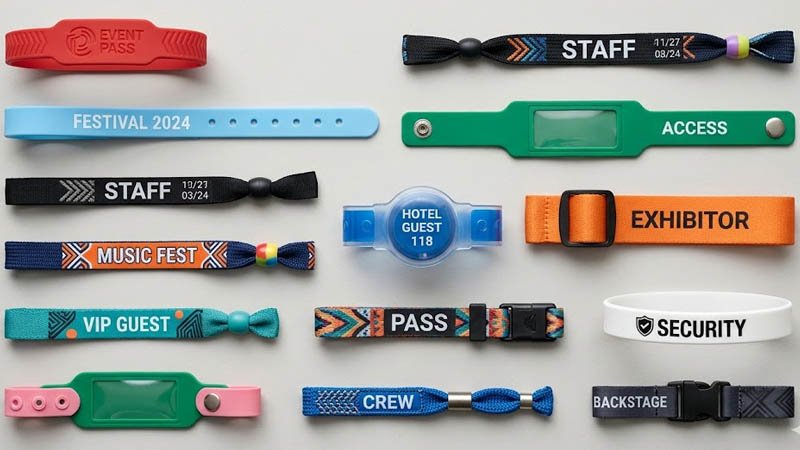
How Do RFID Wristbands Work?
Although RFID technology may sound complex, the basic working process is straightforward. An RFID wristband system typically includes three main components: the wristband, the RFID reader, and the software system connected to the reader.
1. The Wristband Contains an RFID Chip and Antenna
Inside each RFID wristband is a small chip and antenna. The chip stores a unique identifier or other programmed data, while the antenna enables communication with the RFID reader.
Depending on the application, the data stored on the chip may be linked to a person’s ticket, hotel room, membership profile, payment account, or access permissions.
2. The RFID Reader Sends Out a Radio Signal
When the wristband comes within range of an RFID reader, the reader emits a radio frequency signal. This signal activates the RFID chip in the wristband and prompts it to respond.
The read range depends on the RFID frequency, chip type, reader power, and application setup. Some systems are designed for very close-range scanning, while others allow scanning from a longer distance.
3. The Wristband Responds with Its Data
Once activated, the RFID wristband transmits its stored information back to the reader. In many systems, this may simply be a unique ID number. The software platform then matches that ID to the relevant user profile or permission settings in the database.
This process happens in a fraction of a second, which is why RFID wristbands can support fast entry, quick payment processing, and efficient identification.
4. The System Processes the Action
After reading the wristband data, the backend system decides what action to take. For example, it may:
- approve entry at an event gate
- unlock a hotel room or locker
- allow access to a VIP zone
- register attendance at a conference
- deduct money from a prepaid balance
- verify a member’s identity at a gym
The user experience is simple, but behind the scenes, RFID wristbands help connect physical movement with digital control and data management.
Why RFID Wristbands Matter
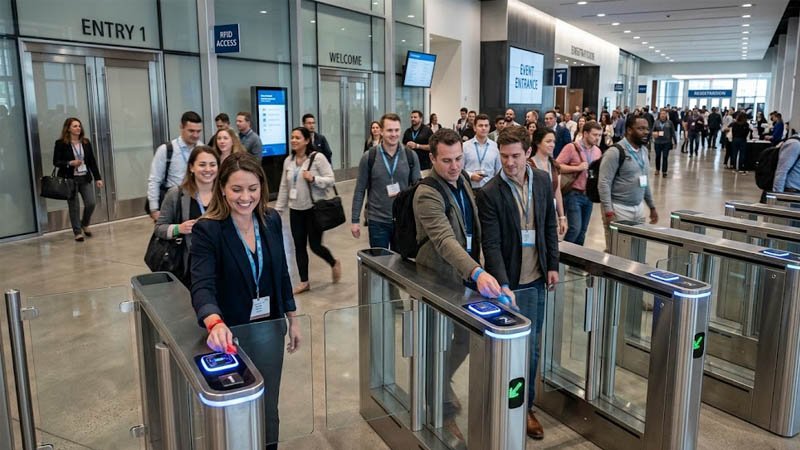
RFID wristbands matter because they help businesses solve real operational challenges. They are not just wearable tags. They are tools for improving efficiency, security, user experience, and data visibility.
Faster Check-In and Entry
Long queues can negatively affect customer satisfaction, especially at events, exhibitions, and entertainment venues. RFID wristbands allow staff to scan people quickly and reduce manual verification steps. This helps speed up entry and improve traffic flow.
For large-scale events or venues with high visitor turnover, even small time savings per person can make a major difference.
Better Access Control
RFID wristbands can be programmed with different access permissions. This makes them ideal for environments with multiple entry levels or restricted zones.
For example, a festival may issue different permissions for general attendees, VIP guests, artists, vendors, and staff. A hotel or resort may use RFID wristbands for guest room access, pool area control, or premium service access. A factory site may use them for staff identification and restricted-area entry.
Compared with manual checks, RFID systems provide a faster and more controlled solution.
Improved Security
Traditional paper tickets and basic wristbands are easier to transfer, misuse, or counterfeit. RFID wristbands offer a higher level of control because each wristband can be linked to a unique profile or record in the system.
This helps businesses reduce unauthorized access, improve identity verification, and better monitor movement in controlled environments.
Support for Cashless Payment
In many events, water parks, resorts, and leisure venues, RFID wristbands are used to support cashless payment systems. Instead of carrying cash or cards, users can tap their wristband to pay for food, drinks, merchandise, or services.
This improves convenience for the user and can also reduce transaction time, simplify operations, and support spending analysis for the organizer.
Better User Experience
One of the biggest reasons RFID wristbands matter is the experience they create. Visitors and guests generally prefer simple, fast, and contactless interactions.
A wearable solution can reduce the need to carry tickets, room cards, or printed vouchers. This makes the overall experience more seamless, especially in busy or active environments such as festivals, theme parks, sports venues, or resorts.
Real-Time Data and Operational Insight
RFID wristbands can also support data collection. Businesses can use RFID systems to track attendance, monitor entry points, understand visitor flow, or analyze transaction behavior.
This real-time visibility can be valuable for planning, staffing, crowd management, marketing, and future event improvement.
Common Applications of RFID Wristbands
RFID wristbands are used in many industries because they combine convenience with digital functionality. Some of the most common applications include the following.
Events and Festivals
RFID wristbands are widely used for ticket validation, attendee identification, VIP access control, and cashless payment at events and festivals. They help reduce wait times, improve security, and make it easier to manage large crowds.
For organizers, they also support smoother operations and more accurate attendance data.
Hotels and Resorts
In hospitality settings, RFID wristbands can be used as wearable room keys, guest identification tools, and payment devices for on-site purchases. They are especially popular in all-inclusive resorts, family resorts, and properties that want to improve convenience for guests.
Because guests wear the wristband throughout their stay, access and service interactions become more efficient.
Water Parks and Theme Parks
RFID wristbands are highly suitable for water parks and amusement venues because they are easy to wear, difficult to misplace, and often designed for wet environments.
They can be used for entry, locker access, ride access management, and food or retail purchases.
Healthcare and Patient Identification
In healthcare environments, RFID wristbands can support patient identification and controlled access management. Quick and accurate identification is especially important in situations where manual errors can create risk.
RFID wristbands can also improve workflow efficiency in certain institutional environments.
Gyms and Membership Clubs
Gyms, fitness centers, and membership clubs often use RFID wristbands for member check-in, locker access, and prepaid services. This reduces the need for separate membership cards and offers a more convenient experience for users.
Corporate, School, and Industrial Access Control
RFID wristbands can also be used in corporate campuses, schools, industrial workplaces, and visitor management systems. They help verify identity, control access, and improve movement tracking within managed spaces.
Types of RFID Wristbands
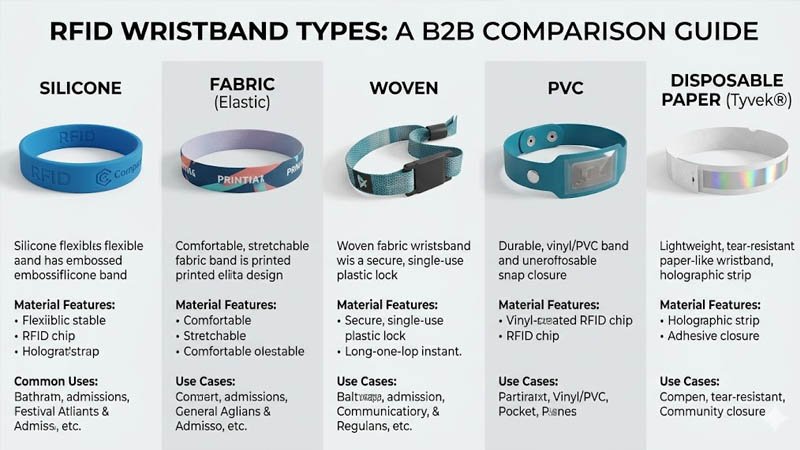
RFID wristbands come in different materials and formats to suit different applications. Choosing the right type is important for performance, comfort, durability, and branding.
Disposable RFID Wristbands
Disposable RFID wristbands are typically used for short-term events, single-day access, or temporary visitor control. They are often made from lightweight materials and designed for one-time use.
These are suitable for concerts, trade shows, conferences, short-term admissions, and crowd-controlled events where low cost and quick distribution are important.
Reusable RFID Wristbands
Reusable RFID wristbands are designed for longer use and repeated wear. They are often made from more durable materials and are suitable for memberships, resorts, healthcare settings, water parks, and long-term access programs.
They are a practical choice when durability, waterproof performance, and long service life are required.
RFID Silicone Wristbands
Silicone RFID wristbands are soft, durable, waterproof, and comfortable to wear. They are commonly used in water parks, fitness clubs, hospitals, and long-term access control applications.
They are a popular option for businesses that need repeated use and reliable performance in active or wet environments.
RFID Fabric or Woven Wristbands
Fabric RFID wristbands are often used for festivals, multi-day events, and branded experiences. They are comfortable to wear and offer a premium appearance, making them suitable for event organizers who want both functionality and visual appeal.
Woven styles are particularly popular where branding and user comfort are important.
RFID PVC Wristbands
PVC RFID wristbands can provide a smooth surface for printing and are often chosen for identification or access applications that require a more structured form.
RFID Paper or Tyvek Wristbands
These wristbands are lightweight and cost-effective, making them suitable for short-term use, promotional events, and simple admissions control. They are often selected when budget is a primary concern and the wristband only needs to function for a limited time.
What B2B Buyers Should Consider
For B2B buyers, selecting the right RFID wristband is not only about appearance. It is also about compatibility, durability, customization, and supplier reliability.
Chip and System Compatibility
One of the first things buyers should confirm is whether the RFID chip and frequency are compatible with the existing reader or software system. A wristband that looks right but does not work with the intended system can create delays and added cost.
Buyers should confirm technical requirements early, especially for access control, ticketing, and payment projects.
Material and Usage Environment
The wristband material should match the use case. For example, water parks and resorts often need waterproof and durable wristbands, while short-term events may prefer disposable options for cost efficiency.
Comfort also matters, especially for multi-day wear or customer-facing applications.
Customization Options
For many businesses, RFID wristbands are not only functional tools but also branded items. Custom logo printing, color matching, serial numbering, QR codes, barcodes, UID encoding, and packaging options may all be important.
A supplier that supports flexible customization can help buyers create a wristband solution that matches both operational and branding goals.
Durability and Quality Control
Depending on the application, RFID wristbands may need to resist water, sweat, abrasion, sunlight, or repeated handling. Quality consistency is especially important for bulk orders, where even minor defects can affect project performance.
Reliable manufacturing and inspection processes help reduce risks during deployment.
Supplier Experience and Production Capability
For custom RFID wristband projects, supplier experience matters. Buyers should look for a manufacturer that understands material options, chip integration, customization requirements, quality control, and export logistics.
Fast sampling, stable production capacity, and dependable delivery times can be especially important for time-sensitive event projects and large-volume orders.
Why Businesses Continue to Adopt RFID Wristbands
As businesses continue to improve operational efficiency and user experience, RFID wristbands offer a practical way to connect people, access, and services in one wearable format.
They help reduce manual work, improve control, support digital transactions, and make interactions faster and more convenient. In many industries, they are no longer just an upgrade. They are becoming part of a smarter standard for managing access, identification, and engagement.
Conclusion
RFID wristbands are more than simple wearable identifiers. They are versatile tools that help businesses improve speed, security, convenience, and operational visibility.
By combining an RFID chip and antenna with a user-friendly wristband format, they enable fast scanning, controlled access, cashless payment, and real-time data collection across a wide range of industries. Whether used at festivals, resorts, gyms, hospitals, or corporate sites, RFID wristbands can deliver clear advantages over traditional identification methods.
For B2B buyers, choosing the right RFID wristband means looking beyond the basic product. Material selection, chip compatibility, customization options, durability, and supplier capability all play an important role in project success.
If your business is looking for custom RFID wristbands for events, hospitality, access control, or membership management, working with an experienced manufacturer can help ensure the right balance of performance, branding, and delivery reliability.