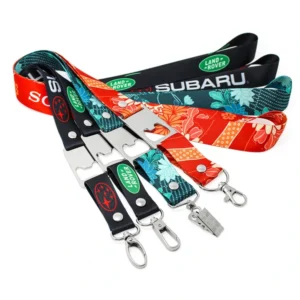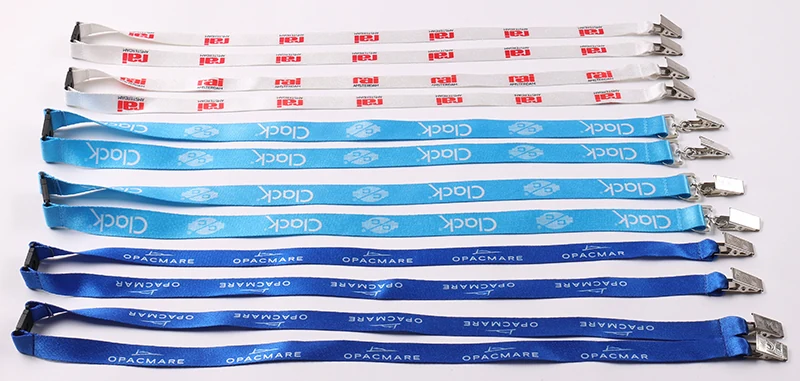
Choosing recycled PET lanyards is not simply a matter of replacing conventional polyester with an environmentally preferred material. For procurement teams, the real questions are whether the recycled content can be verified, whether the webbing prints consistently, whether the finished lanyards meet the intended application, and whether the manufacturer can deliver the correct specifications on schedule.
This guide explains how to source custom rPET lanyards, understand GRS certification, select printing and hardware options, evaluate manufacturing quality, compare recycled and virgin polyester, and prepare an accurate bulk-order specification.
It is written for promotional product distributors, corporate buyers, event organizers, universities, importers and sourcing professionals who need practical information before placing an OEM or wholesale order.
Manufacturing perspective: Guangzhou Lovecolour Garment Accessories Co., Ltd. supplies custom lanyards and accessories from Guangzhou, China. Our manufacturing experience with polyester webbing, sublimation printing, screen printing, cutting, sewing and hardware assembly informs the production considerations discussed below. Recycled-material sourcing and certification requirements must still be checked for each applicable order.
Quick Answer: What Are rPET Lanyards?
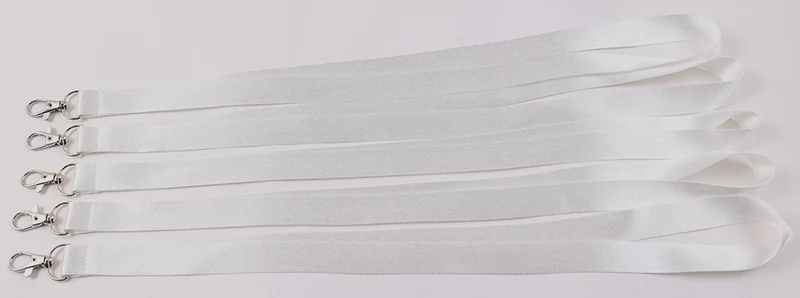
rPET lanyards are lanyards manufactured using webbing made from recycled polyethylene terephthalate (PET), a form of polyester. The recycled material may originate from post-consumer PET bottles or other qualifying PET waste streams. After recycling and yarn production, the material can be woven into straps suitable for ID cards, conference badges, promotional merchandise and other accessories.
Recycled PET lanyards can look and function similarly to conventional polyester lanyards. They may support full-color sublimation, screen-printed logos and different hardware configurations, depending on the yarn, fabric structure and production process.
However, an rPET webbing claim does not automatically mean the complete lanyard is 100% recycled, GRS certified, biodegradable or recyclable as an assembled product. Those are separate claims that require appropriate evidence.
Our practical recommendation: Specify the required recycled content and documentation first, then select the webbing construction, logo method and attachments. This avoids paying for samples or approving production before confirming that the material meets the buyer’s sourcing requirements.
1. How Are Recycled PET Lanyards Made?
The production process begins before the lanyard factory receives finished webbing. Understanding the material supply chain helps buyers distinguish genuine recycled-content sourcing from unsupported marketing descriptions.
Step 1: Collection and Sorting of PET Materials
Suitable PET waste is collected and sorted. Depending on the recycling system, the input may include post-consumer bottles or other eligible PET sources. Sorting and contamination control influence the quality of the recycled feedstock.
Step 2: Recycling and Material Processing
In a mechanical recycling process, PET is generally cleaned, processed into flakes or pellets, and prepared for further manufacturing. Other recycling technologies may use different processing methods. Buyers should not assume that all recycled polyester uses the same recycling technology.
Step 3: Recycled Polyester Yarn Production
Processed PET material is converted into polyester filament or other suitable yarn forms. Yarn specification, consistency and processing conditions influence the eventual webbing’s surface, strength and suitability for decoration.
Step 4: Webbing Weaving and Finishing
Recycled polyester yarn is woven into webbing. Width, yarn density, thickness, texture, finishing treatment and dimensional stability can all affect the final lanyard. A 20mm rPET strap from one supplier should not automatically be considered identical to another supplier’s 20mm webbing.
Step 5: Logo Printing and Assembly
The selected webbing is printed or otherwise decorated, cut to the required dimensions, fitted with attachments and sewn or assembled according to the approved design. Finished products are inspected and packed for shipment.
Buyer tip: Ask the supplier which processes are performed in-house, which materials are sourced externally, and how the recycled-content documentation follows the material through the relevant supply chain.
2. rPET vs Regular Polyester Lanyards: What Is the Real Difference?
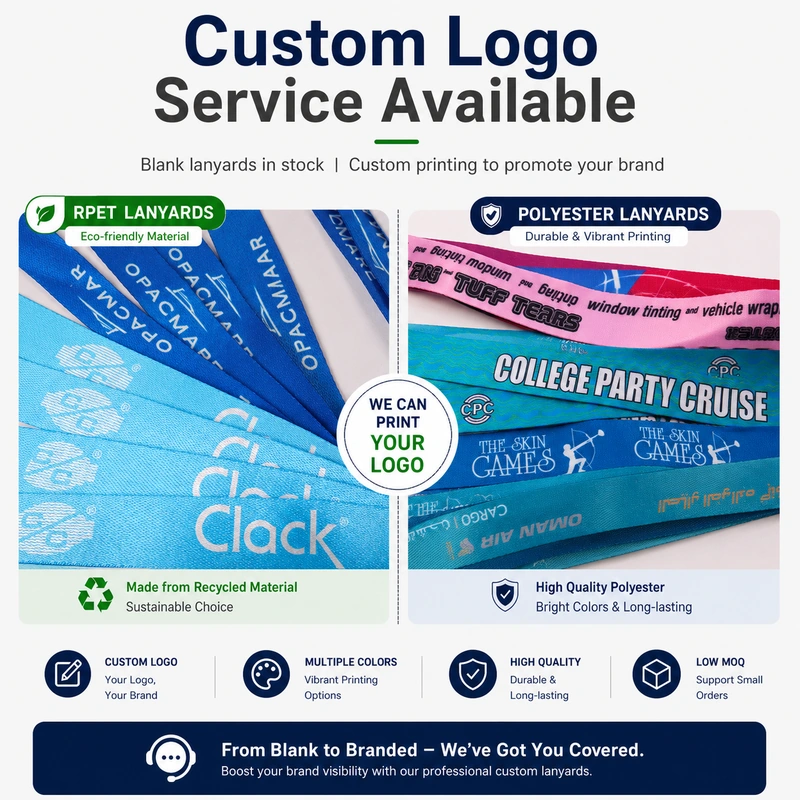
The primary distinction between recycled PET and virgin polyester is the origin of the polyester feedstock. It is not automatically a difference in strength, softness, color quality or durability.
| Comparison | rPET Lanyards | Virgin Polyester Lanyards |
|---|---|---|
| Material origin | Uses recycled PET feedstock | Uses virgin polyester feedstock |
| Appearance | Depends on yarn and weaving specifications | Depends on yarn and weaving specifications |
| Surface texture | Varies with webbing construction and finishing | Varies with webbing construction and finishing |
| Full-color printing | Possible with suitable polyester webbing | Possible with suitable polyester webbing |
| Logo screen printing | Possible after material and ink compatibility review | Commonly used for suitable constructions |
| Strength and durability | Must be evaluated against product specifications | Must be evaluated against product specifications |
| Color availability | May depend on recycled yarn stock and dyeing requirements | Depends on available conventional yarn and webbing |
| Recycled-content documents | Relevant when a verified recycled claim is required | Not applicable to virgin-only material |
| Price | Depends on sourcing, processing, quantity and documentation | Depends on sourcing, processing, quantity and decoration |
| Recommended use | Programs specifying recycled material content | Programs without that material requirement |
Are rPET Lanyards as Strong as Polyester Lanyards?
A recycled polyester lanyard can be suitable for ordinary badge and promotional applications, but its strength cannot be determined from the recycled label alone. Yarn quality, weaving density, strap dimensions, sewing construction and attachments all contribute to performance.
For applications with specific loading or durability requirements, buyers should request appropriate testing or agreed acceptance criteria instead of assuming all polyester-based lanyards perform identically.
Are rPET Lanyards Softer or Rougher?
There is no universal answer. Recycled polyester webbing may feel smooth, firm, soft or textured depending on its construction and finishing. If hand feel is a purchasing priority, compare physical samples of the proposed rPET and conventional polyester options under similar specifications.
Are rPET Lanyards More Expensive?
They can be, particularly when the order requires special recycled yarn, custom-dyed webbing, small quantities or certification documentation. However, price differences vary by supplier, production process and order configuration. A fair comparison must use the same width, finished length, printing method, attachments, packaging and quantity.
For buyers comparing materials, start with our custom lanyard collection to understand the range of conventional and specialty lanyard constructions.
3. Understanding GRS Certification for Recycled Polyester Lanyards
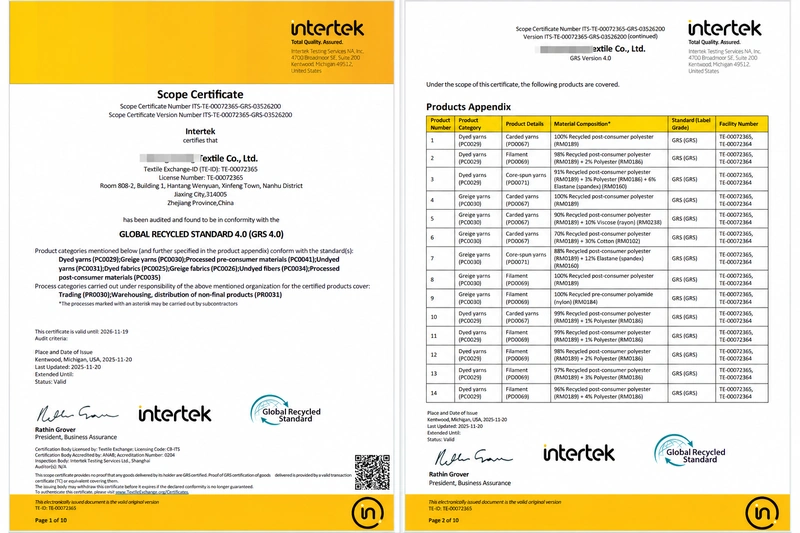
GRS certification is particularly important for promotional merchandise importers, international brands and procurement departments that require documentary evidence of recycled materials.
The Global Recycled Standard (GRS) is administered by Textile Exchange. It addresses recycled materials and chain of custody, with additional requirements relating to social, environmental and chemical practices. It is not simply a certificate stating that a fabric contains recycled plastic.
As of 2026, buyers should also check the applicable standard version, certification validity and transition requirements. Certification terminology and eligibility should be verified against current Textile Exchange requirements rather than copied from outdated supplier catalogs.
What Is a GRS Scope Certificate (SC)?
A scope certificate identifies an organization’s certification status and the covered scope, subject to the certificate’s details and validity. Buyers should review the certified legal entity, certification body, covered product categories, processes, facilities and expiry information.
A scope certificate alone does not establish that every item shipped by the certificate holder is certified. The particular product, materials and transaction must meet the relevant requirements.
What Is a GRS Transaction Certificate (TC)?
A transaction certificate is associated with specific certified goods moving through the supply chain. It helps substantiate that a particular transaction meets applicable certification requirements.
For a buyer requiring certified finished lanyards, it is important to clarify whether the relevant transaction certificate can be issued for the actual order, rather than relying only on a general photograph of a supplier’s certificate.
How to Verify a Supplier’s GRS Claim
- Request the supplier’s relevant scope certificate and identify the certified company.
- Check whether the certificate is valid and covers the required products and processes.
- Confirm whether the webbing’s recycled-content claim is supported by appropriate supplier documentation.
- Ask whether the finished lanyard production route is within the certified chain of custody.
- Clarify whether a transaction certificate is required and can be provided for the shipment.
- Confirm the exact recycled-content wording permitted for the product, packaging and marketing materials.
Textile Exchange provides official resources for checking certification status and authenticating certificates. See its chain-of-custody guidance and certificate authentication information.
Does GRS Certification Mean a Lanyard Is 100% Recycled?
No. Certification and recycled-content percentages are different issues. A product may contain recycled and non-recycled components, and the applicable standard has specific eligibility and claim requirements.
For example, an assembled lanyard may use recycled polyester webbing but conventional metal hooks, plastic buckles and sewing threads. A statement describing the webbing’s recycled content should not be misrepresented as a claim about the entire assembled product.
Is GRS the Same as RCS?
No. The Recycled Claim Standard (RCS) focuses on recycled-content verification and chain of custody. GRS covers recycled-content traceability with additional requirements for specified production practices. Buyers should select the appropriate standard based on their procurement requirements and applicable rules.
Procurement advice: If your company requires GRS-certified custom lanyards for a tender, retail program or brand compliance process, request the necessary documentation before confirming the order. A supplier’s ability to purchase certified raw material does not by itself guarantee that the finished product can be sold with a certified-product claim.
4. Which Printing Method Is Best for Custom rPET Lanyards?
One of the most common purchasing mistakes is choosing a printing process before reviewing the design and webbing. Different logo techniques have different limits, even when the base material is polyester.
Full-Color Dye Sublimation Printing
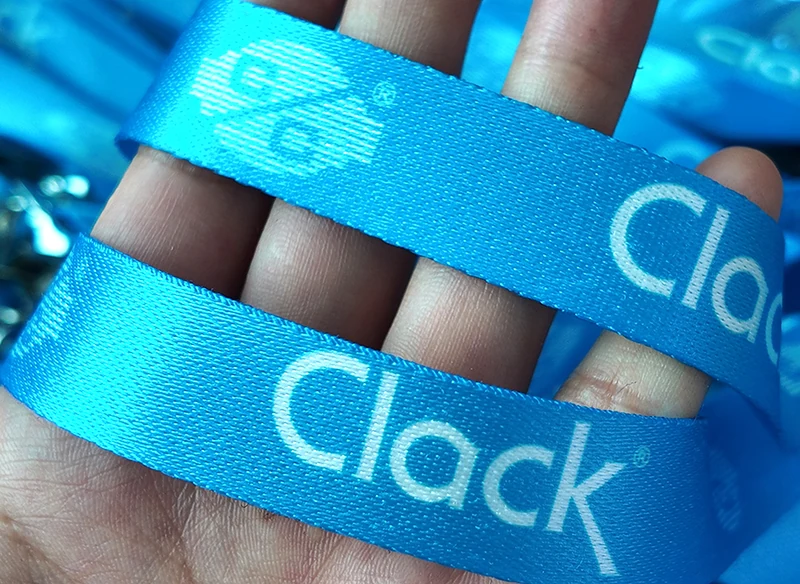
Best for: Conferences, exhibitions, complex branding, gradients, photographic artwork and colorful promotional designs.
Dye sublimation is frequently used for suitable polyester lanyards because it allows detailed artwork and broad color coverage. For recycled polyester webbing, print suitability should be checked using the actual selected material.
Buyers should confirm whether the proposed construction is printed on one side or both sides, how text orientation is handled, and what level of print registration is acceptable.
Screen Printing on rPET Webbing
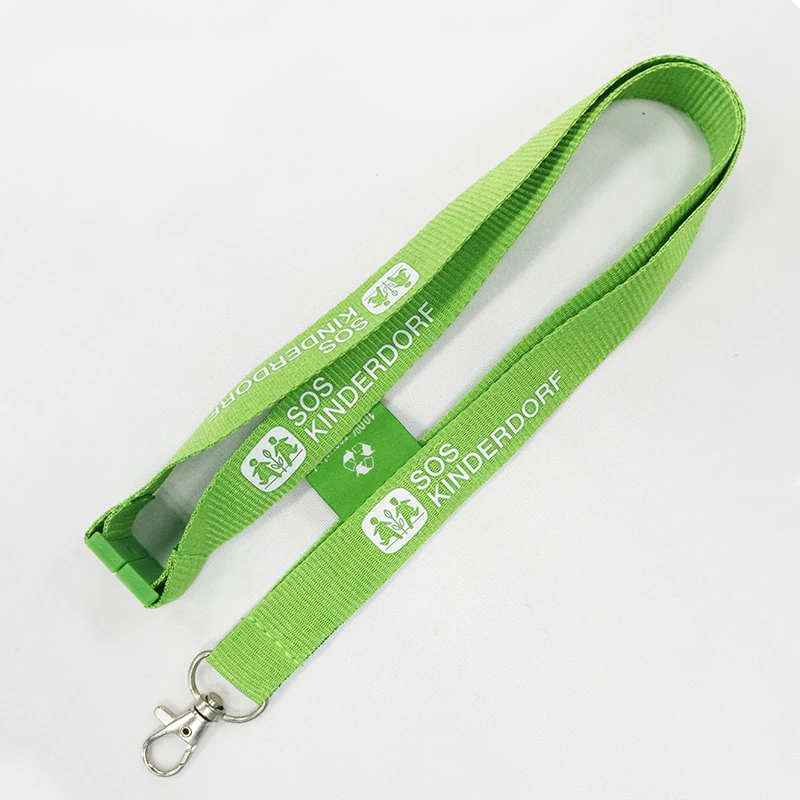
Best for: Simple company logos, lettering, limited-color designs, school IDs and corporate identification.
Screen printing can produce clearly defined graphics when the artwork, ink and webbing are compatible. It is often considered for simpler designs rather than photographic images or complex gradients.
For small text, closely spaced lines or highly detailed marks, ask the supplier to confirm the practical printing limits before approving the proof.
Woven and Jacquard Recycled Polyester Lanyards
Best for: Selected premium corporate merchandise, woven branding and textured accessories.
With jacquard weaving, the design is formed within the textile structure rather than printed onto the finished surface. However, available recycled yarn colors, pattern complexity, loom setup and MOQ may affect feasibility. Certification requirements must be checked for the woven construction.
Printing Method Comparison
| Method | Suitable Artwork | Main Consideration |
|---|---|---|
| Dye sublimation | Full color, gradients and detailed graphics | Heat compatibility, artwork alignment and color approval |
| Screen printing | Text, simple logos and limited solid colors | Ink compatibility, fine detail and color coverage |
| Woven jacquard | Defined woven motifs and repeating patterns | Yarn colors, design complexity and setup requirements |
If you need help choosing the process, see our lanyard customization and printing guide for an overview of materials, colors, widths and accessories.
5. An Important Manufacturing Detail: Heat Shrinkage and Print Registration
Material preparation is a frequently overlooked part of lanyard production. It can directly affect the appearance and dimensional consistency of the final printed strap.
Polyester webbing may undergo dimensional changes when exposed to heat, depending on its yarn, weaving tension, finishing treatment, storage history and processing conditions. This matters when artwork must remain correctly positioned across a long, narrow strap.
Why Pre-Conditioning the Webbing Matters
In our polyester webbing production workflow, preliminary heat treatment is used where appropriate to help stabilize material dimensions before final heat-transfer printing. This can reduce avoidable shrinkage during subsequent processing and support more consistent logo registration.
The appropriate treatment is not identical for every fabric. The selected rPET webbing should be tested and processed according to its actual specifications rather than using a universal temperature or dwell time.
What Happens When Webbing Has Been Stored for a Long Time?
Storage history, moisture exposure, residual textile tension and handling conditions can influence the condition and dimensions of webbing before printing. A material that has been stored for an extended period may behave differently when heated compared with a recently stabilized production batch.
In our webbing production experience, preliminary heat conditioning can be useful before heat-transfer printing, particularly when the material has been stored for a considerable period. Any potential shrinkage should be evaluated using the actual batch before full production.
How Buyers Can Reduce Printing Problems
- Approve the actual webbing type and finished strap width.
- Request a production sample when print placement is critical.
- Check small lettering, edge-to-edge designs and logo orientation.
- Agree on reasonable color and registration tolerances.
- Confirm the finished length after printing and assembly, not only the initial cut length.
- Discuss material conditioning if the project uses a particular stock batch or strict dimensions.
Factory insight: A digital artwork proof can confirm the design but cannot prove that the finished rPET webbing will have the exact same color, texture or dimensional behavior. For technically demanding orders, a physical sample provides much stronger production evidence.
6. Why Webbing Continuity, Clean Handling and Material Storage Matter
For bulk lanyard production, consistency of the supplied webbing is important. Material issues can create visible defects, interrupt printing and increase avoidable production waste.
Continuous Rolls and Webbing Joints
In our regular polyester webbing production, we aim to minimize unnecessary joints, and many rolls are supplied as continuous lengths without joints. This is useful for downstream printing and cutting because unexpected joins may interrupt processing or create sections that cannot be used.
For a specific rPET order, the allowable number of joints and usable roll length should be confirmed against the selected recycled webbing supply. Continuous-roll requirements should be included in the purchase specification when necessary.
Clean Material Handling
Dust, stains, machine oil and contamination can affect the appearance of finished fabric accessories. Our webbing handling workflow emphasizes clean work areas and keeping material protected during production stages.
Buyers should inspect webbing for visible contamination, uneven texture and unexpected marks before approving bulk printing. These checks are particularly important for white or light-colored straps used for full-color sublimation.
Extra Material for Processing Loss
Printing, cutting and assembly involve normal material consumption. Allowing an appropriate material margin helps reduce the risk of incomplete orders if a section is rejected during processing. The amount of additional material depends on the process and should be agreed with the production team rather than assumed as a fixed universal percentage.
7. Choosing Width, Length and Hardware for Recycled Lanyards
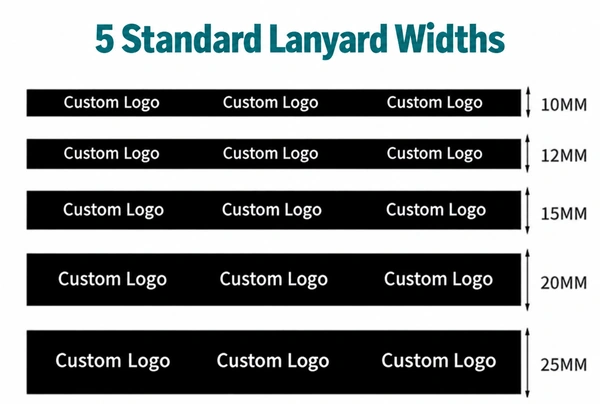
Material selection is only one part of a successful lanyard specification. Width, finished length and hardware affect comfort, logo visibility and day-to-day function.
10mm rPET Lanyards
Suitable for slim promotional straps and simple designs. The narrow surface restricts the amount of readable text that can be included.
15mm rPET Lanyards
A practical choice for general staff IDs, school programs and corporate applications requiring a relatively narrow strap with visible branding.
20mm rPET Lanyards
A useful starting point for many printed conference lanyards and promotional projects. The wider strap offers more room for logos, contact details or event artwork while remaining suitable for everyday badge use.
25mm rPET Lanyards
Can be considered where prominent printed graphics or a wider visual design is required. Verify material availability, wearer comfort and compatibility with the chosen attachment.
Finished Length vs Cut Length
The length of the webbing before assembly is not necessarily the same as the finished hanging length. Folds, stitching, rings, buckles and hooks change the final configuration.
For corporate ID programs and exhibition credentials, review the position of the completed badge when worn. This is especially useful when combining a detachable buckle, badge reel or long connector with the lanyard.
Choosing the Right Attachments
- Metal J-hook: A practical attachment for compatible ID badges and holders.
- Swivel lobster clip: Provides a rotating connection for selected cards or accessories.
- Double hooks: Commonly used with horizontal conference credentials.
- Breakaway buckle: Considered where a safety-release function is specified.
- Detachable buckle: Allows a selected accessory to be separated from the main strap.
- Badge reel: Useful for frequently presented access cards.
- Transparent ID holder: Protects the card and should be selected according to card dimensions and orientation.
For complex identification systems, it can be helpful to purchase the lanyard and compatible accessories together rather than combine hardware from different untested suppliers. Our badge reel and retractable lanyard buying guide explains related assembly and compatibility considerations.
8. What Should Buyers Test Before Approving Bulk rPET Lanyards?
There is no single test result that proves a lanyard is suitable for every application. Quality requirements should reflect the intended use, materials and agreed buyer specifications.
Material Inspection
Check the selected webbing width, thickness, appearance, texture, visible defects and batch identification. Recycled-content documentation should be reviewed separately from visual inspection.
Logo and Color Inspection
Compare the actual printed sample with the approved artwork and color references. Inspect text clarity, pattern position, image completeness, printing defects and any agreed registration tolerance.
Stitching and Assembly Inspection
Check whether the folded ends and stitched areas follow the approved construction. Loose threads, visibly inconsistent stitching or poorly positioned attachments should be reviewed against the acceptance criteria.
Attachment Function
Test the selected clips, buckles or badge reels according to their intended function and any agreed performance requirements. Safety-release components and specialized hardware may need separate application-specific testing.
Dimensional Consistency
Measure the finished width and length after the full manufacturing process. For orders with multiple designs or colors, check samples across the relevant production variations.
Packaging and Order Accuracy
Verify quantities, design assortments, labeling, individual packing requirements and shipping marks. Mixed-design orders deserve particular attention because packing mistakes can cause problems during event distribution.
Practical quality-control principle: Establish measurable acceptance requirements before production. Statements such as “premium quality” or “perfect printing” are less useful than an approved sample, clear specifications and documented inspection criteria.
9. How Much Do Custom rPET Lanyards Cost?
There is no universal price for wholesale recycled polyester lanyards. The final unit price depends on materials, production configuration and order quantity, and it should be evaluated together with the customer’s documentation and delivery requirements.
Factors That Affect rPET Lanyard Pricing
- Recycled Webbing: Material source, recycled-content specification, stock availability and certification requirements.
- Strap Width and Length: Material consumption and production configuration.
- Printing: Artwork complexity, number of designs, printing method and setup requirements.
- Hardware: Hook type, safety buckle, detachable components and badge-holder combinations.
- Order Quantity: Overall volume and the number of pieces per design or color.
- Certification: Additional costs associated with qualifying sourcing, documentation and applicable transaction processes.
- Packaging: Bulk packing, individual bags, printed cards and retail presentation.
- Shipping: Destination, delivery deadline, packed weight and freight service.
How to Compare Supplier Quotations Fairly
If one manufacturer quotes a much lower price, confirm that the proposed material, recycled-content requirements, webbing width, printing method, hooks and certification documentation are equivalent. A conventional polyester lanyard should not be compared directly with a documented recycled-content product without accounting for specification differences.
For distributors requesting quantities such as 100, 500, 1,000, 5,000 or 10,000 pieces, separate quantity tiers can help clarify how production scale affects pricing. These are useful quotation examples, not guaranteed rPET minimum order quantities.
Buyers can request a factory-direct quotation through our contact and RFQ page.
10. Which Industries Buy Custom Recycled PET Lanyards?
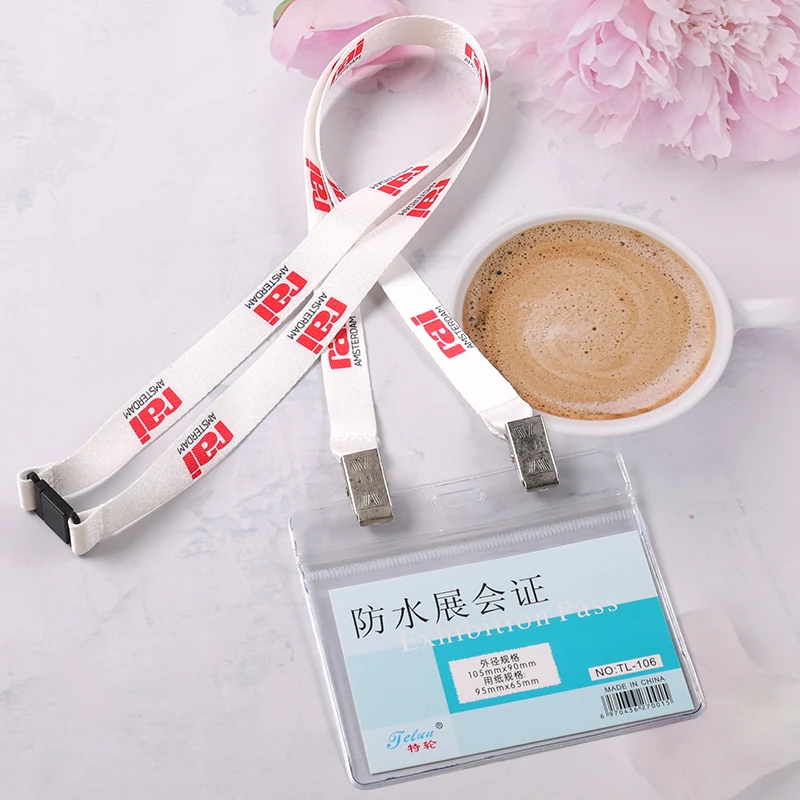
Recycled polyester lanyards can serve many of the same practical applications as conventional lanyards. The decision to specify rPET normally comes from the procurement requirements of the buyer, event or brand rather than an entirely different lanyard function.
Promotional Product Distributors
Distributors supplying corporate promotional merchandise may be asked to quote recycled-content product alternatives alongside standard polyester options. Consistent documentation, artwork support, repeat-order specifications and competitive quantity pricing are important considerations.
Conferences and Trade Shows
Event agencies often need printed conference lanyards with compatible badge holders, sponsor graphics and defined delivery dates. Recycled polyester can be specified when the event’s procurement requirements call for recycled-content merchandise.
Corporate ID Programs
Companies can use rPET lanyards for employee badges, visitors, meetings and branded internal programs. Buyers should consider repeated-use comfort, attachment reliability and the availability of replacement orders.
Universities and Educational Institutions
Schools and universities may request recycled-content lanyards for orientation, campus IDs, events and promotional merchandise. Safety-release features, durability, clear identification and budget requirements should be evaluated for each application.
Sports and Community Events
Organizers may need printed straps for staff passes, media credentials, VIP identification or branded souvenirs. Hardware selection should match the activity and conditions in which the product will be worn.
International Brand Sourcing
Brands operating across the United States, United Kingdom, Germany, France, the Netherlands, Australia, Canada and other markets may have different recycled-content documentation and environmental marketing requirements. Buyers should confirm the applicable standards and claims rather than assume a single certificate resolves every market’s compliance needs.
11. Common Mistakes When Sourcing Recycled Lanyards
Mistake 1: Assuming Every rPET Product Is GRS Certified
The presence of recycled material does not automatically establish product certification. Check the certification scope and transaction requirements.
Mistake 2: Treating Recycled Webbing as a Fully Recycled Lanyard
Metal clips, plastic buckles, thread and additional accessories may contain non-recycled materials. Keep material-component claims accurate.
Mistake 3: Choosing a Supplier Based Only on Unit Price
Price comparisons are unreliable when the quotations use different webbing specifications, accessories, packaging or certification assumptions.
Mistake 4: Approving Artwork Without Checking Actual Printing
Digital proofs cannot fully establish the final fabric texture, heat response, color appearance or print registration.
Mistake 5: Forgetting Hardware and Finished Length
A strap may match the specified cut length but produce an unsuitable finished badge position once all attachments are assembled.
Mistake 6: Ordering Without Confirming Material Availability
Specific recycled yarn colors, fabric constructions and certification requirements may affect MOQ and lead time.
Mistake 7: Using Unsupported Environmental Claims
Recycled PET is not automatically biodegradable, carbon-neutral or plastic-free. Environmental statements should be specific and supported by appropriate evidence.
Mistake 8: Leaving Certification Requirements Until Shipment
Supply-chain documentation may need to be planned before material purchasing and production. Late requests can be difficult or impossible to satisfy for a particular transaction.
12. The 12-Point Buyer Checklist for Custom rPET Lanyards
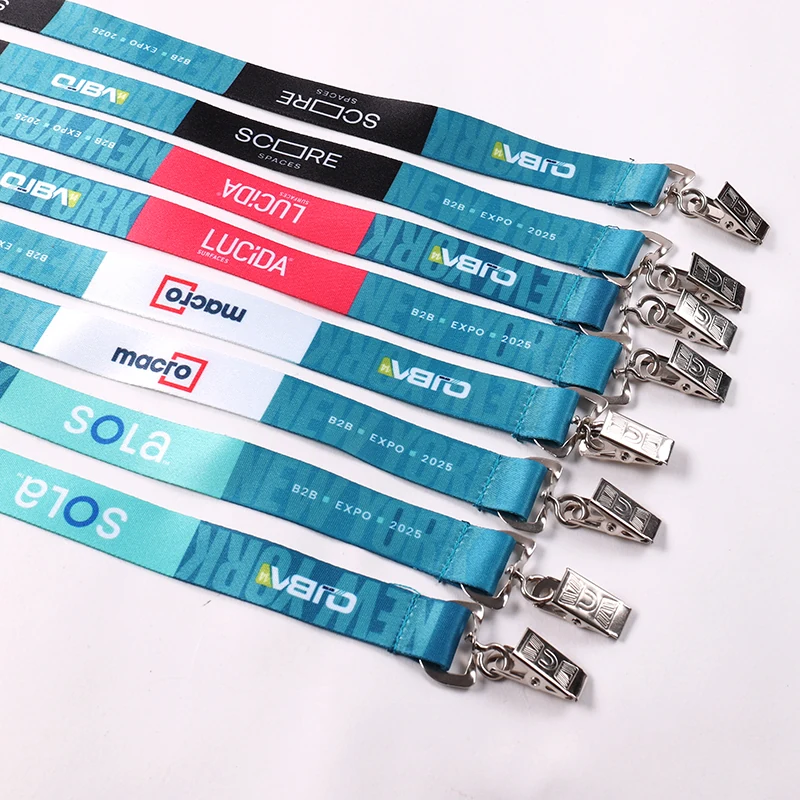
Use this checklist when evaluating a recycled polyester lanyard manufacturer or preparing a purchasing specification.
- Confirm the exact recycled PET material and required recycled-content percentage.
- Clarify whether the material must be post-consumer recycled PET or another qualified source.
- Request the relevant GRS or RCS documents, where required.
- Check certification validity, product scope and transaction certificate availability.
- Specify the webbing width, finish, thickness requirements and finished length.
- Provide the original logo artwork and Pantone or other color references.
- Select sublimation, screen printing or another suitable branding method.
- Confirm the number of printed sides and required logo orientation.
- Choose the correct hooks, safety buckles, detachable parts and badge accessories.
- Agree on the sample approval process and relevant quality acceptance criteria.
- Confirm quantities per design, packing method and shipping destination.
- Verify production lead time against the required delivery or event date.
Recommendation: For repeat orders, retain an approved sample, technical specification, material description and artwork version. This gives the supplier a consistent reference for future production rather than relying on a previous invoice alone.
13. What Information Should You Send to an rPET Lanyard Manufacturer?
An accurate RFQ helps the supplier identify the correct materials and avoid unnecessary follow-up questions. The following example can be adapted for different order quantities and applications.
| RFQ Field | Example Specification |
|---|---|
| Product | Custom recycled PET polyester lanyard |
| Material requirement | Recycled polyester webbing, specified recycled content |
| Certification | GRS documentation as required for the order |
| Width | 20mm |
| Length | 900mm cut length, or a confirmed finished hanging length |
| Printing | Full-color dye sublimation, double-sided |
| Logo | Attached AI, EPS or vector PDF artwork |
| Attachment | Metal swivel hook with optional breakaway buckle |
| Quantity | 1,000 pcs, with quantities per artwork specified |
| Packaging | Bulk packing, with carton details requested |
| Destination | Country, city and postal code |
| Required delivery date | Specified event or warehouse arrival date |
This is an illustrative specification, not a statement that all listed options are automatically available under the same minimum order quantity or certification arrangement.
14. Frequently Asked Questions About rPET Lanyards
What does rPET mean in lanyards?
rPET means recycled polyethylene terephthalate, a recycled polyester material used in webbing and textile accessories.
Are recycled PET lanyards suitable for full-color printing?
Yes, suitable rPET polyester webbing can support dye sublimation. The actual webbing and printing process should be confirmed before bulk production.
Can recycled lanyards have Pantone-matched colors?
Custom color matching may be possible, depending on yarn availability, webbing construction and the selected printing or dyeing process. A physical sample is recommended for color-critical orders.
Is an rPET lanyard environmentally friendly?
Using verified recycled content can address a recycled-material purchasing requirement, but a broad claim of being environmentally friendly needs additional substantiation. The complete environmental impact depends on more than recycled content alone.
Are rPET lanyards biodegradable?
No. Recycled PET remains a polyester plastic material. Recycled content and biodegradability are different characteristics.
What is the minimum order quantity for recycled lanyards?
The MOQ depends on the selected recycled webbing, printing method, color, hardware and certification requirements. Buyers should request a quotation for the exact specification.
Can I buy GRS-certified rPET lanyards from China?
Certified sourcing may be possible through an appropriately certified supply chain. Buyers should confirm the manufacturer’s scope certificate, product coverage and applicable transaction documentation for the specific order.
What is the best rPET lanyard width for an exhibition?
20mm is often a practical starting point for conference branding and badges, but 10mm, 15mm and 25mm may also suit different designs and uses.
Can recycled lanyards include safety breakaway buckles?
Suitable recycled polyester lanyards can be configured with safety-release components. The chosen buckle should be evaluated for the required application and performance.
How should I choose a reliable rPET lanyard supplier?
Review the supplier’s material documentation, manufacturing capabilities, physical samples, quality-control process, accessory options, order specifications and delivery commitments. Certification claims should be independently verifiable.
15. Final Recommendations: How to Buy the Right Recycled PET Lanyards
For most B2B buyers, successful rPET lanyard sourcing comes down to five decisions: verified recycled material, the right printing method, an appropriate strap and hardware construction, clearly defined quality standards, and a realistic production and shipping schedule.
Choose recycled polyester because it meets a meaningful and documented material requirement, not simply because the product is described as green. A credible supplier should explain both the opportunities and limitations of the selected construction.
For detailed specifications and available custom lanyard styles, explore our custom lanyard product collection and printing and customization options.
Request a Custom rPET Lanyard Quotation from LOVECOLOUR
Guangzhou Lovecolour Garment Accessories Co., Ltd. supports factory-direct OEM/ODM production of custom lanyards, including recycled polyester material options. We can review artwork, material requirements, GRS documentation needs, strap dimensions, printing, hardware and packaging for wholesale projects.
If you are a promotional merchandise distributor, event supplier, corporate buyer or importer, send your artwork, quantity, preferred lanyard width, attachments, delivery destination and required certification documents for a project-specific quotation.
Contact LOVECOLOUR to Discuss Your Custom rPET Lanyard Project.