This guide explains what professional buyers should evaluate before ordering sublimation webbing rolls, how to select suitable specifications, what to test before bulk production and how to compare suppliers based on total production efficiency rather than price alone.
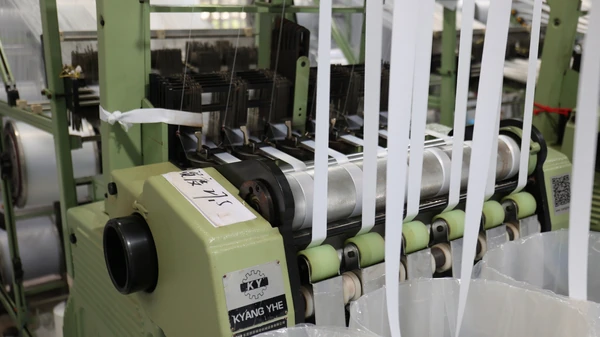
The purchasing and manufacturing observations in this guide are informed by the production experience of Guangzhou Lovecolour Garment Accessories Co., Ltd., a factory-direct supplier in Guangzhou, China, operating more than 50 weaving machines for regular webbing production. The company also works with transfer paper printing, heat transfer, cutting, sewing and lanyard accessory assembly.
Quick Answer: What Is the Best Webbing for Sublimation Lanyard Printing?
Start with white polyester webbing specifically intended for dye sublimation, select the correct width and thickness for your finished product, and test the material on your own printing equipment. For efficient bulk production, check roll cleanliness, joint frequency, dimensional stability, consistency and packing accuracy. A low unit price is less valuable if the material causes repeated printing waste or production stoppages.
1. What Is Sublimation Webbing?
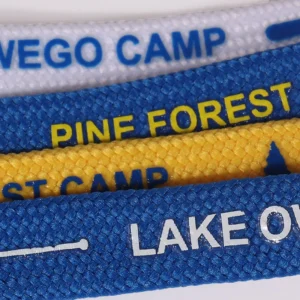
Sublimation webbing is a woven textile tape suitable for receiving printed graphics through a dye sublimation heat transfer process. In lanyard manufacturing, the material is usually supplied as blank white or light-colored polyester webbing, then printed using sublimation transfer paper and appropriate heat transfer equipment.
The printed tape may subsequently be cut, sewn and assembled with metal hooks, plastic buckles, safety breakaway components or other accessories to create finished promotional lanyards, key straps, ID holders and custom textile merchandise.
Blank sublimation webbing is different from finished sublimation lanyards. Buying blank webbing allows printing businesses to manage artwork, printing schedules and assembly locally. Buying finished lanyards transfers more of the production process to the original manufacturer.
For an overview of related material categories, visit our custom webbing collection. For printed and assembled products, explore our custom lanyard solutions.
2. Why Is Polyester Commonly Used for Sublimation Webbing?
Polyester is widely used in dye sublimation because compatible disperse dyes can transfer into polyester under controlled heat. This enables full-color artwork, repeated branding, detailed graphics and photographic designs on suitably constructed fabric.
White polyester provides a neutral base that supports the reproduction of a broad range of colors. However, successful printing depends on more than fiber composition. The weave, surface texture, finishing, thickness, tension and heating conditions can all influence the outcome.
Not every white strap sold as polyester webbing will perform identically in a sublimation production line. Buyers should request material specifications and test samples rather than assume that all polyester tapes are interchangeable.
Polyester Webbing vs. Satin Ribbon
Polyester webbing and polyester satin ribbon may use related synthetic fibers, but they are not necessarily equivalent products. Their weave structures, surface finishes, thickness and intended applications can differ substantially.
Satin ribbon is frequently selected for decoration, gift packaging and smooth-finish branding. Webbing intended for lanyard manufacturing should be evaluated for its mechanical construction, edge quality, printing compatibility and performance during cutting and assembly.
Choose the material based on the actual end product and approved sample, not simply on whether its appearance is smooth or glossy.
3. Choosing the Right Webbing Width: 10mm to 50mm
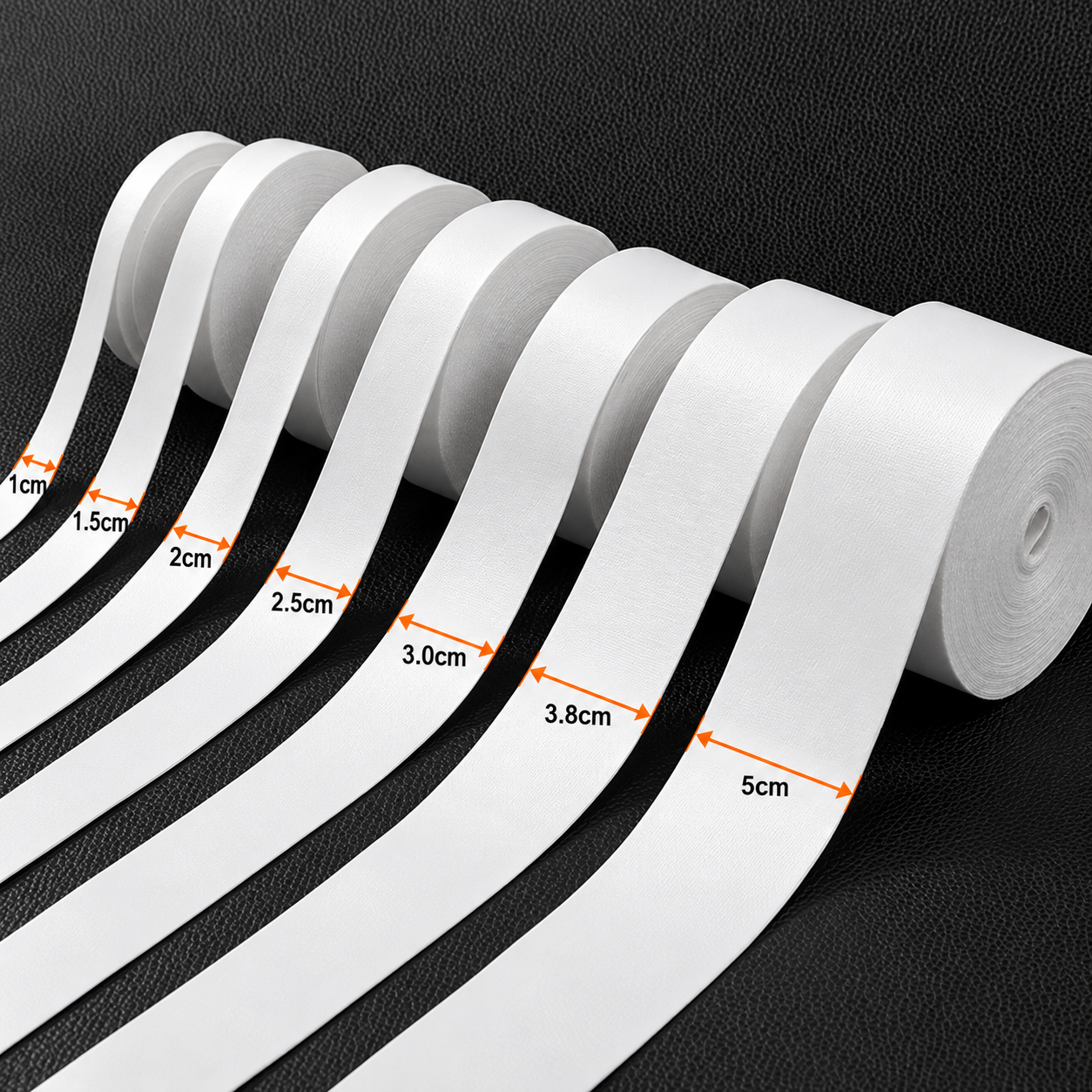
Width is one of the first specifications buyers need to confirm. It affects the available print area, comfort, hardware compatibility, finished product proportions and material consumption.
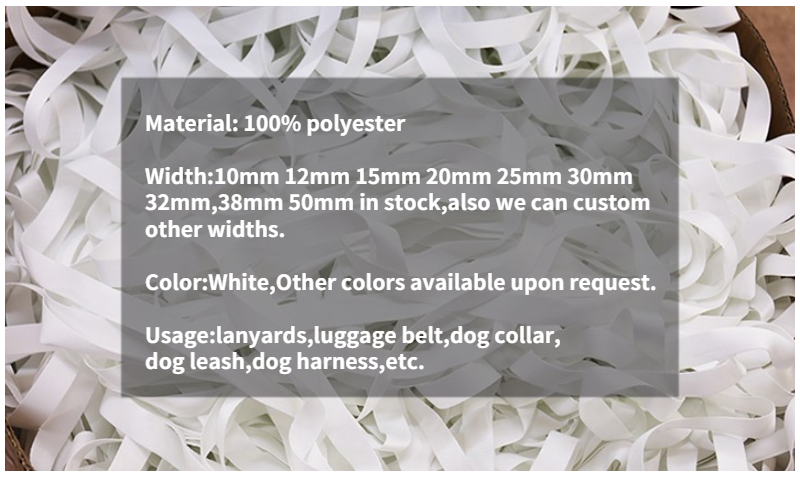
At LOVECOLOUR, our regular white polyester sublimation webbing range includes seven stocked widths: 10mm, 15mm, 20mm, 25mm, 30mm, 38mm and 50mm. The standard material thickness is approximately 0.6mm.
| Webbing Width | Imperial Equivalent | Potential Applications | Buyer Considerations |
|---|---|---|---|
| 10mm | Approx. 0.39in | Narrow straps, lightweight accessories | Limited print area and narrower hardware |
| 15mm | Approx. 0.59in | Slim lanyards, key straps, promotional accessories | Logo size and attachment compatibility |
| 20mm | Approx. 0.79in | Printed ID lanyards, event straps | Good balance of print area and strap width |
| 25mm | Approx. 0.98in | Wide branded lanyards and promotional straps | Larger print area and matching hardware |
| 30mm | Approx. 1.18in | Wider printed straps and textile accessories | Machine width and cutting setup |
| 38mm | Approx. 1.50in | Wide promotional webbing and custom straps | Equipment and finishing compatibility |
| 50mm | Approx. 1.97in | Wide printed straps and suitable luggage accessories | Strength requirements and large-format processing |
Practical recommendation: For typical identification lanyard projects, 15mm, 20mm and 25mm are useful widths to evaluate. Wider materials should be chosen when the design, machinery, hardware and product application justify them. A supplier’s available width does not automatically prove the material meets the mechanical requirements of every application.
4. Does Webbing Thickness Matter for Sublimation Printing?
Yes. Webbing thickness can influence heat transfer contact, handling, sewing, folding, cutting and the selection of finished product hardware.
Our regular blank white polyester webbing is approximately 0.6mm thick. This is the standard specification in our ongoing stock range, but buyers should evaluate the material against their own printing and converting equipment.
A thinner construction may behave differently under tension, pressure or folding than a thicker material. A thicker construction may require different processing considerations, especially when multiple folded layers pass through a sewing machine or attachment.
However, thickness alone cannot predict printing quality, tensile strength or dimensional stability. Fabric structure, fiber characteristics, finishing and processing conditions also matter. Before approving bulk material, request a representative sample and confirm the acceptable thickness tolerance.
5. The Hidden Cost of Webbing Joints in Continuous Printing
One of the most overlooked factors in wholesale webbing purchasing is the number of joints inside a roll.
In continuous or roll-to-roll production, a joint may interrupt a print run, affect webbing tension, create an area that cannot be used for a finished product or require an operator to stop the machine and remove material.
A roll may contain the correct total length but still create unnecessary processing losses if it has frequent joints. This is why professional buyers should ask about roll continuity rather than focusing only on material width and price.
What Should Buyers Ask Their Supplier?
- How are webbing joints handled during winding?
- Is there an agreed maximum number of joints per roll?
- Are joint positions identified when required?
- Can the supplier support stricter continuity requirements for automated production?
- How will joint-related defects be handled under the agreed quality specification?
At LOVECOLOUR, our production approach emphasizes fewer joints and careful winding. Customers with strict continuous-roll requirements should agree on measurable acceptance criteria before ordering. A general low-joint claim is not a substitute for a documented no-joint specification.
6. Why Clean White Webbing Reduces Printing Losses
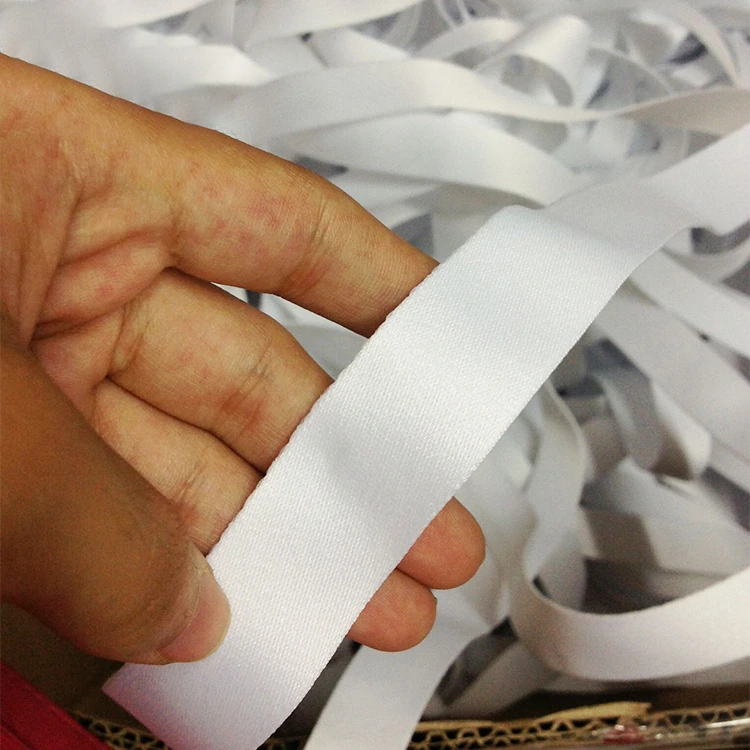
White webbing can expose marks and contamination that might be less noticeable on darker fabrics. Dirt, oil marks, stains or handling contamination may remain visible after printing or interfere with the intended visual appearance.
If defects are discovered only after transfer paper, ink, heat press time and labor have already been used, the cost of waste extends beyond the original raw material.
For this reason, white webbing should be inspected before winding and before large printing runs. Buyers should evaluate appearance under consistent lighting and check for contamination, edge irregularities and other obvious defects.
LOVECOLOUR emphasizes clean handling and neatly prepared rolls in its regular white webbing production. The objective is to minimize avoidable printing waste and support more efficient downstream processing.
7. Webbing Shrinkage: What Pre-Ironing Can and Cannot Guarantee
Dimensional change during heating is an important concern for sublimation printers. If the webbing changes length or width during processing, it may affect artwork registration, repeat spacing, cutting accuracy and finished product dimensions.
Pre-ironing or thermal preparation can help flatten material and reduce certain handling-related issues before winding. LOVECOLOUR irons and flattens its regular white polyester webbing before roll packing as part of its material preparation process.
However, it would be inaccurate to assume that every polyester webbing remains dimensionally unchanged under all heat transfer conditions. Final performance can depend on yarn, weave, tension, prior heat treatment, temperature, pressure, dwell time and the specific printing machine.
How to Test Dimensional Stability Before Bulk Production
- Cut or mark a representative webbing sample and record its starting length and width.
- Apply the intended heat transfer conditions using the customer’s actual production process.
- Allow the material to cool and relax under a consistent measurement procedure.
- Measure the same reference points again and calculate the dimensional change.
- Repeat the test across representative samples when the production requirement is sensitive to size changes.
- Record the result and agree on an acceptable tolerance before placing the full order.
For example, if a 1,000mm marked sample measures 995mm after processing, its measured length change is -0.5%. This is an illustrative calculation, not a laboratory result for LOVECOLOUR webbing.
Purchasing advice: If your production line requires a particular maximum shrinkage percentage, specify the test method and allowable result in the purchasing agreement.
8. Sublimation Printing Settings: Temperature, Time and Pressure
Dye sublimation quality depends on coordinated material, ink, paper, heat and pressure conditions. A setting that works for one polyester textile may not be optimal for another webbing construction or for a continuous transfer machine.
As a general reference, Sawgrass lists approximately 205°C (400°F), 45 seconds and medium pressure as an example starting point for polyester fabric in a compatible flat heat press workflow. These values are not a universal production recipe for narrow woven webbing or industrial roll-to-roll printing.
Before mass production, follow the recommendations of the ink and equipment manufacturers, evaluate the material and confirm the resulting print quality. Check color, transfer consistency, dimensional changes, surface appearance and repeat registration.
Technical reference: Sawgrass Sublimation Heat Press Settings.
Recommended Trial Checks
- Confirm that the material and ink system are suitable for polyester sublimation.
- Verify the actual equipment temperature and pressure.
- Check print sharpness, solid colors, fine text and repeat patterns.
- Inspect for ghosting, blurred edges and unwanted transfer marks.
- Measure any material shrinkage or distortion.
- Check whether the printed material can be cut and sewn consistently.
9. Common Sublimation Webbing Problems and How to Troubleshoot Them
When printing defects occur, do not automatically assume the webbing is defective. Material quality, transfer paper, artwork, machinery and operating conditions can interact. A controlled test is more useful than changing several variables at the same time.
| Problem | Possible Causes | Recommended Check |
|---|---|---|
| Faded Print Colors | Incorrect transfer conditions, color management or incompatible materials | Check temperature, ink, transfer paper and test results |
| Ghosting or Double Images | Transfer movement, unstable tension or shifting during separation | Inspect paper alignment, fixing and machine tension |
| Uneven Color Transfer | Uneven contact, temperature variation or material inconsistency | Verify contact pressure and perform sample comparisons |
| Length or Width Changes | Heat response, excessive tension or insufficient process validation | Run controlled dimensional stability tests |
| Wrinkles or Creases | Winding condition, tension or material handling | Inspect roll preparation and feed alignment |
| White Spots or Visible Stains | Contamination or incomplete transfer | Inspect blank material and the transfer contact area |
| Frequent Line Stoppages | Webbing joints, feeding issues or winding inconsistency | Check roll continuity and feeding equipment |
| Cutting or Sewing Problems | Thickness, edge construction or hardware mismatch | Test cutting and assembly using the final components |
A good supplier should help investigate whether a problem originates from the raw material, the printing setup or downstream assembly. Buyers can improve communication by providing photographs, machine parameters, production batch information and samples of both acceptable and defective results.
10. How to Compare 100-Yard and 100-Meter Webbing Rolls
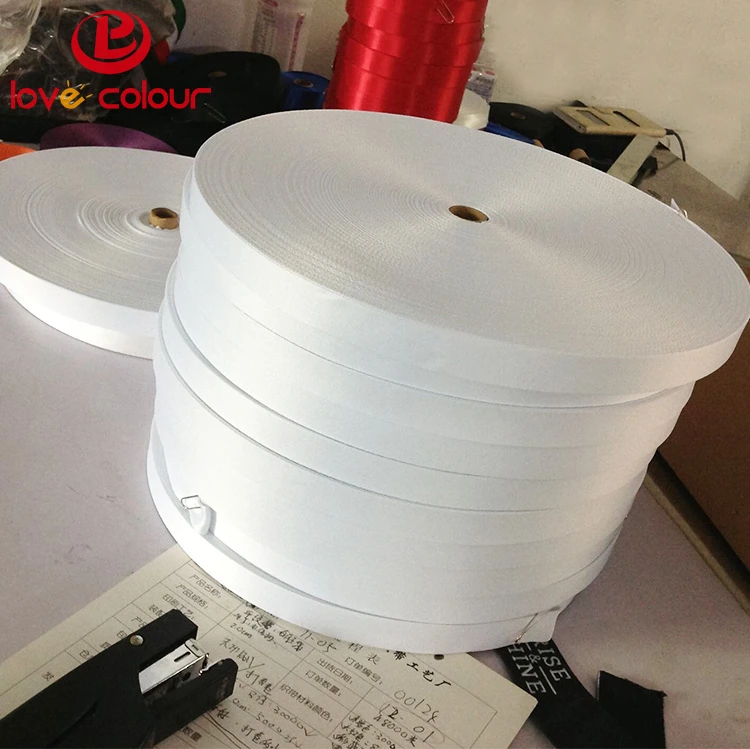
International buyers frequently order webbing using different measurement systems. American buyers may request yard-based rolls, while other importers may prefer meters.
One yard equals exactly 0.9144 meters. Therefore, a 100-yard roll contains 91.44 meters, while a 100-meter roll contains approximately 109.36 yards.
These are not interchangeable packing quantities. When comparing quotations, convert both offers to the same unit and confirm the measured or agreed usable length.
| Packing | Length in Meters | Length in Yards |
|---|---|---|
| 100 Yards / Roll | 91.44m | 100yd |
| 100 Meters / Roll | 100m | Approximately 109.36yd |
For wholesale orders, specify the width, length per roll, number of rolls, total ordered length, permissible joints, packaging and any required carton identification. LOVECOLOUR’s regular packing options include both 100 yards and 100 meters per roll, with alternative packing arrangements available for review.
11. How to Calculate the Real Cost of Sublimation Webbing
Raw material price is only one part of a printing company’s operating cost. An inexpensive webbing roll can become costly if defects cause additional waste, machine stoppages or reprinting.
A more useful purchasing comparison considers the cost per usable meter together with printing efficiency and defect-related losses.
Illustrative example: Supplier A quotes $0.10 per meter and delivers 10,000 meters, but only 9,600 meters are usable after material-related losses. The effective webbing cost is $1,000 / 9,600 = approximately $0.1042 per usable meter, excluding processing losses.
Supplier B quotes $0.102 per meter, with 9,900 usable meters from the same ordered quantity. The effective webbing cost is $1,020 / 9,900 = approximately $0.1030 per usable meter.
In this hypothetical comparison, Supplier B has the higher nominal price but the lower effective material cost per usable meter. The figures are examples only, not quoted LOVECOLOUR prices or verified factory defect rates.
For a complete analysis, purchasing teams should also consider lost machine time, unused transfer paper, labor, rework, shipping, delivery consistency and the reliability of repeated supply.
12. Polyester vs. RPET Webbing: Which Should You Choose?
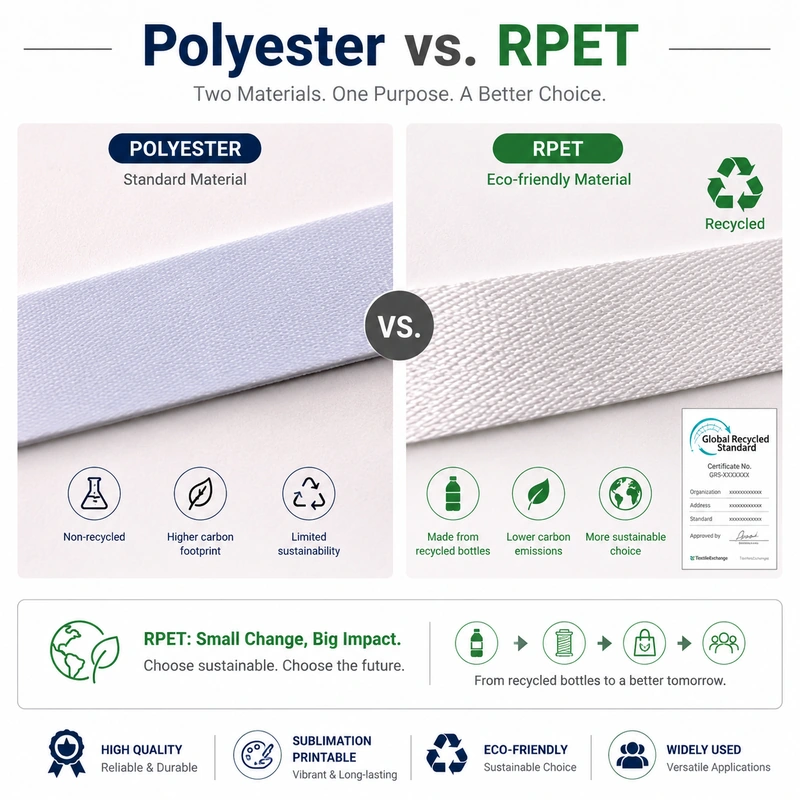
Regular polyester and recycled polyester (RPET) webbing are related material options, but they can serve different sourcing priorities.
Conventional polyester webbing is commonly selected for established printing programs where buyers prioritize repeat specifications, pricing, availability and printing compatibility.
RPET webbing uses recycled polyester feedstock and may be requested by brands or procurement teams seeking recycled content. However, recycled material claims should be supported by appropriate documentation and, where required, a relevant chain-of-custody certification.
Both materials require printing validation. Buyers should not assume identical heat transfer behavior solely because both are based on polyester.
If your order requires recycled content, provide the target composition, documentation requirements, desired specifications and intended certification claims before production. Our regular stock product discussed in this guide is conventional blank white polyester webbing; RPET should be reviewed as a separate material sourcing option.
13. Choosing Between a Webbing Manufacturer and a Trading Supplier
For occasional small purchases, a distributor with local stock may offer convenience. For ongoing bulk orders, buying directly from a webbing manufacturer can provide different advantages, especially when the product must meet consistent manufacturing specifications.
Direct manufacturing can make it easier to discuss weave construction, production scheduling, material preparation, roll quality, custom widths and repeat-order consistency. It may also offer more flexibility when the buyer needs connected services such as printing or cutting.
However, factory-direct supply is not automatically the best choice for every order. A buyer should compare total landed cost, lead time, communication, quality control, shipment terms and the supplier’s ability to meet the actual purchase specification.
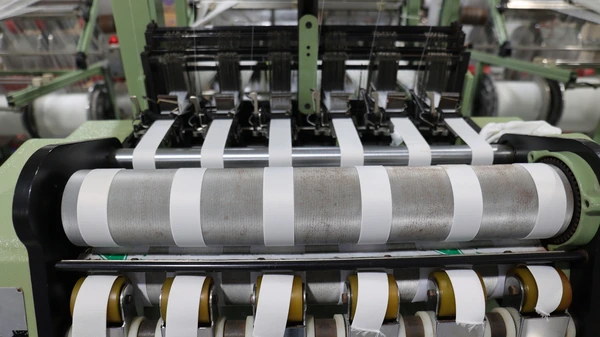
LOVECOLOUR operates more than 50 weaving machines for ongoing production of regular white polyester webbing. Our factory also supports sublimation transfer paper printing, heat transfer, sewing and lanyard hardware assembly. This integrated workflow helps buyers source the required stage of production from raw webbing to finished lanyards.
Learn more about our manufacturing background and custom production services.
14. What Should Importers Check Before Ordering Bulk Sublimation Webbing?
A technically complete RFQ helps the manufacturer understand the intended product and provide a more accurate quotation. It also reduces misunderstandings over material specifications and packing.
Bulk Webbing Purchasing Checklist
- Material: Confirm the exact polyester specification and whether recycled content is required.
- Color: Specify white and identify any approved shade reference when color consistency is critical.
- Width: State the nominal width in millimeters and the required tolerance.
- Thickness: Confirm the expected thickness and measurement requirements.
- Quantity: Specify total meters or yards and the required allocation by width.
- Roll Length: State 100 yards, 100 meters or a custom length.
- Joints: Agree on acceptable roll continuity and any required joint identification.
- Surface Quality: Define acceptable appearance, contamination and edge conditions.
- Printing: Identify whether the material will be used in flat pressing or continuous heat transfer equipment.
- Testing: Approve a sample and any important dimensional or printing performance requirements.
- Accessories: List matching metal hooks, split rings, buckles or other components if needed.
- Packing: Confirm carton quantities, labeling and identification requirements.
- Delivery: Provide destination, required shipment timing and preferred Incoterms.
For large repeating orders, it is useful to retain an approved reference sample and maintain consistent product identification between purchase orders.
15. International Sourcing: USA, Middle East, Europe, Australia and Latin America
When sourcing white polyester webbing internationally, regional buyers may use different measurement systems, printing equipment, payment arrangements, customs procedures and distribution models. The underlying technical questions remain similar: Is the material suitable for the intended process, is the supply specification clear, and can the supplier support repeat orders?
LOVECOLOUR has experience supplying blank webbing and related lanyard accessories to customers in the United States, Mexico, the United Kingdom, Spain, Poland, Australia, Saudi Arabia, the United Arab Emirates including Dubai, Brazil, Ecuador, Chile, Russia, the Philippines, India, Vietnam, Angola and the Dominican Republic.
For USA buyers, we can discuss yard-based roll orders and inch-to-millimeter width comparisons. For UK, European and Australian importers, metric packing and technical specifications can be arranged according to the agreed order. Customers in the Middle East, Latin America, Asia and Africa can also request wholesale material and related lanyard components for local printing or assembly.
These examples describe markets served by our business, not local factory locations or guaranteed shipping times. Export documentation, freight, import requirements and applicable trade restrictions should be assessed for the actual transaction and destination.
16. When Should You Buy Blank Webbing Instead of Finished Lanyards?
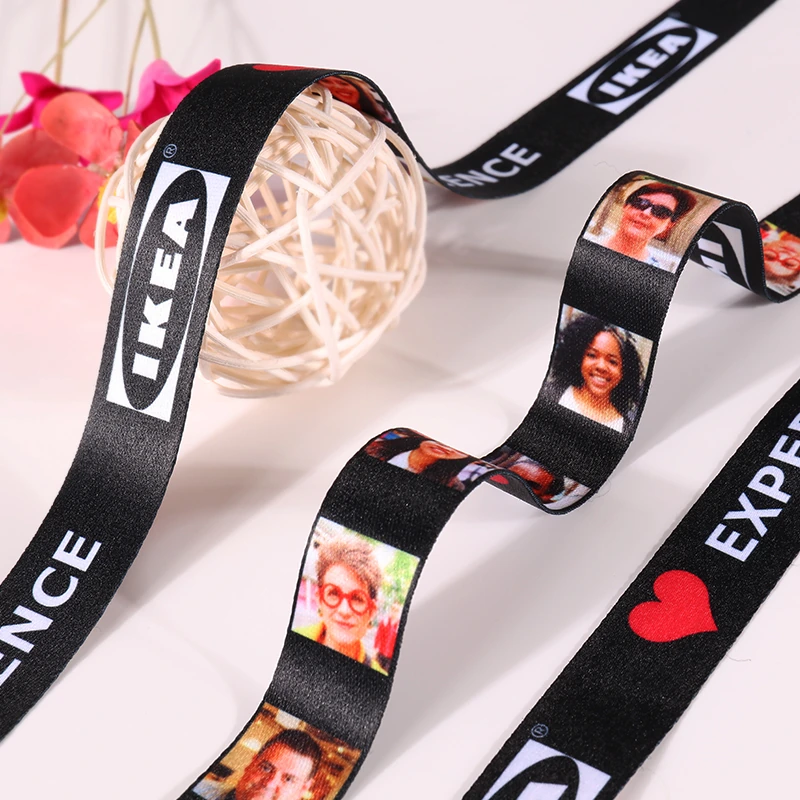
Buying blank webbing is appropriate when you already operate reliable printing and conversion equipment, need to control local production schedules or intend to distribute rolls to other printers.
Buying pre-printed webbing can make sense when you have local cutting or sewing capabilities but prefer to outsource sublimation printing.
Buying complete lanyards is often more convenient when you need ready-to-use products with printed logos, approved hardware, cutting, sewing and individual packing already completed.
Because LOVECOLOUR works with weaving, printing, cutting, sewing and accessory assembly, buyers can discuss the supply model that best matches their own production capabilities.
Browse finished custom lanyards or request a material and manufacturing quotation.
17. Frequently Asked Questions
What is the best material for sublimation lanyards?
White polyester webbing designed for dye sublimation is a common starting point. The best specification depends on the printing process, desired artwork, width, thickness, finishing and sample test results.
Can all polyester webbing be sublimation printed?
Not necessarily with the same quality or settings. Polyester compatibility, fabric construction, surface treatment and equipment conditions should be assessed. A supplier’s material sample is the most useful starting point for testing.
What is the most suitable width for printed lanyards?
For common identification and promotional lanyard designs, 15mm, 20mm and 25mm are useful choices to evaluate. The final width should be selected according to artwork, comfort, hardware and product requirements.
Is 0.6mm polyester webbing suitable for heat transfer printing?
Our regular 0.6mm white polyester webbing is intended for sublimation applications. Buyers should still test their specific equipment, transfer settings and downstream assembly requirements before bulk approval.
How can I reduce webbing waste during printing?
Use appropriately prepared material, inspect rolls before printing, check joint frequency, test dimensional stability and verify printing settings. Maintaining consistent specifications and recording defects can help identify the main causes of waste.
Should I buy 100 yards or 100 meters per roll?
Choose the format that matches your inventory and production system. Remember that 100 yards equals 91.44 meters, so the two packing options should not be compared as equal material quantities.
Can I mix different widths in one wholesale order?
Mixed-width supply may be possible depending on stock and order requirements. Provide your total demand and a breakdown by width when requesting a quotation.
Can I source blank webbing and matching lanyard accessories together?
Yes. LOVECOLOUR supplies white polyester webbing and related metal or plastic lanyard accessories. Buyers can specify hook types, rings, buckles and other components for compatibility review.
Is RPET webbing always better than conventional polyester?
No single material is automatically best for every project. RPET may meet a buyer’s recycled-content requirements, while conventional polyester may suit an established manufacturing specification. Both require appropriate performance testing and accurate material documentation.
What information does a manufacturer need for a bulk webbing quotation?
At minimum, provide material type, width, thickness requirement, quantity, roll length, printing application, delivery destination and any special quality or packing requirements.
18. Final Recommendations for Sublimation Webbing Buyers
When selecting blank white polyester webbing, focus on repeatable production performance rather than price per meter alone. Confirm the material construction, choose a suitable width, test printing compatibility and evaluate the supplier’s ability to control joints, contamination, preparation and roll packing.
For businesses that run regular lanyard printing operations, an approved material specification and dependable replenishment process can be more valuable than repeatedly changing suppliers to obtain a marginally lower quote.
At Guangzhou Lovecolour Garment Accessories Co., Ltd., our ongoing white polyester webbing production is supported by more than 50 weaving machines, seven regular stocked widths, approximately 0.6mm material thickness and standard 100-yard or 100-meter roll packing. We also provide related sublimation printing, sewing and hardware assembly services.
Planning your next bulk webbing order? Tell us your required width, quantity, roll length, printing method, destination and any special material standards. Our team can review your requirements and prepare a factory-direct quotation.
Request Blank Polyester Webbing Samples and Wholesale Pricing
About This Guide and Technical References
This article is published by Guangzhou Lovecolour Garment Accessories Co., Ltd. for professional buyers, printing companies, lanyard manufacturers and webbing distributors. Company-specific manufacturing information reflects the factory’s stated production practices and regular product specifications. Printing parameters and technical examples are general guidance and should not replace equipment-specific testing or an agreed purchase specification.
Technical reference: Sawgrass – Sublimation Heat Press Settings.
Related resources: Custom Webbing Products | Custom Lanyards | OEM/ODM Manufacturing | About LOVECOLOUR | Contact Our Factory.