I once ordered lanyards that fell apart in just a few weeks. Clips broke, stitching came loose, and my team had to scramble for replacements right before an event. I felt trapped by a bad choice and a supplier who disappeared as soon as they’d been paid.
That painful experience taught me something important: before you place a bulk order, you don’t just compare prices—you ask the right questions.
Asking key questions up front helps you choose a reliable supplier. You get clear answers on materials, quality, cost, and delivery before you commit your budget and your brand reputation.
Today, I work closely with the team at Guangzhou Lovecolour, a lanyard and wristband manufacturer in China. I see both sides: the pressure buyers feel to hit deadlines and the work a serious factory puts in to get things right. In this guide, I want to share the 10 questions I wish I had asked earlier—so you can avoid the same stress, wasted money, and damaged brand image.
1. What materials do you use for your lanyards?
I still remember watching cheap lanyards tear in the middle of a busy event. Badges dropped, people looked annoyed, and I felt both embarrassed and frustrated. Since then, I always start with one core topic: materials.

Ask your supplier to clearly list the materials they use—such as polyester, nylon, cotton, or eco-friendly options like recycled PET. The right choice gives you the look, strength, and feel you actually need.
Materials directly affect durability, comfort, and price. Polyester is the most common choice: sturdy, cost-effective, and resistant to fading and fraying. Nylon feels smoother and shinier, but usually costs more. Cotton feels natural and soft, but can shrink and show wear faster. Recycled PET (RPET) brings eco benefits and appeals to green, sustainability-focused brands.
I once tested three materials at a trade show. The polyester lanyards stayed intact the whole week. The nylon ones looked premium but strained the budget. The recycled PET lanyards drew compliments from visitors who noticed the “recycled” message. Now I balance cost and brand image by comparing samples instead of guessing.
These days I ask suppliers for:
-
Material data sheets showing tensile strength and shrink rates
-
Color and finish samples for each option
-
A few test pieces I can use under real conditions, like repeated badge swipes and outdoor walks
At Lovecolour, we routinely test webbing for strength and color fastness before bulk production. That simple step has saved me, and many of our clients, from dealing with returns and product failures after an event.
2. What printing techniques and color management do you offer?
I once ordered lanyards that looked vibrant when they arrived—but after one wash, the print faded badly. I felt disappointed and misled. Since then, I always check printing methods and color control before I approve an order.
Suppliers may offer screen printing, dye sublimation, heat transfer, or woven designs. Each method affects color quality, durability, and price in different ways.
Printing style defines both your brand look and the lifespan of your lanyards:
-
Screen printing – Great for simple logos with a few solid colors. Cost-effective for large orders.
-
Dye-sublimation – Ideal for full-color artwork, gradients, and complex designs. Colors are infused into the fabric and won’t peel.
-
Surface heat transfer – Works for smaller runs, but the print layer can crack over time with heavy use.
-
Woven/Jacquard – Your logo is woven directly into the strap. Very durable and premium, but less suitable for tiny details and usually higher in cost.
I once ran a promotion using lanyards with surface heat-transfer prints. They looked sharp at first, but started to crack after a month of daily wear. On the next project, I switched to dye-sublimation with a supplier who managed Pantone color matching properly. The colors stayed vibrant through outdoor events and regular washing.
Now I make sure to:
-
Ask which printing method they recommend for my specific design and why
-
Request a digital color proof with Pantone references
-
Test one sample by wearing and washing it for a week before approval
At Lovecolour, we keep color recipes and Pantone records for repeat orders, so colors stay consistent from one batch to the next.
3. Can you provide samples or a pre-production proof before mass production?
I once approved a lanyard design too quickly and ended up with 5,000 pieces that weren’t right. The logo size was off, the colors were slightly wrong, and the clip style wasn’t what I thought I’d ordered. When I opened the boxes, I felt pure panic.
Your supplier should offer a physical sample and/or a detailed digital mock-up before the full run. This step catches errors in design, color, and size before you spend your full budget.
Samples and proofs are your last chance to fix problems cheaply. A digital proof shows layout and color expectations, but a physical sample reveals the real material, stitching, and hardware.
I remember ordering woven lanyards with a logo that looked perfectly centered in the digital file. When the sample arrived, the logo sat too close to the clip area and looked cramped. I adjusted the artwork, requested a second sample, and only then approved mass production. That extra round of checking saved me from a full run of lanyards I would have been ashamed to hand out.
Now I typically ask for:
-
One full-color sample on the final material and width
-
A very small trial run (even 3–5 pieces) if timing allows
-
Clear photos and videos of the sample from different angles
I check print clarity, alignment, stitching, edge finishing, and how the hardware feels in hand. At Lovecolour, we treat samples as a shared checkpoint with our clients—not a formality—so both sides know exactly what will be delivered.
4. What are your MOQs and pricing structure?
I once lost a deal because of hidden costs. The headline price looked amazing, but extra fees appeared late in the process—setup fees, special packaging charges, and a higher shipping cost than I expected. By then, I felt boxed in with no room to negotiate.
Minimum order quantities (MOQs) and unit prices often vary by material, printing method, and order size. Clear pricing and terms help you avoid budget surprises.
MOQ sets the minimum quantity you must buy. Some suppliers ask for 100 pieces, others for 300 or 500. At the same time, unit price usually drops as your quantity increases.
I once ordered 200 lanyards at $1.20 each, not realizing there was a major price break at 500 where the unit price dropped to $0.90. That small oversight cost me money I could have spent on better accessories or packaging.
Now I always ask for a tiered price table, for example:
-
100 / 300 / 500 / 1,000 / 3,000 / 5,000 pcs
-
With and without badge holders, safety breakaways, or premium hooks
I also ask suppliers to spell out:
-
Artwork or setup fees
-
Charges for custom molds or special attachments (if any)
-
Packaging options and their costs
-
Estimated shipping cost under different terms (FOB, CIF, DDP, etc.)
At Lovecolour, we prefer to show the full cost picture up front so buyers can compare options and choose the best mix of quantity, quality, and budget.
5. What is your production lead time and capacity?
My event date was fixed, and everyone’s name badges were already printed. Then my supplier missed the deadline. We ended up improvising with plain, last-minute lanyards. I felt stressed, and honestly, a bit betrayed.
Lead time covers design approval, production, and shipping. Capacity tells you whether a supplier can handle your order size on schedule. Both are critical if you work with fixed event dates.
Knowing realistic lead times helps you avoid last-minute chaos. Some suppliers need 7–10 days for production; others may require 20–30 days, especially for complex printing or large runs. Big orders also depend on how many machines and operators the factory has.
I once needed 1,000 lanyards in two weeks. My supplier had a backlog but didn’t tell me clearly. We missed the conference deadline and had to apologize to everyone involved. I never forgot that.
Now I always ask:
-
“What is your typical production lead time for this exact product?”
-
“How many lanyards can you produce per day or per week?”
-
“Can you handle rush orders? If so, at what extra cost?”
-
“What does your schedule look like around my event date?”
I also separate production time from shipping time, and I build in a buffer for customs or delays.
At Lovecolour, we share an honest timeline based on current capacity. If a deadline is too tight, we say so and explore faster printing methods, partial shipments, or express logistics options with the client.
6. How do you ensure quality control throughout the process?
I once opened a box of lanyards and immediately saw problems: messy stitching, inconsistent print, and at least one broken clip. The supplier brushed it off as “normal.” I felt let down and realized I hadn’t asked about their quality control process at all.

A reliable supplier has clear quality checks at each stage—materials, mid-production, and pre-shipment. Ask how they inspect, what defect rate they consider acceptable, and what happens if they find issues.
Quality control (QC) keeps your standards consistent. I look for at least three checkpoints:
-
Incoming material inspection – Check webbing, inks, and hardware for color, finish, and defects.
-
In-process inspection – Inspect pieces during printing and assembly so mistakes are caught early.
-
Final inspection – Check finished lanyards for print clarity, stitching quality, length and width, and clip function before packing.
I once worked with a supplier who sent me an eight-page QC report before shipping. It listed defect categories, sample photos, and corrective actions taken. That level of detail reassured me that they took my order seriously.
Now I ask:
-
Whether they follow an AQL (Acceptable Quality Limit) or similar standard
-
If they can share photos or short videos from the inspection
-
How they handle rework or replacement if defect rates are higher than agreed
At Lovecolour, our QC team checks materials, monitors production, and inspects finished lanyards before they leave the factory. It’s extra work, but it’s cheaper than disappointed customers.
7. What certifications and compliance standards do your products meet?
I’ve dealt with shipments delayed at customs because documentation wasn’t complete. Watching boxes sit in a warehouse instead of being around people’s necks at an event is incredibly frustrating.
Ask whether your supplier follows recognized standards like ISO9001 or BSCI and can provide third-party test reports. This protects you on safety, quality, and legal compliance—especially for international projects.

Certifications and test reports signal a responsible partner:
-
ISO9001 – A quality management standard that shows processes are documented and controlled.
-
BSCI – Indicates a commitment to social and labor compliance in the supply chain.
-
Third-party lab tests – Cover material safety for webbing, inks, and metal parts, including:
-
Heavy metal content in clips
-
Chemical restrictions (e.g., AZO dyes, phthalates) where required
-
I once shipped to Europe and discovered the lanyards didn’t come with the specific documentation that customer’s compliance team needed. Customs delays and extra paperwork turned a simple project into a stressful one.
Now I always:
-
Ask for current certificates and check validity dates
-
Request test reports for the specific product and material being used
-
Keep a digital folder of all certificates for each supplier
At Lovecolour, we maintain ISO9001 and social compliance audits, and we work with third-party labs for product testing, because we know our customers rely on those documents to keep their own brands safe.
8. What customization options and accessories do you offer?
I once confirmed a lanyard order and only later realized I also needed badge holders, safety clips, and better hooks. My supplier couldn’t provide them. I felt stuck managing multiple vendors for one simple project.
Ask about clip types, swivel hooks, breakaway safety features, badge holders, and packaging from the beginning. A supplier with more options can deliver a complete, ready-to-use solution.
Customization turns a simple strap into a full ID system:
-
Clips and hooks – Swivel hooks, lobster claws, split key rings, bulldog clips, plastic alligator clips, carabiners, and more
-
Safety features – Breakaway safety clasps for schools, hospitals, and crowded events
-
Badge holders – Clear PVC sleeves, rigid card holders, zipper pouches, or multi-slot holders
-
Adjusters and buckles – Detachable buckle releases, length adjusters, and quick-release connectors
-
Packaging – Individual polybags, cardboard backing cards, branded boxes, or eco-friendly packaging
I once built VIP kits using lanyards with breakaway clips, metal hooks, and clear PVC holders, all pre-assembled. The supplier helped me choose the right hardware and packaging, and the kits looked polished and professional.
Now I ask suppliers to:
-
Share a catalog or photo sheet of all lanyard accessories
-
Provide mock-ups showing the full set (lanyard + clip + holder)
-
Explain how customization affects lead time and pricing
At Lovecolour, we help clients design complete kits instead of just selling a bare strap. It saves time, reduces complexity, and makes the final result look much more cohesive.
9. How do you handle packaging, shipping, and customs?
I once received a pallet with damaged boxes and bent clips. The lanyards themselves had been produced well, but poor packing ruined the final impression. It felt like watching value leak away in transit.
Your supplier should clearly explain packaging standards, shipping methods, and customs documentation. Ask about terms like FOB, CIF, and DDP so you know exactly who is responsible for each step.

Packaging and logistics are just as important as production:
-
Packaging
-
Are lanyards packed in bulk or individually?
-
Are they pre-assembled with badge holders?
-
How are clips protected against bending or scratching?
-
-
Shipping methods
-
Express couriers (DHL/UPS/FedEx) for urgent, smaller shipments
-
Air freight for mid-sized, time-sensitive orders
-
Sea freight for large, cost-sensitive bulk orders
-
-
Incoterms
-
FOB – You handle freight from the port onward
-
CIF – Supplier covers cost and freight to your port
-
DDP – Supplier delivers to your door, including customs clearance
-
Now I routinely ask for:
-
Carton specifications (dimensions, weight, stacking recommendations)
-
Photos of trial packing for new projects
-
Details on export documents, including commercial invoices, packing lists, and any certificates of origin
At Lovecolour, we’ve shipped to many different countries and learned how much a small change—like using stronger cartons or better inner packing—can reduce damage and complaints.
10. What is your after-sales policy and support?
I once discovered defects in a batch only after the event was over. Some prints were misaligned and a number of clips had issues. When I contacted the supplier, they stopped replying. I felt completely helpless.
A solid after-sales policy covers returns, replacements, and timelines. Ask about response times, how issues are handled, and what support you can expect if something goes wrong.
After-sales support is your safety net once the lanyards arrive. I always ask:
-
How long do I have to report issues (30, 45, or 60 days)?
-
What counts as a defect, and what percentage is acceptable?
-
Will they offer free replacements, partial refunds, or discounts on the next order for serious problems?
-
Who pays for return shipping if products need to be sent back?
I once had a batch with misprinted logos. The supplier admitted the mistake and shipped replacements within a week at no extra cost. That quick, fair response turned a bad situation into a long-term partnership.
Now I insist on:
-
Getting the after-sales policy in writing in the quotation or proforma invoice
-
Knowing what proof is needed (photos, videos, sample returns)
-
Checking how quickly they respond to everyday questions before trusting them with critical deadlines
At Lovecolour, we see after-sales service as part of quality—not a separate department. Problems sometimes happen in any production; what matters is how fast and honestly we solve them with our clients.
Conclusion: Turn Hard Lessons Into a Simple Checklist
Ordering lanyards in bulk shouldn’t feel like a gamble. It should feel like a confident decision that supports your event, your team, and your brand.
I’ve made my share of mistakes—lanyards that fell apart, shipments delayed at customs, deadlines missed because I trusted vague promises. Asking these ten questions changed everything. They helped me avoid costly errors, protect my reputation, and build strong, long-term relationships with the right supplier partners.
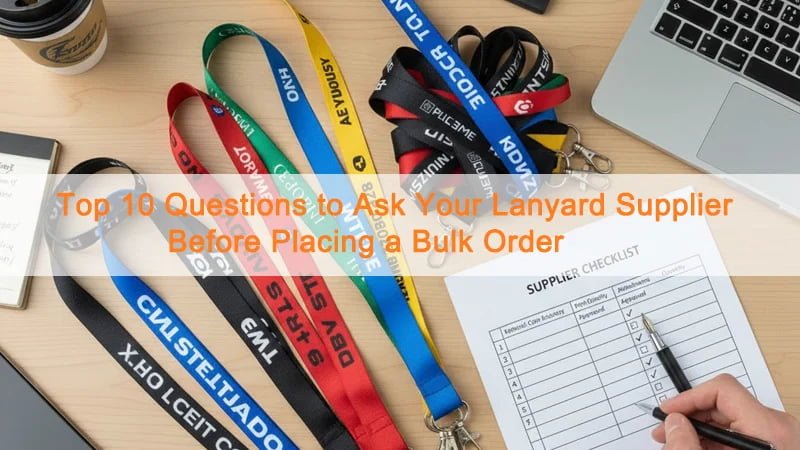
Here’s a quick checklist you can use with any lanyard supplier:
-
What materials do you use, and why?
-
What printing techniques and color management do you offer?
-
Can you provide samples or a pre-production proof?
-
What are your MOQs and pricing structure?
-
What is your production lead time and capacity?
-
How do you ensure quality control?
-
What certifications and compliance standards do you meet?
-
What customization options and accessories do you offer?
-
How do you handle packaging, shipping, and customs?
-
What is your after-sales policy and support?
If you’re planning a bulk custom lanyard order, feel free to use this list in your next email or call with a potential supplier. It will quickly reveal who is truly prepared to support you—and who isn’t.
At Guangzhou Lovecolour, we’ve spent more than a decade manufacturing custom lanyards, wristbands, and other promotional items for brands and events around the world. My team and I are happy to:
-
Recommend the right materials and printing methods for your design
-
Prepare samples and proofs before you commit to bulk production
-
Walk you through pricing, lead time, and shipping options step by step
If you’d like help with your next project, just share your design, quantity, and timeline. I’ve already paid the price of learning these lessons the hard way—so you don’t have to. Ask the right questions now, and enjoy smooth, stress-free lanyard orders for every event and campaign to come.