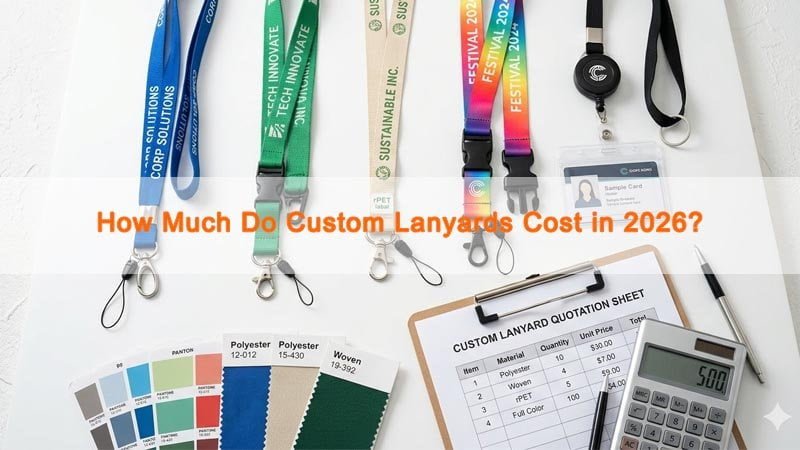
Planning an event on a tight budget can be stressful, especially when product prices seem to rise at every step. For many buyers, custom lanyards look simple at first, but the final quotation can vary more than expected.
In 2026, custom lanyards typically range from around $0.50 to $5.00 per piece, depending on material, printing method, accessories, and order quantity. In most cases, larger bulk orders significantly reduce the unit cost.
Every detail matters when planning an event, promotion, or employee identification program. Clear pricing helps buyers set realistic budgets, compare options, and avoid unexpected costs later in the process.
Average Custom Lanyard Cost in 2026?
Many buyers are surprised by how widely custom lanyard prices can vary. A basic promotional lanyard and a premium branded lanyard may look similar at a glance, yet their actual costs can be very different.
On average, a custom lanyard in 2026 may fall around the mid-range level of the market, while basic polyester flat lanyards can start from around $0.50 per piece in high-volume orders. Premium woven, silicone, or eco-friendly options may reach $5.00 per piece or more, depending on quantity and specifications.
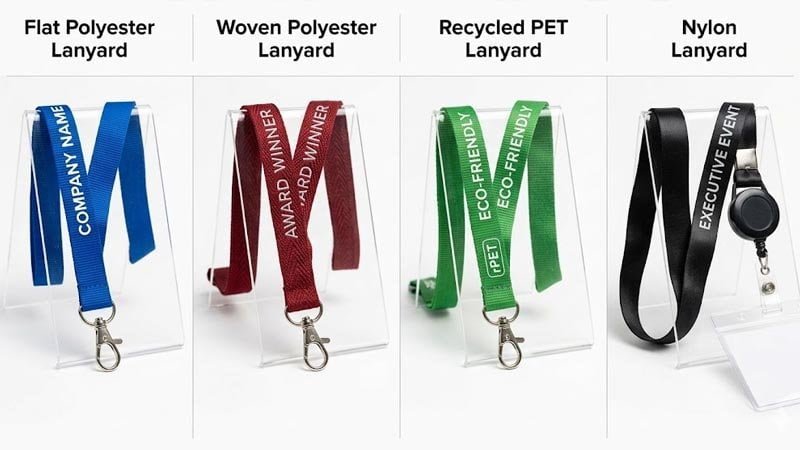
Understanding the typical price range makes it easier to compare suppliers and choose the right option for your project.
In most cases, average custom lanyard pricing is influenced mainly by material type and order volume. Polyester flat lanyards are generally the most economical option for bulk projects. For example, a high-volume order of 1,000 pieces may bring the unit price down to around $0.50 per piece, while woven lanyards at the same volume often cost closer to $2.00 each because of the more specialized production process. Silicone and recycled PET lanyards are usually positioned in a higher price range, often around $3.50 per piece in larger orders, and may reach $5.00 per piece in smaller custom runs. In general, pricing becomes more competitive once the order reaches 500 pieces or more, because setup and production efficiency improve. The table below offers a simple reference for comparing average price levels by material and quantity.
| Material Type | 100 pcs | 500 pcs | 1,000 pcs |
|---|---|---|---|
| Polyester Flat | $0.80 | $0.60 | $0.50 |
| Woven Polyester | $2.50 | $2.10 | $2.00 |
| Silicone | $4.00 | $3.70 | $3.50 |
| Recycled PET | $4.50 | $4.00 | $3.50 |
These ranges are useful for reference, but actual prices will still depend on artwork, accessories, packaging, and shipping terms.
What Factors Affect Custom Lanyard Pricing?
Many buyers focus first on the strap itself, but the total cost of a custom lanyard order is shaped by several technical and commercial factors working together.
Custom lanyard pricing is mainly affected by material, printing method, hardware, order volume, packaging, and lead time. Optional accessories and rush production can increase the total cost further.
Understanding these cost drivers helps buyers budget more accurately and compare quotations more fairly.
Material is usually the first and most important pricing factor. Polyester remains the most economical choice for most standard applications, while woven polyester costs more because the logo or text is integrated into the structure of the fabric rather than printed on the surface. Silicone and recycled PET options typically cost more due to material and production differences. Printing method is another major factor. Screen printing is often the most cost-effective option for simple logos and limited colors. Dye sublimation provides better results for full-color designs, gradients, and detailed artwork, but usually comes at a higher price. Hardware also has a measurable cost impact. Metal hooks, detachable buckles, badge reels, and safety breakaways can add around $0.20 to $0.50 per piece depending on the configuration. Packaging requirements such as individual poly bags or retail-ready boxes also increase the unit cost. Rush orders can add 10–20% or more to the total due to priority scheduling and faster freight. Shipping method matters as well, since air freight is usually much more expensive than sea freight. Order volume is another major factor: in many cases, a 10,000-piece order can reduce the unit price substantially compared with a 100-piece order. Because all of these variables add up, buyers should evaluate the full project specification rather than unit price alone.
Budget, Standard, and Premium Lanyard Pricing?
Not every project requires the same type of lanyard. Some orders are designed for simple identification or promotions, while others need stronger branding, better materials, or upgraded accessories.
As a general reference, budget lanyards may range from $0.50 to $1.00, standard lanyards often fall between $1.00 and $2.50, and premium lanyards can range from $2.50 to $5.00 or more, depending on features and quantity.
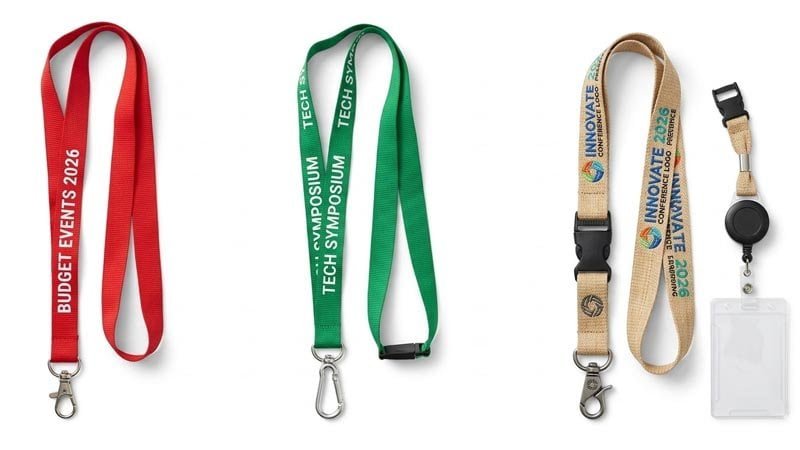
A tiered pricing approach helps buyers match product specifications to different event or branding needs.
Custom lanyards are often easiest to evaluate in three pricing tiers. The budget tier usually includes flat polyester material, simple screen printing, and standard attachments. In medium-to-large orders, this category can often be sourced for around $0.60 per piece. The standard tier typically includes better print quality, woven details, sublimation printing, or upgraded attachments, and may average around $1.50 per piece in larger orders. The premium tier is usually defined by features such as eco-friendly materials, custom hardware, full-color branding, special packaging, or smaller production runs, where unit pricing can reach $4.00 or more. Many buyers reduce overall costs by combining tiers within one event or program. For example, standard lanyards may be sufficient for staff or general attendees, while premium styles can be reserved for VIPs, speakers, or retail presentation. This approach improves budget control without sacrificing presentation quality where it matters most.
| Tier | Material | Printing | Hardware | Unit Price |
|---|---|---|---|---|
| Budget | Polyester Flat | Screen Print | Standard Clips | $0.50–$1.00 |
| Standard | Woven Polyester | Sublimation | Breakaway Clips | $1.00–$2.50 |
| Premium | Silicone/PET eco | Full Color | Custom Hooks | $2.50–$5.00 |
This pricing model gives buyers a practical way to align product quality with event priorities and budget limits.
Hidden Costs Buyers Should Not Ignore?
The quoted unit price is only one part of the real purchasing cost. Additional charges often appear in artwork preparation, accessories, packaging, and delivery requirements.
Hidden costs may include art setup fees, screen or plate charges, custom hardware fees, individual packaging, shipping, and rush surcharges. Together, these extra costs can add 10–30% or more to the total order value.
Identifying these charges early helps buyers compare quotations more accurately and avoid last-minute surprises.
Artwork setup fees are common, especially for screen printing, and may start at around $25 per color depending on the supplier and design complexity. Plate or screen charges can also apply, often around $50 per color. Custom hardware upgrades may add $0.10 to $0.50 per piece, while basic individual poly bagging can add around $0.05 per unit. Retail-oriented packaging such as hang cards, printed inserts, or custom boxes may add $0.20 to $1.00 per unit or more depending on the format. Rush production can also create a noticeable surcharge, sometimes adding 10–20% to the total order. Shipping is another major factor and may account for 5–15% of the order value, depending on destination, carton volume, and shipping method. For international buyers, taxes and import duties may apply as well. For this reason, experienced buyers usually request an itemized quote and build a simple cost checklist before approving production.
| Fee Type | Typical Cost |
|---|---|
| Art Setup | $25/color |
| Plate Charge | $50/color |
| Hardware Upgrade | $0.10–$0.50/piece |
| Poly Bagging | $0.05/piece |
| Custom Packaging | $0.20–$1.00/piece |
| Rush Order Surcharge | 10–20% total order |
| Shipping | 5–15% total |
Even when the quoted unit price looks attractive, these additional costs should always be reviewed before placing the final order.
How to Reduce Custom Lanyard Costs Without Sacrificing Quality?
Reducing cost does not always mean choosing the cheapest possible lanyard. In many cases, the better approach is to optimize specifications so the product still meets branding and usage needs without unnecessary extras.
Buyers can reduce costs by ordering in larger volumes, choosing the right printing method, limiting unnecessary upgrades, using standard hardware, and planning ahead to avoid rush charges.
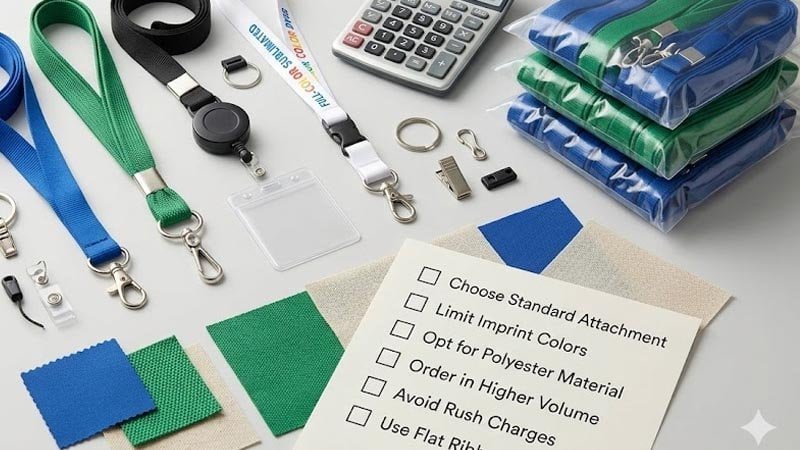
With the right purchasing strategy, it is possible to lower total cost while still maintaining a professional appearance and reliable quality.
One of the most effective ways to reduce cost is to plan early and avoid rush production or expedited freight. Consolidating orders into higher quantities also helps lower the unit price because setup and production become more efficient. Simplifying the design can reduce cost as well. For example, using fewer print colors often lowers setup and screen charges, while choosing screen printing over sublimation for simple artwork can improve price efficiency. Standard clips and attachments are generally more economical than custom hooks or multiple accessory combinations. It is also wise to reserve premium printing, eco materials, or custom packaging only for projects where they add clear value. Sampling before mass production can prevent expensive mistakes later, especially for large-volume orders. In some organizations, combining requirements across departments or events can also improve purchasing leverage. Overall, the best way to reduce cost without sacrificing quality is to match the specification closely to the real purpose of the lanyard.
How to Request an Accurate Custom Lanyard Quote?
Accurate quotations depend on accurate specifications. The more clearly a buyer defines the project, the faster and more precise the supplier’s pricing will be.
To get an accurate custom lanyard quote, buyers should provide material type, printing method, hardware choice, quantity, artwork files, packaging requirements, lead time, and shipping preference. It is also helpful to request itemized fees and sample information.
Clear specifications reduce back-and-forth communication and make quotation comparison much easier.
A clear quote request usually starts with a simple specification sheet. This should include the material type, such as polyester, woven polyester, silicone, or recycled PET. It should also state the preferred printing method, for example screen printing, sublimation, or another custom logo process. Hardware details matter as well, including clip type, breakaway requirement, buckle release, or any custom attachment. Quantity is essential because pricing depends heavily on volume. Artwork files should ideally be provided in editable vector formats such as AI, EPS, or PDF, which helps suppliers assess print feasibility and setup requirements. Packaging details should also be listed, whether bulk-packed, individually poly-bagged, or packed in retail boxes. Buyers should also specify the required lead time, preferred shipping method, and whether a pre-production sample is needed. For the most transparent comparison, it is best to ask suppliers to break down material cost, setup charges, hardware fees, packaging, and freight separately.
| Spec Item | Detail |
|---|---|
| Material | Polyester Flat |
| Printing Method | Screen Print, 2 colors |
| Hardware | Standard Clip, No Breakaway |
| Quantity | 1,000 pcs |
| Artwork File | Logo.ai |
| Packaging | Bulk in Carton Box |
| Lead Time | 4 weeks |
| Shipping | Sea Freight |
| Additional Notes | Need sample before full run |
A well-prepared specification sheet saves time, improves pricing accuracy, and helps avoid misunderstandings during production.
Conclusion
Custom lanyard pricing in 2026 depends on much more than the strap alone. Material, printing method, hardware, packaging, quantity, and delivery terms all affect the final cost. Buyers who understand these factors can set more realistic budgets, compare quotations more accurately, and avoid hidden charges.
By reviewing average price ranges, identifying key cost drivers, using pricing tiers, watching for hidden fees, and preparing a clear specification sheet, it becomes much easier to manage a custom lanyard order with confidence. The most cost-effective solution is not always the cheapest option on paper, but the one that delivers the right balance of price, quality, branding, and lead time.