Ordering a custom automotive lanyard looks simple until you start making the actual production decisions.
Should the strap be 15 mm or 20 mm wide? Is screen printing sufficient, or does the artwork require dye sublimation? Should the logo repeat along the strap or become part of a full-length racing graphic? Do you need a detachable buckle, metal hook, key ring or credential attachment?
For racing teams, motorcycle clubs, car clubs, dealerships and promotional product buyers, these decisions affect more than appearance. They influence logo clarity, usability, production cost, packaging and how well the final product fits the intended application.
This guide explains how to choose a custom automotive or motorcycle lanyard from a B2B purchasing perspective, starting with the application and working through artwork, printing, width, colors, hardware and production requirements.
If you already know that you need a full-length automotive style, you can also view our
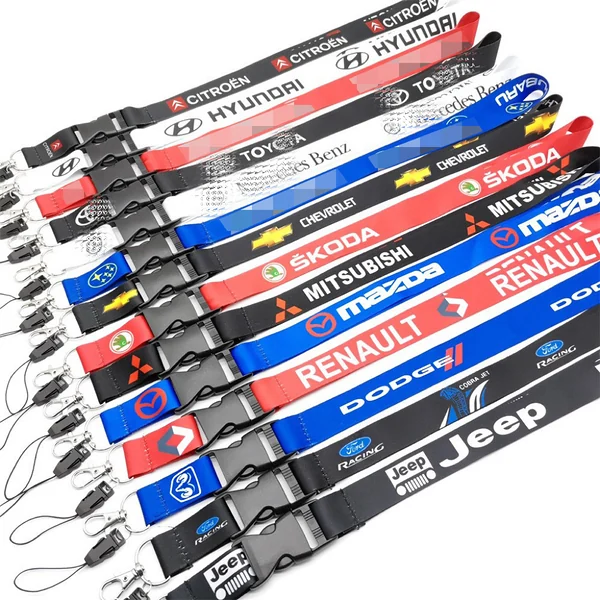
Custom Automotive & Motorcycle Lanyards.
Start With the Application, Not the Printing Method
One of the most common mistakes when sourcing custom lanyards is beginning with a production question such as:
“Should I choose screen printing or heat transfer?”
That question matters, but it should not be the first question.
A better starting point is:
What does the lanyard need to do?
The answer helps determine the appropriate width, branding method, hardware and overall construction.
Racing Teams
Racing and motorsport projects often contain more visual information than a conventional corporate lanyard.
The artwork may include:
- Team logo
- Racing number
- Driver or rider name
- Sponsor logos
- Team colors
- Racing graphics
- Website or social media information
When several of these elements need to appear together, a wider lanyard and full-color dye sublimation often provide more design freedom.
A racing lanyard may also need to carry an event credential, paddock pass or access card rather than just a key.
For complete credential applications, see our
custom motorsport lanyards and racing credentials.
Car Clubs
Car club lanyards normally need strong, easily recognizable branding rather than a large amount of information.
A typical club design may contain:
- Club logo
- Club name
- Chapter or region
- Website
- Anniversary year
- Short slogan
If the artwork is simple and uses only a few solid colors, screen printing may be sufficient.
If the club wants a more graphic design with gradients, repeated patterns, multiple colors or detailed backgrounds, dye sublimation gives more flexibility.
Motorcycle Clubs
Motorcycle club lanyards often use bold logos, text and strong contrasting colors.
Before selecting the printing method, check whether the logo includes:
- Very small lettering
- Detailed emblems
- Gradients
- Multiple colors
- Fine outlines
- Large background graphics
A logo that looks clear on a computer screen may become difficult to read when reduced to a 15 or 20 mm strap.
Artwork should therefore be evaluated at the actual production width rather than judged only from the original full-size logo.
Car Dealerships & Automotive Businesses
Dealerships and automotive businesses may use lanyards for several different purposes:
- Staff identification
- Key management
- Exhibitions
- Vehicle launches
- Customer events
- Promotional giveaways
- Branded merchandise
A dealership staff lanyard and a motorsport merchandise lanyard may carry the same logo but require completely different specifications.
For staff use, comfort, attachment choice and repeat-order consistency may be more important than complex graphics.
For promotional merchandise, visual impact and packaging may become the priority.
Automotive Events & Exhibitions
For automotive shows, racing events and exhibitions, the lanyard often works together with a badge, pass or credential.
In this situation, buyers should consider the complete system:
- Lanyard width
- Badge or pass size
- Single hook or double clip
- Safety breakaway if required
- Role identification
- Sponsor visibility
- Variable credentials
- Packaging and distribution
The lanyard should be designed as part of the event credential system rather than as an isolated promotional product.
Merchandise & Promotional Programs
When the lanyard will be sold or distributed as branded merchandise, the decision changes again.
Consider:
- How the product will be displayed
- Whether it needs individual packaging
- Whether the hardware should match the brand style
- Whether the front and back need different artwork
- Whether the design is intended for repeated long-term use
- Whether other matching automotive accessories will be sold alongside it
The most visually impressive specification is not always the most commercially suitable one. The correct product should match both the design and the sales channel.
Step 1: Choose the Right Lanyard Width
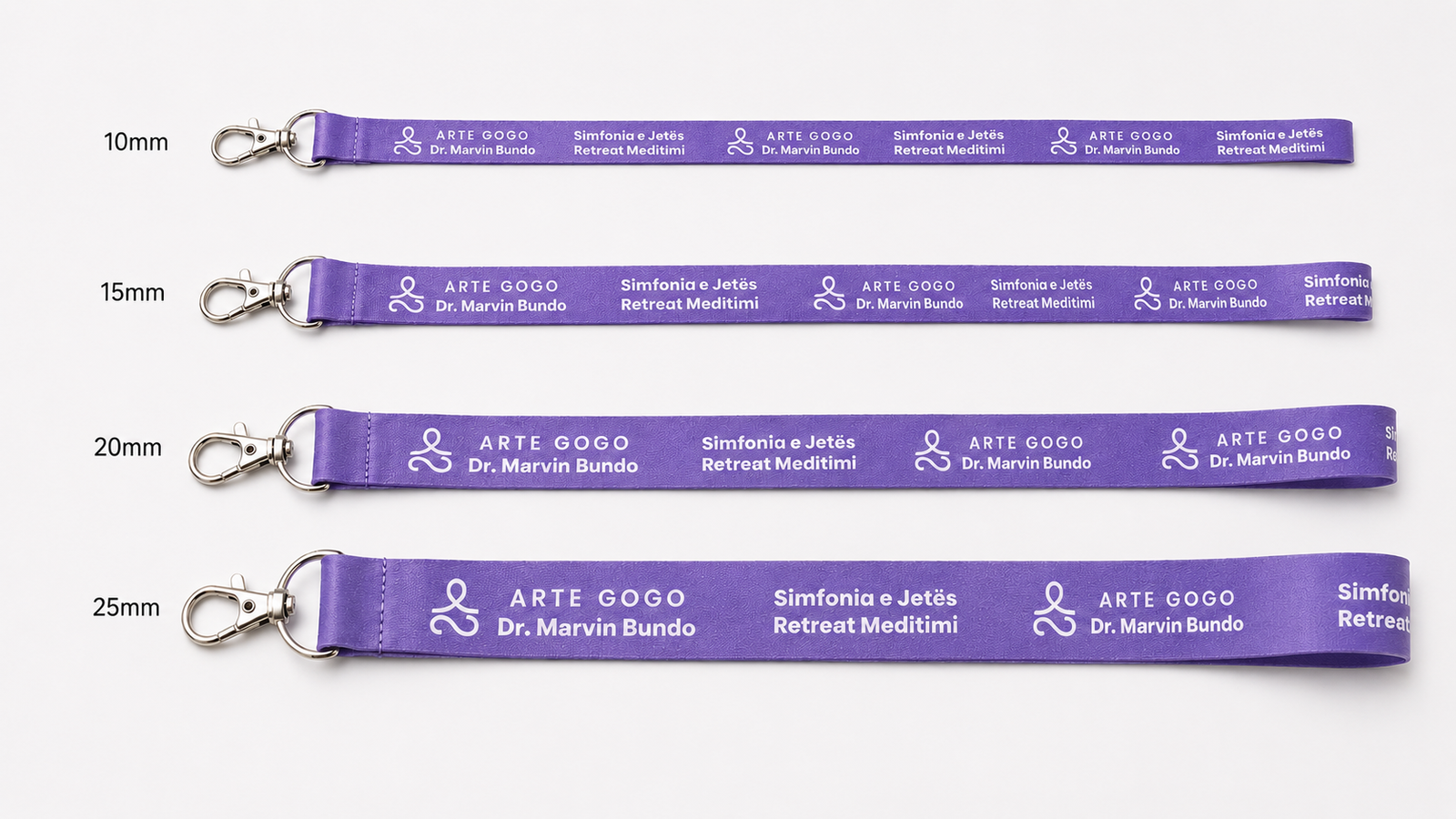
Width is one of the most underestimated specifications in custom lanyard production.
A wider strap gives the artwork more space, but it also changes the overall appearance, hand feel and cost of the product.
Common custom polyester lanyard widths include:
| Width | Typical Character | Suitable Automotive Applications |
|---|---|---|
| 10 mm | Slim and lightweight | Simple text or small logos where a narrow appearance is preferred |
| 15 mm | Compact but practical | Simple automotive logos, clubs and promotional programs |
| 20 mm | Balanced branding area | Racing, automotive logos, repeated branding and general merchandise |
| 25 mm | Wide and visually prominent | Detailed artwork, racing graphics and designs requiring more print area |
A narrow lanyard may look elegant, but forcing a complicated racing logo onto a 10 mm strap can make the text unreadable.
A 25 mm strap offers more artwork space but may be unnecessary for a simple two-color logo.
For a deeper explanation of the relationship between artwork and strap width, read our
Lanyard Width Guide.
Step 2: Choose Between Screen Printing and Dye Sublimation
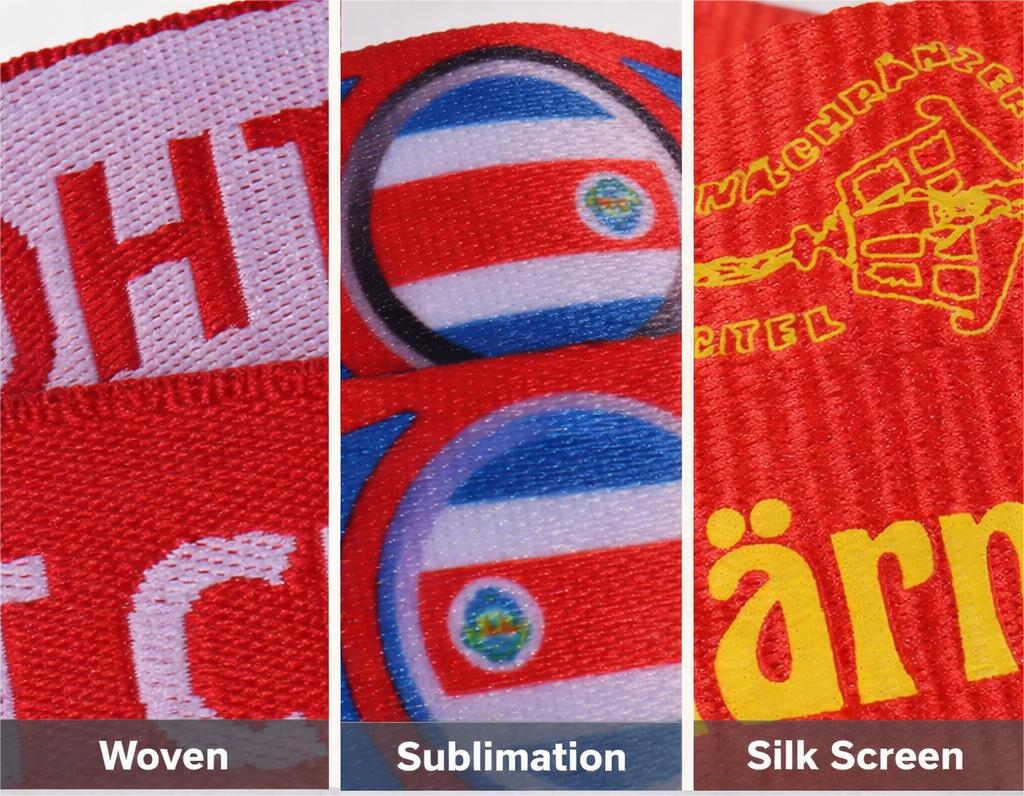
For most long automotive and motorcycle lanyards, one of the biggest decisions is whether to use screen printing or dye sublimation.
Neither method is automatically better. They solve different artwork problems.
When Screen Printing Makes Sense
Screen printing is particularly suitable when the artwork uses:
- Simple logos
- Bold lettering
- A limited number of solid colors
- Repeated branding
- High-contrast artwork
A typical automotive example might be:
Black polyester webbing + one white logo repeated along the strap.
There is little benefit in turning this type of design into an unnecessarily complex full-color process.
For specifications and examples, view our
Custom Screen Printed Polyester Lanyards.
When Dye Sublimation Makes More Sense
Dye sublimation is usually the more flexible choice when the artwork contains:
- Gradients
- Multiple colors
- Fine details
- Full-background graphics
- Racing illustrations
- Complex sponsor layouts
- Different artwork on each side
- Edge-to-edge printed patterns
During sublimation, the design is transferred into polyester under controlled heat and pressure rather than simply creating a thick surface ink layer.
That makes the process especially useful when the strap itself needs to become part of the overall visual design.
See our
Custom Dye Sublimation / Heat Transfer Lanyards
for additional specifications.
Screen Print vs Dye Sublimation: Quick Automotive Decision Table
| Artwork Requirement | Usually Consider |
|---|---|
| One simple logo color | Screen Printing |
| Simple repeating text | Screen Printing |
| Strong solid-color club logo | Screen Printing |
| Gradient background | Dye Sublimation |
| Detailed racing graphics | Dye Sublimation |
| Several sponsor logos | Dye Sublimation |
| Different artwork on each side | Dye Sublimation |
| Full-width background pattern | Dye Sublimation |
This table is a starting point, not a production rule. Material, artwork size, quantity and desired finish should still be reviewed together.
For a deeper technical comparison, read:
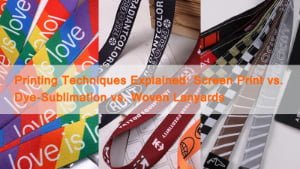
Screen Print vs Dye Sublimation vs Woven Lanyards.
Step 3: Evaluate the Artwork at Actual Lanyard Size
One of the easiest ways to create a disappointing lanyard is to approve the artwork only at full screen size.
A logo that looks excellent at 300 mm wide on a computer monitor may contain details that become extremely small when printed on a 15 or 20 mm strap.
Before production, review:
- Smallest text
- Thin outlines
- Spacing between letters
- Fine graphic elements
- Sponsor logo size
- Logo repeat distance
- Background contrast
- Attachment positions
Small Text Can Become the Real Limitation
Buyers often focus on the main logo, but the smallest secondary text may determine whether the complete artwork is printable.
Examples include:
- Website addresses
- Sponsor names
- Registered marks
- Taglines
- Small model names
If these elements become too small, increasing the lanyard width or simplifying the artwork can provide a cleaner result.
Do Not Treat a Low-Resolution Screenshot as Production Artwork
For the best artwork preparation, vector files such as AI, EPS or print-ready PDF are preferred.
High-resolution raster artwork can also be reviewed, but low-resolution images copied from websites, screenshots or messaging apps can produce soft edges and create unnecessary artwork reconstruction.
Step 4: Decide Between Repeated Logos and Full-Length Artwork
Automotive lanyards normally use one of two visual approaches.
Repeated Logo Layout
The logo is repeated at regular intervals along the strap.
This layout is useful when:
- The logo is simple
- Brand recognition is the priority
- The same identity should remain visible regardless of how the strap turns
- The customer wants a clean merchandise appearance
Full-Length Graphic Layout
The complete lanyard is treated as one design surface.
This approach is particularly useful for:
- Racing graphics
- Color gradients
- Vehicle-inspired patterns
- Sponsor arrangements
- Illustrations
- Team color transitions
Full-length designs generally make more sense with dye sublimation because the entire polyester surface can participate in the artwork.
Step 5: Single-Sided or Double-Sided Printing?
Do not assume the two sides of the lanyard must be identical.
For some automotive projects, using different artwork on each side makes better use of the available branding area.
Example 1: Racing Team
Front: Team logo + racing graphic
Back: Sponsor logos + website
Example 2: Car Club
Front: Club logo
Back: Club name + chapter + anniversary year
Example 3: Automotive Event
Front: Event branding
Back: Sponsor information or event message
Double-sided artwork is particularly useful when the buyer wants more information without making each individual logo too small.
Step 6: Choose Hardware According to the Actual Use
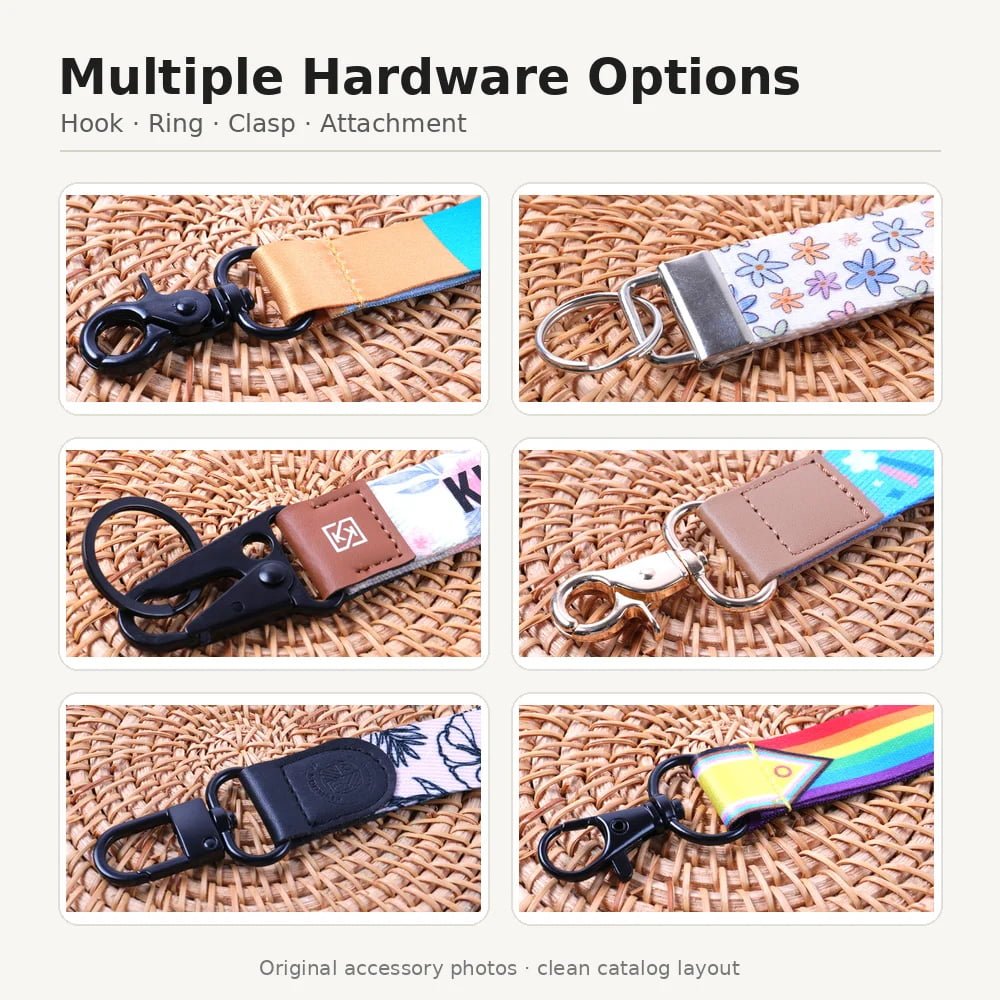
The attachment should not be treated as the final decorative detail. It changes how the product functions.
Metal Hook
A standard metal hook is suitable for keys, badge holders and general accessories.
Key Ring
A key ring is useful when the main application is automotive or motorcycle keys.
Detachable Buckle
A detachable buckle allows the lower section to be removed without taking the entire lanyard off.
This can be convenient when keys, cards or small accessories need to be detached regularly.
Phone Loop
A phone loop can support lightweight compatible accessories where this style of attachment is required.
Credential Attachment
For racing events, exhibitions and paddock programs, the bottom attachment may need to connect with:
- PVC passes
- Badge holders
- Credential cards
- Rigid card holders
Safety Breakaway
Where the project or workplace requires a breakaway function, a safety release can be added to suitable lanyard constructions.
The required safety specification should come from the buyer’s actual workplace or event requirements rather than assuming one configuration is appropriate for every environment.
Step 7: Treat Color Matching as a Production Process
Automotive and motorsport branding often depends heavily on color.
A team may have one specific red, blue or green that customers immediately associate with its identity.
Providing a Pantone reference is therefore useful—but a Pantone number alone does not make every physical material automatically appear identical.
The finished appearance can be affected by:
- Printing method
- Polyester construction
- Ink
- Transfer paper
- Heat settings
- Artwork color values
- Lighting conditions
This is particularly important with dye sublimation because the final color should be evaluated on the transferred polyester, not only on the computer monitor or printed transfer paper.
We explain this in more detail in:
Can Dye Sublimation Lanyards Match Pantone Colors Exactly?.
Pantone also recommends using a current physical color reference when color accuracy moves from a digital environment into a physical product. Buyers with critical brand colors can review
Pantone’s guidance on physical color standards.
Step 8: Consider the Relationship Between Color and Printing Method
The printing method should also reflect how the brand color is being used.
Simple Spot-Color Branding
If the design consists of a simple logo in one or several solid colors, screen printing may provide a practical approach.
Complex Full-Color Artwork
If the brand color is combined with gradients, photographic graphics, detailed patterns or many other colors, sublimation provides greater freedom.
The important point is that “Pantone matching” and “printing method” should not be treated as two unrelated decisions.
Step 9: Decide Whether You Need Stock or Fully Custom Production
Automotive and motorcycle lanyards can serve two very different purchasing situations.
Stock Styles
Selected ready-made designs can be useful when:
- The customer needs faster delivery
- The design already suits the intended market
- The buyer wants to test demand
- A custom brand is not required
Stock availability changes, so current quantities should always be confirmed before ordering.
Fully Custom Production
OEM production is more suitable when the buyer needs control over:
- Logo
- Artwork
- Brand colors
- Lanyard width
- Length
- Printing method
- Front and back artwork
- Hardware
- Packaging
Many standard custom lanyard constructions can start from relatively modest quantities, while special structures, accessories or materials may require a different MOQ.
You can view additional standard options in our
Custom Lanyards with Logo
collection.
Step 10: Decide Whether a Physical Sample Is Necessary
Not every order requires the same sampling process.
A physical sample becomes more valuable when:
- Brand color is critical
- The artwork is complicated
- The hardware is unusual
- The order quantity is large
- The product will be sold as retail merchandise
- The customer needs to confirm hand feel or material
- The project will be repeated over a long period
For straightforward repeat orders using an already approved specification, the process may be simpler.
The important point is to decide what must be physically verified before mass production rather than automatically sampling—or automatically skipping sampling—every project.
Step 11: Think About Packaging Before Production Is Finished
Packaging is often discussed too late.
For automotive merchandise, it may affect both presentation and production planning.
Possible Packaging Requirements Include:
- Bulk packing
- Individual polybags
- Custom backing cards
- Barcode labels
- SKU labels
- Retail-ready packaging
- Club member sets
- Event distribution packs
If the lanyards are intended for retail or e-commerce, tell the manufacturer before quotation rather than after production has already started.
Five Common Automotive Lanyard Buying Mistakes
Mistake 1: Choosing the Narrowest Strap Without Checking the Logo
A lower-profile strap may look attractive, but detailed automotive artwork can become unreadable if there is not enough printing area.
Always evaluate the logo at actual production width.
Mistake 2: Choosing Screen Printing for Complex Racing Artwork
A design containing gradients, multiple sponsor graphics and detailed backgrounds may be unnecessarily difficult to reproduce using a simple spot-color approach.
Choose the branding process according to the artwork rather than trying to force the artwork into a preferred process.
Mistake 3: Selecting Dye Sublimation Just Because It Supports More Colors
The opposite mistake also happens.
A simple one-color repeated logo does not automatically need full-color sublimation.
The technically more flexible method is not always the commercially more appropriate method.
Mistake 4: Approving Color From a Phone Screen
Different displays can show the same RGB value differently. Screen brightness and display calibration also affect visual judgment.
For brand-critical colors, provide a physical reference and approve the finished material when necessary.
Mistake 5: Forgetting the Hardware Until the End
A beautiful strap with the wrong hook or buckle is still the wrong product.
Hardware should be specified during the quotation and artwork stage so the complete product can be reviewed together.
Three Example Automotive Projects
The following examples show how the selection logic works in practice.
Example A: Motorcycle Club Merchandise
Requirement: Bold club logo, two colors, repeated along the strap, used mainly as member merchandise.
Possible direction:
- 15 or 20 mm polyester
- Screen printed repeated logo
- Metal key attachment
- Custom club colors
- Individual packaging if sold to members
The artwork is simple, so there may be little reason to introduce unnecessary full-color production complexity.
Example B: Racing Team With Multiple Sponsors
Requirement: Team colors, gradient graphics, several sponsor logos and different information on each side.
Possible direction:
- 20 or 25 mm polyester
- Full-color dye sublimation
- Different front and back artwork
- Credential or key attachment depending on application
- Physical sample if color is important
In this situation, the artwork rather than the unit price should lead the selection of printing technology.
Example C: Automotive Dealership Promotional Program
Requirement: Clean dealership logo, consistent brand color and practical everyday use.
Possible direction:
- 15 or 20 mm width
- Screen printing for simple branding or sublimation if the artwork requires it
- Key ring or detachable buckle
- Consistent Pantone reference
- Repeat-order specification retained for future purchasing
For a repeat program, maintaining an approved reference specification can be more valuable than redesigning the lanyard every order.
What Should Be Included in an Automotive Lanyard RFQ?
A good request for quotation reduces unnecessary back-and-forth and makes it easier to compare production solutions accurately.
You do not need to know every technical detail, but the following information is useful.
| RFQ Item | What to Provide |
|---|---|
| Artwork | AI, EPS, PDF or highest-resolution file available |
| Quantity | Required quantity and possible future reorder quantity |
| Application | Racing event, club, dealership, merchandise, promotion, credentials, etc. |
| Width | 10 / 15 / 20 / 25 mm or ask for a recommendation |
| Printing | Screen print or sublimation if already decided |
| Colors | Pantone references for important brand colors |
| Printing Sides | Same design or different front/back artwork |
| Hardware | Hook, key ring, buckle, credential holder or reference picture |
| Packaging | Bulk, individual or retail packaging |
| Schedule | Required delivery date or event date |
| Shipping | Destination country and postal code when freight is required |
If many of these details are not decided yet, the minimum useful starting information is:
Logo + quantity + intended application + required delivery date.
A manufacturer can then help narrow down the technical specification.
How Custom Automotive Lanyards Move From Artwork to Production
Once the specifications are clear, a typical custom project moves through several stages:
- Requirement review
- Artwork evaluation
- Material and width selection
- Printing method selection
- Hardware confirmation
- Digital layout approval
- Sampling when required
- Bulk production
- Quality inspection
- Packaging and shipping
For a detailed look at the manufacturing workflow, see our
visual guide to how custom lanyards are made.
Quality Checks That Matter for Automotive Lanyards
Good quality control should evaluate the complete product rather than checking only whether the correct logo was printed.
Important checkpoints include:
- Logo clarity
- Small-text readability
- Color consistency
- Artwork orientation
- Printing position
- Lanyard width and length
- Front/back alignment
- Clean strap edges
- Buckle and hook assembly
- Sewing quality
- Packaging accuracy
For long-term or repeat programs, keeping an approved production sample can also help provide a clearer reference for future orders.
What If a Long Lanyard Is Not the Right Product?
Not every automotive key accessory needs to be worn around the neck.
If the main application is an everyday motorcycle or car key, you may also want to compare:
- Short nylon key straps with metal hooks
- Flat embroidered fabric key tags
- Woven key tags
Our comparison guide
Long Lanyard vs Short Key Strap vs Fabric Key Tag
explains how the three structures differ and when each is more suitable.
Frequently Asked Questions About Automotive & Motorcycle Lanyards
What width is best for an automotive lanyard?
There is no single best width. A simple logo may work well on a 15 mm strap, while detailed racing graphics or multiple sponsor logos may benefit from 20 or 25 mm. The artwork should be evaluated at actual production size before the width is finalized.
Is screen printing or dye sublimation better for automotive lanyards?
Screen printing is usually suitable for simple logos, bold text and limited solid colors. Dye sublimation provides greater flexibility for gradients, detailed racing graphics, multiple colors and full-background artwork.
Can I print different designs on the two sides?
Yes. This is especially practical with dye sublimation. One side can display the primary automotive or racing identity while the reverse side carries sponsor logos, a website or additional information.
Can automotive lanyards match Pantone colors?
Pantone references can be used as color targets. The achievable result depends on the production process, material and specific color. For strict brand requirements, approving a physical sample is recommended.
Should I choose a 20 mm or 25 mm racing lanyard?
It depends mainly on the artwork and desired appearance. A 20 mm strap offers substantial branding space for many designs, while 25 mm can be useful when the artwork contains larger graphics, more text or several sponsor elements.
Can I add a detachable buckle?
Yes. Detachable buckles can be combined with suitable lanyard constructions when keys, cards or accessories need to be removed frequently.
Can you add a key ring instead of an ID badge hook?
Yes. The attachment can be selected according to the intended use, including key rings, different hooks and other compatible accessory configurations.
Can I order custom lanyards for a car club or motorcycle club?
Yes. Logos, club names, colors, width, printing method, hardware and packaging can all be developed according to the project requirements.
Can you make lanyards for racing teams with several sponsor logos?
Yes. Full-color dye sublimation is particularly useful when several sponsor logos, gradients or complex racing graphics need to appear within one design.
What artwork format should I send?
Vector files such as AI, EPS or print-ready PDF are preferred. High-resolution image files can also be reviewed when vector artwork is unavailable.
Do I need a physical sample?
A sample is particularly useful when brand colors, complex artwork, unusual hardware or a large retail order needs to be verified before bulk production. The appropriate sampling approach depends on the project.
What is the MOQ for custom automotive lanyards?
MOQ depends on the material, printing method, hardware and construction. Many standard custom lanyard styles can start from around 100 pieces, while special materials or accessories may require a different minimum quantity.
Can I use an existing car or motorcycle brand logo?
Production can be based on customer-supplied artwork. Buyers should ensure they have the appropriate authorization or rights when using third-party trademarks, registered brand logos or copyrighted designs.
A Better Way to Choose an Automotive Lanyard
Instead of beginning with “Which printing method is cheapest?” or “Which lanyard looks best?”, begin with the project requirements.
A practical selection sequence is:
- Define the application.
- Review the artwork.
- Select a suitable width.
- Choose screen printing or dye sublimation based on the design.
- Confirm front and back artwork.
- Select hardware according to actual use.
- Identify brand-critical colors.
- Decide whether a physical sample is required.
- Confirm packaging and delivery requirements.
This approach reduces the risk of selecting a technically possible product that does not actually fit the application.
Start Your Custom Automotive or Motorcycle Lanyard Project
If you are sourcing lanyards for a racing team, car club, motorcycle club, automotive business, dealership, event or merchandise program, you do not need to finalize every technical specification before contacting us.
Send us your logo or artwork, quantity, intended application and required delivery date.
We can review the artwork and help determine the appropriate:
- Lanyard width
- Printing method
- Logo layout
- Colors
- Hardware
- Packaging
For dedicated automotive styles, visit our
Custom Automotive & Motorcycle Lanyards.
Or explore our full range of
Custom Lanyards with Logo.