For promotional product distributors, event organizers, corporate buyers, and importers, custom lanyard quality control should begin before production, not only when the finished cartons are ready for shipment.
At LOVECOLOUR, a custom lanyard manufacturer in Guangzhou, China, our artwork review and production coordination work includes checking logo proportions, Pantone references, printing feasibility, webbing specifications, attachments, and packing requirements. These practical manufacturing considerations form the basis of this guide.
Quick answer: The most important custom lanyard quality checks cover color accuracy, logo clarity, printing position, webbing dimensions, fabric condition, stitching, hardware functionality, order quantities, and export packaging. Buyers should approve a final artwork proof and, where necessary, a physical pre-production sample. Bulk products should then be inspected against those approved references and agreed acceptance criteria.
1. Why Quality Control Matters for Bulk Custom Lanyards
A lanyard looks like a simple product, but several production processes must work together: material selection, webbing preparation, artwork adjustment, color matching, printing or weaving, cutting, stitching, hardware assembly, and packaging.
Each step can introduce defects if the original specifications are unclear or the approved sample is not consistently followed.
For example, a conference organizer might approve a lanyard design on a computer screen, only to discover that the finished brand color looks different on polyester. A promotional distributor might receive attractive printed straps with metal hooks that are difficult to open. An importer might find that improperly packed cartons increase shipping charges or allow the merchandise to become damaged.
These situations illustrate an important purchasing principle: quality is not only about appearance. It also includes dimensional accuracy, functional performance, consistency, packaging, and compliance with the agreed order specifications.
Below are 15 defects that bulk buyers should understand and check.
2. The 15 Most Common Custom Lanyard Defects
Category A: Color, Logo and Printing Defects
Defect 1: Incorrect Webbing or Logo Colors
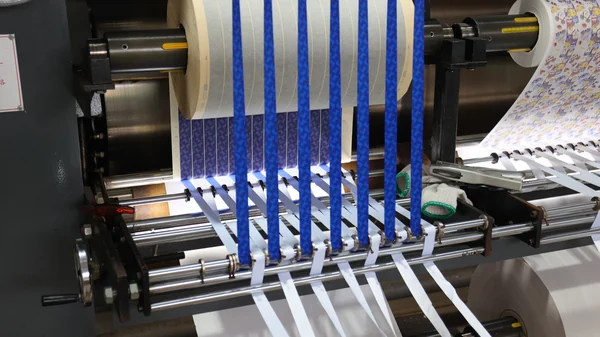
The problem: The finished webbing background or printed logo does not match the buyer’s approved brand-color reference.
One frequent cause is relying entirely on computer screens to confirm colors. Different monitors, display settings, devices, and lighting conditions can make the same digital artwork appear noticeably different.
At LOVECOLOUR, we recommend that buyers provide Pantone references for both the webbing background and important logo colors at the beginning of the inquiry and artwork preparation process.
Using a common physical color reference helps the factory understand the intended target and reduces unnecessary revisions, material waste, and repeated sampling.
However, a Pantone code is a target reference, not a universal guarantee of zero color difference. Final appearance depends on the material, ink, printing or dyeing method, and production conditions.
How to prevent it:
- Provide the full Pantone code, including the applicable color system or suffix.
- Identify which background and logo colors are brand-critical.
- Do not use a screenshot or computer display as the sole approval standard.
- Compare critical colors on an actual finished-material sample.
- Retain the approved physical sample for production comparison and repeat orders.
How to inspect: Compare the finished lanyard with the approved physical color reference under suitable, consistent lighting. When instrumental color tolerances are required, agree on the measurement method and acceptable limits before production.
For a more detailed explanation of the variables involved, read our Pantone color matching guide for dye sublimation lanyards.
Defect 2: Distorted or Stretched Logos
The problem: The printed logo appears wider, taller, thinner, or otherwise different from the customer’s original design.
This often happens during artwork preparation. When a logo needs to fit a particular lanyard width, someone may stretch it horizontally or vertically instead of resizing it proportionally.
For example, if the original artwork has a width-to-height ratio of 4:1, scaling it to a different size should normally preserve that ratio. Changing it to 5:1 would alter the appearance of the logo.
Our practical artwork recommendation: The factory should prepare a final mockup using the customer’s original logo proportions unless a design alteration has been specifically requested and approved.
How to prevent it:
- Supply original vector artwork whenever available.
- Keep the logo’s aspect ratio locked during resizing.
- Check the logo against the original design rather than relying only on the factory mockup.
- Approve the final artwork size, position, orientation, and repeat pattern before sampling.
How to inspect: Compare the finished logo’s proportions with the approved artwork and inspect recognizable letters, symbols, and design elements for visible distortion.
Defect 3: Blurry Small Logos, Fine Lines or Trademark Symbols
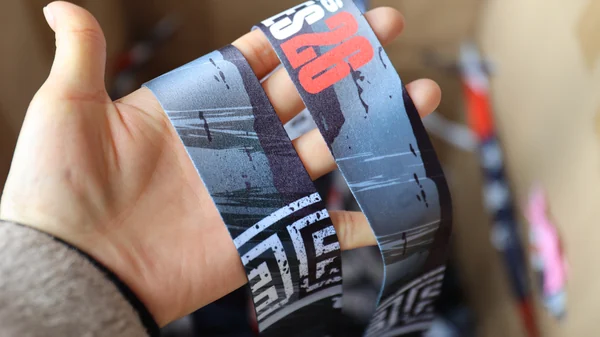
The problem: Small text, fine graphic details, or registered trademark symbols become difficult to recognize after printing.
This is particularly common when complicated artwork is reduced to fit narrow webbing.
Consider a detailed company logo intended for a 15 mm-wide lanyard. After allowing space around the design, some letters or graphic elements may become too small for dependable reproduction.
Small registered trademark symbols, such as ®, can be especially challenging because their internal details are very fine.
With dye sublimation, very fine details may soften because of ink behavior, heat transfer conditions, fabric texture, and the limited printable area.
How we approach this during artwork review: If a logo is too detailed for the selected webbing width, we discuss practical adjustments with the customer before producing the sample.
Possible solutions include:
- Simplifying very small decorative details without changing the essential brand identity.
- Selecting wider webbing, such as 20 mm instead of 15 mm, when appropriate.
- Adjusting the minimum printable line thickness.
- Making a tiny trademark symbol or fine stroke slightly heavier, subject to customer or brand-owner approval.
- Comparing alternative printing processes with an actual sample.
Important printing distinction: Screen printing can sometimes reproduce small, solid-color details with sharper defined edges than dye sublimation under particular conditions. However, screen printing also has minimum feature-size and registration limitations. Neither process guarantees that every extremely fine line will print perfectly.
Dye sublimation is generally more flexible for photographs, gradients, and complex multicolor graphics. Screen printing can be practical for simpler solid-color designs, but additional colors or complex artwork may increase setup requirements and cost.
The best technique should therefore be selected according to the artwork, material, lanyard width, quantity, and required appearance.
Learn more in our screen printing vs dye sublimation vs woven lanyards comparison.
Defect 4: Off-Center, Misaligned or Incorrectly Repeated Logos
The problem: The logo is not located where it was approved, appears rotated, or has inconsistent spacing along the lanyard.
Logo placement affects how a finished product looks when worn. A design that appears centered on an unfolded strip may look different after the strap is folded, stitched, and attached to its hardware.
Common issues include:
- Logo placement too close to the stitching or connector.
- Uneven spacing between repeated logos.
- Text or symbols facing the wrong direction.
- Different alignment on the left and right sides.
- Incorrect front-to-back printing orientation.
How to inspect: Compare the finished lanyard in its assembled condition with the approved mockup and reference sample. Check the logo position relative to the strap edges, sewn ends, and hardware.
Prevention: Confirm the logo layout on the finished product mockup, not only on a flat printing template.
Defect 5: Uneven Printing, Missing Areas or Poor Print Durability
The problem: The logo has patchy color, missing sections, uneven coverage, unexpected marks, or inadequate resistance to the intended handling conditions.
Possible causes depend on the printing method and may involve fabric texture, ink application, screen setup, transfer conditions, pressure, or temperature.
For dye sublimation, inconsistent transfer conditions can produce uneven color development. For screen printing, insufficient or inconsistent ink deposition may cause gaps or uneven edges.
How to inspect:
- Check solid-color areas for visible gaps or irregular printing.
- Inspect repeated logos for consistency.
- Compare printing quality on both sides when double-sided printing is specified.
- Use an agreed rub, wash, or durability test when the application requires it.
Any durability test should specify the procedure and acceptance criteria. Casual scratching or rubbing without a defined method does not provide a reliable universal quality standard.
Category B: Material and Dimension Defects
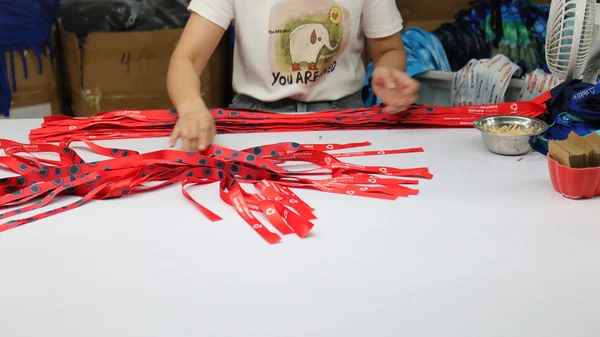
Defect 6: Incorrect Lanyard Width or Finished Length
The problem: The actual dimensions do not match the approved mockup, pre-production sample, or purchase specification.
One important detail is the definition of lanyard length. The unfolded webbing length, folded length, and finished hanging length are different measurements.
If the customer and manufacturer use different definitions, both parties may believe the same dimensions were approved while expecting different finished products.
Our recommendation: Clearly define the dimensions on the approved drawing and use the same measurement method for sampling and bulk inspection.
How to inspect: Measure representative finished products using a ruler or measuring tape according to the agreed method. Check both the strap width and the correct length dimension.
The approved digital mockup, physical sample, and bulk production should be consistent with the confirmed specifications. Any deviation outside the agreed tolerance should be identified and resolved.
Defect 7: Inconsistent Webbing Thickness, Texture or Material
The problem: The webbing feels noticeably thinner, thicker, rougher, or different from the approved material sample.
Even when two straps have the same nominal width, their thickness, weave density, weight, and surface finish may differ.
This can affect comfort, printing appearance, sewing quality, and the way the lanyard connects to certain buckles or fittings.
How to inspect:
- Compare the material composition and construction with the approved specification.
- Check webbing thickness at defined positions if a thickness tolerance was agreed.
- Compare surface texture and consistency against the approved reference.
- Check that the webbing fits the selected hardware and assembly method.
Do not assume that all polyester, nylon, tubular, or recycled-polyester lanyards have the same thickness or texture.
Defect 8: Frayed Edges or Damaged Fabric Ends
The problem: The lanyard edges have loose fibers, visible fraying, irregular cut ends, or poor finishing.
These issues can occur when the webbing is cut improperly, the fabric construction is unsuitable, or cut ends are not finished correctly.
Fraying affects appearance and may worsen during repeated handling.
How to inspect: Examine both long edges and the strap ends, especially near stitching and hardware attachment points.
Prevention: Confirm the appropriate cutting and edge-finishing methods for the selected material and inspect finished edges during production.
Defect 9: Stains, Contamination or Surface Damage
The problem: Finished lanyards have oil marks, dirt, discoloration, scratches on accessories, or fabric damage.
Such defects can result from handling, machinery contact, storage, assembly, or packaging.
Light-colored polyester lanyards may show contamination more visibly than darker designs.
How to inspect: Examine the visible strap surfaces and assembled accessories under consistent lighting, with attention to large solid-color areas and places that contact machinery or work surfaces.
Finished goods should be protected from contamination and unnecessary handling after inspection.
Category C: Sewing and Attachment Defects
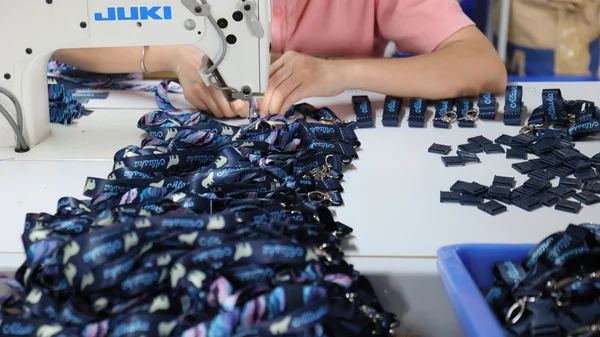
Defect 10: Weak, Crooked or Inconsistent Stitching
The problem: Stitching is crooked, uneven, incomplete, poorly positioned, or insufficient for the required attachment function.
Sewing quality affects both appearance and product reliability.
For example, a hook can be manufactured correctly but still become insecure if the webbing loop around it is poorly sewn.
How to inspect:
- Compare stitch positioning with the approved sample.
- Look for skipped stitches, broken thread, and open seams.
- Check whether the sewing is visibly straight and consistent.
- Verify attachment security using an agreed functional or pull test where required.
Stitch strength requirements should reflect the product’s intended use rather than an arbitrary universal value.
Defect 11: Excessive Loose Threads and Poor Sewing Finish
The problem: Long thread tails remain attached to the finished product, or the sewing area looks untidy.
Even if the stitch structure is functional, excessive loose threads can make promotional merchandise look poorly finished.
Buyers should distinguish cosmetic thread tails from broken or unraveling structural stitching. The latter may represent a more serious functional issue.
How to inspect: Check sewing areas, folded ends, connector attachment points, and visible thread tails.
Prevention: Include thread trimming and sewing-area inspection in the finishing process.
Defect 12: Incorrect Hardware Type, Size, Finish or Thickness
The problem: The delivered hook, buckle, clip, or other attachment differs from the one approved.
Examples include:
- The wrong metal hook design.
- An incorrect buckle size or shape.
- A noticeably thinner attachment than the approved component.
- An incorrect metal finish or plastic color.
- A missing accessory or connector.
Attachment differences may affect function, cost, durability, and customer expectations.
How to inspect: Compare the actual accessories against the approved sample, component photographs, drawings, and relevant specifications.
For metal hardware, material thickness alone does not establish strength. Construction, material properties, dimensions, and functional performance also matter.
Review our lanyard attachments guide for the differences between hooks, clips, buckles, breakaways, and connectors.
Defect 13: Defective Clips, Broken Buckles or Loose Connections
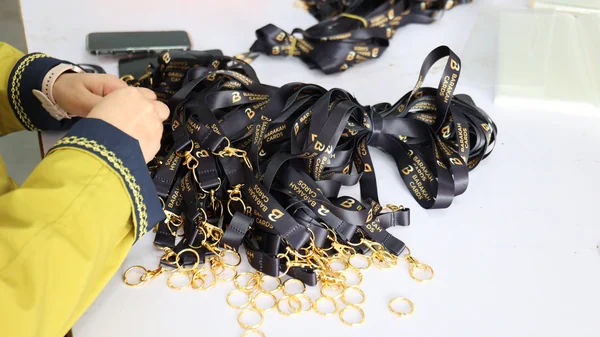
The problem: The attachment cannot open properly, fails to close securely, breaks during normal operation, or separates unexpectedly.
For example, a metal hook that is difficult to operate may be unsuitable for frequently accessed ID cards. A brittle plastic buckle or poorly fitted connector may fail during regular handling.
How to inspect:
- Open and close sampled hooks or clips.
- Check whether spring-loaded mechanisms return correctly.
- Connect and disconnect buckle components as intended.
- Inspect plastic parts for cracks, weak fit, or visible damage.
- Check the connection between the webbing and the hardware.
Safety breakaway buckles require separate attention. Their release behavior should be checked according to the intended application and agreed requirements. A breakaway buckle should not be evaluated in exactly the same way as a standard fixed connector.
Important: Ordinary lanyard hardware should not be described as fall-protection equipment or certified personal protective equipment unless it has been specifically designed, tested, and certified for that purpose.
Category D: Order Accuracy and Packaging Defects
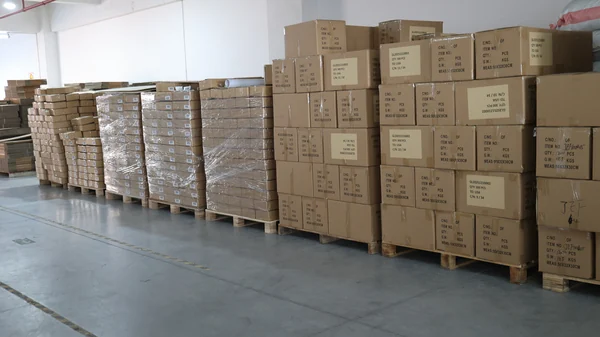
Defect 14: Wrong Quantity, Mixed Designs or Incorrect Order Allocation
The problem: The shipment contains fewer pieces than ordered, incorrect colors or attachments, or the wrong quantities of individual designs.
This can be particularly troublesome for conferences requiring separate lanyard colors for visitors, staff, exhibitors, or different departments.
How to inspect:
- Check the total order quantity.
- Confirm quantities for each artwork, color, and SKU.
- Check carton labels and packing lists against the approved order.
- Verify that different versions have not been mixed during packing.
For orders containing several artwork versions, the buyer should approve a clear version list and quantity breakdown before manufacturing.
Defect 15: Incorrect Packaging, Damaged Cartons or Excessive Shipping Dimensions
The problem: Products are packed differently from the approved requirements, cartons are damaged, or shipping weight and dimensions are unsuitable for the selected transport method.
Packaging is an important part of custom lanyard quality control because it protects the finished product and affects logistics costs.
For example, packing too many lanyards into one carton may produce a carton that exceeds the handling requirements of a particular carrier. Using unnecessarily large cartons can increase volumetric-weight charges.
Improper protection may also cause printed surfaces, metal attachments, or individual packages to become damaged during transportation.
How to prevent it:
- Confirm bulk packing, individual packing, or retail packaging before production.
- Agree on pieces per inner package and carton.
- Check carton gross weight and external dimensions.
- Confirm packaging requirements for the selected shipping route and carrier.
- Use suitable protection to prevent surface damage and hardware contact.
- Check carton labels, quantities, and packing lists before shipment.
Manufacturer’s recommendation: Packing requirements should be considered during quotation, not added only after all lanyards have been manufactured.
3. Custom Lanyard Quality Control Checklist for Bulk Buyers
The following checklist summarizes the key inspection points for standard custom printed lanyards. Different constructions, including woven, specialty, safety-release, and phone lanyards, may require additional checks.
| Inspection Item | What to Check | Approval Reference |
|---|---|---|
| Webbing color | Color match and consistency | Approved physical color sample |
| Logo color | Color match and print coverage | Pantone reference and approved sample |
| Logo proportions | No unauthorized stretching | Approved artwork |
| Small text and symbols | Readability and fine detail | Approved print sample |
| Print placement | Position, spacing, orientation | Approved finished layout |
| Dimensions | Width and defined finished length | Approved dimensions and tolerances |
| Webbing | Material, thickness, texture | Material specification and sample |
| Fabric surface | Fraying, stains, damage | Agreed appearance requirements |
| Stitching | Alignment, completeness, security | Approved construction sample |
| Hardware | Correct model, finish, operation | Approved component specification |
| Quantity | Total quantity and SKU allocation | Purchase order |
| Packaging | Pack style, protection, carton details | Approved packing instructions |
Tip: Use this checklist together with the approved order specification. Buyers and manufacturers should agree on actual tolerances, sampling methods, and acceptance criteria rather than assuming every listed item has the same defect severity.
4. How to Prevent Lanyard Defects Before Mass Production
Many custom lanyard quality problems can be avoided during artwork approval and sampling, before expensive mass-production corrections become necessary.
Step 1: Review Artwork and Pantone References
Send the original logo files, background color references, and required dimensions. Review whether the logo can be printed clearly at the selected width.
The manufacturer should identify potential problems such as tiny letters, narrow lines, unsuitable graphics, or unclear color references.
Step 2: Check the Final Mockup
Confirm the logo’s aspect ratio, placement, repetition, orientation, and final size. If the artwork needs to be modified for printing, the proposed changes should be shown to the customer for approval.
Digital mockups are particularly useful for checking design dimensions and layout, but they should not be treated as a complete substitute for physical color approval.
Step 3: Approve the Physical Sample
For projects with strict color, printing, construction, or attachment requirements, review a representative physical sample.
Check both appearance and function. When approved, the reference sample can be used as a production benchmark.
Step 4: Verify Materials and Components
Before assembly, compare the selected webbing and hardware with the confirmed specifications. Changes in component type, material, thickness, or appearance should be communicated and approved where applicable.
Step 5: Conduct In-Process Checks
Inspect representative products during printing, cutting, sewing, and attachment assembly so problems can be identified before affecting the entire batch.
Step 6: Inspect Finished Goods and Packaging
Check sampled finished lanyards against the approved requirements, then verify order quantities, packing arrangements, carton condition, and labels.
LOVECOLOUR supports artwork review, sample confirmation, specification checks, and quality inspection as part of its custom lanyard manufacturing workflow. The specific inspection scope should be confirmed according to the order and customer requirements.
5. How Should Buyers Set Acceptance Criteria for Bulk Lanyards?
Not all defects carry the same risk. Buyers should distinguish cosmetic issues from defects affecting function, safety, or compliance with essential specifications.
Critical Defects
Defects presenting an unacceptable safety risk or another critical failure defined by the inspection agreement. Their classification depends on the specific product and application.
Major Defects
Defects that substantially affect intended use, essential appearance, or agreed specifications. Examples may include an unusable clip, a materially incorrect logo, or a significant dimensional deviation.
Minor Defects
Small cosmetic imperfections that do not materially affect intended use but may fail agreed appearance requirements, such as limited cosmetic thread tails or slight noncritical print irregularities.
These examples are illustrative. The buyer and supplier should determine severity classifications before production.
What Is AQL Inspection?
AQL, or Acceptance Quality Limit, is used within statistical acceptance-sampling systems to help determine whether a production lot meets agreed inspection criteria.
The applicable standard should be confirmed with the buyer or inspection provider. ISO 2859-1:2026 provides acceptance-sampling schemes indexed by AQL for lot-by-lot inspection.
There is no single AQL level that automatically applies to every custom lanyard order. The agreed plan must address inspection level, lot size, defect classifications, sampling rules, and acceptance criteria.
Important: Passing a sampling inspection is not a guarantee that every individual item is defect-free. For safety-sensitive applications, additional functional testing or more stringent requirements may be appropriate.
6. Packaging and Shipping Quality: An Often-Overlooked Risk
Good products can still arrive in poor condition if the packaging is unsuitable for the transport route.
Custom lanyard shipments may use bulk carton packing, individual polybags, custom retail packs, or other approved arrangements.
Buyers should confirm:
- Units per inner pack and outer carton.
- Carton gross weight and dimensions.
- Packaging materials and protective arrangements.
- Requirements for separating different colors or designs.
- Shipping labels and carton identification.
- Any applicable carrier-specific weight and size restrictions.
Freight charges can depend on actual weight, dimensional weight, destination, service type, and carrier rules. Oversized cartons or inefficient packing may increase transportation costs even when the merchandise itself meets the specification.
Packaging should therefore be included in the original quotation and order confirmation whenever possible.
7. What Should Buyers Do When They Find a Quality Problem?
If a delivered sample or production lot does not match the approved specification, the first step is to identify exactly what differs from the agreed requirements.
- Record the defect: Take clear photographs or videos, including close-ups and overall product views.
- Identify affected items: Record product versions, cartons, quantities, and relevant batch information.
- Compare with approved references: Use artwork, physical samples, purchase orders, and acceptance requirements.
- Assess severity: Determine whether the issue is cosmetic, functional, or otherwise critical.
- Discuss corrective action: Depending on the issue and agreement, options may include sorting, reworking, replacing, or another mutually accepted resolution.
- Prevent recurrence: Update specifications, approved samples, production instructions, or inspection checkpoints as necessary.
Clear documentation helps both buyer and supplier resolve issues faster and reduces disagreements about what was originally approved.
8. Information to Send Your Manufacturer Before Ordering
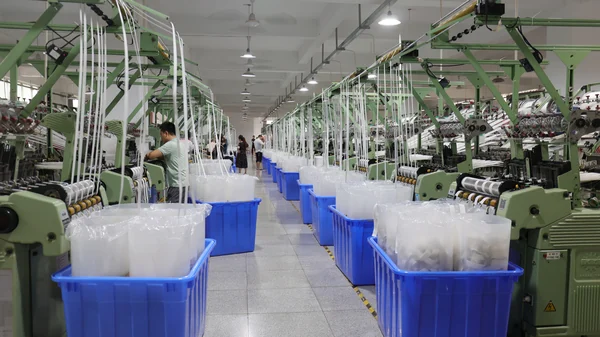
To reduce preventable quality problems, include the following information when requesting a custom lanyard quotation:
- Original logo artwork and approved design proportions.
- Webbing background color and logo Pantone references.
- Required material, width, thickness if applicable, and length definition.
- Preferred printing or weaving method.
- Logo orientation, placement, and print sides.
- Attachment types, component specifications, and functional requirements.
- Order quantity and any artwork or color variations.
- Packaging requirements, carton limitations, and shipping destination.
- Requirements for samples, inspection, and acceptance criteria.
- Target delivery date.
For broader purchasing considerations, see our wholesale lanyard buying guide for distributors and resellers.
9. Frequently Asked Questions About Custom Lanyard Quality Control
What are the most common custom lanyard defects?
Common defects include incorrect colors, stretched logos, blurry small text, inaccurate dimensions, print misalignment, frayed fabric, weak stitching, defective clips, incorrect quantities, and unsuitable packaging.
How can buyers avoid color differences in custom lanyards?
Provide complete Pantone references for the webbing and logo at the beginning of the project. For color-sensitive orders, approve a physical sample made with the intended materials and printing method. Digital mockups alone are not reliable final color standards.
Why does a small logo look blurry on a 15 mm lanyard?
Complex artwork can contain lines and text that become too fine when reduced to a narrow printable area. The solution may involve simplifying the artwork, enlarging specific details with approval, choosing wider webbing, or testing another printing process.
Is screen printing better than sublimation for fine logo details?
Screen printing may produce sharper edges for some small solid-color elements under suitable conditions, while dye sublimation is generally more flexible for multicolor artwork, gradients, and full-color designs. The correct choice depends on feature size, fabric, artwork, and production settings. A sample is the best way to evaluate borderline designs.
Should a logo be stretched to fit the lanyard width?
Not without approval. Logos should normally be resized proportionally to preserve their original appearance. Any intentional changes to proportions or design elements should be approved by the customer or authorized brand owner.
Must mass-production dimensions match the approved sample?
Yes, within the agreed manufacturing tolerances. The drawing, approved sample, and mass-produced products should follow the same measurement definitions and confirmed specifications.
How are lanyard clips and buckles inspected?
Inspect the selected component type, finish, dimensions, attachment method, and operation. Functional checks may include opening and closing clips and connecting buckles. Specific durability or release tests should use agreed methods and acceptance criteria.
Should every lanyard be inspected individually?
Not necessarily. The appropriate inspection scope depends on the order, risk, buyer requirements, and agreed quality plan. Sampling inspection can be used for many production lots, while particular critical characteristics may require additional checks.
Why does export packaging affect custom lanyard quality?
Packaging protects the product from handling and transit damage. Carton dimensions, gross weight, product separation, and packing methods also influence handling efficiency and potentially freight costs.
What should buyers do when a bulk order does not match the approved sample?
Document the differences, identify the affected quantity, compare the products with the agreed specifications, and discuss appropriate corrective actions with the manufacturer according to the purchase agreement.
10. Order Custom Lanyards with Clear Quality Requirements
Reliable custom lanyard production starts with clear communication between the buyer and manufacturer.
At LOVECOLOUR, we work with overseas promotional product distributors, corporate buyers, event organizers, and brand owners on customized lanyard projects. Our manufacturing support includes artwork review, color-reference coordination, material and attachment selection, sample development, sewing and assembly coordination, and quality checks based on approved requirements.
If you are preparing a bulk order, send us your logo files, Pantone references, dimensions, material preferences, attachment specifications, required quantity, and packaging instructions. Our team can review the design and discuss suitable production options.
Contact LOVECOLOUR to request a custom lanyard quotation.
Explore our custom lanyard materials, printing methods, and personalization options to prepare your project specifications.